
~ A Woven History ~
“
燭の火を 燭にうつすや 春の夕
Lighting one candle
with another candle —
spring evening.
~ Yosa Buson
📬 ✩₊⋆☾⋆⁺₊✧ 💌
To:
My friends all over the world,
wherever this finds them.
From:
Zoe xX
~ LETTER FROM A EUROPEAN ENCLAVE IN JAPAN ~
Or, should I call it a Japanese town with a European style?
The truth lies somewhere beyond these simple descriptors, and I feel my mind is in a muddle. My dear friend, let me write this out to you, and in the writing perhaps I may find some clarity; or clarity find me, like a sunbeam through a glass of cloudy water, split into its elemental rainbow hues. I shall be the water. Can these words provide the light?
The first truth, which we may embark upon, is this: Nagasaki is a port, in the oldest sense of the word…
PORT:
English, French - [ pɔrt, poʊrt ]
a geographical area that forms a harbour, bay, cove or inlet.
Used for the loading and unloading of ships.
(from the Latin portus: ‘a port, harbour’)c. 1300. An entryway. A city gate. A portal.
(from the Latin porta: ‘a gate; door, entrance,’
and the root per: ‘to lead, pass over.’)to carry, to bear, to convey.
(from the Latin portare: ‘to carry’)
. . .
~ 𓊝 ~
One: Port
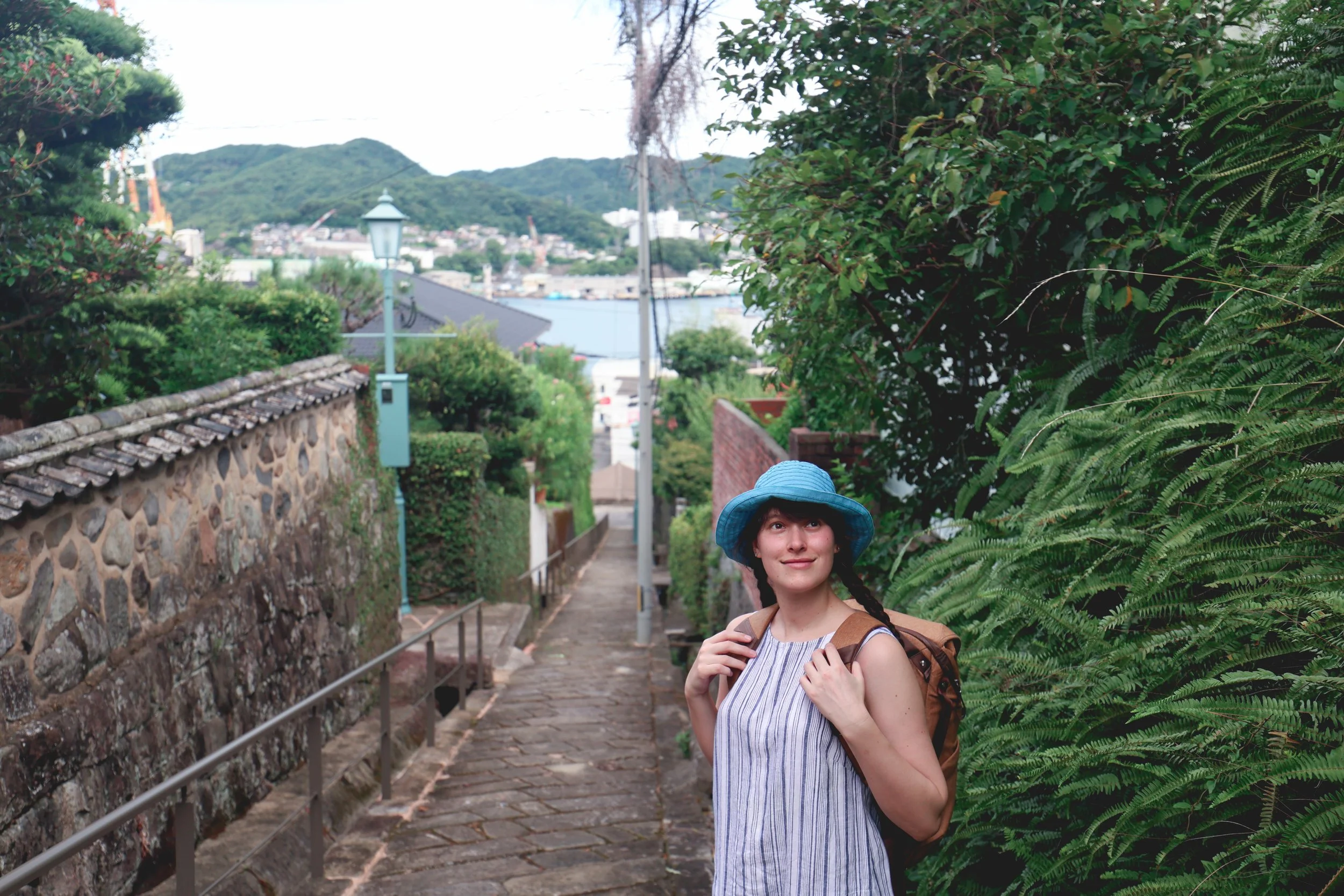
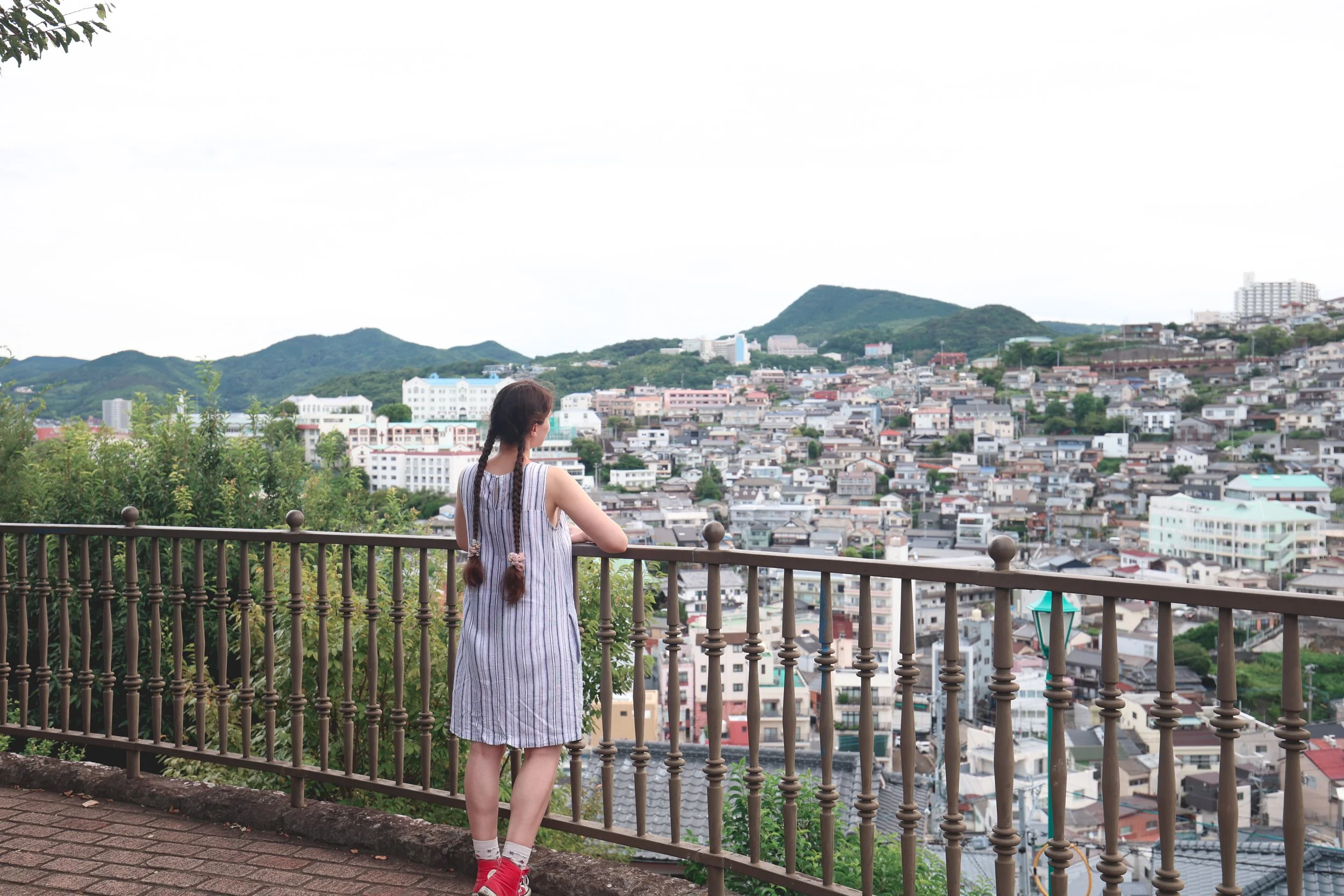
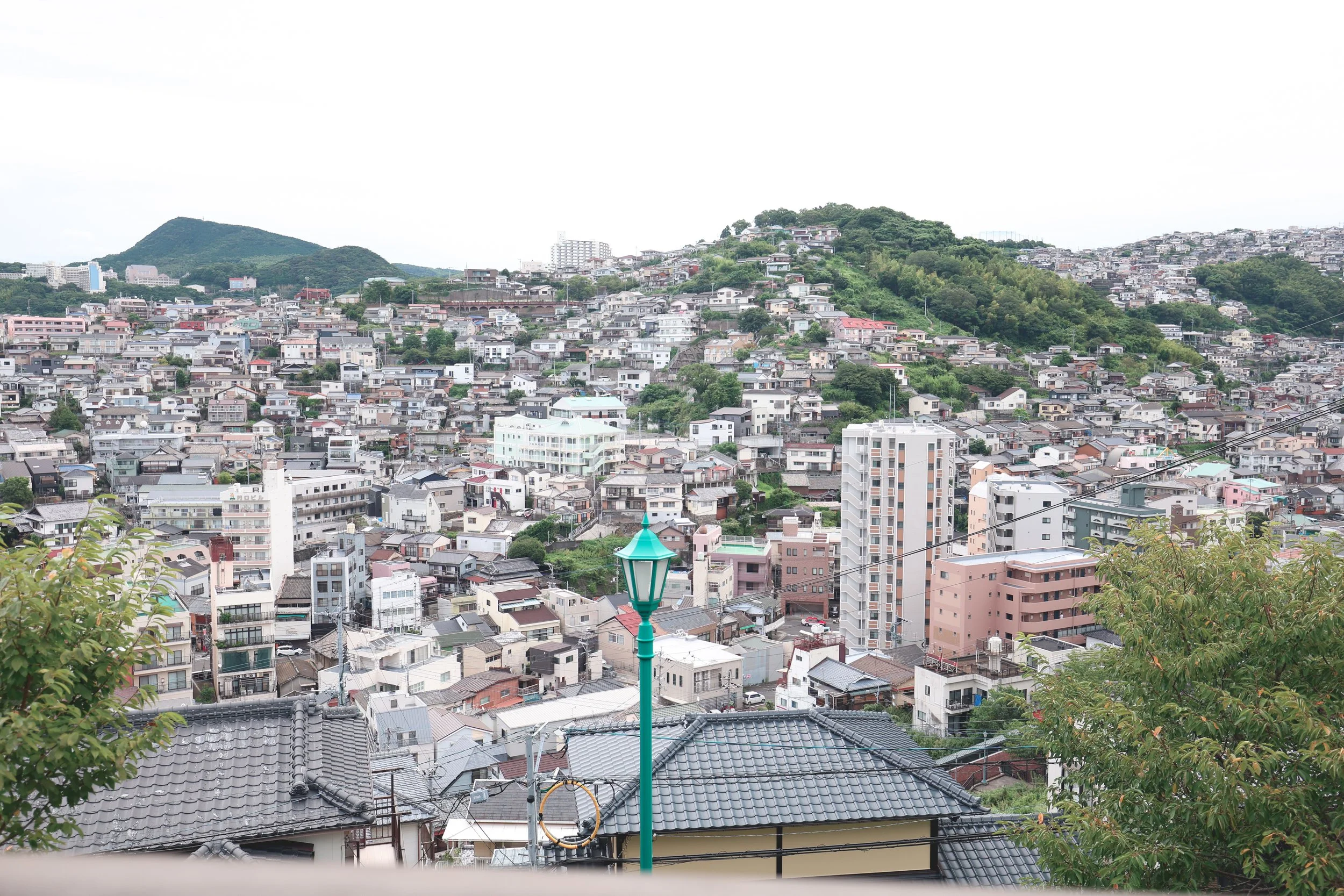
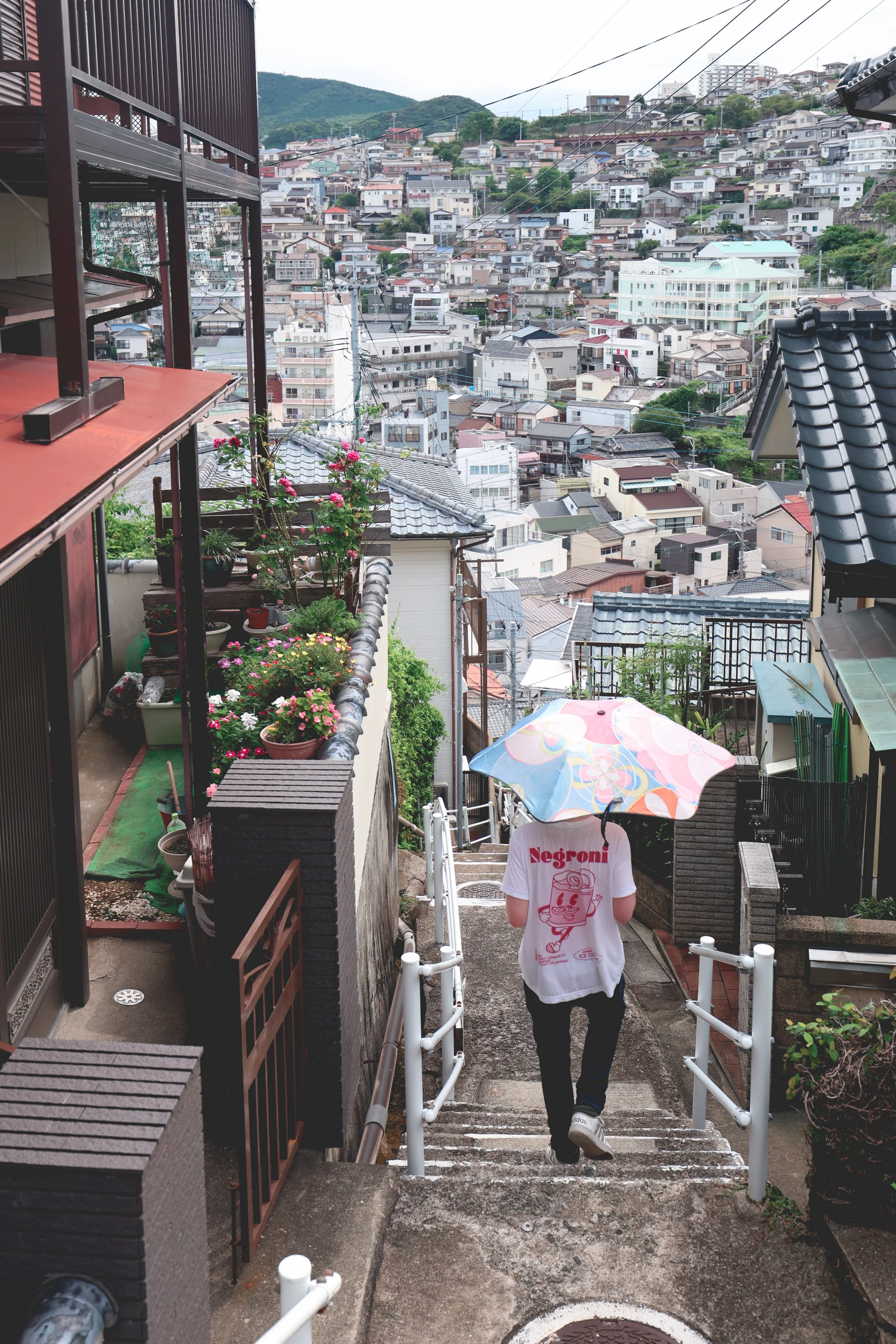
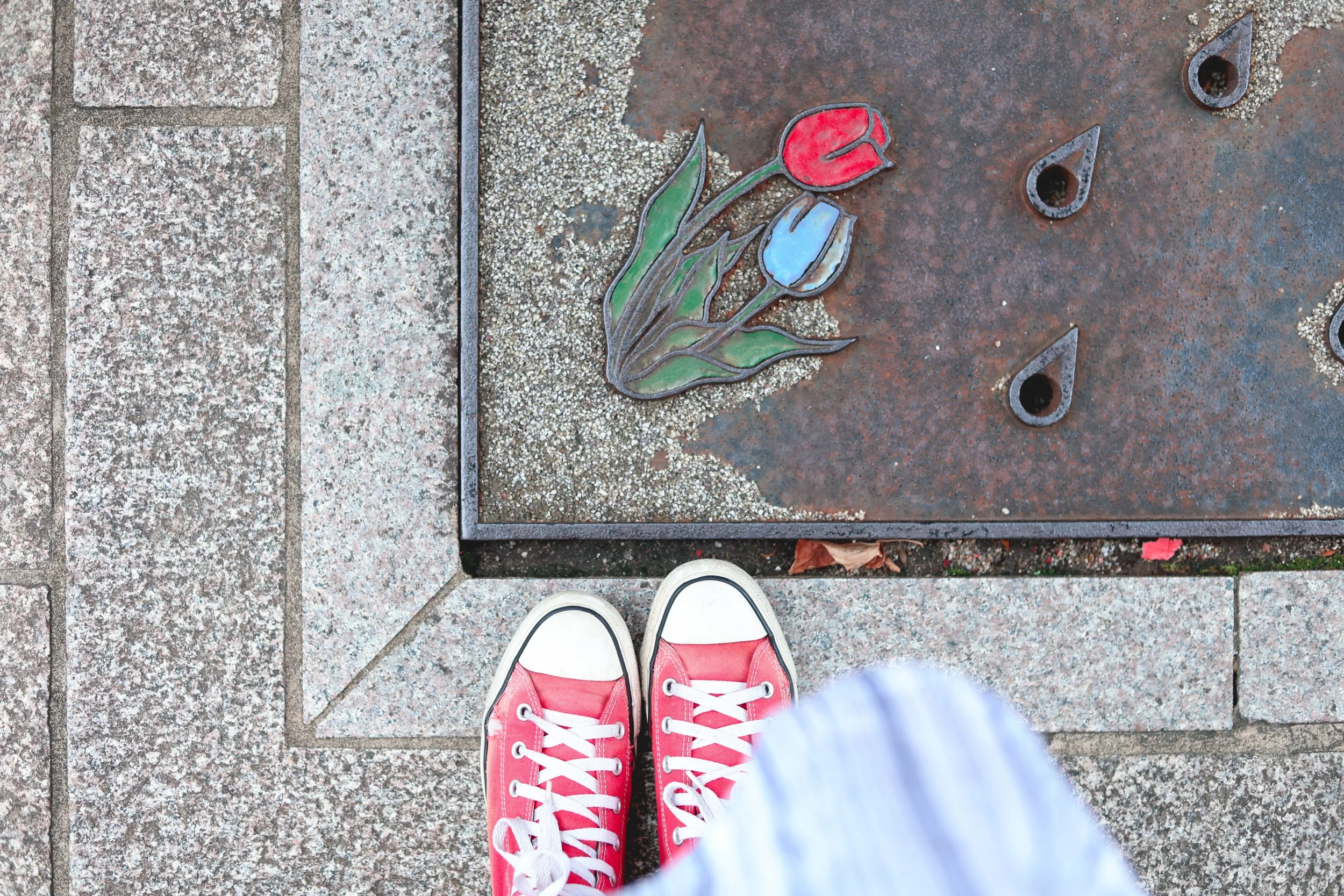
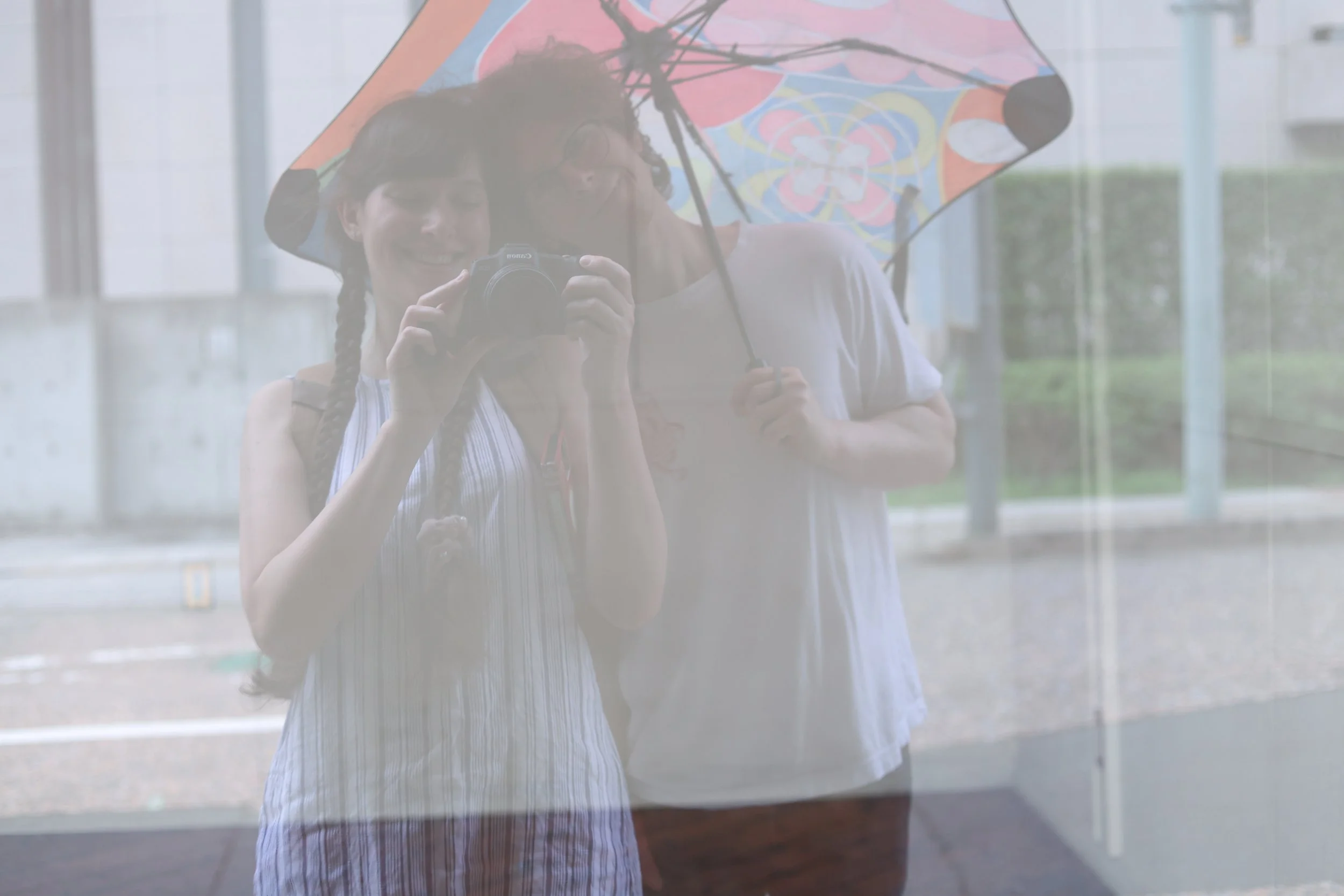
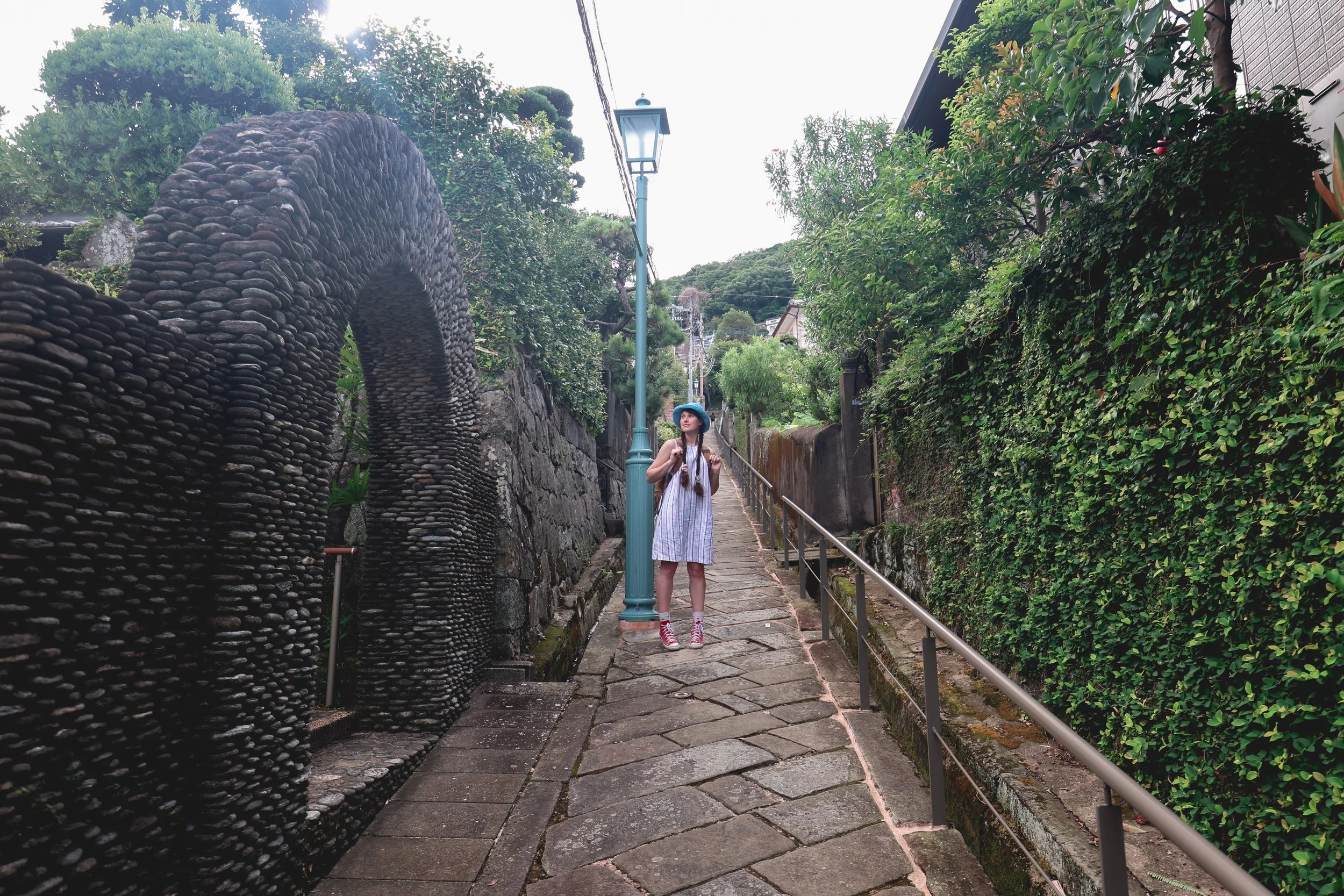
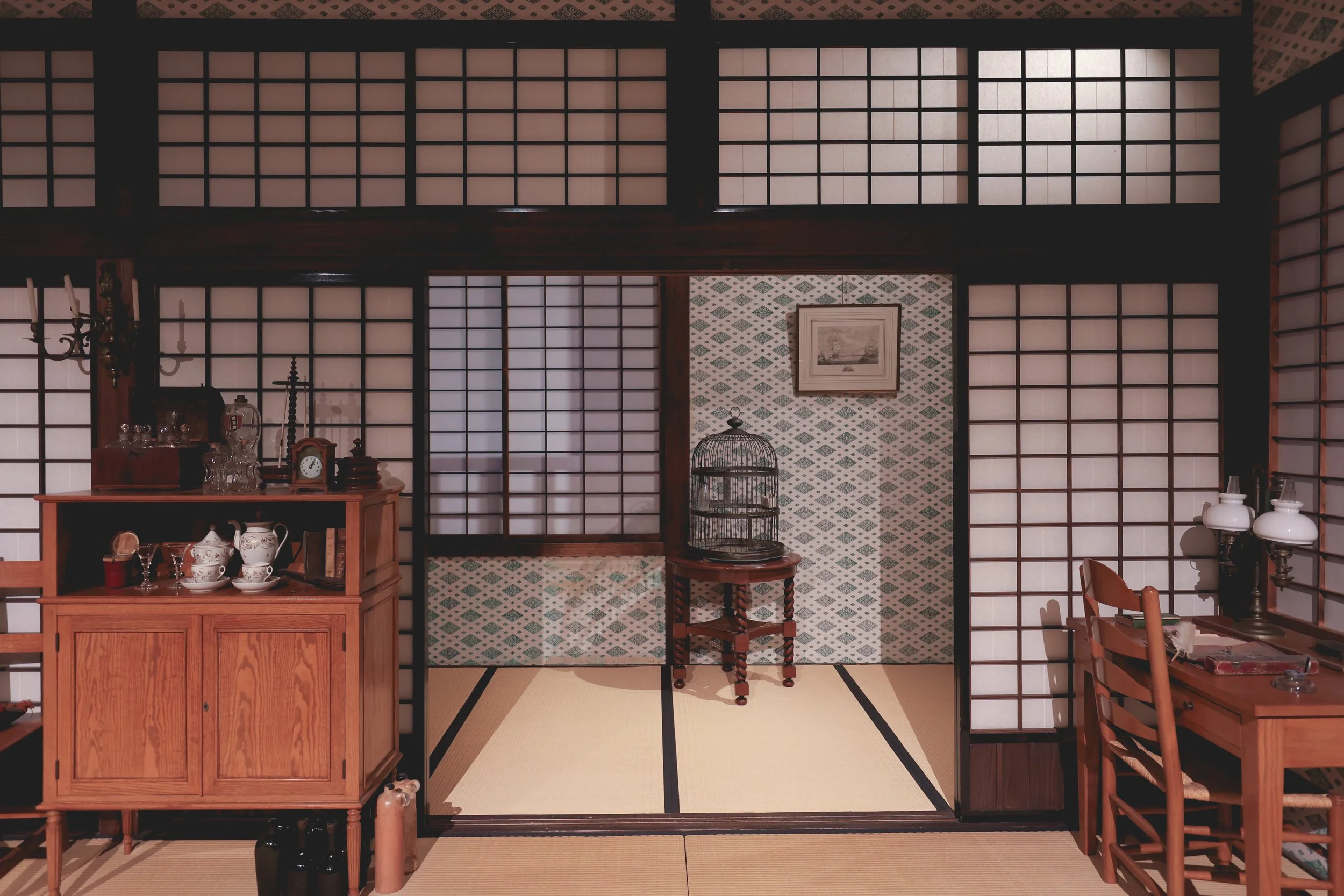
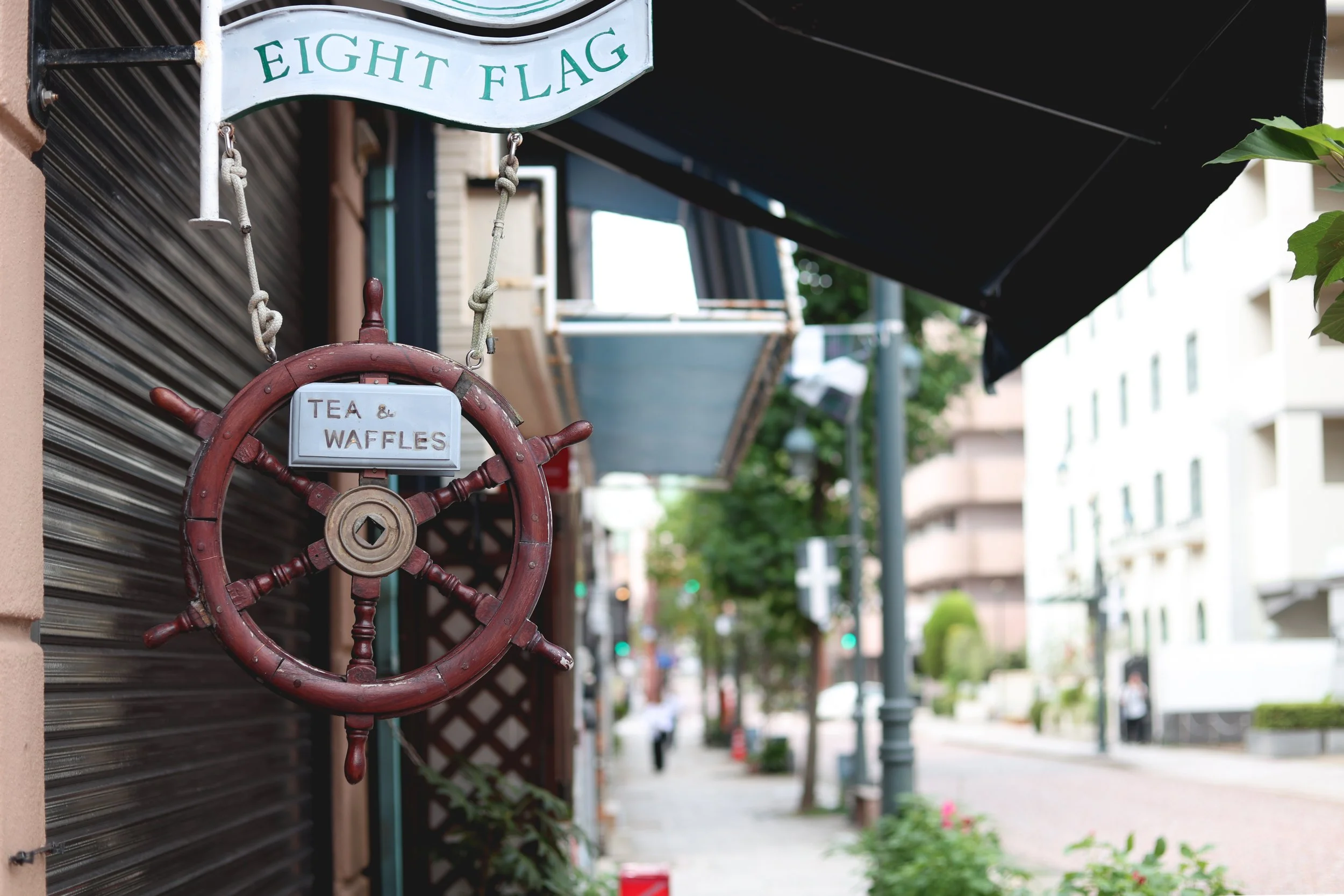
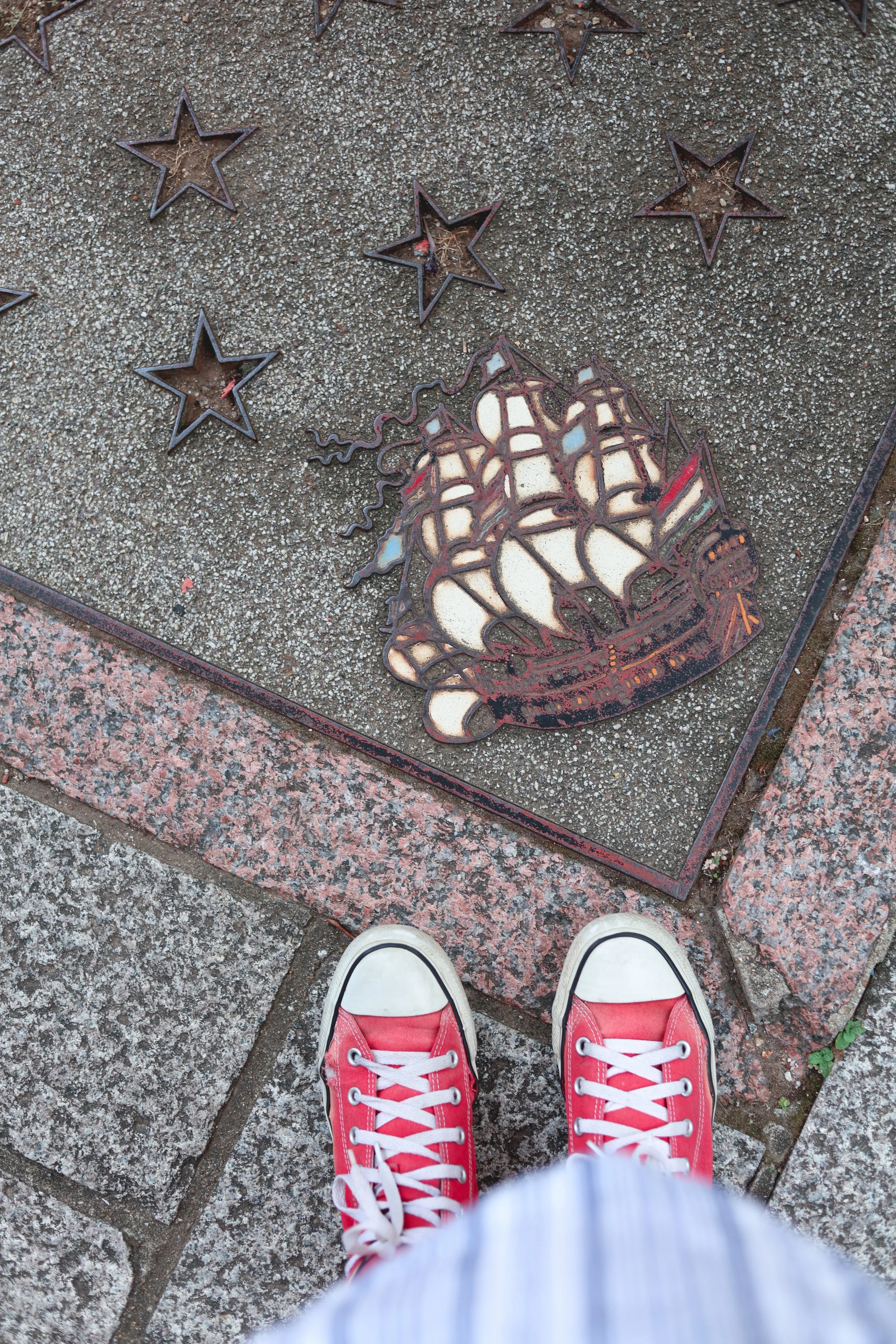
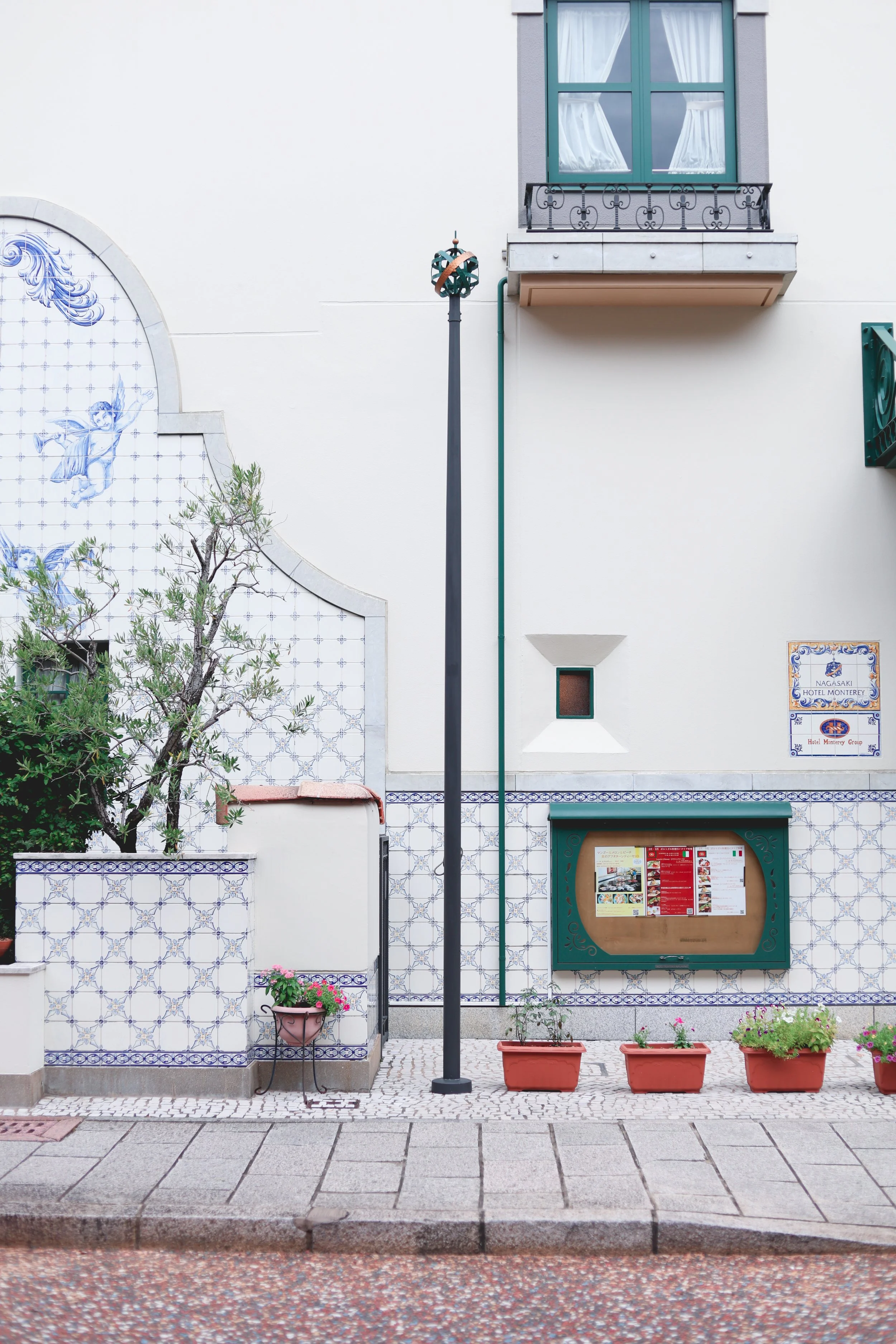
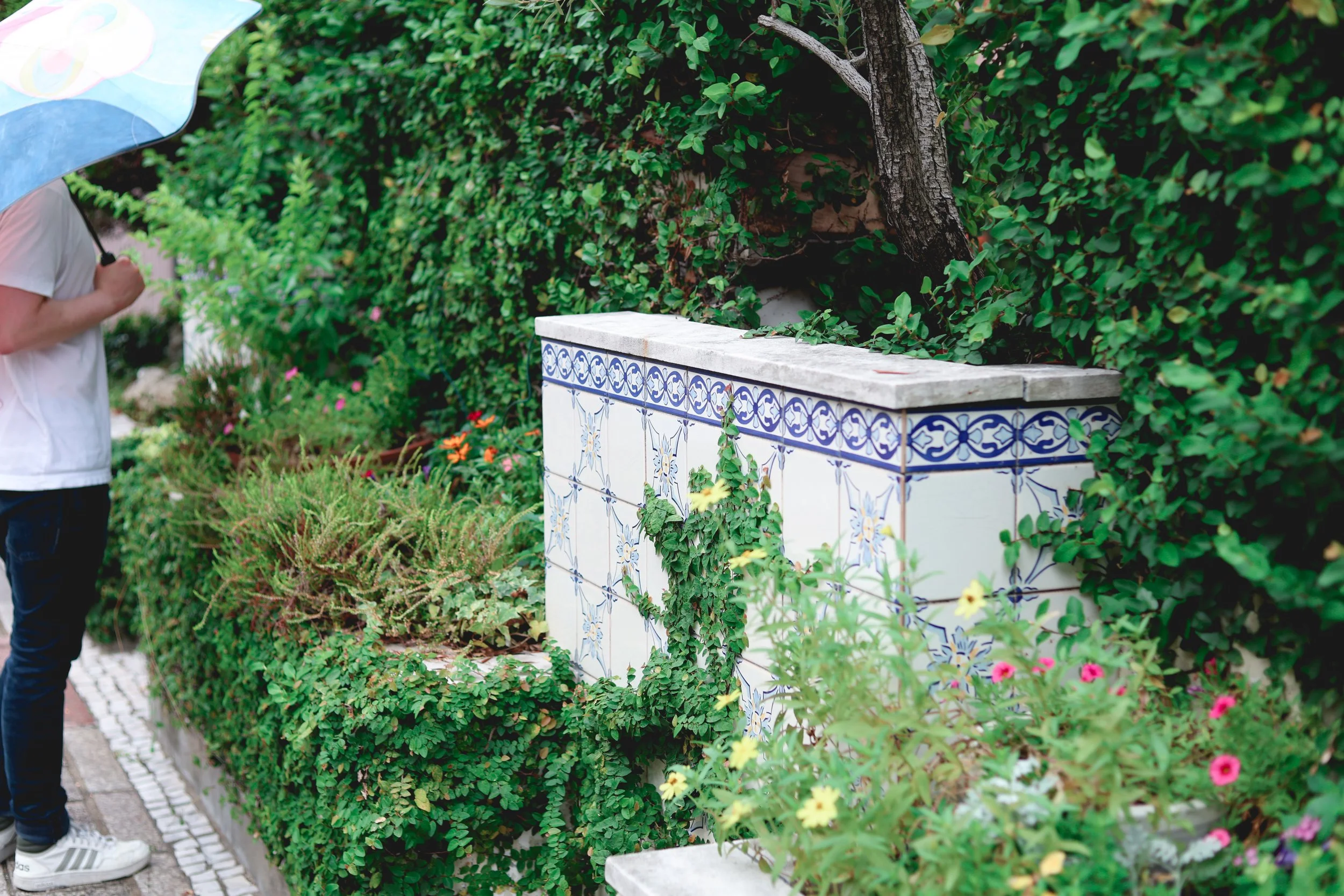
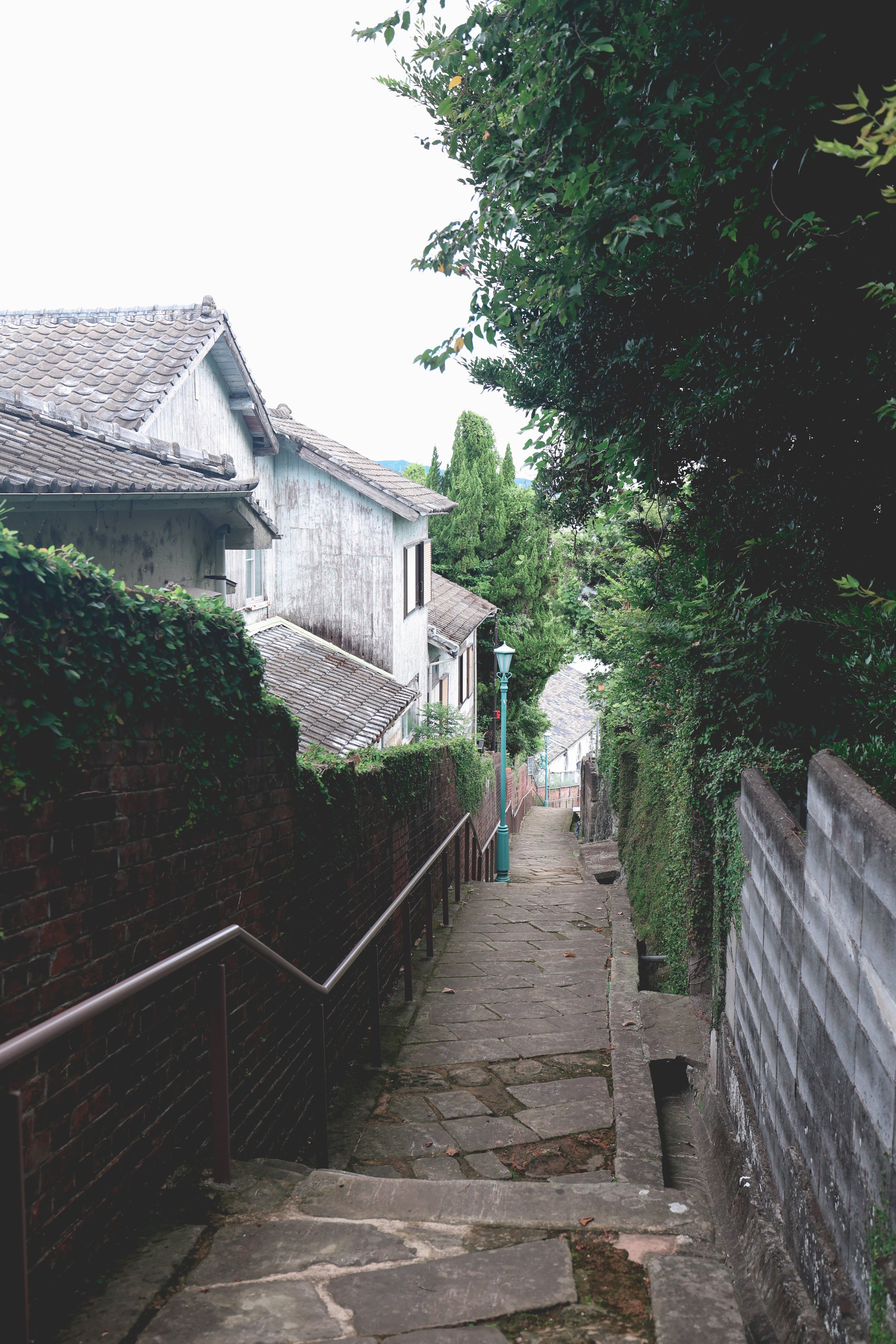
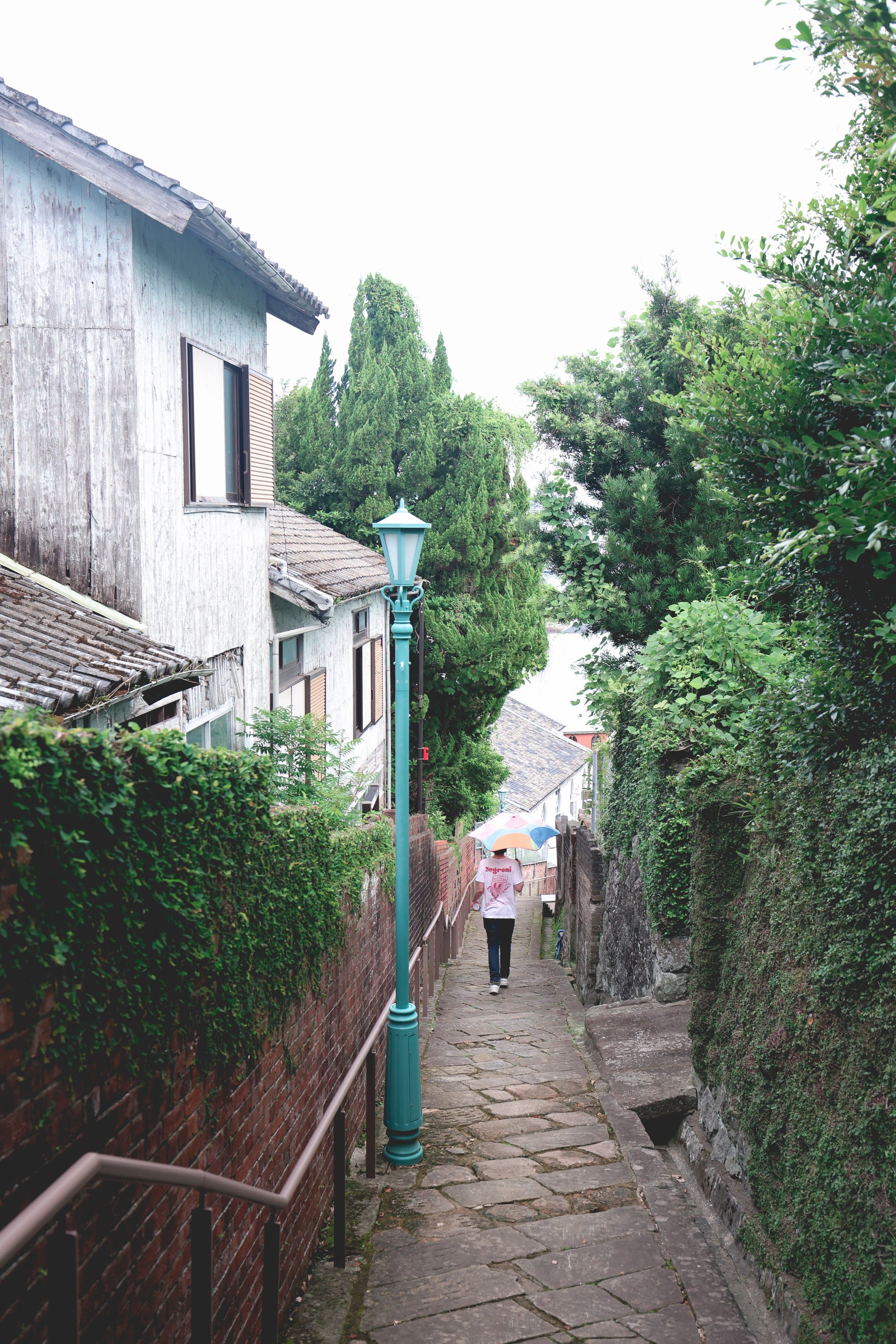
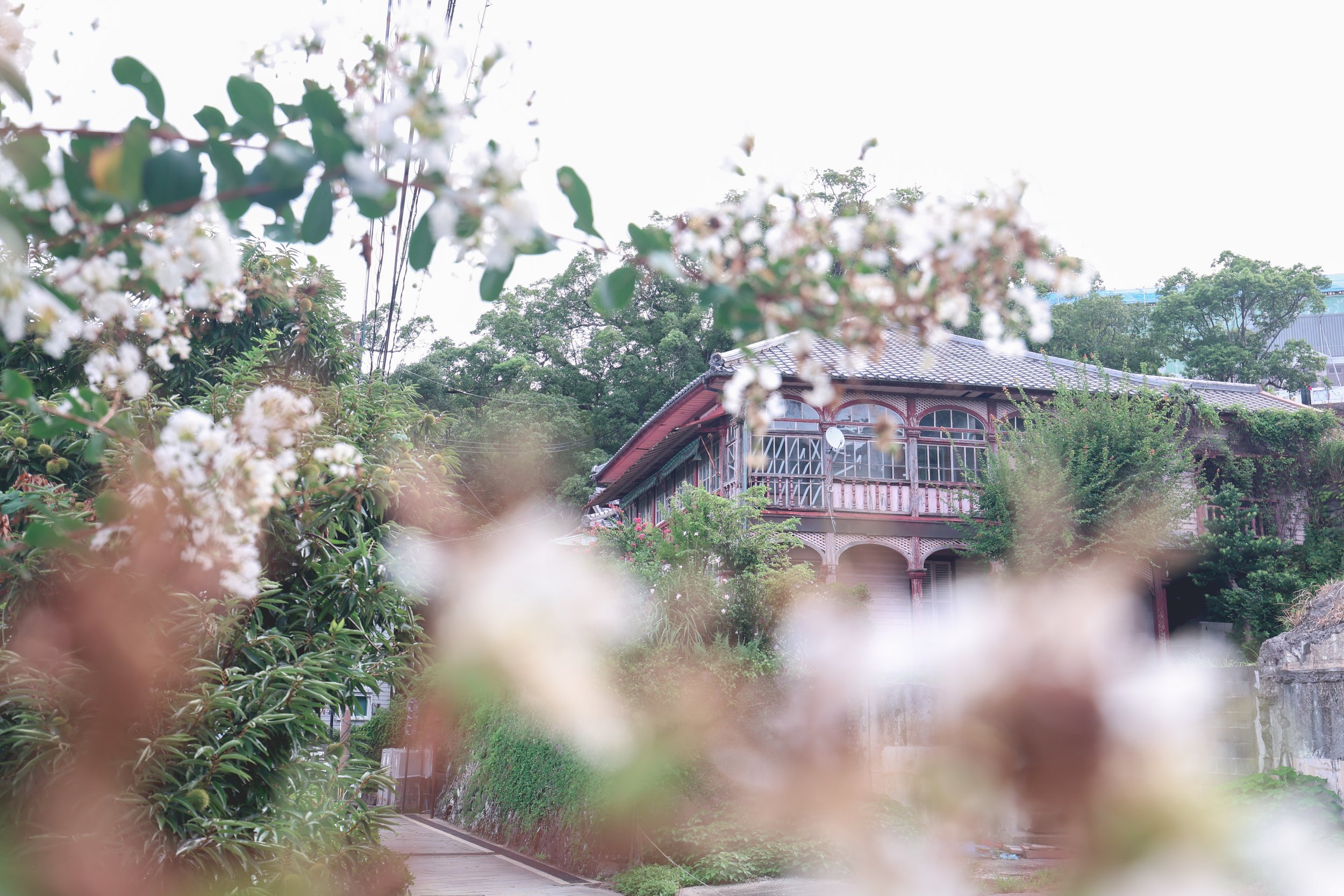
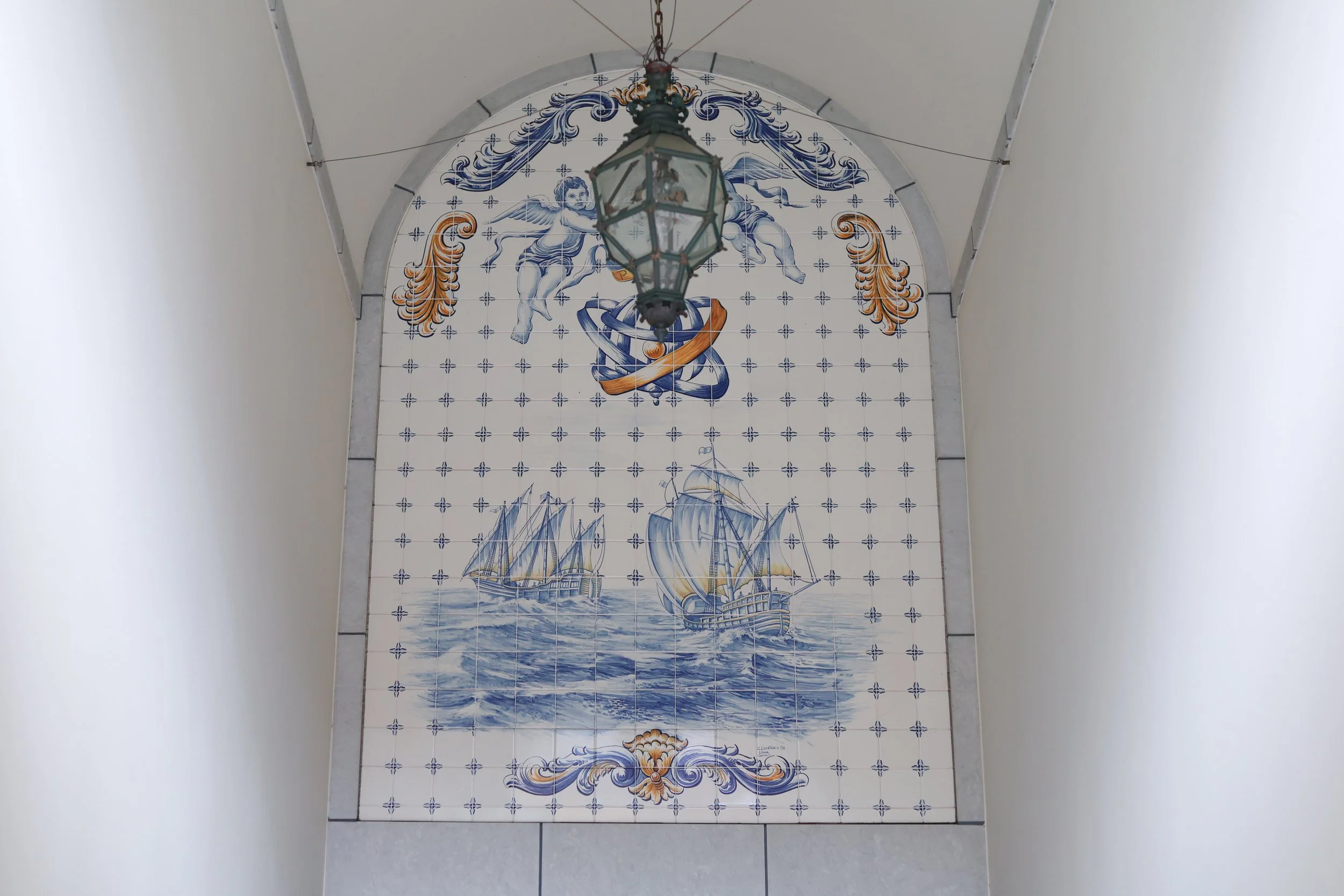
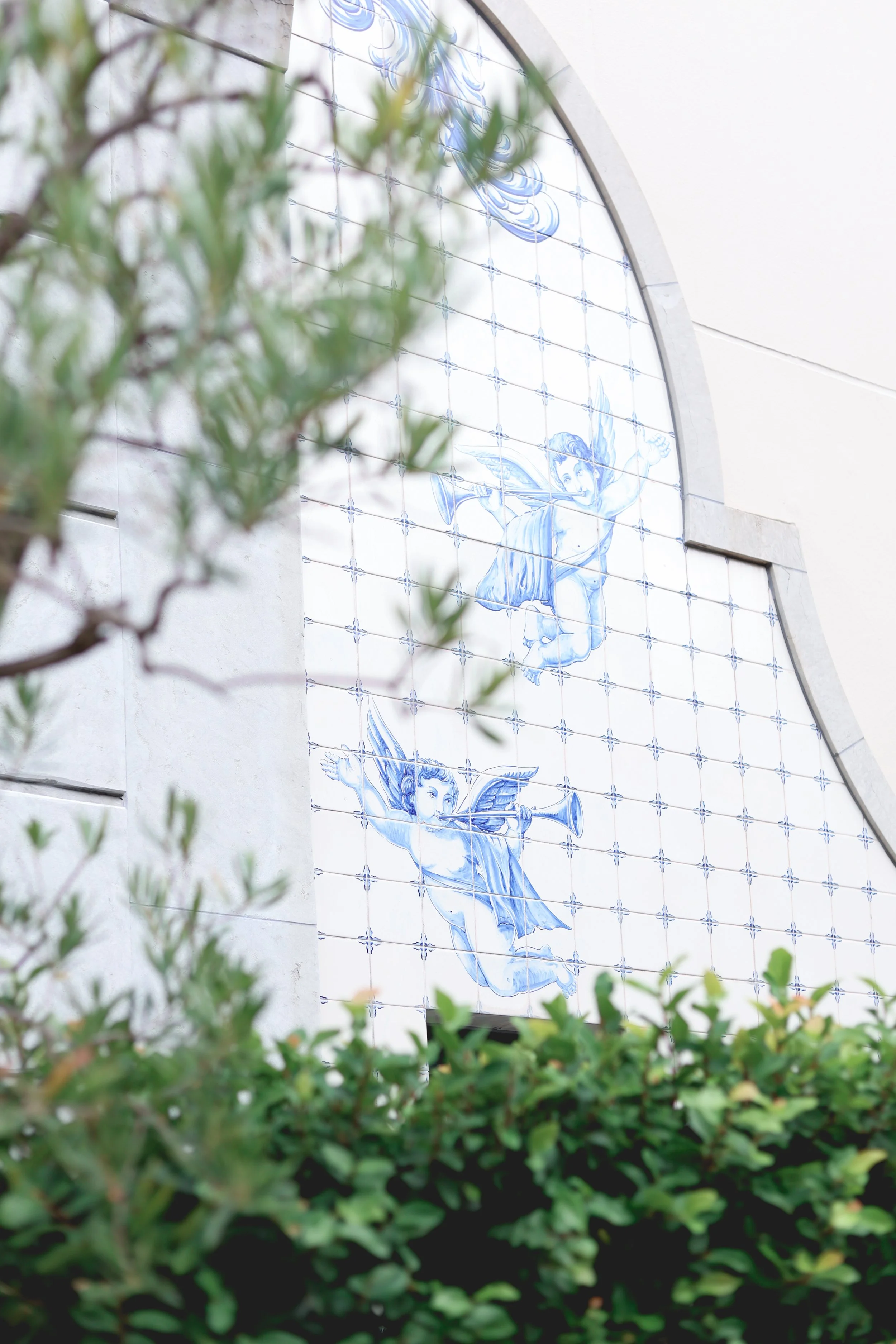
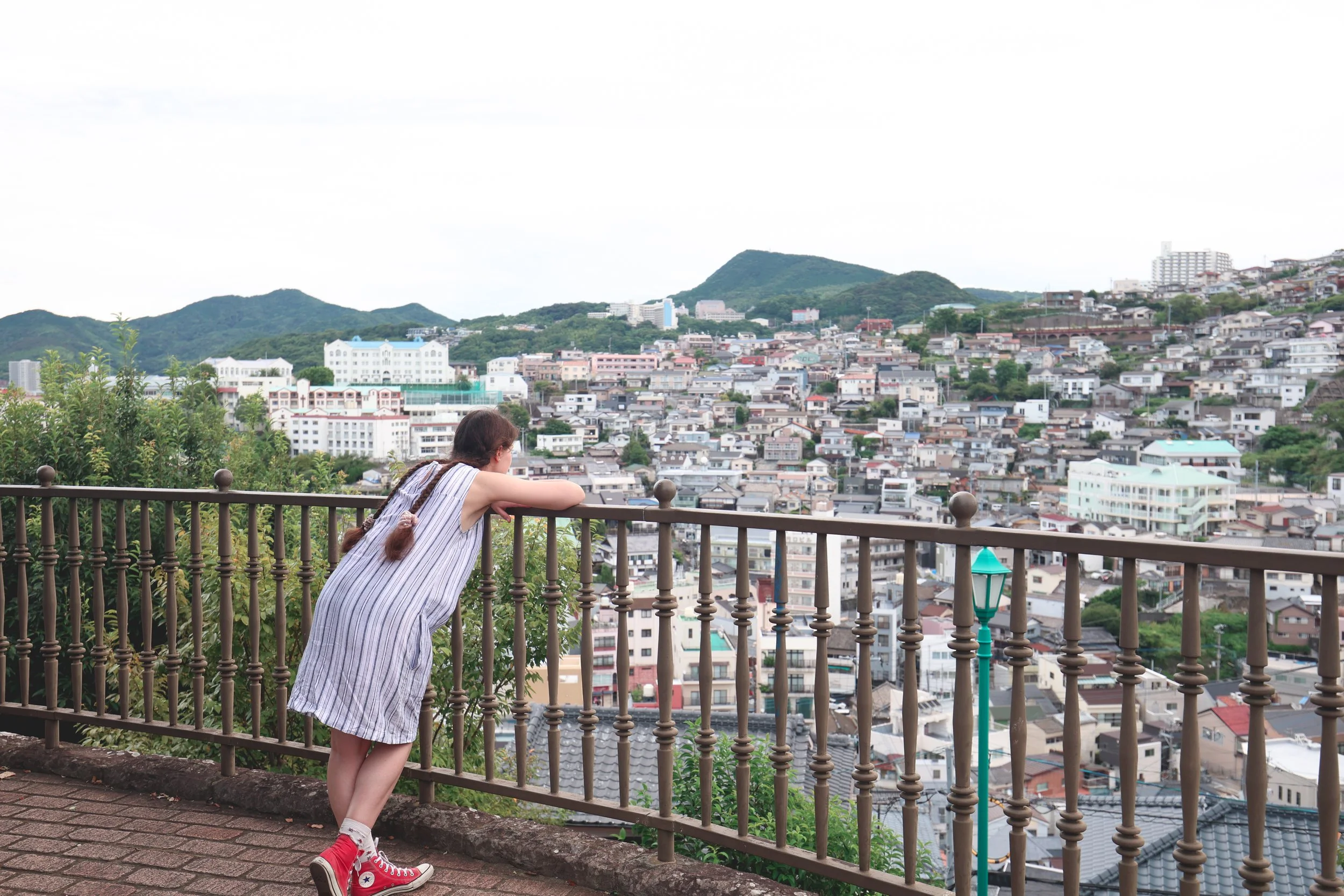
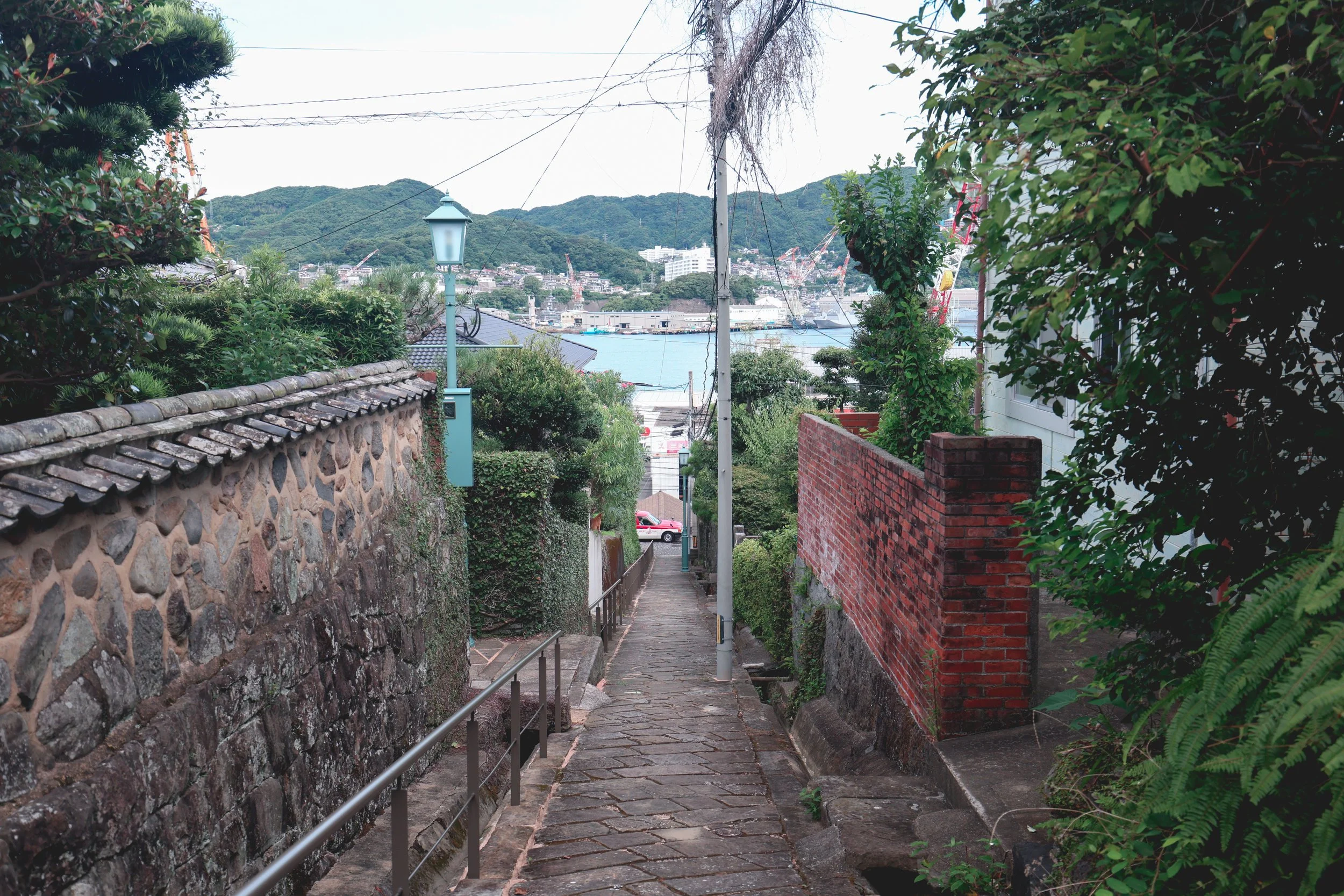
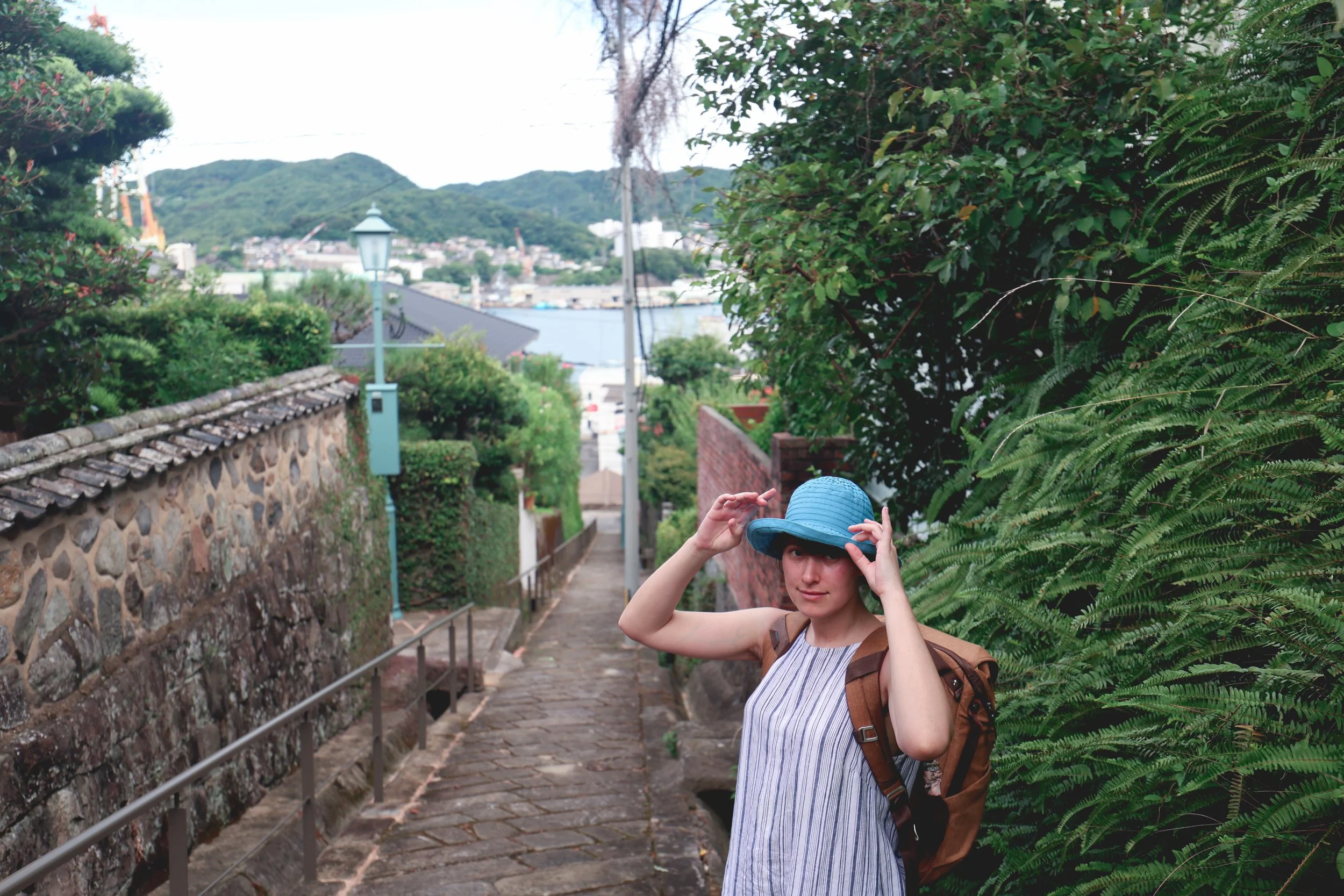
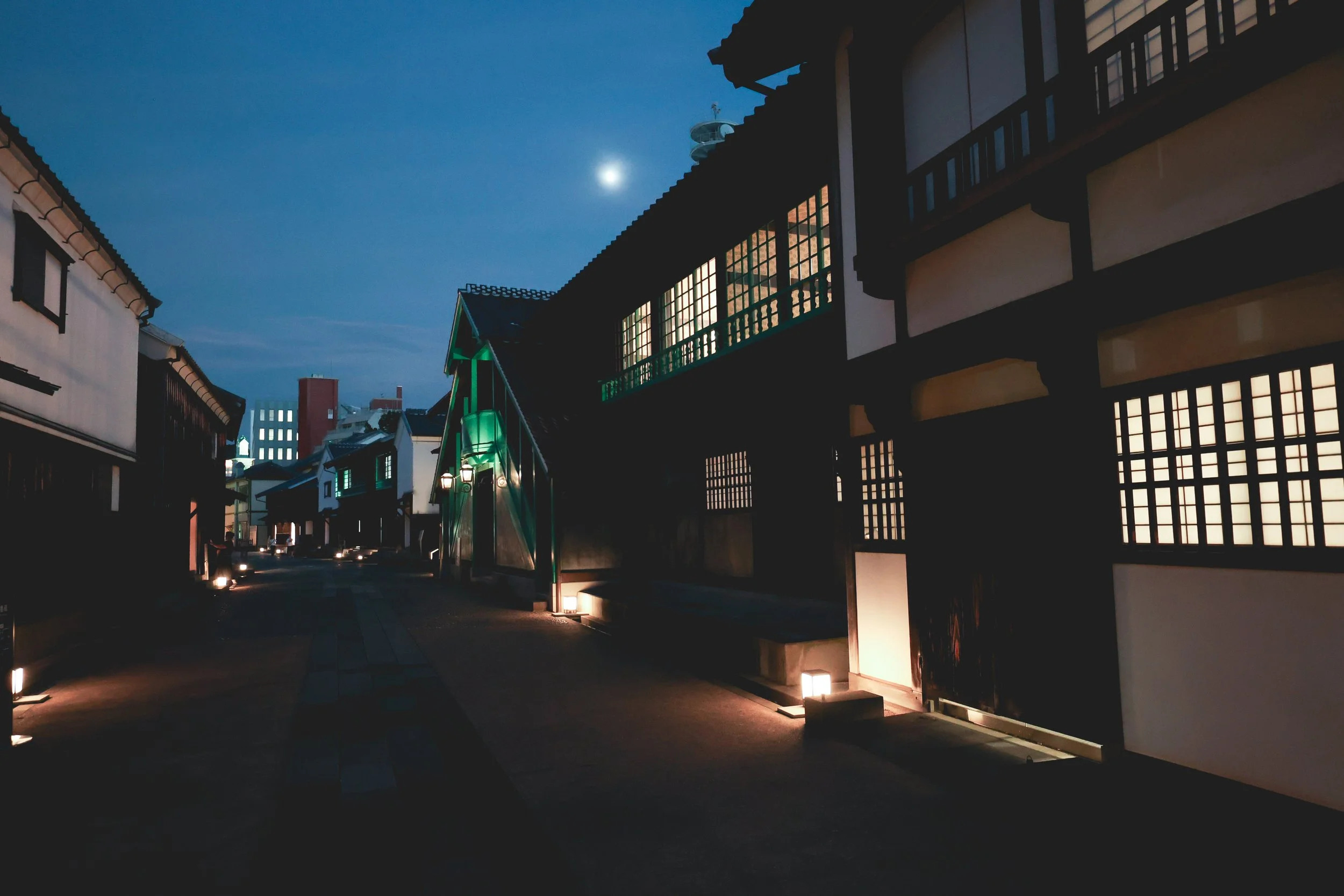
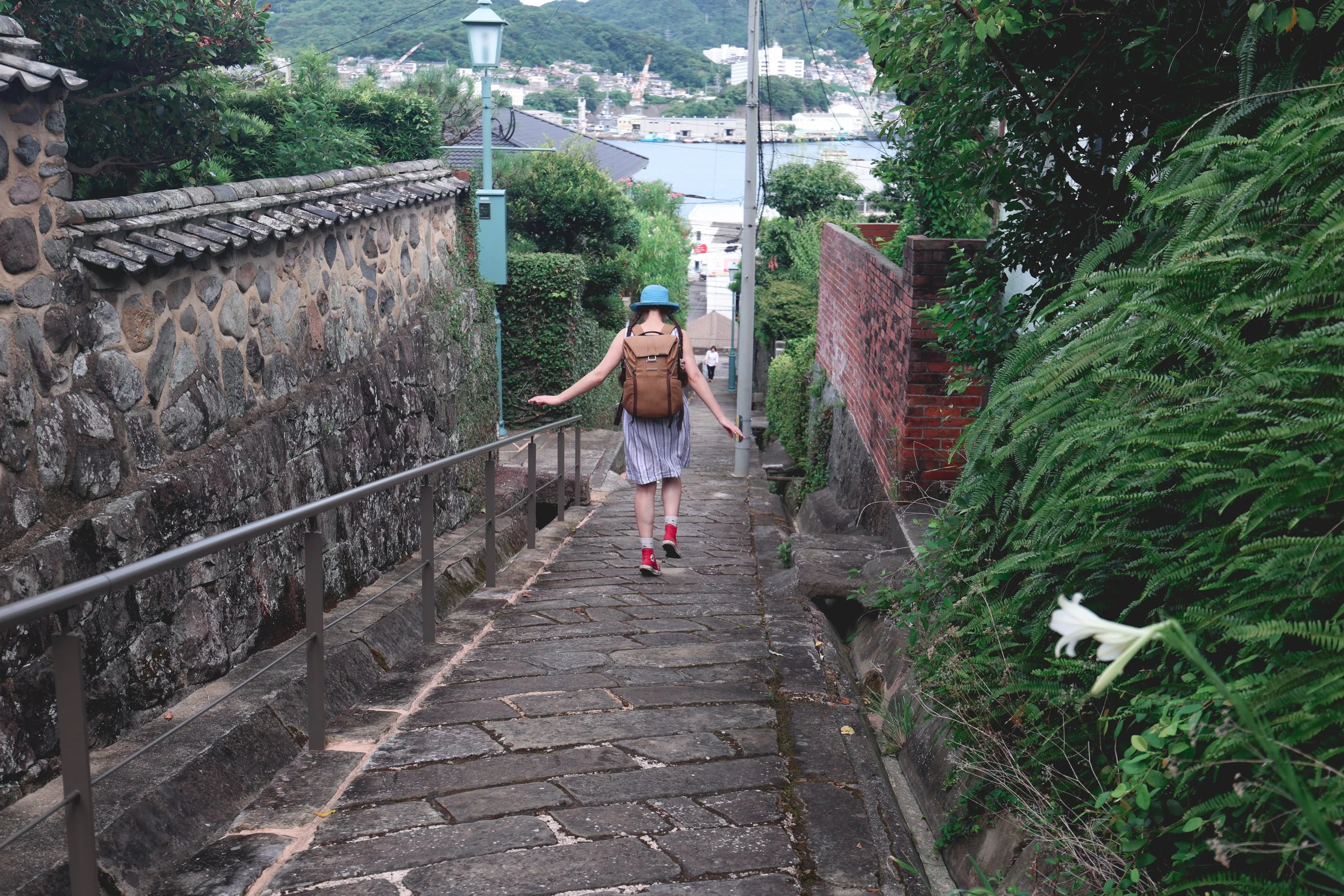
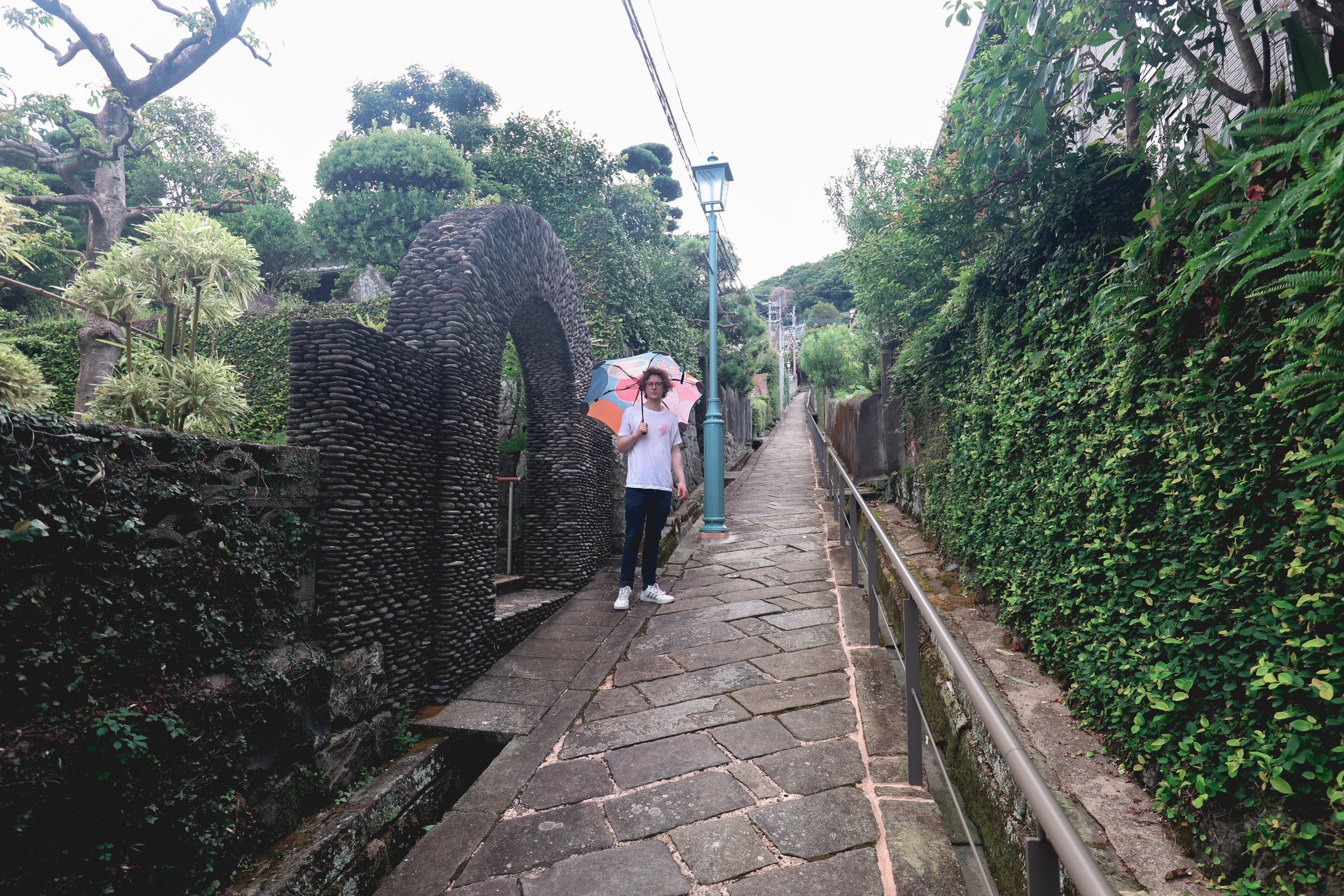
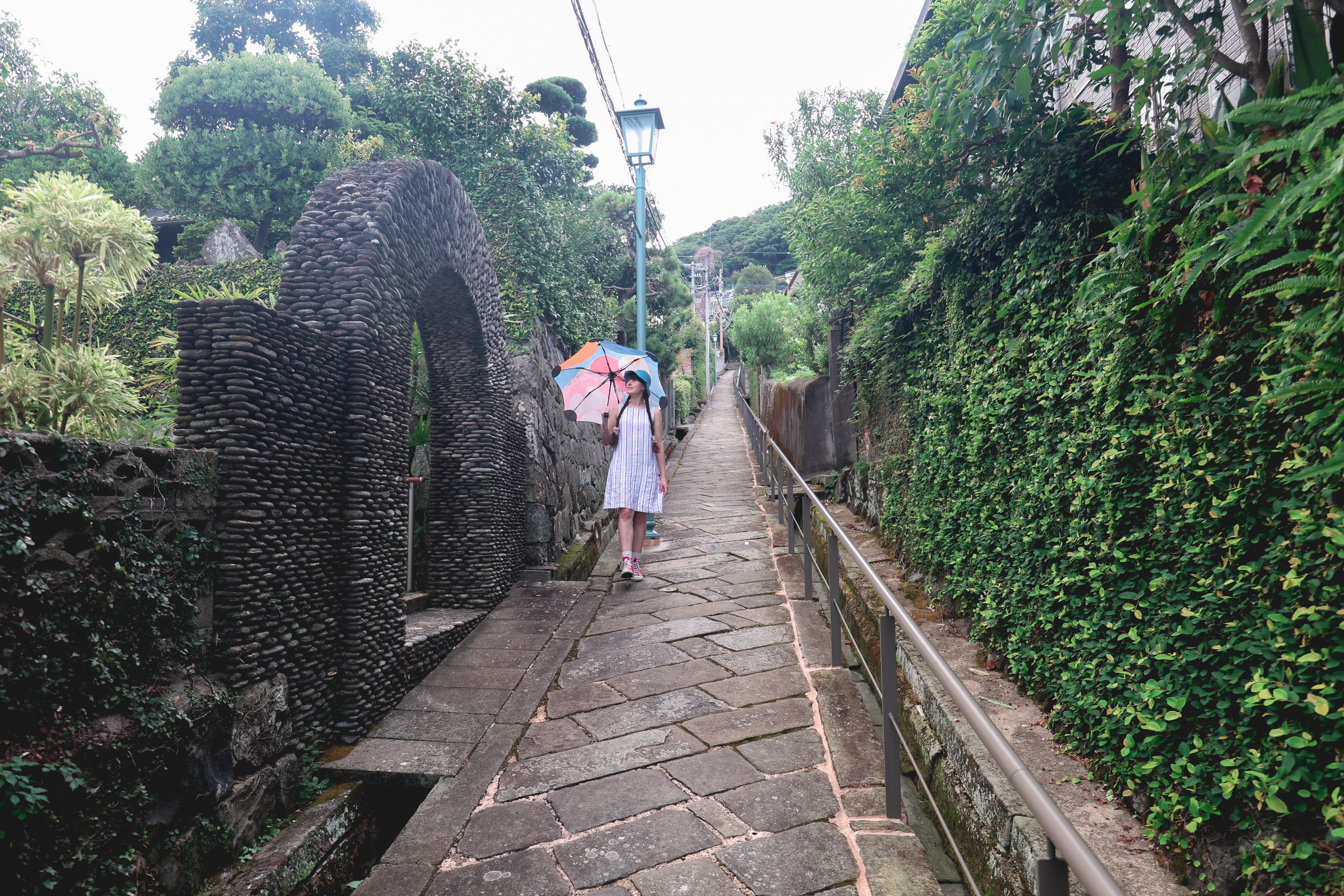
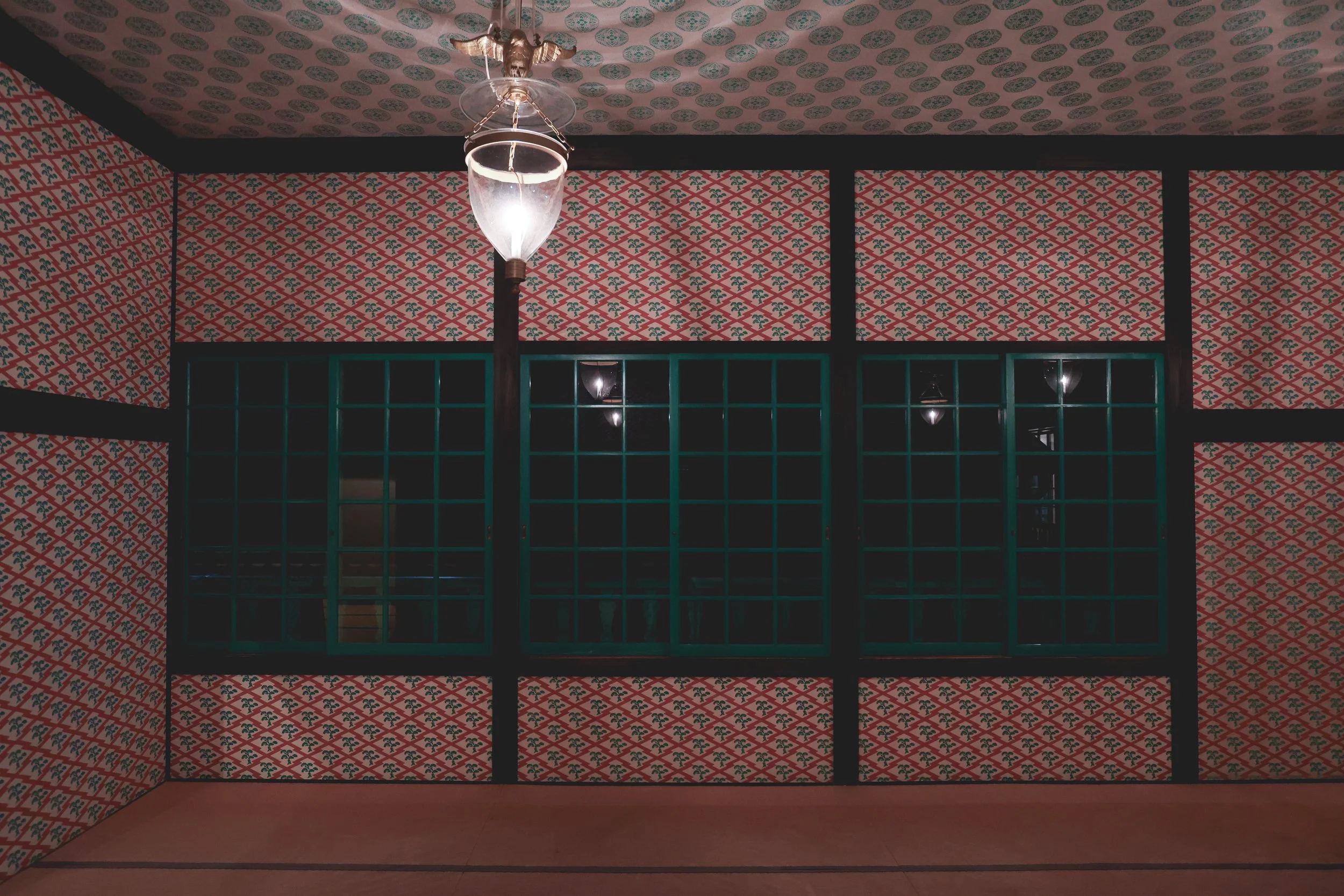
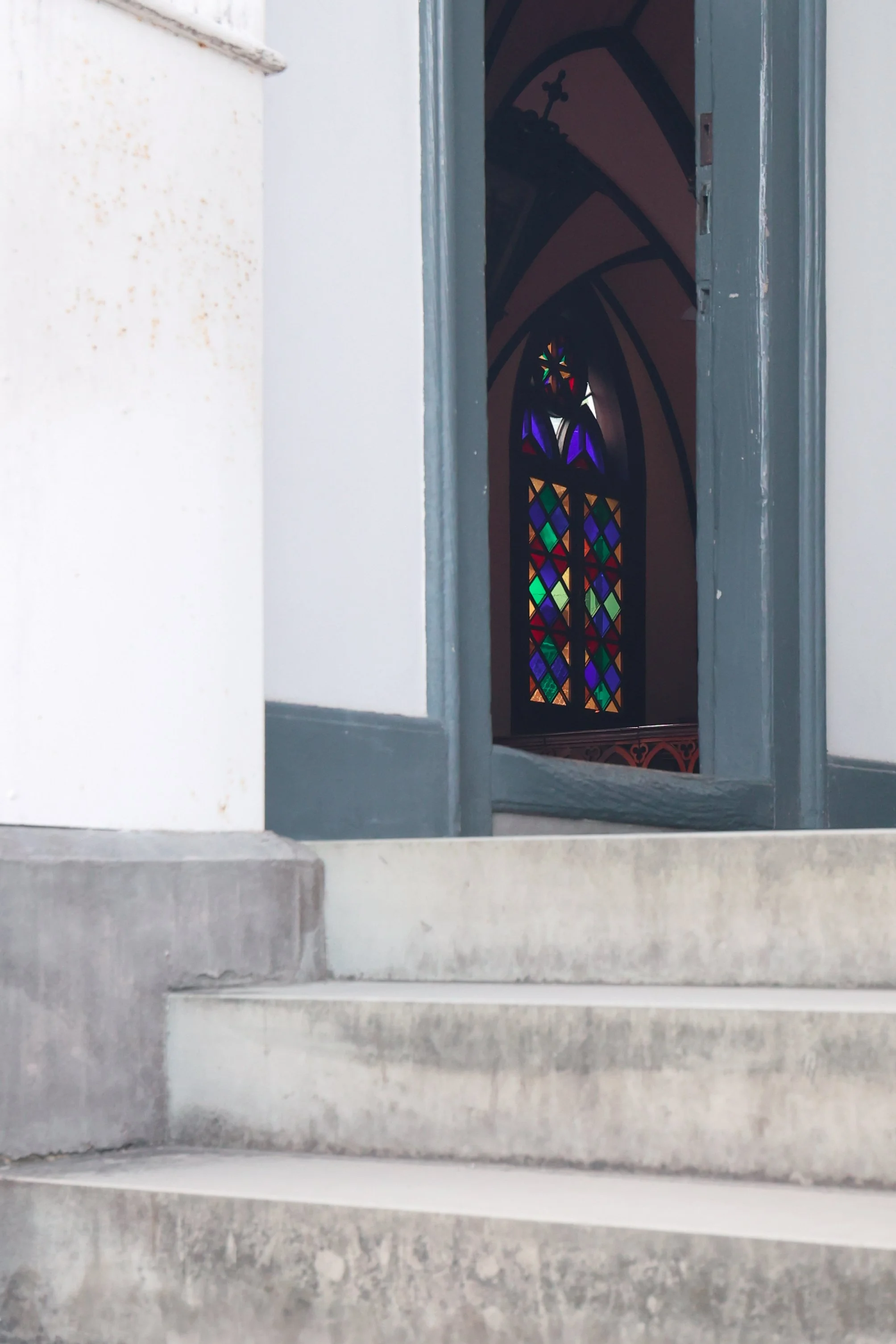
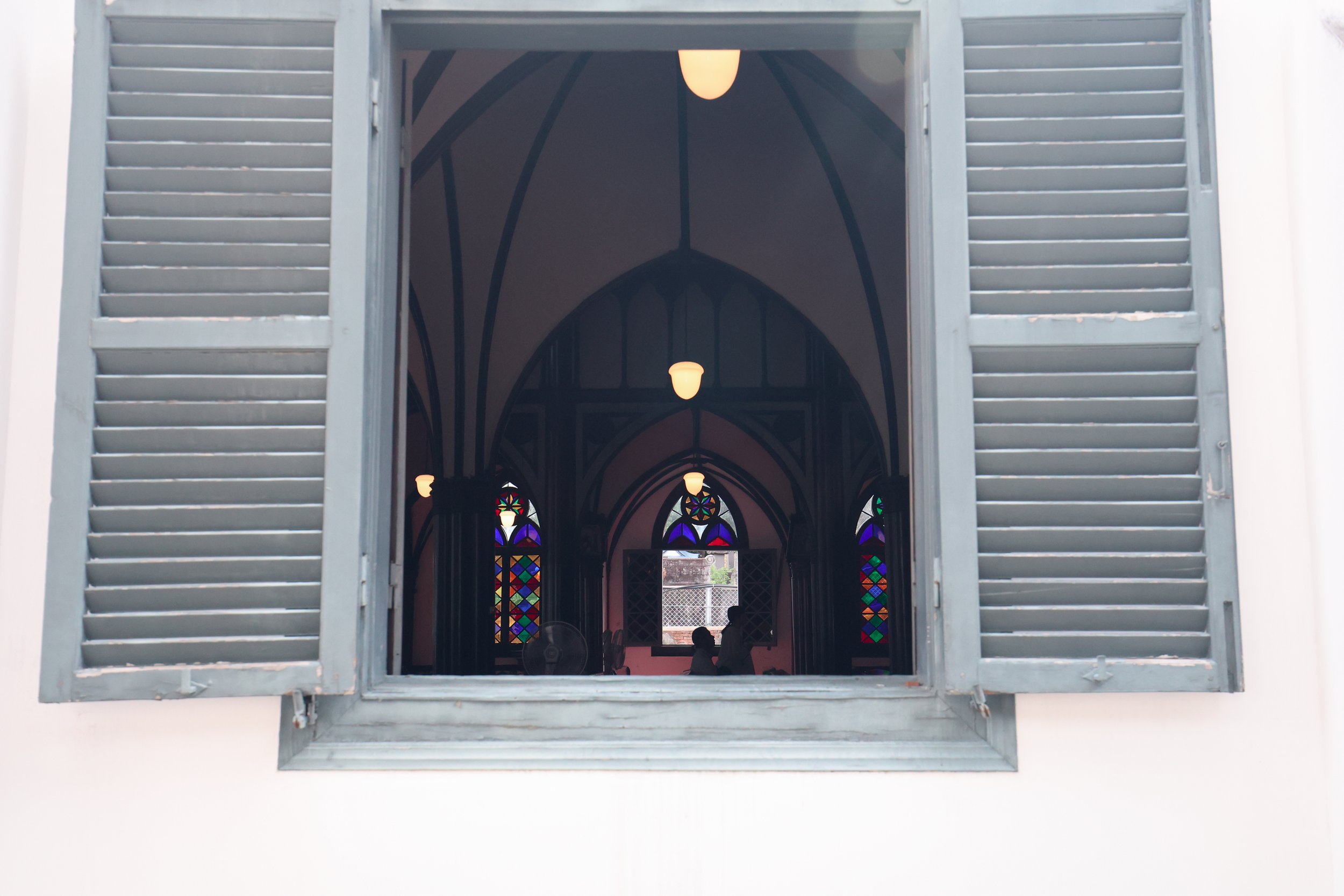
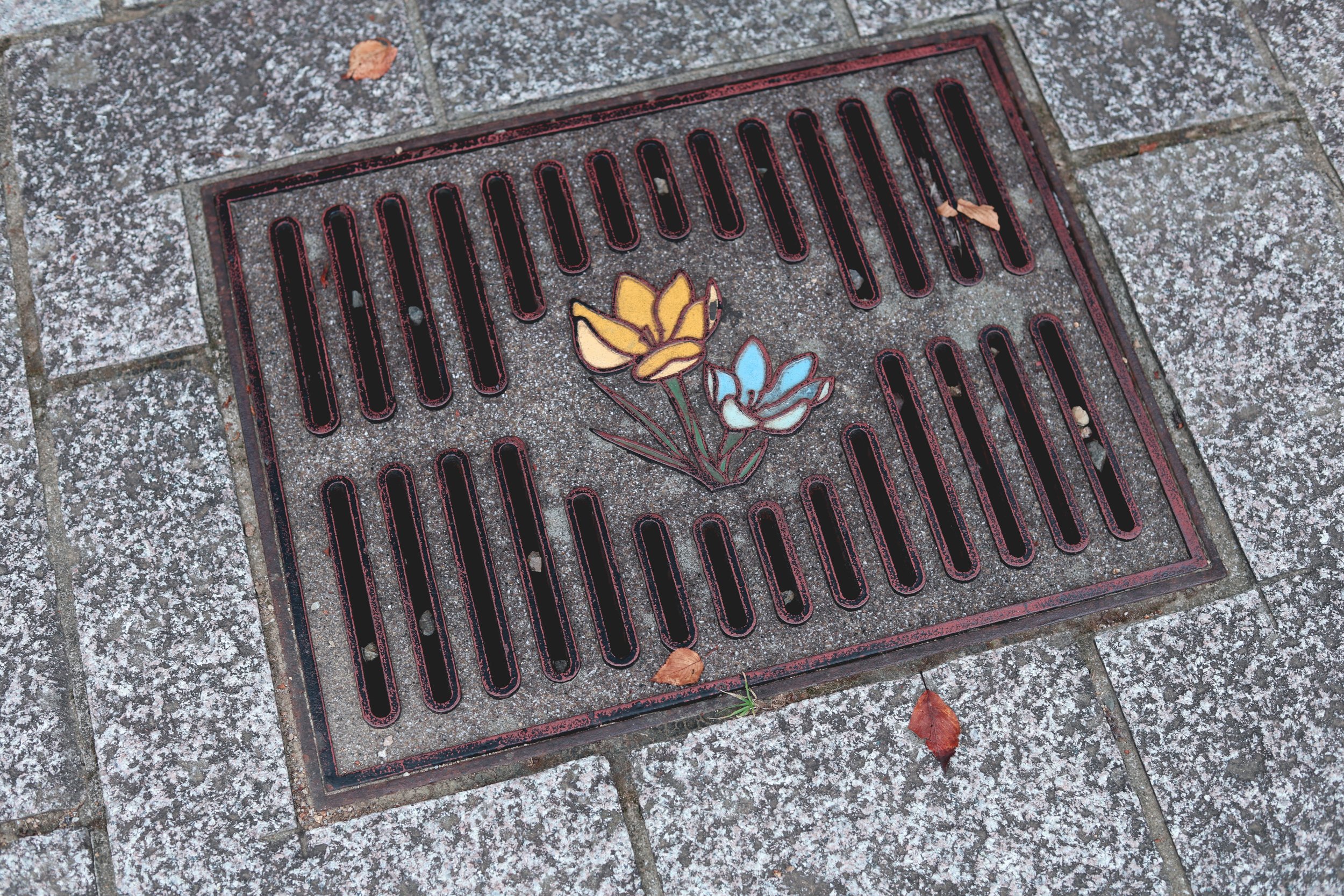
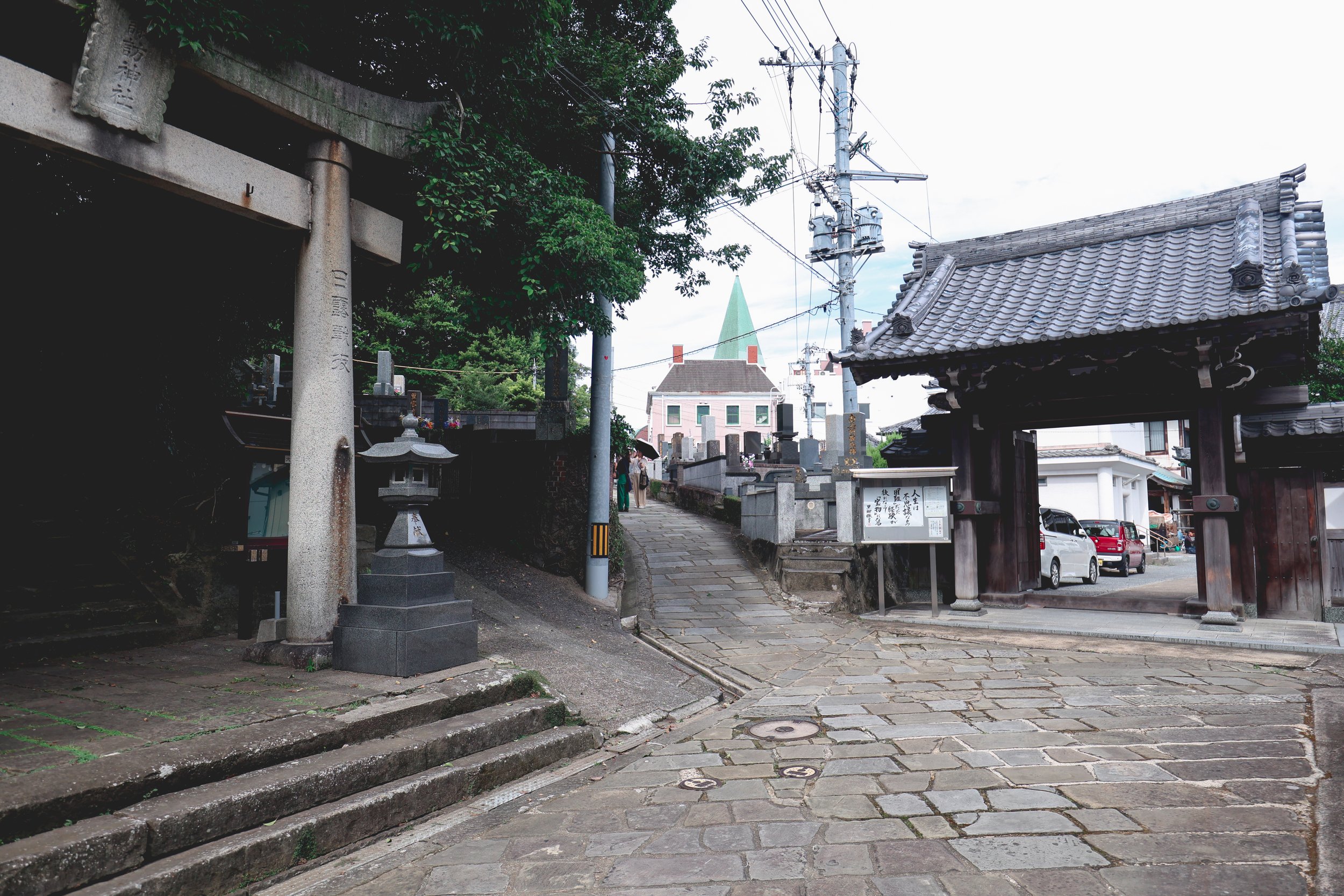
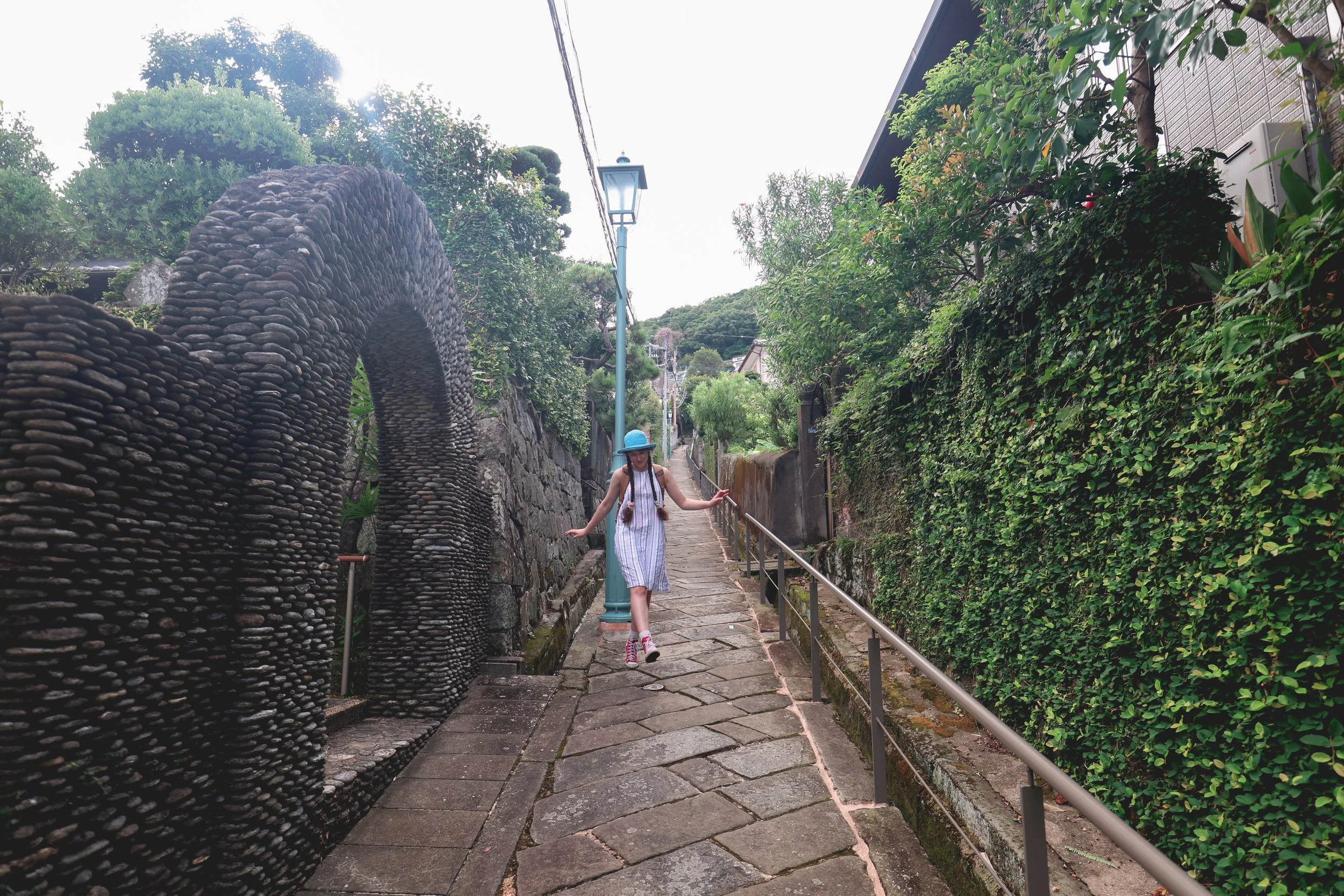
That week, Nagasaki shimmered in the pale heat of the late summer sun. Hadleigh and I wandered the city slicked in sweat, stopping under shadows and buying water at every vending machine. Emerging from the haze as we walked, we encountered small appearances, spectres, born of a distant past and place: will-o-the-wisps in the form of blue painted tiles, stained glass windows, cobbled alleys. They fluttered at the corners of my vision like the sleeves of an old robe hanging on a bedroom chair, quivered by an unseen force only moments before I glanced their way. Familiar objects, breathing. Waving. And there, alongside them, shimmering in unison, new acquaintances. The hush of a sliding shōji paper screen. The reedy feel of tatami floors gently moving beneath my feet, smelling of green wood and sun-dried straw. To my Euro-drenched mind, simmered in the sauce of a hundred mediterranean summer days, these encounters tasted like coffee and pepper, both comforting and surprising.
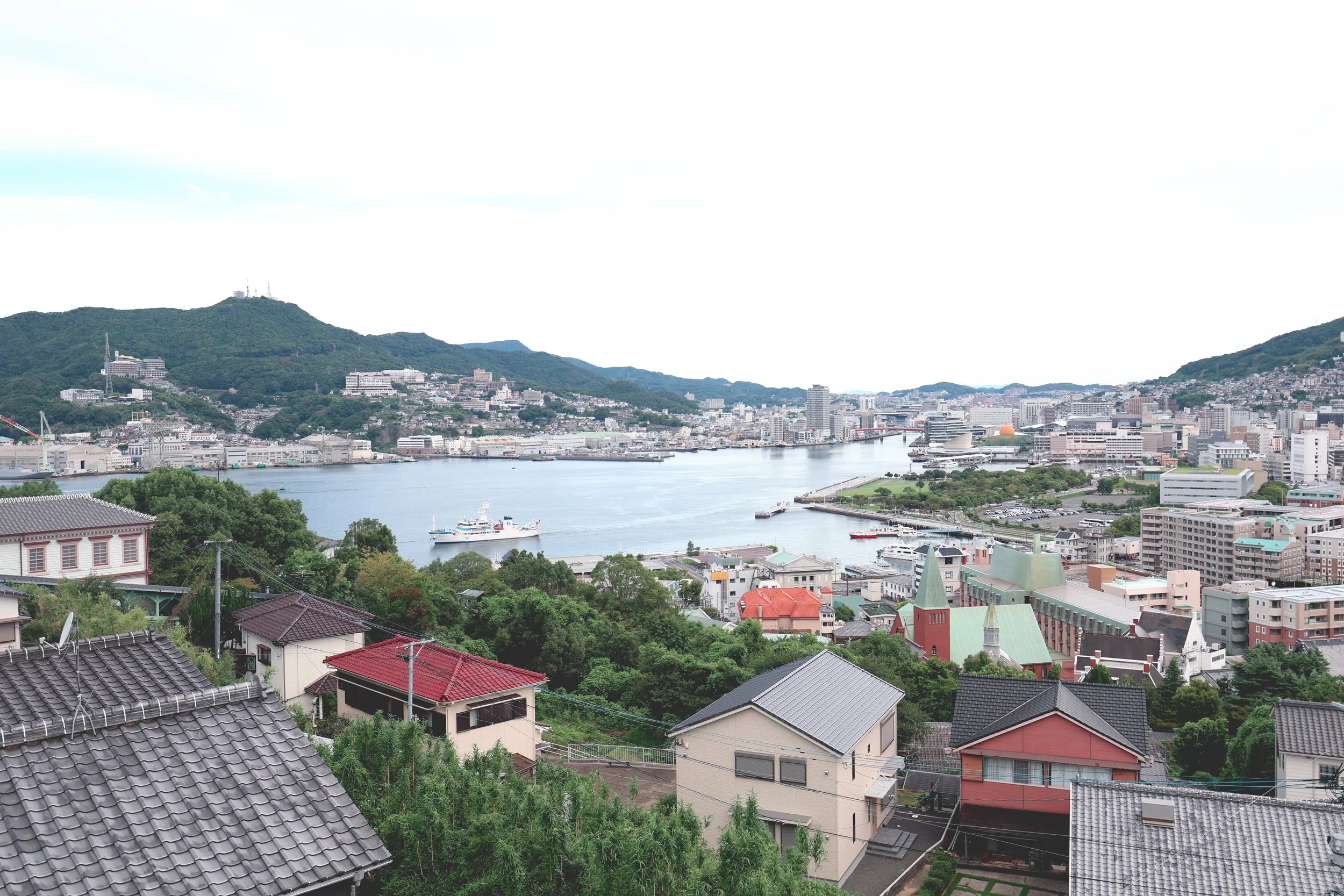
The city of Nagasaki rests snugly in the arms of a sheltered bay on the southern edge of Kyushu, the southernmost of the four main islands that make up Japan. Standing on the headland, one may look out past the islands dotted along the harbour, into the long expanse of the East China Sea.
The city’s history is bound to the ocean, and those bonds stretch and creak into distant spaces and times. As far away as the colonial kingdoms of Europe. As far back as 1543.
In 1543 a bedraggle of Portuguese merchants washed ashore on the the island of Tanegashima, some 500 km from Nagasaki. The sailors, with their odd appearance and foreign weaponry, stirred up interest in the local villagers. Guns were admired, lessons given; small exchanges and accidental encounters that acted like keys, opening the locks and swinging wide the doorway to a new path in the sweep of history. Those same Portuguese guns would become pivotal tools in the unification of Japan under Toyotomi Hideyoshi and Tokugawa Ieyasu, later that same century.
The beat of a butterfly’s wing, as the theory goes, can change the course of larger things. Ships. Tornadoes. Time.
What began as an accidental meeting became solidified into a routine trade route. China had recently implemented ‘Haijin’ - a maritime trade ban affecting Japan - and the Portuguese Empire saw its chance to become the proverbial middle man, importing and selling Chinese goods to a clamouring Japanese market. Ships began to arrive from Europe, carrying merchants and missionaries. They were directed to set up shop in a small fishing village, at the end of a long, deep, sheltered bay. Nagasaki.
From those first days, Nagasaki grew with the influx of goods, money and people, and soon, its influence grew too…
.˚⊹. ࣪𓉱 ࣪⊹˚.
Two - Portal
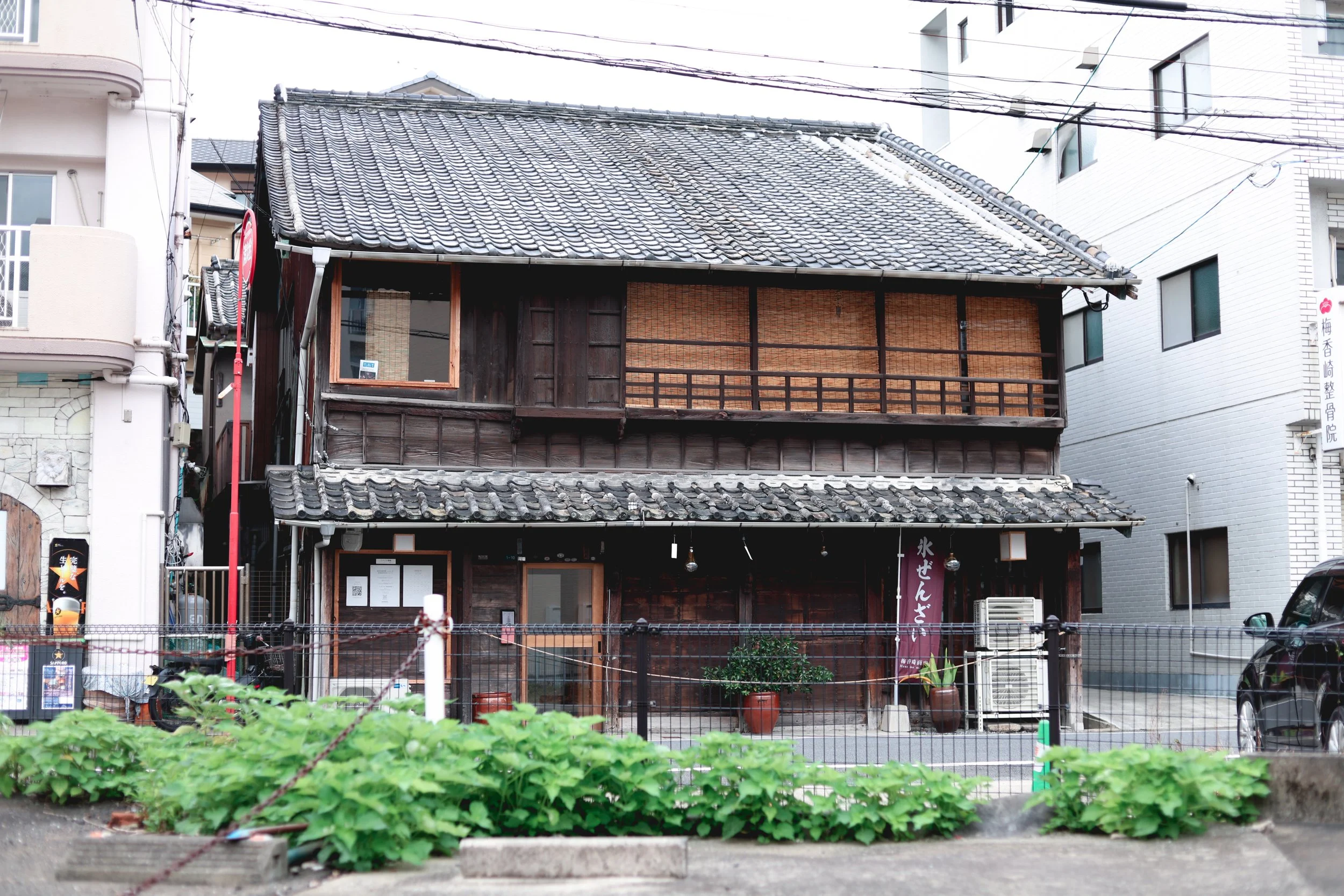
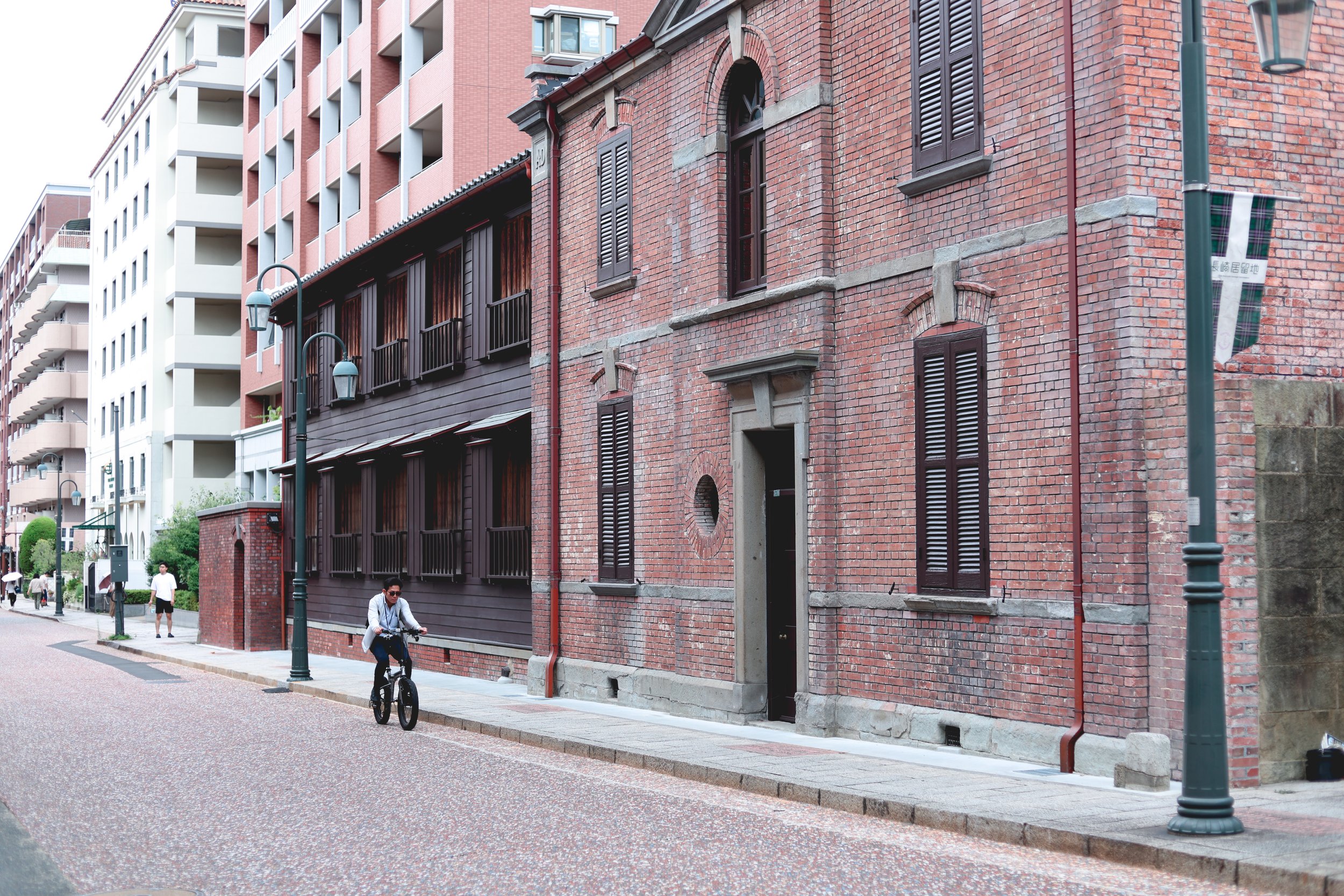
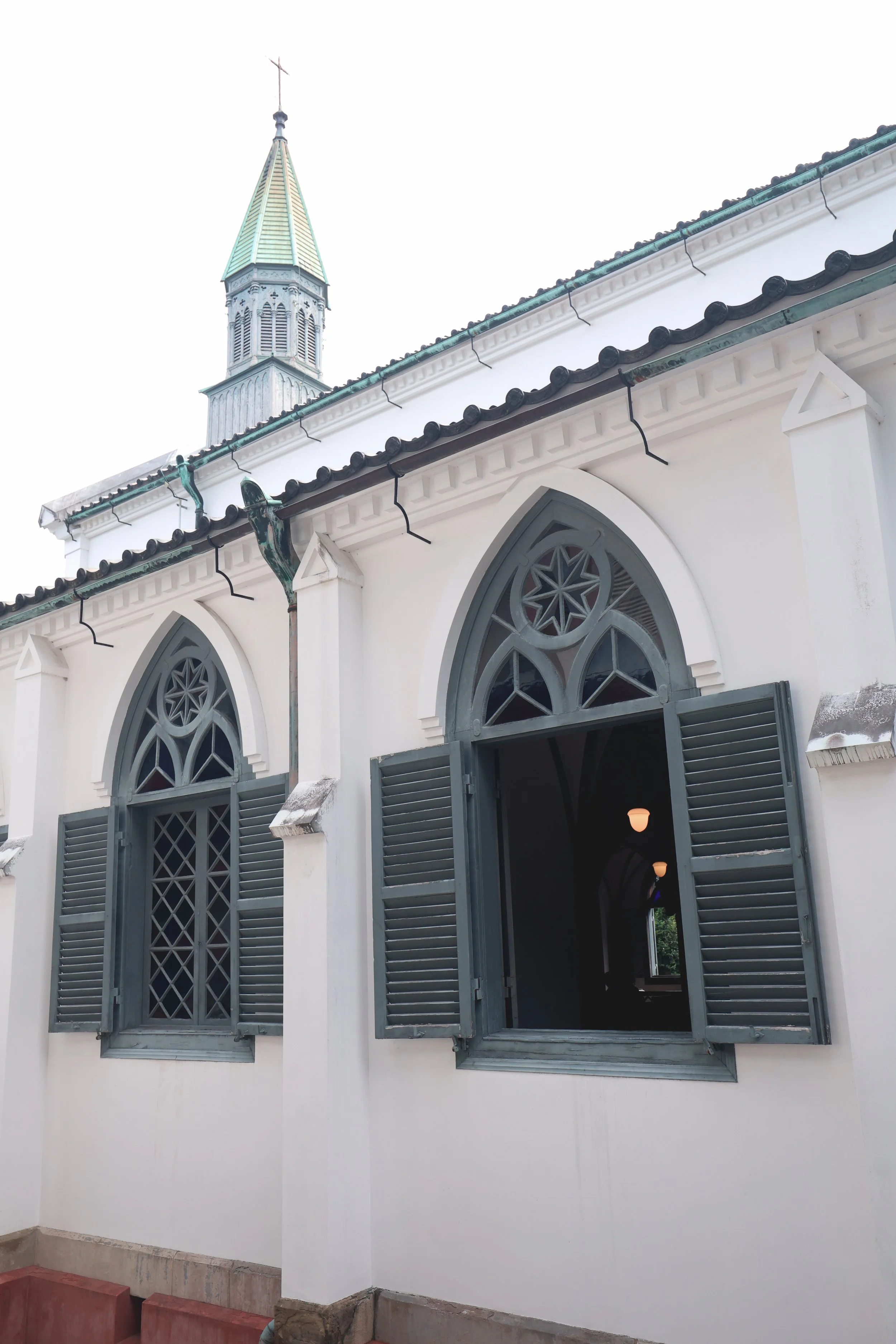
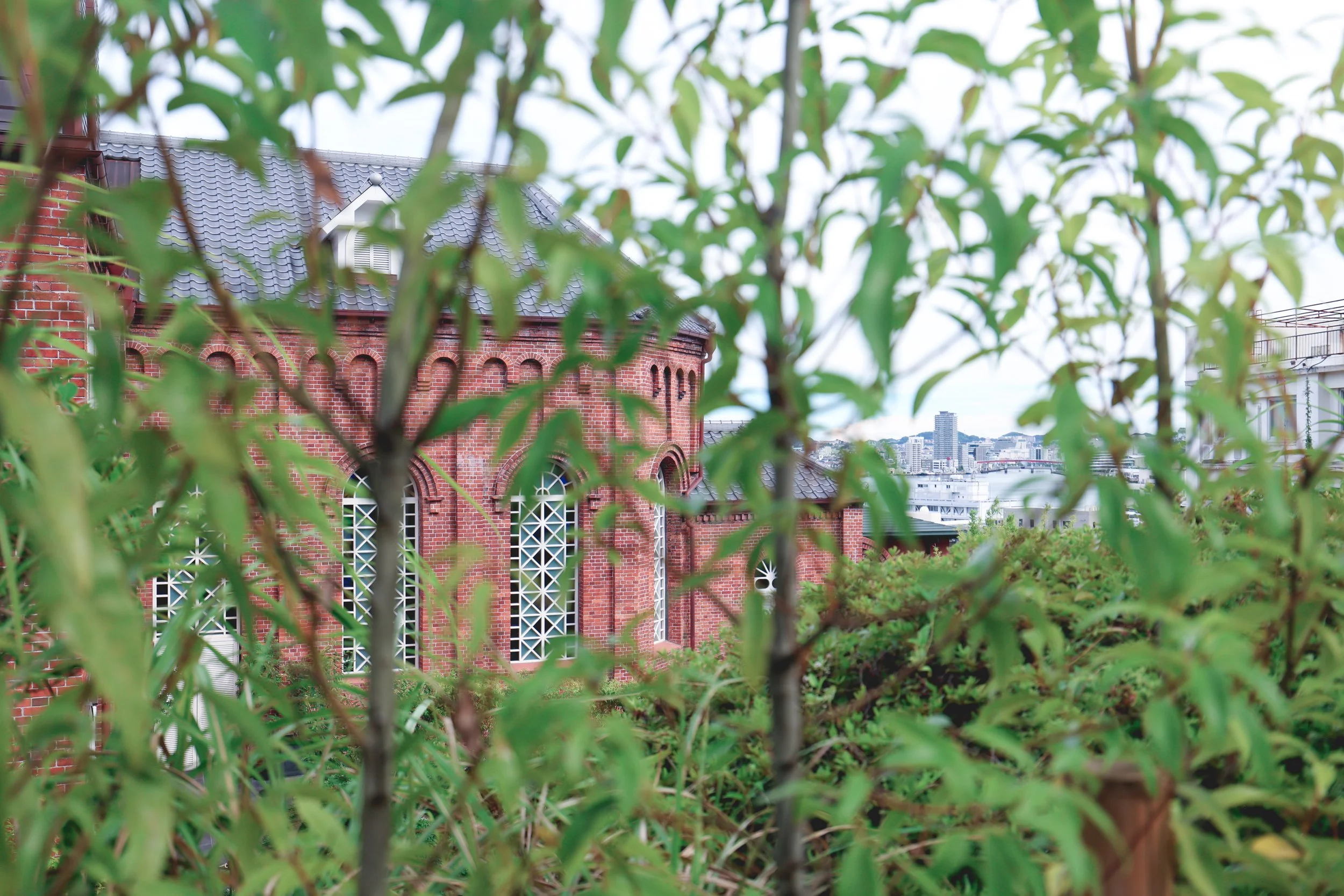
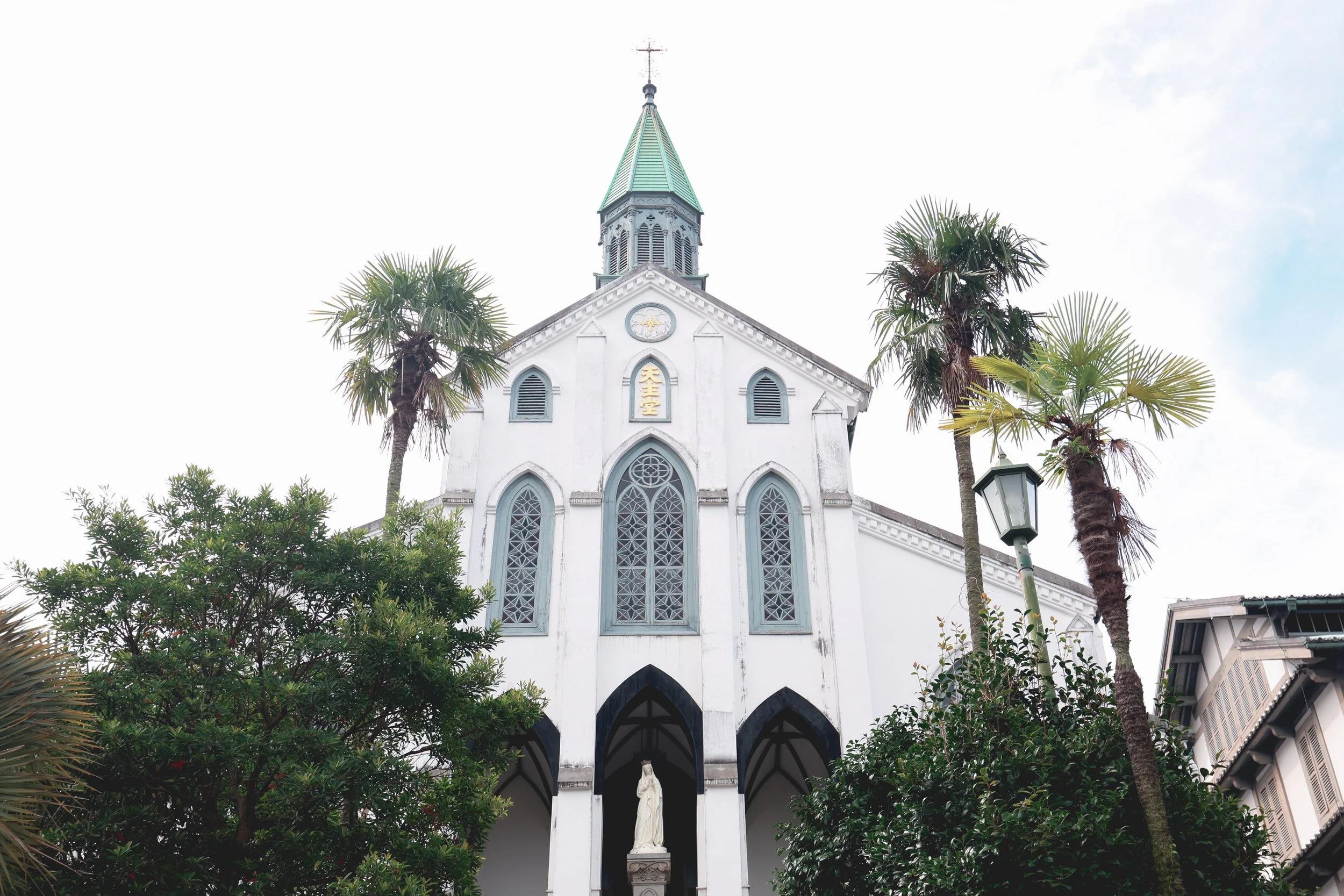
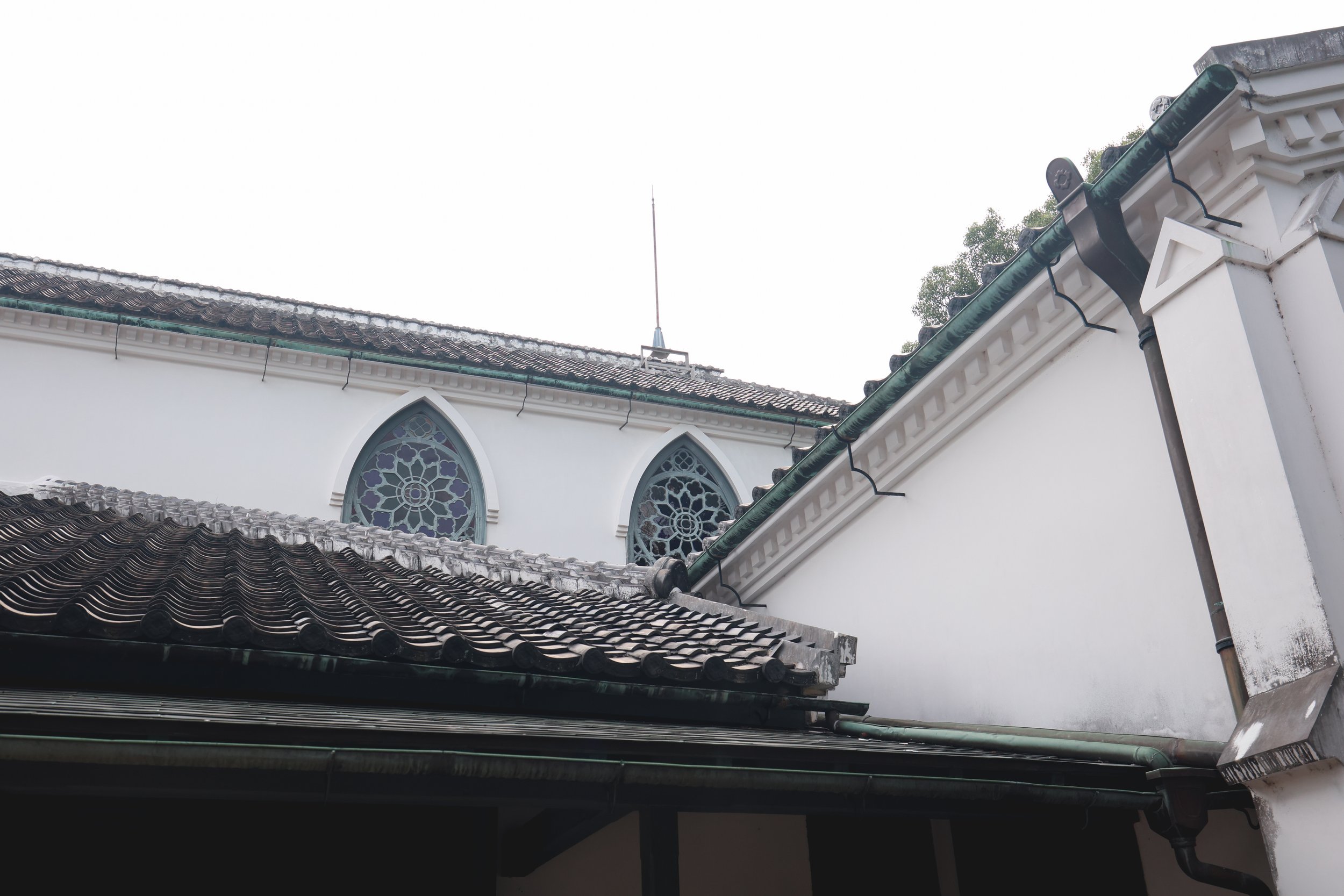
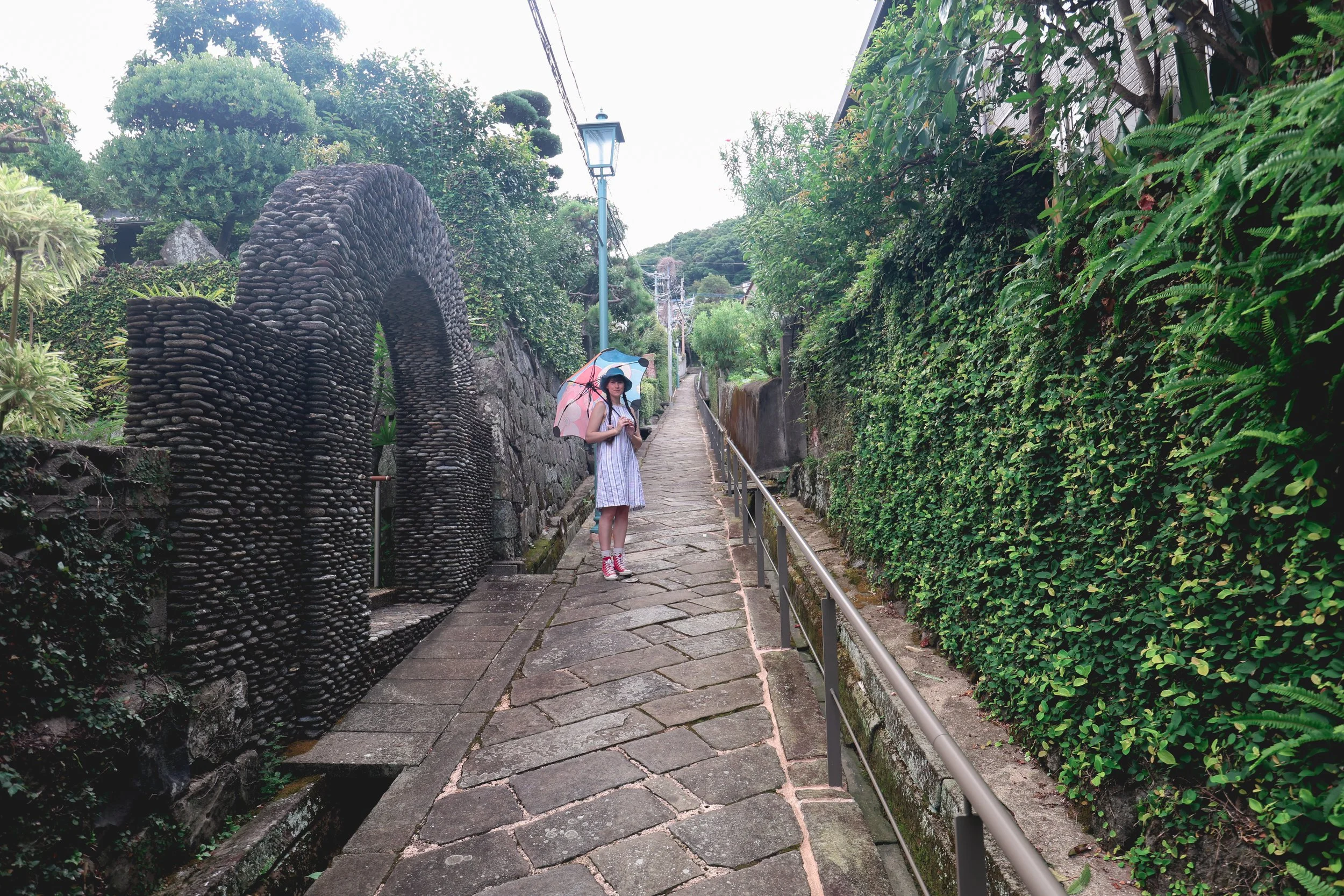
I had thoroughly prepared, as usual. My curated online map was sprinkled with overlapping pins, each pin opening into notes and carefully detailed plans, alongside inspirational photos gleaned from the web. In my preparedness, I had already seen these streets through Google eyes. Photos, however, are two dimensional frames. One may not walk between the flat planes of a pictured building, nor feel the humidity, unseen by the camera, on one’s skin. Nor might one know how it feels, given only pictures, to encounter Nagasaki as a stranger. To see a pointed steeple appear amongst the silvery grey kawara tiled roofs.
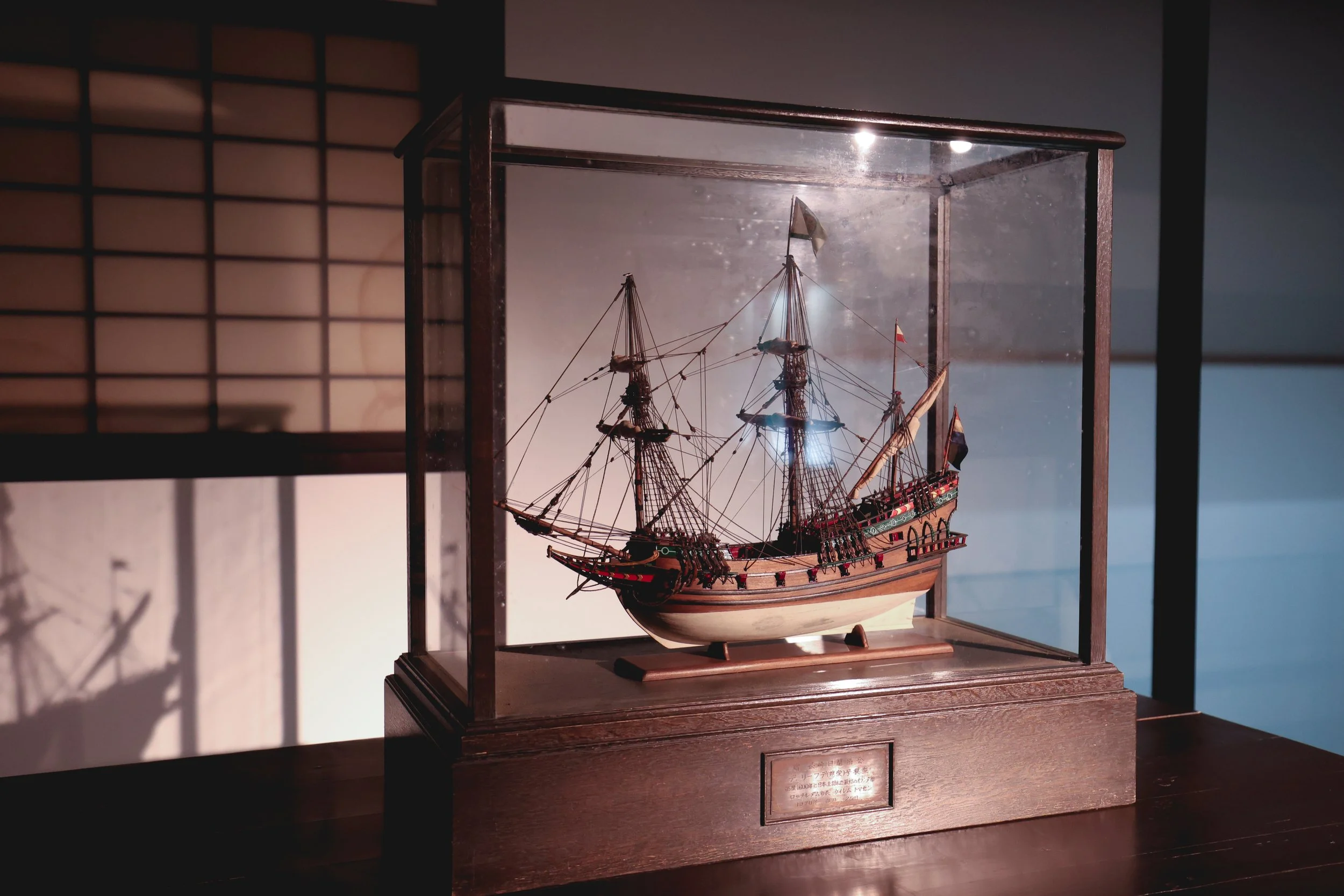
By 1580, Nagasaki had grown into a major port, with trade coming in on ships from Portugal, England and the Netherlands, carrying goods from as near as Taiwan and as far as inland Europe. Extant shipping logs show itemised lists of tobacco, bread, textiles, and even a Portuguese sponge cake still available in the city today, called “castella.” Alongside these products, the Portuguese ships ferried in a new religion: Christianity.
The port had become a portal, a gateway, carrying new ideas from distant places across its threshold and into the heart of Japan.
From the first, Nagasaki was a Catholic town. Missionaries, mostly Jesuit in style, populated the newly formed port - they constructed a chapel, and then set their sights on the distant hills. Their influence quickly spread across the four main islands. By 1587, Catholic converts, called Kirishitans, were becoming a minority of such force that even the Tokugawa Shogunate in Edo (Tokyo) began to take notice. Originally tolerant of the evangelisers, Tokugawa Ieyasu now felt wary of the growing influence of Christianity, which denied all other religions, including the country’s longstanding Buddhist and Shinto traditions.
By 1614 the town that had been granted to and built by the Portuguese merchants and Jesuits was now being expelled of all Christians.
That year, Catholicism and all its converts were officially banned in Japan. All missionaries in the country were ordered to leave. What followed was a terrible campaign of persecution, in the name of saving Japanese traditions from the clutches of foreign colonial influence. The horrific warning of years before - in which dozens of Christians were marched in a twisted pilgrimage from Kyoto to be crucified in Nagasaki - was now becoming official policy. Any person to be found with Christian items or beliefs could be investigated, tortured, forced to renounce their beliefs, and crucified or burned at the stake. Suspected Christians were made to step on fumi-e, idolic images of Jesus or Mary, to prove themselves unbelievers. Kirishitan quickly became Kukure Kirishitan, “Hidden Christians.”
But the portal had not been closed, and the changes wrought around it were not so easily undone.
The Christians went into hiding. And the port, which had largely been serviced by the ships and merchants of Portugal, was about to change its a-to-b axis… Portugal and its missionaries had lost favour with the Tokugawa Shogunate, and now they were losing power in the region. After the Shimabara Rebellion of 1637, led by impoverished peasants and local Christians, the Portuguese were blamed, and they were officially expelled. This ushered in a new era. Japan had entered Sakoku jidai, or the “locked country period.” For over 200 years, from around 1633 to 1853, Japan closed its borders to the outside world, severely restricting trade, and banning almost all foreign nationals from entry.
Yet, at Nagasaki there remained a small crack in the window of the locked house of Japan. The expulsion of the Portuguese had left a hole in the beating heart of the town, and it was in need of a new trade partner. Moreover, the Portuguese had left behind a remnant: a tiny little island, just offshore, in the middle of the harbour. Dejima.
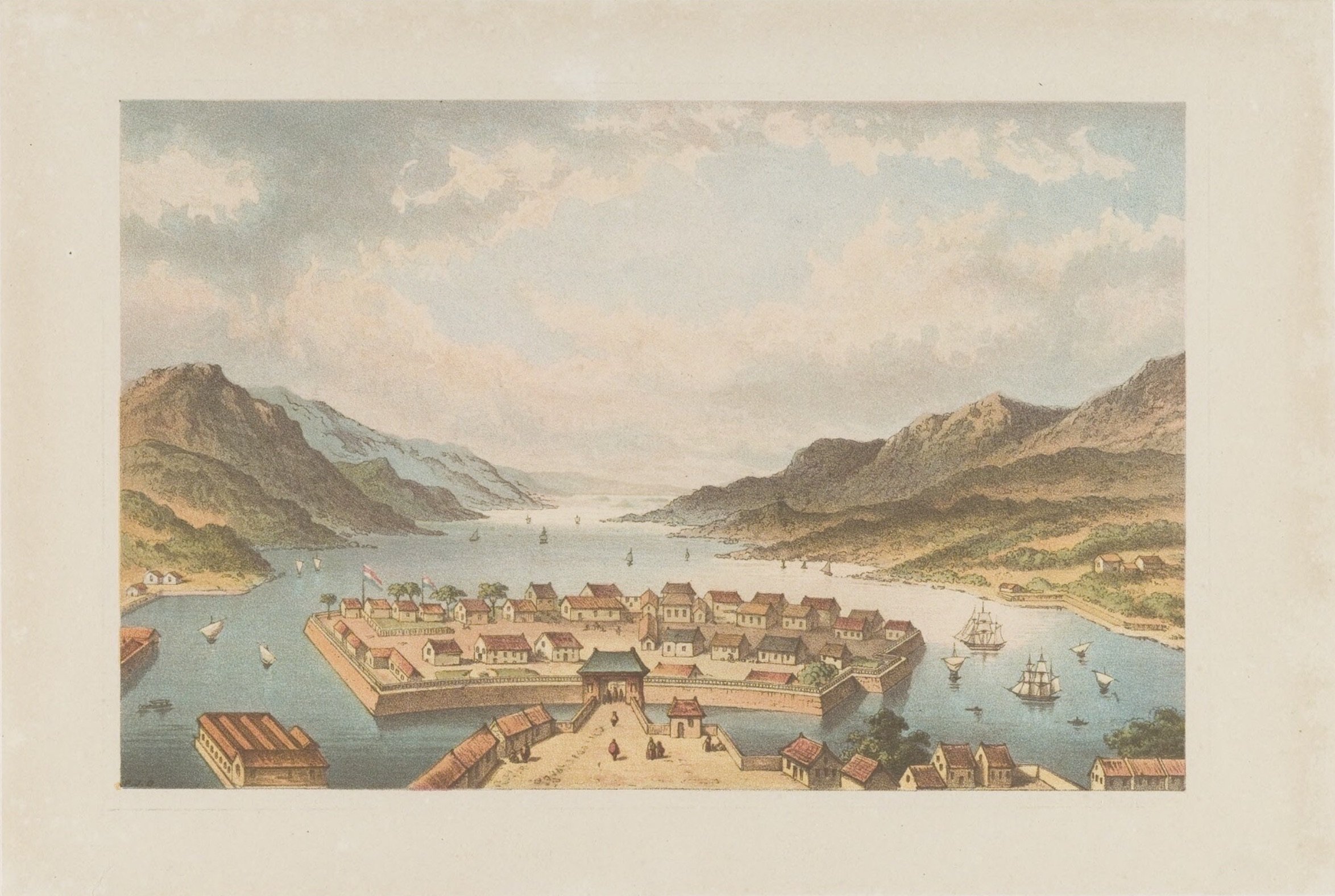
View on the Dutch trade base on Deshima, circa 1890, Leiden University Libraries (shelf no. KITLV 36D536)
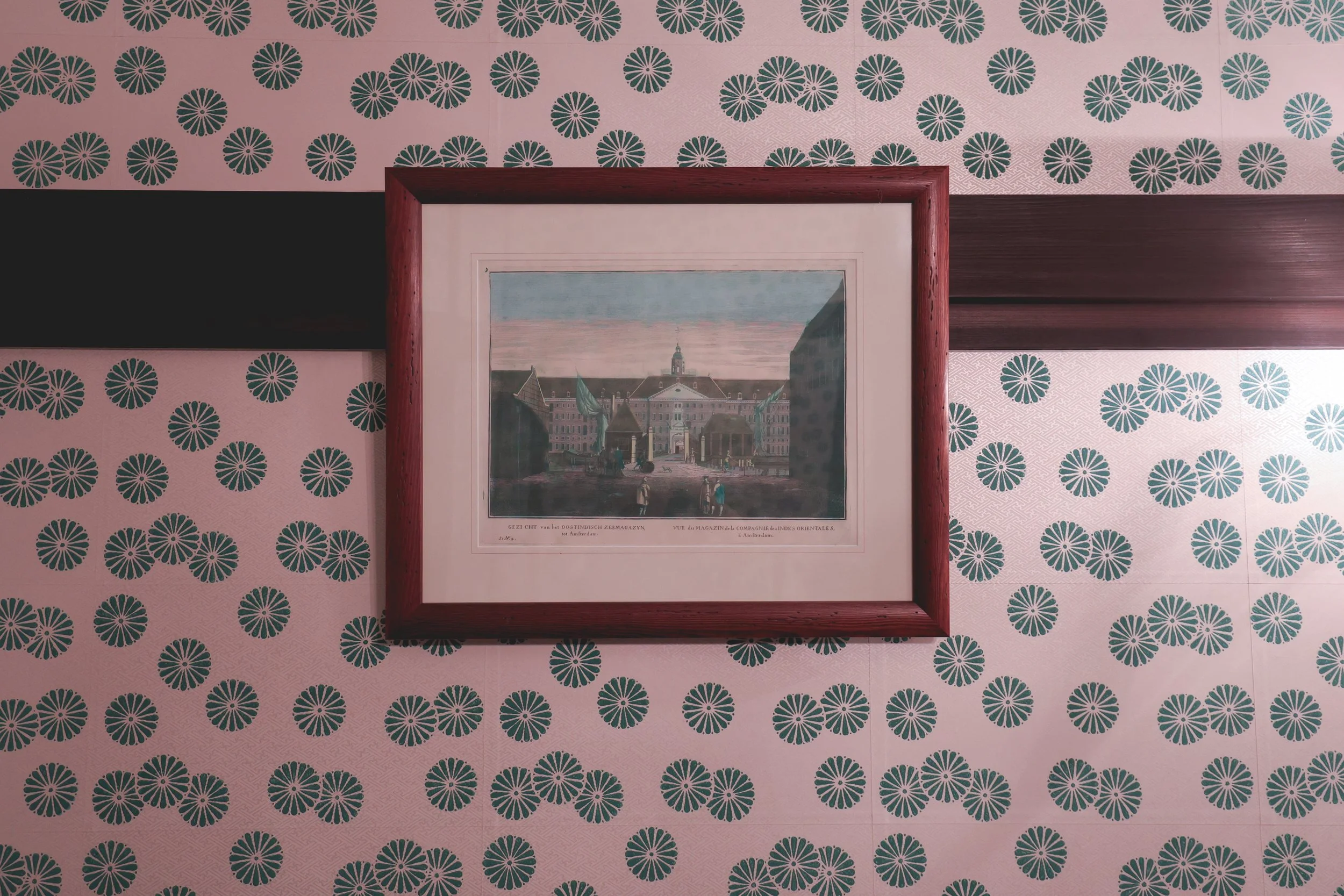
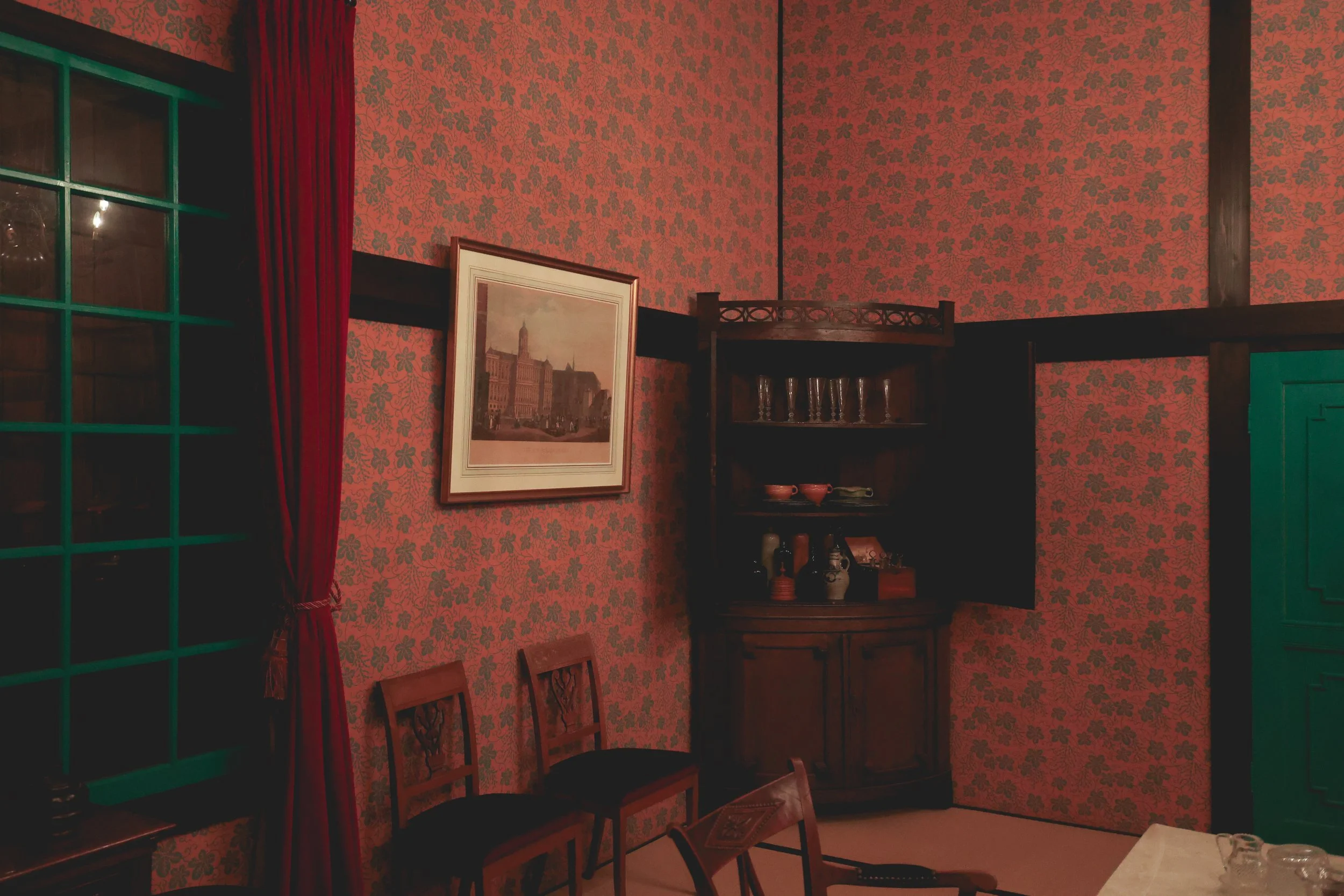
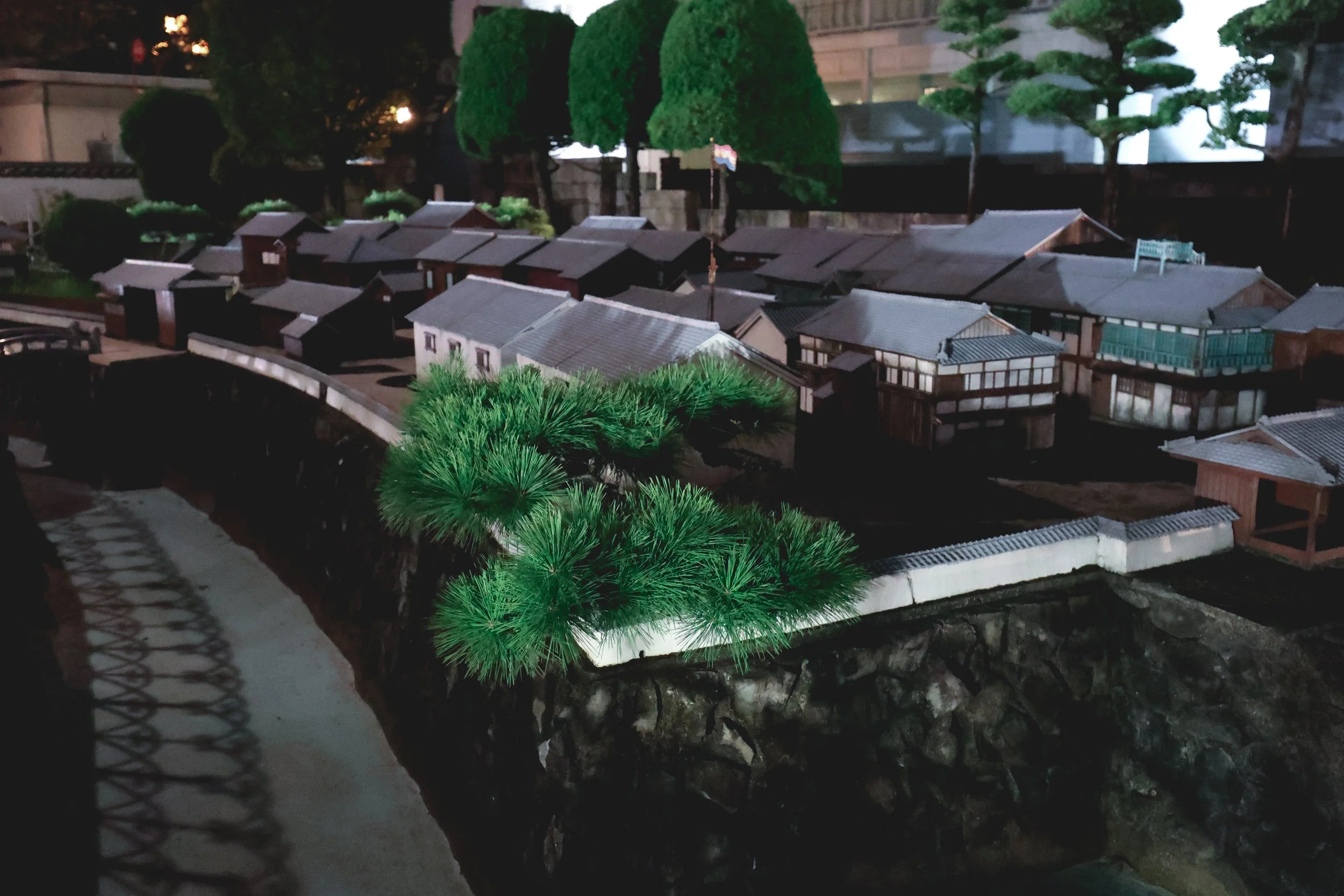
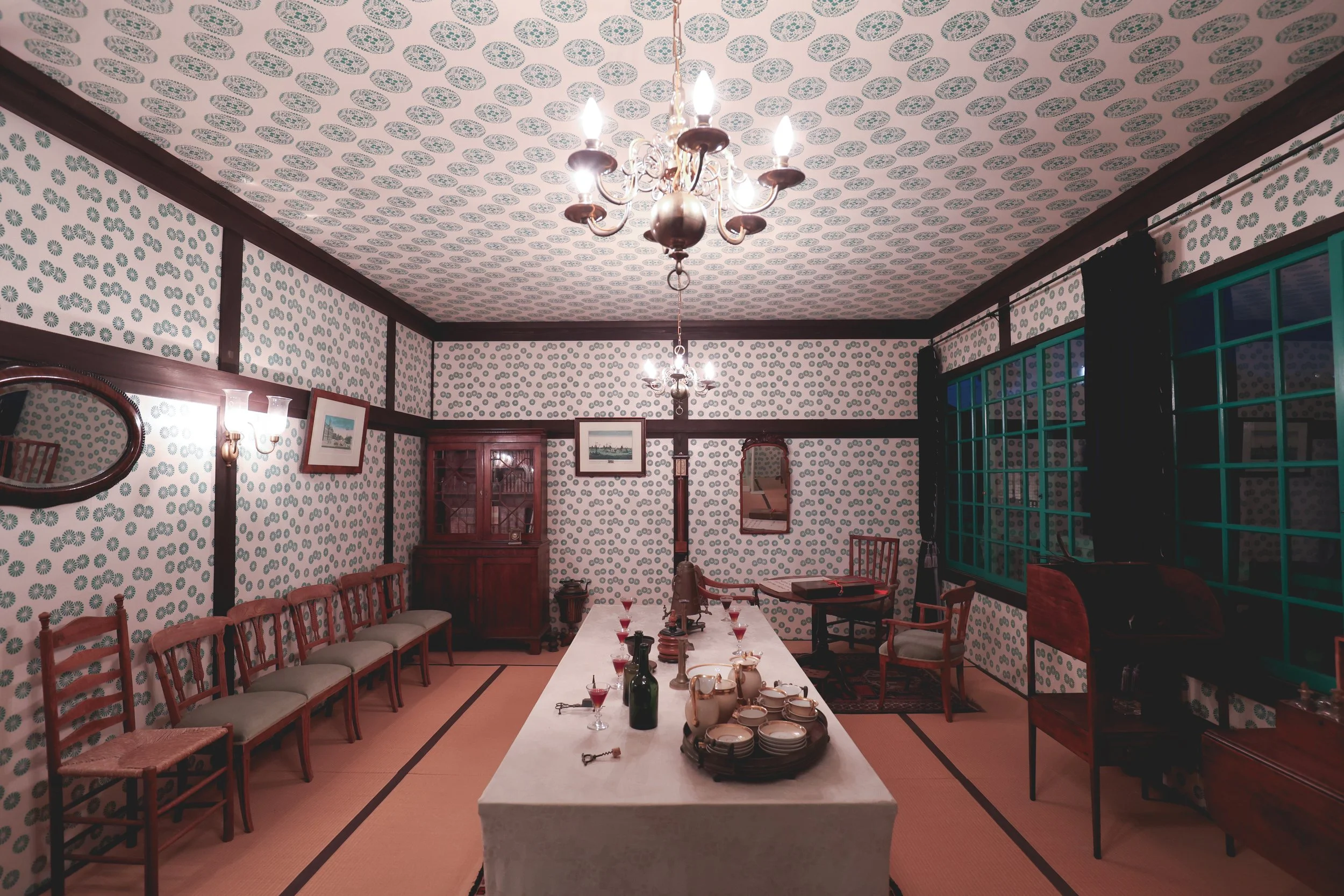
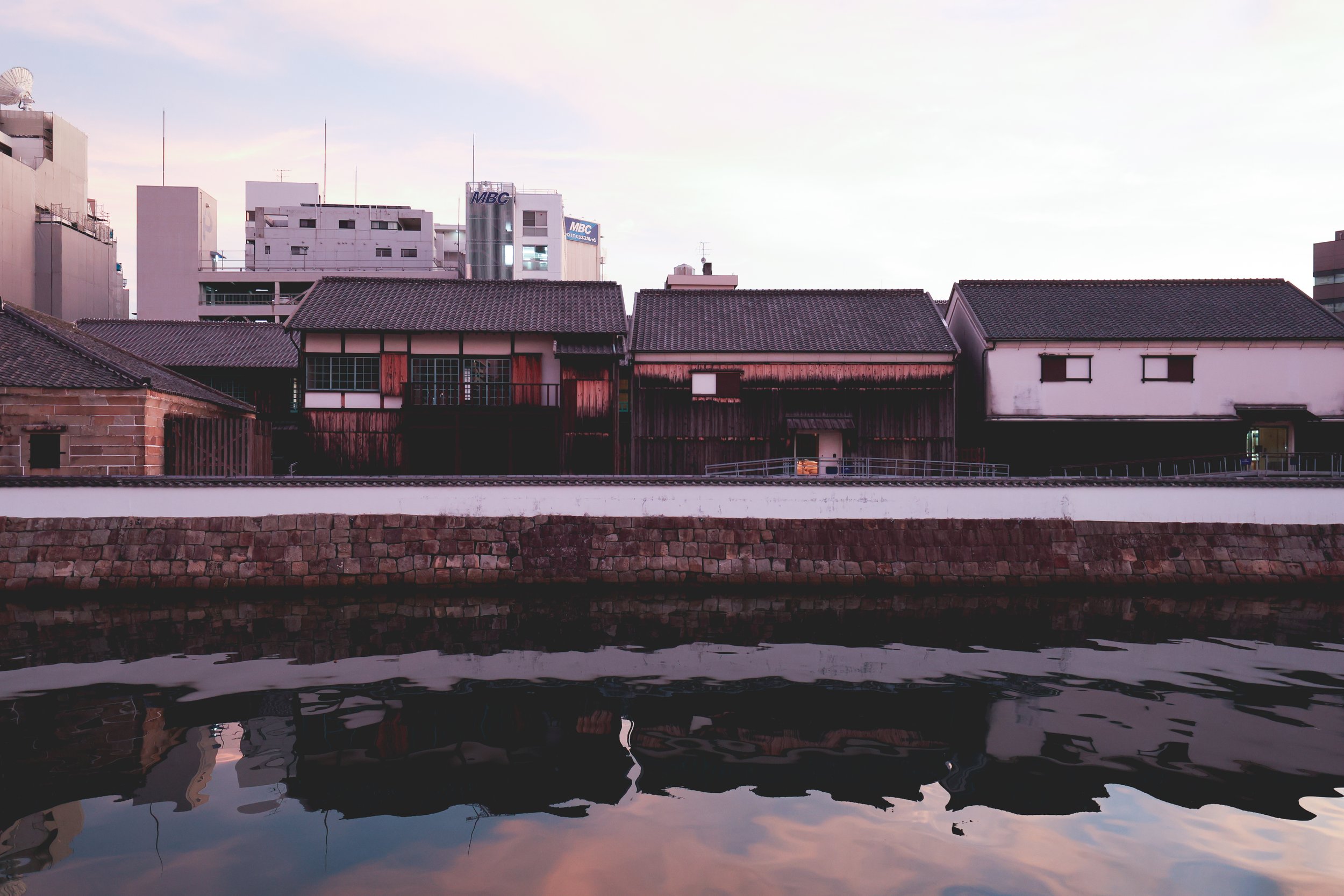
Dejima was, and still is, shaped like an open fan. The artificial island, once home to the Portuguese traders, was connected to the mainland by a stone bridge, but was otherwise floating in the waters of the bay, like a ship amongst ships. It was the perfect place for the Japanese government to sequester away their new European trade partners: the Dutch East India Company, or Vereenigde Oostindische Compagnie (VOC).
The Dutch had not yet had a chance to give Japan such a headache as the Portuguese, with their religious zeal and their colonial visions. Instead, the presence of Dutch merchants had been only minor, and, seeing the brutal persecutions of the Christians, the VOC had smartly refrained from introducing evangelism, focusing instead on pure trade. Thus it was that they were chosen to become the primary, and soon only, European trade partners with Japan after the expulsion of the Portuguese. After the closure of Japan’s borders, the Dutch were told that their shipyard had to be moved. They were to base themselves on Dejima, the small island in the harbour of Nagasaki. Under Sakoku rulings, the Dutch were not allowed to step foot off the island, (with the exception of a few circumstances and a yearly fealty visit to the Shogun), and the local Japanese people were not allowed to fraternise with the Dutch, (with the exception of a few select aides, esteemed visitors and sex workers).
In this way, Nagasaki became the one and only remaining point of connection between Japan and Europe for over 200 years.
The portal of Nagasaki may have become smaller, shrunk to the island of Dejima, but it was growing in power. Soon, the portal began to move its cargo of ideas in both directions…
˗ˏˋ ✉︎ ˎˊ˗
Three - To Convey
Even now, it is hard to put the feeling of my visit into words. A strange elixir of joy, guilt, wonder, compunction, comfort, complicity… Should I love this city as I do? Why not? In this task, the writing of my experiences, I have laboured to delve further - both into the history of this place, and into my own mind - than I would normally delve for a simple story on my website.
As an avid student of European history, and a longtime traveller of Europe, I loved Nagasaki. As a hater of colonialism and its cousin, neocolonialism, I felt conflicted and uncomfortable. As a child of Pākehā (European) parents born into the colonised country of Aotearoa New Zealand, my right to live there resting on a treaty, I felt some sense of kinship with the spaces that invoked a complex interweaving of cultures and histories.
Over 200 years after the ban on Christianity, religious freedom was restored in Japan. A cathedral was built in Nagasaki, now Ōura Cathedral, and the Hidden Christians of the area emerged. Finally, they were are able to share their stories. They had kept their faith secret all those years, passing it down through family lines, while keeping themselves safe. When they had been forced to step on fume-i, idolic images of Jesus and Mary, they had done so with newly woven shoes, which were then washed, and the water boiled as a tea and drank, in an act of penance. Yet, with the passing of the years, and their isolation from the Catholic church, their faith had changed. The Christianity of the Kukure Kirishitan had merged with the influences of Buddhist and Shinto traditions, first practiced as part of their protective façade, now practiced in earnest. Altars devoted to all three of these beliefs are still dotted around their houses. Images of the Virgin Mary are depicted in the style of traditional Japanese deities. Rituals are performed following old Shinto practices, with hidden signs of the cross worked into clasped hands and small gestures. These changed practices are emblematic - they reveal both the resilience of the ideas introduced through the Nagasaki portal, and the complexity of the connections that were made during those cultural exchanges. The result: cultural enmeshment so embedded in the ever-forming identities of a group of people that it cannot be extracted or removed, but can only be changed in form, like an immovable stone washed by the tides surrounding it.
Christianity was not the only import that had become integrated, and thus integral, in the culture of Nagasaki.
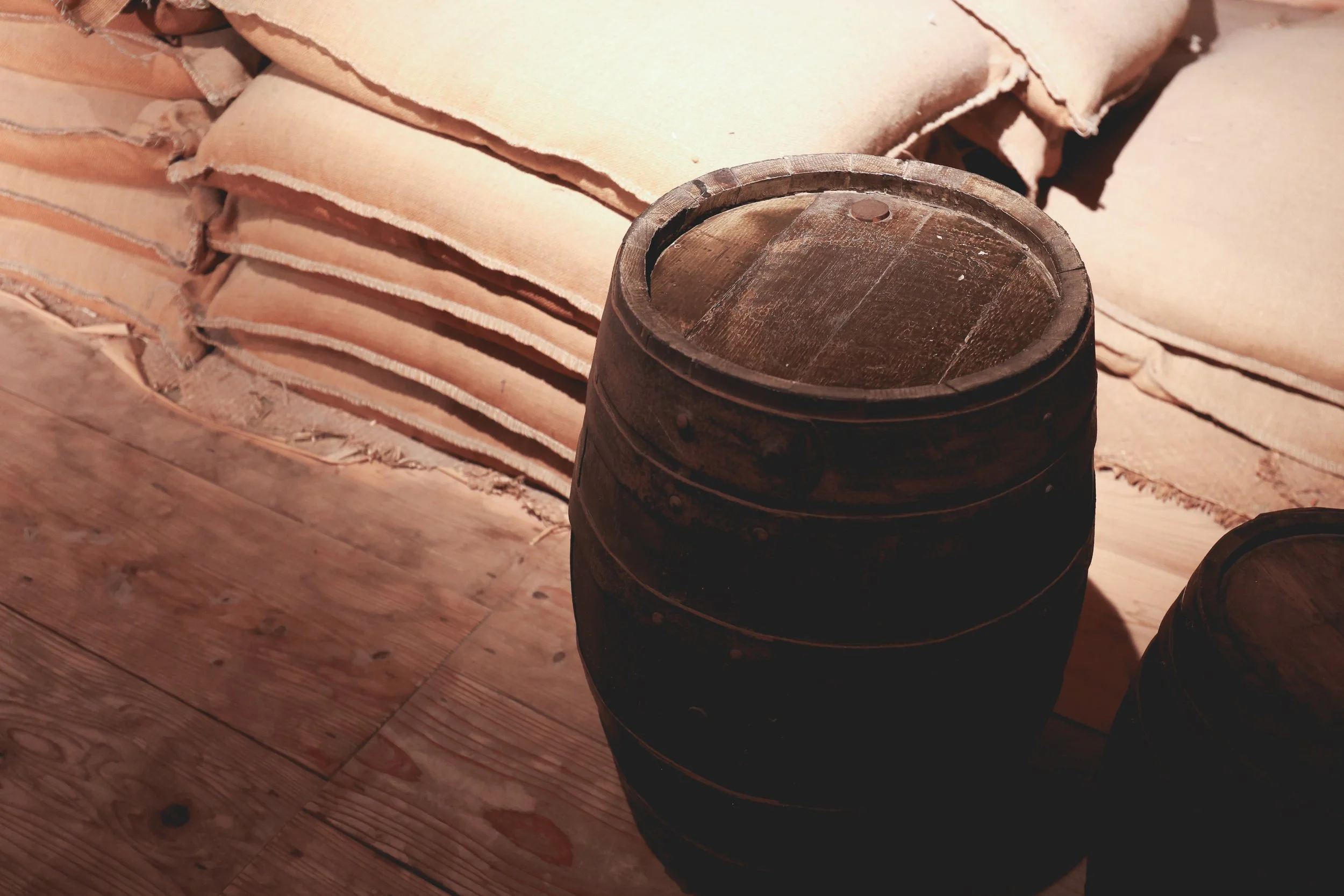
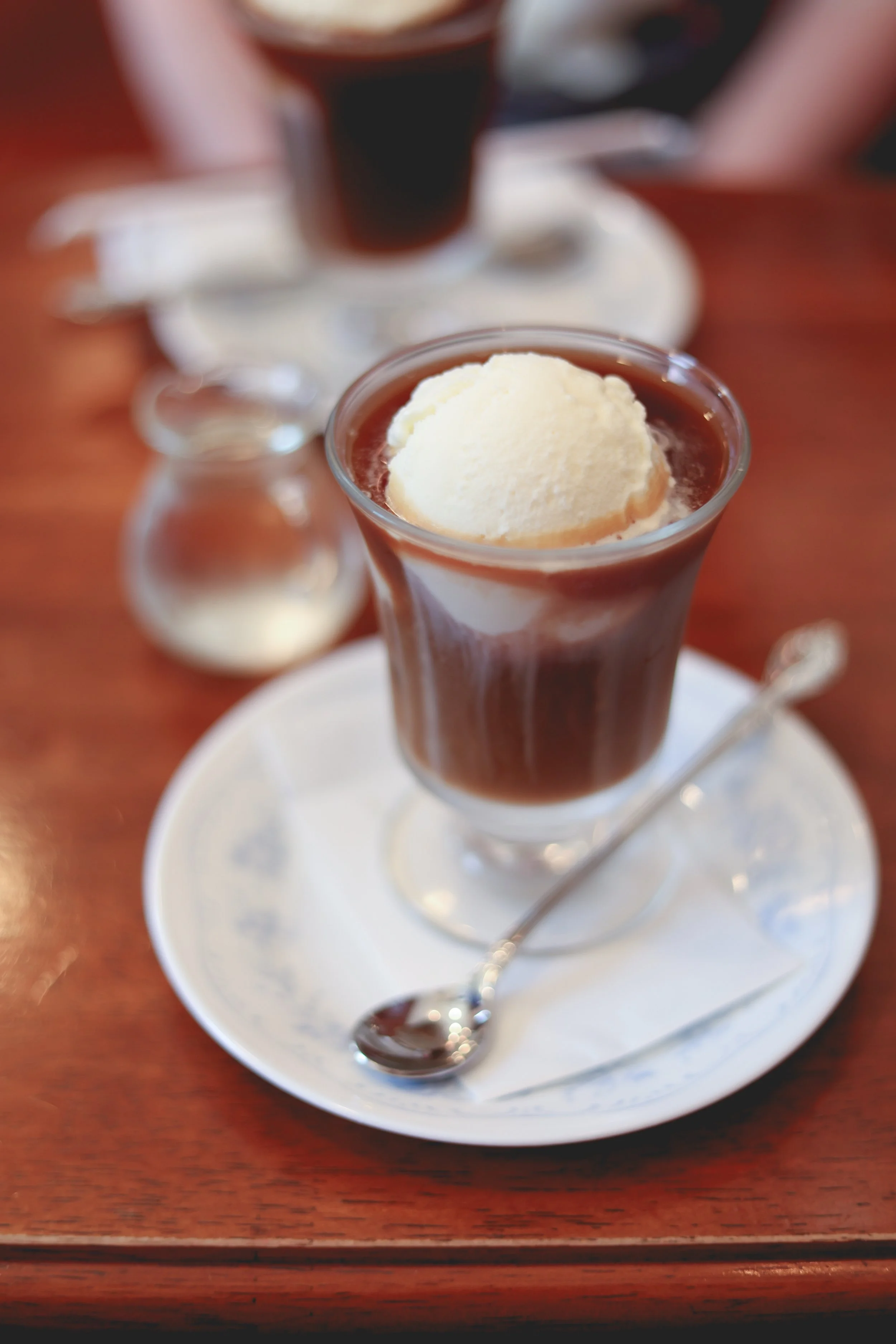
By 1720, local interest in the Dutch merchants sequestered away on Dejima had grown into a thriving academic exchange. The study of Dutch culture was given a name: Rangaku. Students flocked to Nagasaki to learn about Western science, medicine, geography, biology, chemistry, and later, electricity, and mechanics, with all its new clocks, pumps, and steam engines. Dejima, although small, was the singular gateway between Europe and Japan during this time, and thus its inhabitants acted as Japan’s eyes onto the slowly modernising Western world. Nagasaki became a centre for newly emerging ideas: medical schools were established, Western sciences were introduced, with Dutch words becoming the basis for a new scientific language. In the arts, the Dutch merchants also had a great influence: pottery, a traditional Japanese practice that had often been shaped by Chinese designs, was now being moulded to fit the standards of a Western market. The esteemed Korean potters of Arita, in Hizen province (Nagasaki prefecture), were given European style dishes as examples to copy, in order to make their products more saleable. And Dutch food, too, found its way into the heart of Japan, with coffee and beer finding their places amongst a traditional culture of tea and sake.
The portal of Nagasaki also allowed ideas to flow from Japan back to the Netherlands, and then on throughout Europe. The arrival of ships stocked with Aritaware, porcelain created by the potters of Arita, marked an important turning point in the design of Delftware, Dutch pottery. Unlike the traditional blue and white designs imported from China, Aritaware was polychromatic, as Arita potters had perfected the art of the overglaze. Soon, colourful porcelain was showing up in local markets across Europe, and European potters began to use the overglaze technique.
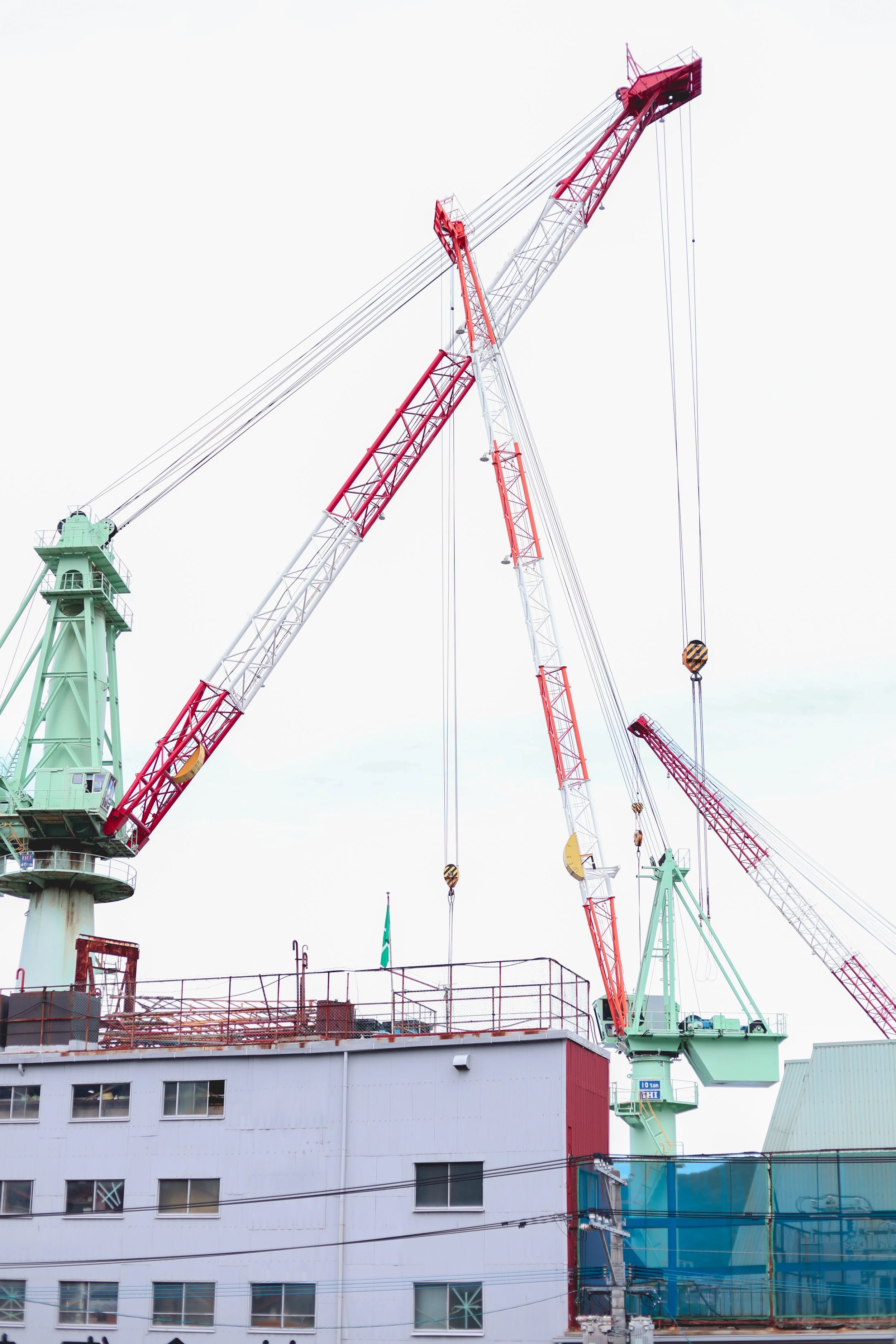
Upon the opening of Japan, and the end of the Sakoku period in 1853, ideas flowed steadily along the old shipping lines between Nagasaki and Europe. Japonisme, an interest in all things Japanese, mirrored perfectly the earlier studies of Rangaku. Suddenly, all of Europe wanted to know about Japanese culture, art, architecture, fashion, ceramics, landscaping, painting and printmaking. In Nagasaki, the old shipyards were extended to accommodate the now bustling levels of trade and exchange. To keep up with the powers of the modern world, Japan’s new Meiji government contracted Dutch engineers to help build a fleet of modern steamships, for military purposes, and a foundry was set up for this purpose: a foundry that would eventually become the Mitsubishi Shipyard and Heavy Industries.
And so it was that the Nagasaki shipyards, the foundational site of the city, built in 1543, became a target for bombing during World War II.
On August 9th 1945 at 10:50am a plane flew over the city, carrying a plutonium bomb. The primary target, Kokura, had been abandoned because of obscuring clouds and smoke. Nagasaki, with its Mitsubishi Heavy Industries factories, its shipyards, its foundries and ordnance works, was the secondary target. At 11:01am the bomb was released. It fell over the Urakami district, halfway between the Mitsubishi Steel and Arms Works in the south, and the Mitsubishi-Urakami Ordnance Works in the north. The district was obliterated; within a fraction of a second, 39,000 lives were taken. More than 10% of the city’s population. The devastation was massive, the impacts spanning decades.
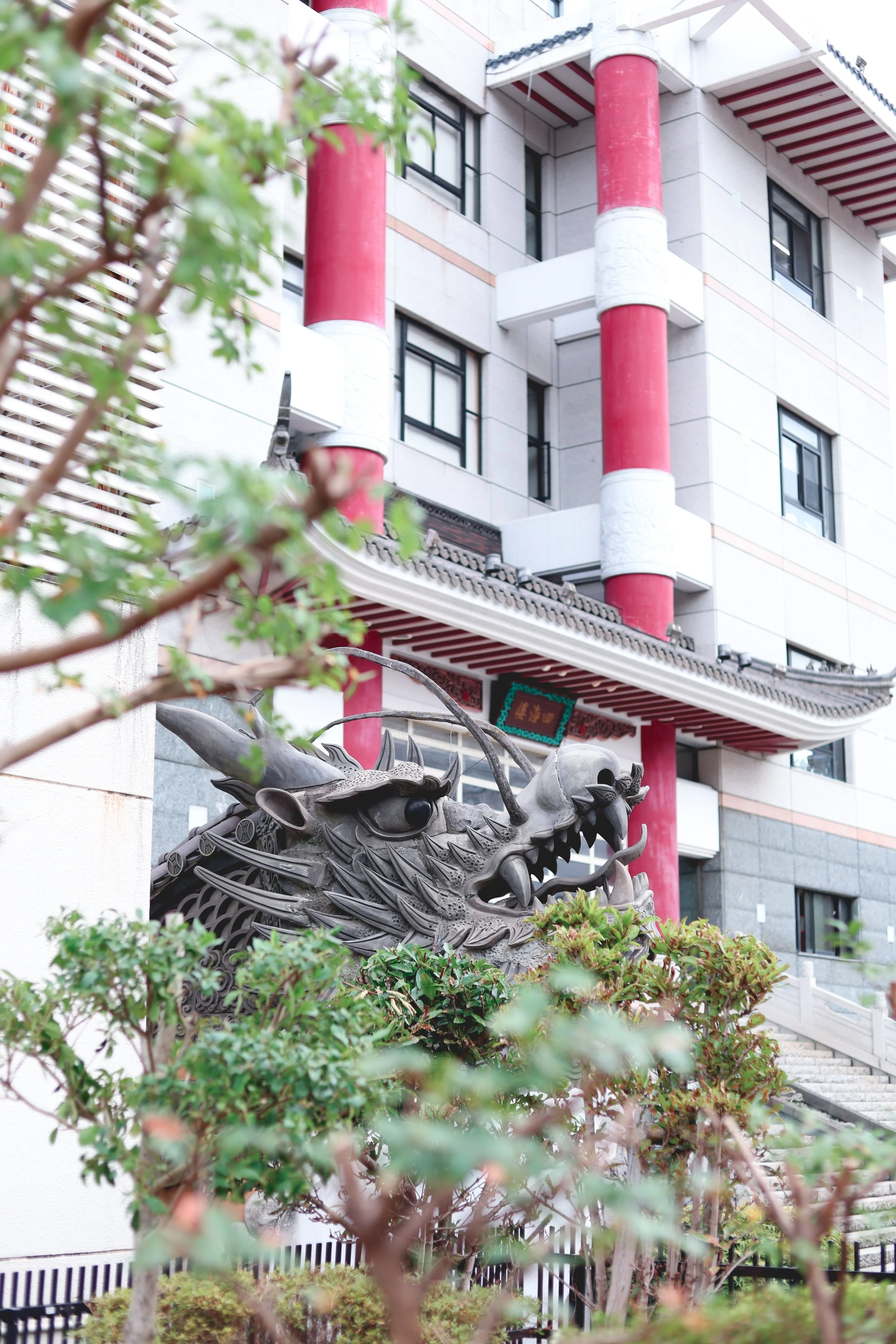
So far, this story could be framed as a terrifyingly perfect example of the butterfly effect. The accidental arrival of a ship in the 16th century leads to the dropping of an atomic bomb in the 20th century. However, this linear telling would leave out much of the complexity of the tale. To tell it like this - a simple line through time - would imply a direct correlation, a causation, as if fate, the inevitable, brought that bomb upon Nagasaki; as if it dropped from the sky of its own invisible accord. We must remember and account for the web of complexity: the other factors, other agents, other threads in the weaving of this city. The thread of the U.S. Government’s neocolonial visions and unsupported decisions, in the making of that horrific moment. The old thread of the Dutch East India Company and its colonial abuses, although dulled and nullified by Sakoku and the island of Dejima, still so vivid and terrible in other parts of the world. The thread of colonialism that extended from Japan to Korea, forming itself a rough node on the island of Hashima, just 15km off the coast of Nagasaki, where Korean civilians and Chinese prisoners of war were put into forced labour, mining coal in horrendous conditions. The thread of migration and trade that wove itself between China and Nagasaki, during all this time, leading to the creation of one of only three remaining Chinatowns in Japan. And finally, the many threads of the city’s present, joining those of the past, moving on into the future. The thread of time that continues on.
When we fill in these gaps, we begin to see the vastness of the web of history, and, drawing out now, as if stepping away from a tapestry image, we can see larger pictures forming; can begin to draw meanings from the pictures. It is this part that I love the most, and which I have built my words to find.
.₊ ⊹ . ݁🕸️ ⟡ ݁₊ .
Four - The Message and The Meaning
Through the port and portal of Nagasaki, I found myself in a reflective space - contemplating the pattern within the picture. From this perspective, Nagasaki can be seen as an emblem of exchange.
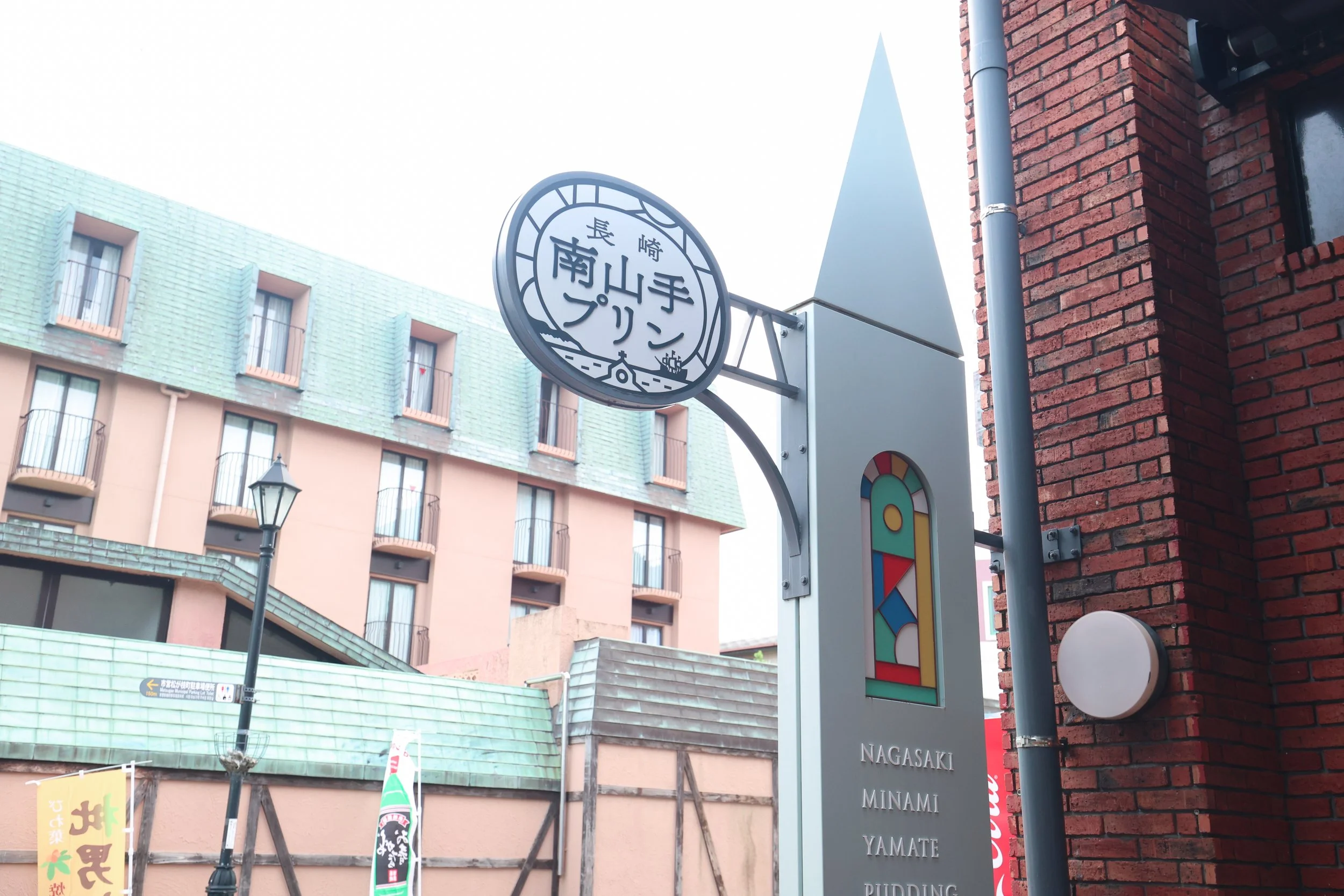
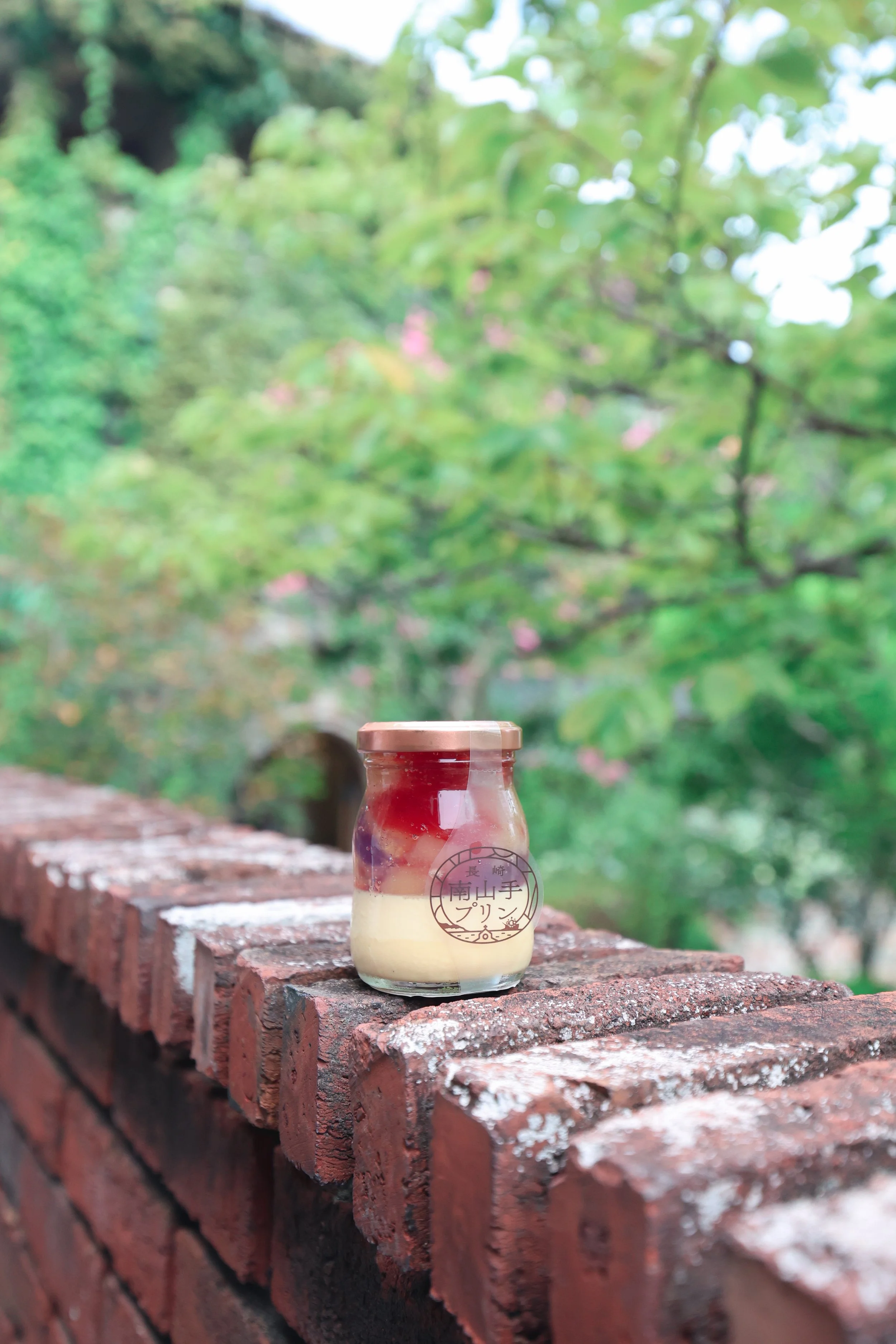
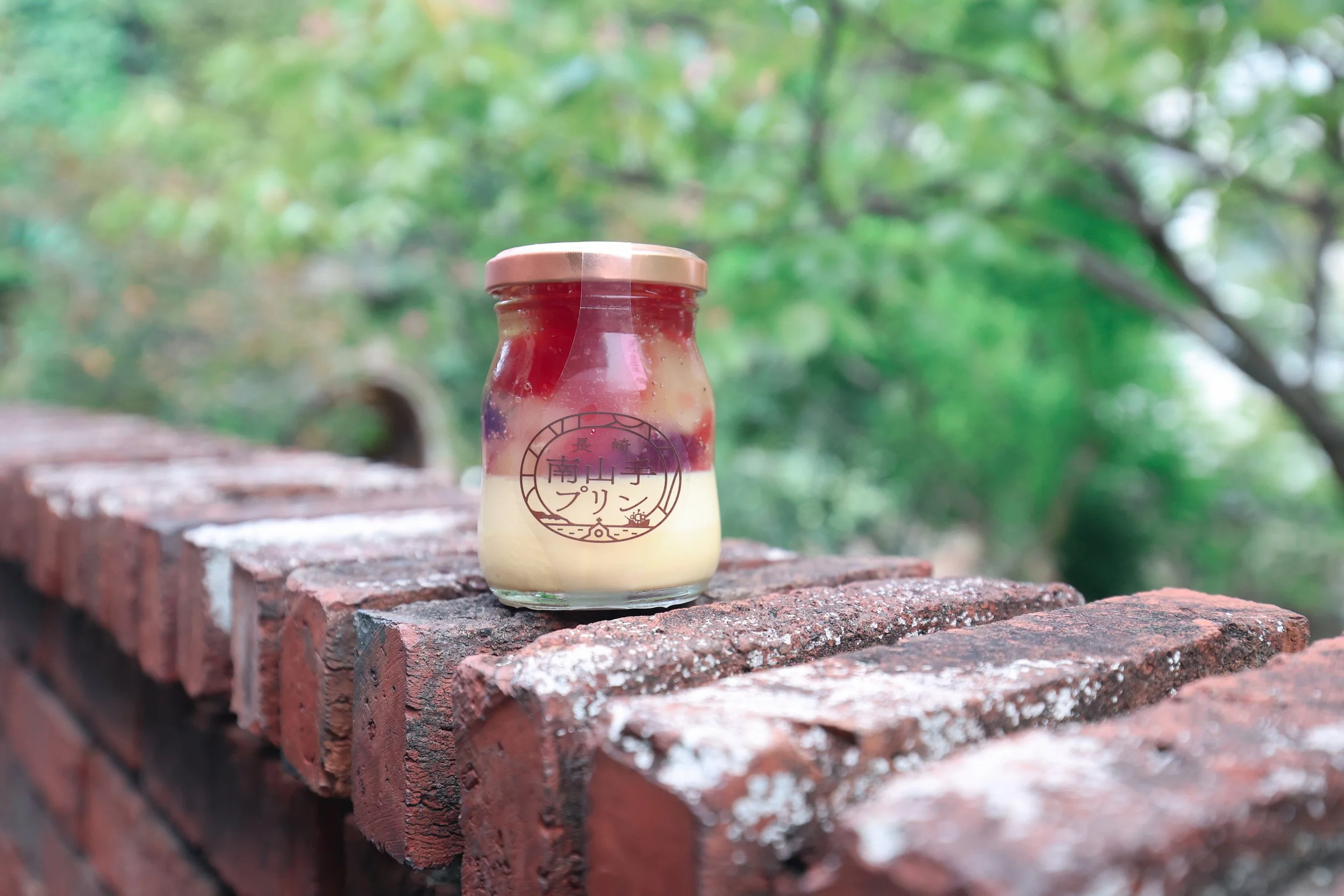
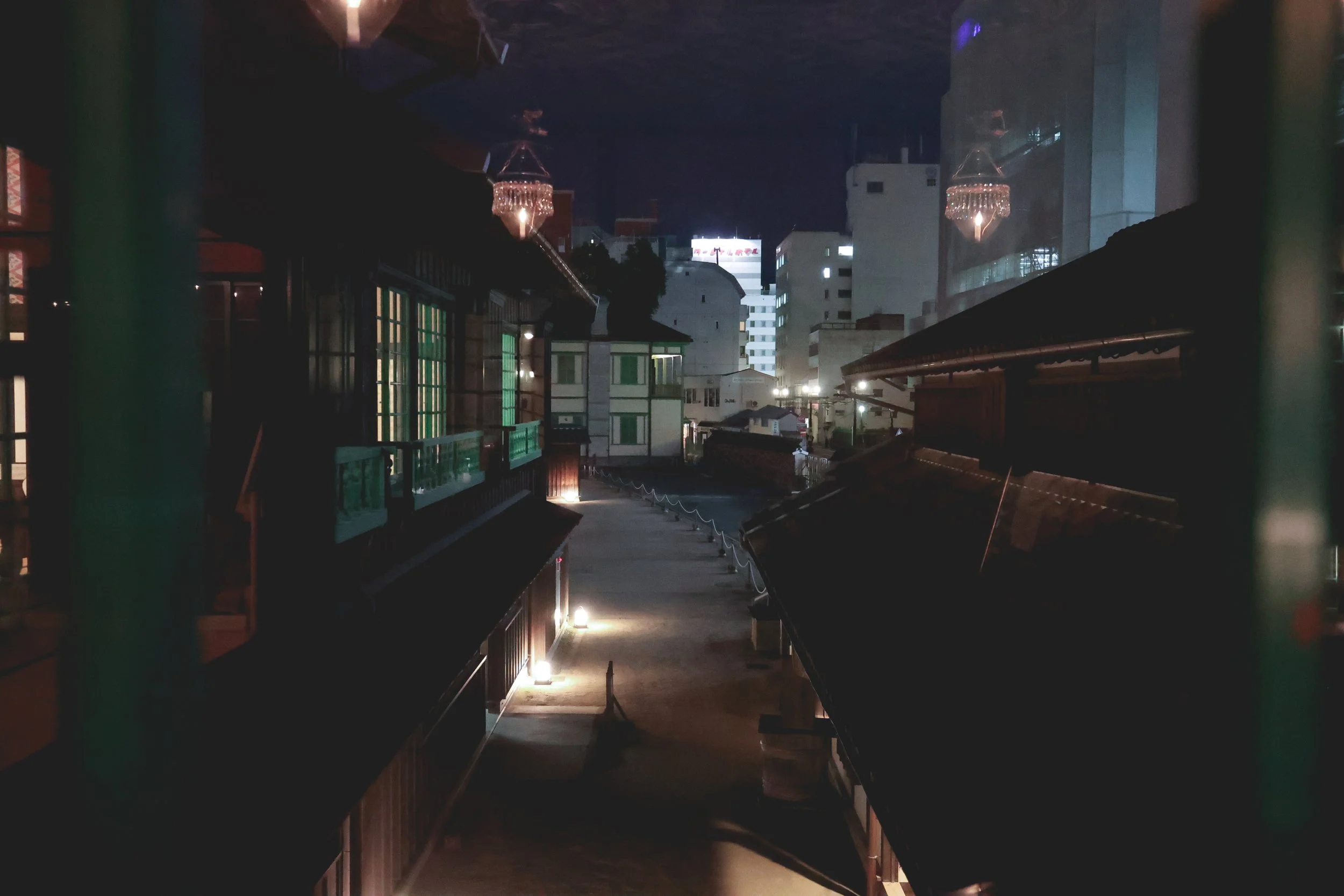
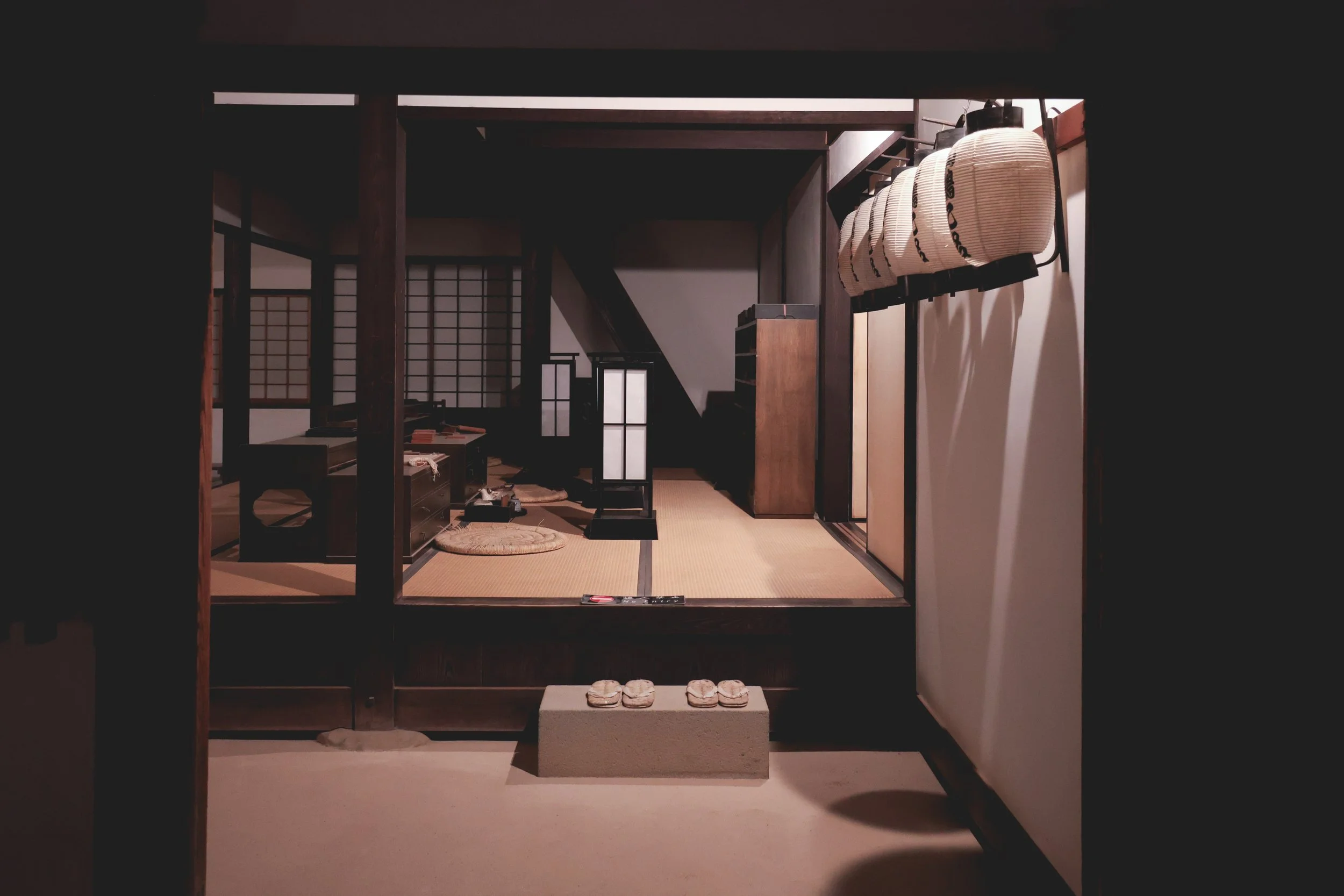
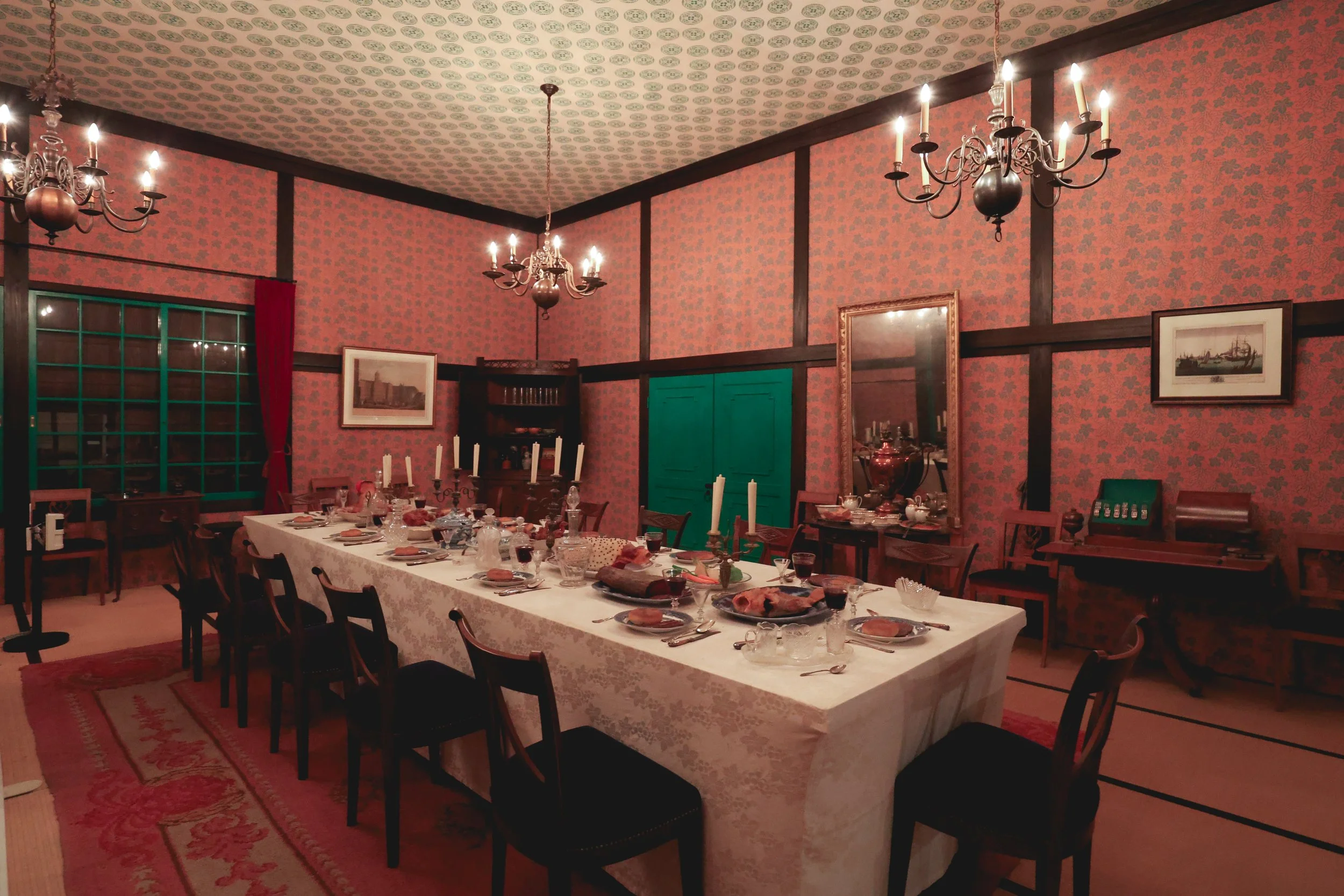
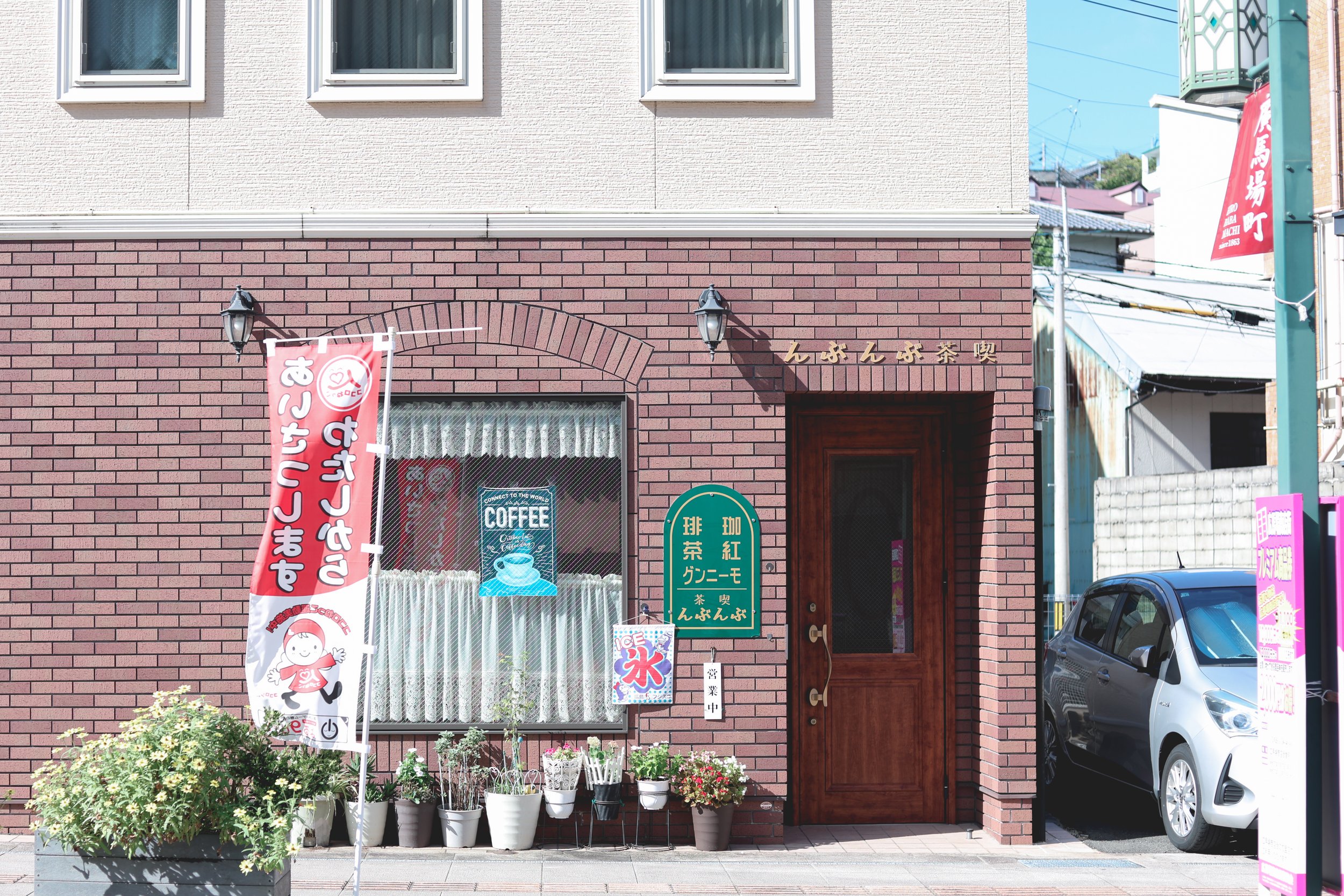
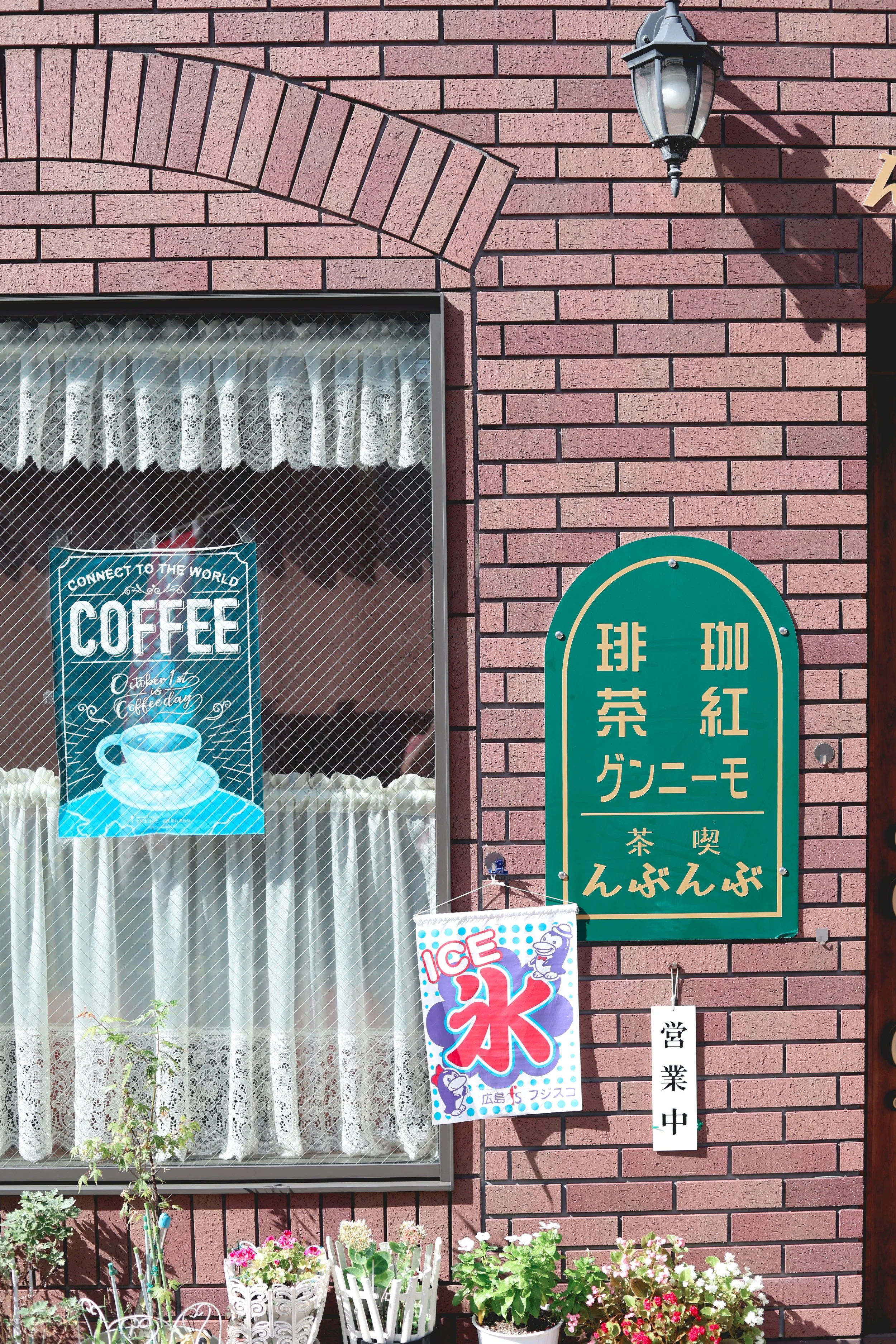
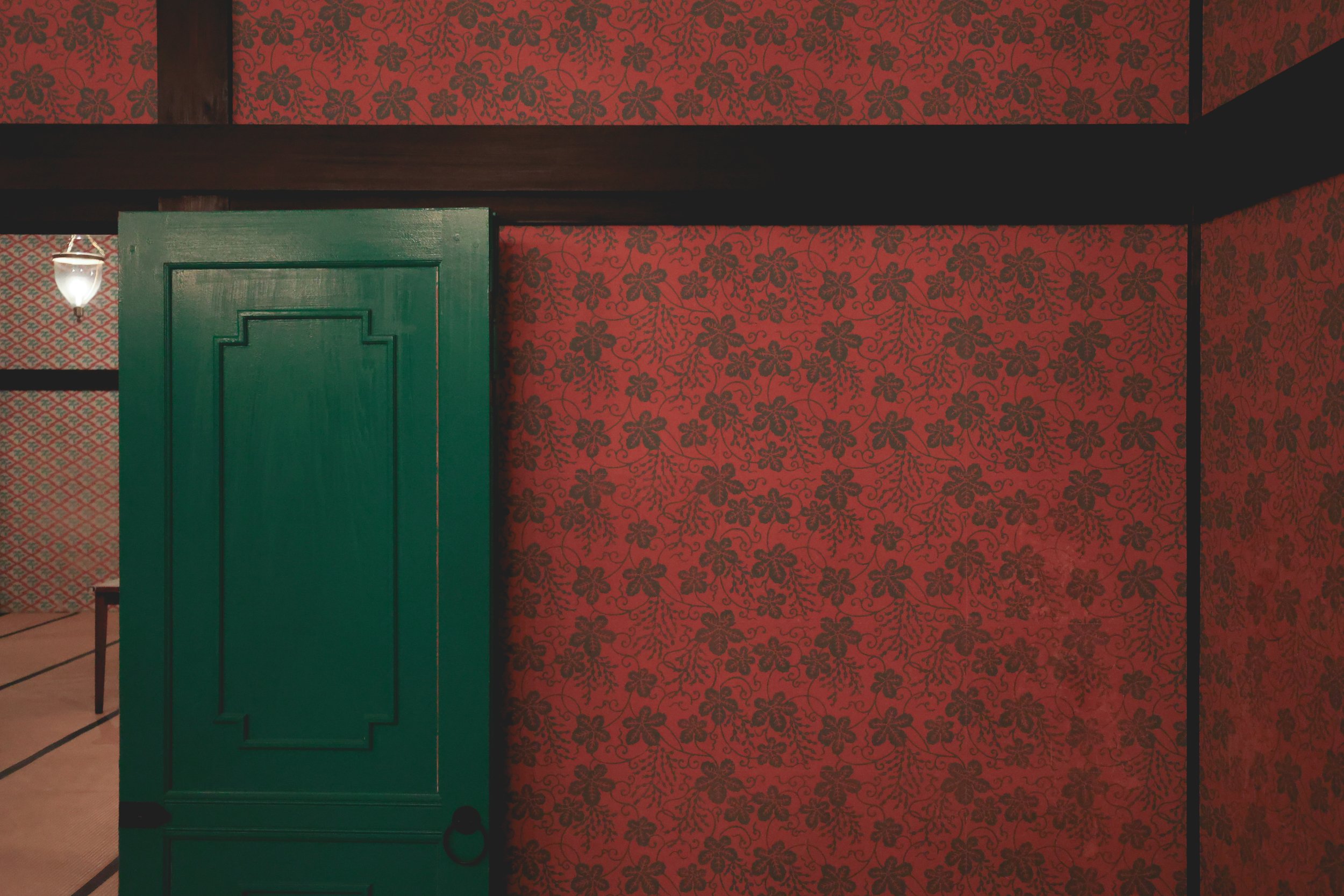
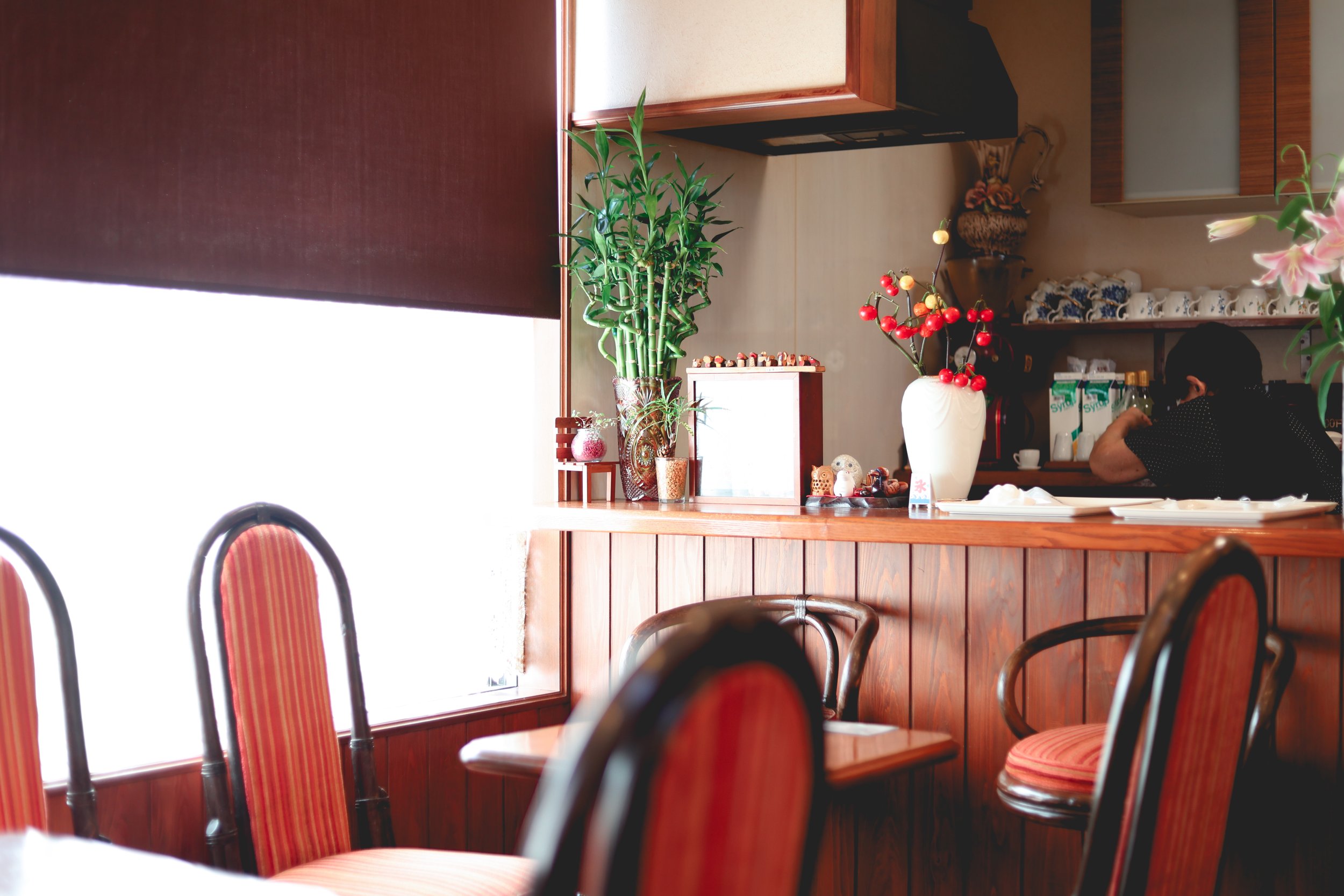
The city sits now, some parts reconstructed, others remaining, built layer by layer from that small port town, on the edge of the harbour, where it was founded in the 16th century. To walk through the city is to walk through a great many portals, like wormholes, each transporting the walker to various points in time and space. In the commercial area, the walker finds themselves moving between Japan and Europe, as the Dutch once did, on the island of Dejima with its recreated captain’s house, and in the cobbled streets lined with lampposts, and in the little coffee shops still selling castella cake. Walking through the Urakami district, one encounters other connections, layers made and unmade: the earliest Christian persecutions, the Catholic church rebuilt, the hypocentre of destruction at the hands of the U.S., the new housing. In the area of Shinchi Chinatown, another wormhole opens, ferrying the walker into a maze of small alleys, lanterns, lights, food and festivities brought here by generations of Chinese immigrants to the city. Everywhere, the city bears the messages, imprints and ideas of a multilayered past.
If ports and portals are passages that bear across their borders goods, people, ideas, and messages, then what message does Nagasaki bear for the world?
Many would argue that the message is one of peace, in the wake of the bombing, as ‘peace’ has been the chosen word for parks and memorials, with U.S. encouragement, during the reconstruction phase of the city.
However, I feel that there is a different, possibly deeper, message here. While ‘peace’ denotes a kind of exchange - an allowance, a truce, an agreement of sorts between differing groups - I would instead choose the word ‘communion.’
For, as Kwame Ture, a leader of the Black Civil rights movement, once said: “You can have injustice and have peace. You can have peace and be enslaved.” Again, we can look to the Hidden Christians as an example: it was possible for the Tokugawa Shogunate to enforce a sort of peace- a 200 year long period with relatively few instances of political civil unrest, compared to the preceding periods - without allowing the people their basic human rights and freedoms: to live, believe, and practice their beliefs freely, without discrimination.
‘Communion,’ often associated with the Christian practice, has its roots in the Old French word comunion, meaning ‘community,’ from the Latin communionem, meaning ‘fellowship, mutual participation, a sharing.’ The word is made up of two parts: com meaning ‘with, together,’ and unus, meaning ‘oneness, union.’
In the story of Nagasaki, we can see many forms of communion; the exchange of ideas through encounter, community, and mutual participation, as happened between the locals and the Dutch merchants. We can also see exchanges of a different kind: forced exchanges, as happened with the opening of Japan’s borders, after threats by the U.S. in 1853, or exchanges that involved colonial exploitation, as in the movement of Korean peoples to Arita and the island of Hashima, for enforced labour. We can see, too, a kind of unity emerging: the unity of disparate parts that come together to form the whole, the unity that happens when experiences and encounters become part of the self.
Japanese and Dutch people each have a term that describes this phenomenon of the meeting and merging of cultures. In Japan, there is the phrase ‘Wakon yōsai,’ meaning “Japanese spirit, Western technique,” a term used heavily during the Meiji period, when Japan was looking to Westernise while retaining their own independence. In the Netherlands, the term ‘Shared Cultural Heritage’ has been used more recently to describe the interweaving of histories and cultures between the Dutch people and the peoples whose countries they colonised. It must be noted that both of these terms carry historiographical weight and contextual baggage, however, I believe that these added meanings perfectly capture the complexities that underlie the phenomenon of cultural encounter and exchange. Exchange may happen within a framework of peace, or it may not. It may happen on a basis of equity, or it may not. These are the things I found myself reflecting upon, as I walked through the streets of Nagasaki…
In our world of hyper-exchange, with our new era of trade and encounter, characterised by forces that push us towards both globalised homogenisation and individualised experience, what can we learn from these varying stories of historic communities?
Individually and collectively we are woven into being by our histories, experiences, encounters, ideas, and the stories of our ancestors. In order to live in better communion - that is, cultural exchange between equitable communities, instead of neocolonial exploitation or neoliberal individualism - we cannot simply say ‘peace.’ We must begin to take stock of the complex web of reality, including the many sad and sorrowful threads that weave from the past into our present world. Peace does not mean all is well. It is the view of the coloniser to see the world or a person as a potential blank slate, to be bombed, then written upon and repurposed. The denial of history can become the denial of a peoples, a place, a self. Conversely, the remembrance of history is the remembrance of peoples, places, selves. Furthermore, we cannot deny who we have been, as it remains a part of who we are! Like the Hidden Christians, our identities may be forged from histories that are sometimes brutal, and our potential for brutality is ever present, but erasure of these parts of ourselves is not an option. Erasure, of ourselves or others, does not absolve us as humans, does not offer us a new opportunity. A city, after being bombed, does not become a blank slate to be rewritten, no matter what governments and NGOs may say. It is still filled with stories, with meaning, for many people. So it is with our current global culture. Many hope for change, and wish for a new way. Yet, it is only from that place: the complex web, the multilayered picture, the nuanced story, that we might be able to find a deeper and more stable truth to build upon. So, we must tell our story, and, in the telling, we can find ourselves in space and time. Only then can we clearly see and choose a way forward.
We will start where we began: back on the edge of the ocean.
Dear friend, I have found my thoughts, and now I have questions for you. Imagine again that immovable stone, washed by the tides. The stone cannot be undone, or unearthed. But the tides, the waves, they have the power to shape its form over time.
How can we be like the tides?
How might we find better communion with one another in the tossing of the waves?
I would love to hear your thoughts in return!
Love, always,
Zoe
Who we are, as people, is not always our choice.
But it is our responsibility.
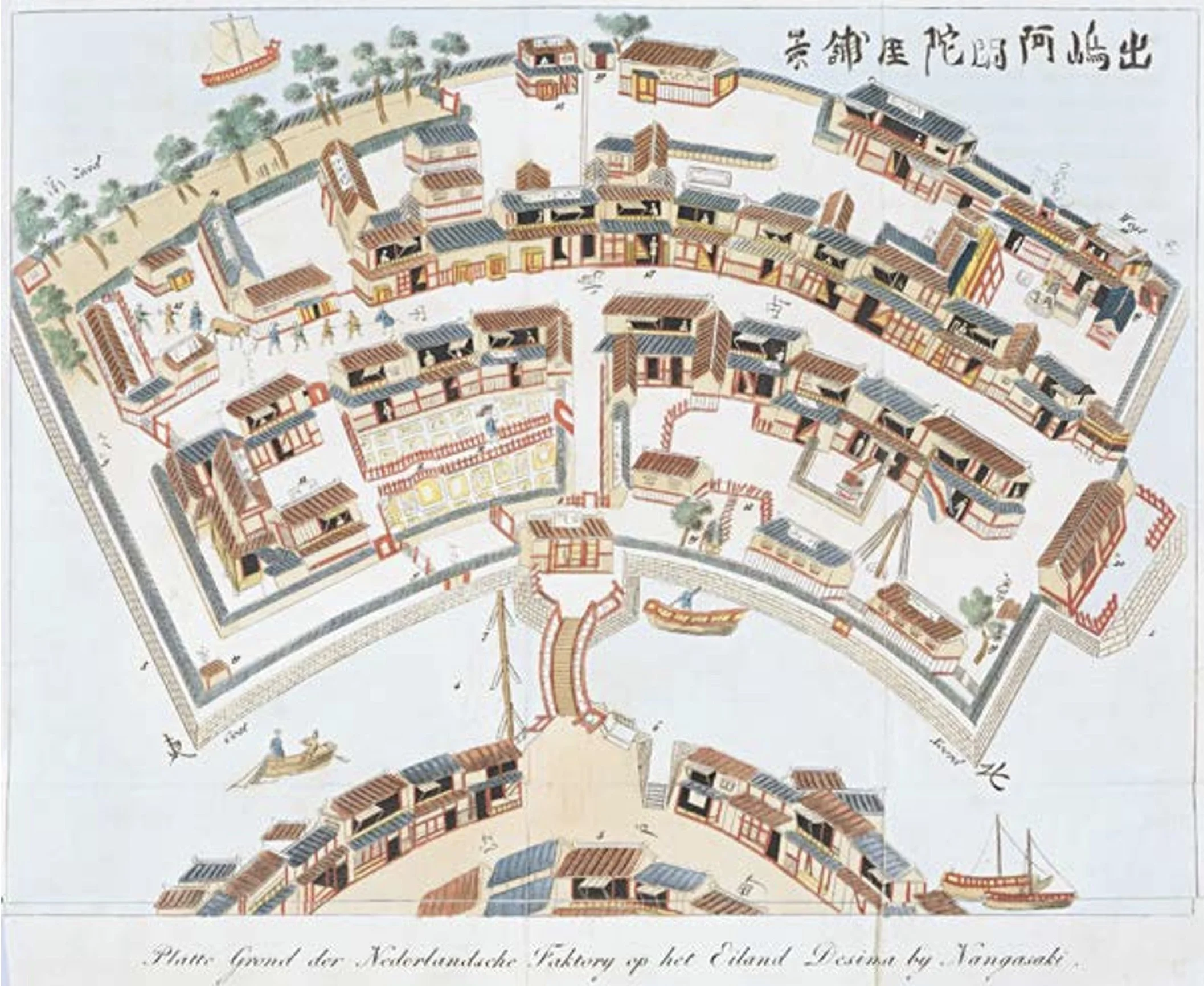
Dejima as drawn by VOC chief Isaac Titsingh (1745-1812) in his book Bijzonderheden over Japan, printed in 1824 and now in the collection of national library of the Netherlands in The Hague
“
灯を消せば 涼しき星や 窓に入る
The lamp once out
cool stars enter
the window frame.
~ Natsume Sōseki
Bibliography:
Aronson. “Japanese Influences on Dutch Delftware.” Aronson Antiquiars of Amsterdam. Web article. September 4 2025.
Duits, Kjeld. “Nagasaki, 1865: Dejima Island.” Old Photos of Japan. Web article. November 11 2022.
Fexingo History. “The Dutch in Nagasaki: How Dejima Kept Japan Open.” The Rise of Colonialism: How Europe Divided the World. Podcast episode. June 22 2026.
Hosaka, Yuji. “Remembering Japan’s colonial abuses against Koreans on Hashima Island.” The Diplomat. June 25 2020.
Jackson, Neil. Japan and the West: An Architectural Dialogue. 2018.
Klos, Marike, and Leon Derksen. “Shared Cultural Heritage of the Netherlands and Japan.” Cultural Heritage Agency of the Netherlands, Rijksdienst voor het Cultureel Erfgoed, Amersfoort. 2015.
Knikker, Jan. “Decolonisation Through Critical Debate… and Fluffy Pancakes.” MRDV. Web Article. April 23 2024.
Leonard, Anne. “Japonisme.” Hue and Cry: French Printmaking and the Debate Over Colors. The Clark Art Institute. Web Article. 2021.
NHK World Japan. “Discovering Japan's Hidden Christians - Journeys in Japan.” YouTube video. December 19 2025.
Nozomu, Kawamura. “The Historical Background of Arguments Emphasizing the Uniqueness of Japanese Society.” Social Analysis: The International Journal of Social and Cultural Practice. No. 5/6: 44–62. 1980.
Otsuki, Tomoe. “The Politics of Reconstruction and Reconciliation in U.S-Japan Relations—Dismantling the Atomic Bomb Ruins of Nagasaki’s Urakami Cathedral.” Asia Pacific Journal: Japan Focus. Vol. 13, Issue 32, No. 2. 2015.
Palmer, David. “Nagasaki’s Districts: Western Contact with Japan through the History of a City’s Space.” Journal of Urban History. Vol. 42, Issue 3. 2016.
Salverda, Reinier. “When Japan’s Elite Spoke Dutch.” The Low Countries. Web article. September 9 2021.
Stevenson, Cornelius. “Early Dutch Influence on Japanese Art (Dutchmen as Netsukes).” Bulletin of the Pennsylvania Museum 7. No. 27: 49–51. 1909.
Tantri, Erlita. “The Dutch Science (Rangaku) and its Influence on Japan.” Jurnal Kajian Wilayah. Vol. 3, No. 2. 2012.
Vos, Frits. “A Distance of 13,000 Miles: the Dutch Through Japanese Eyes.” Delta: A Review of Arts, Life and Thought in the Netherlands. 16.2: 29–46. 1973.
Willmann, Anna. “Edo-Period Japanese Porcelain.” Heilbrunn Timeline of Art History. The Metropolitan Museum of Art. April 2011.
