PLUM VILLAGE & MINDFULNESS

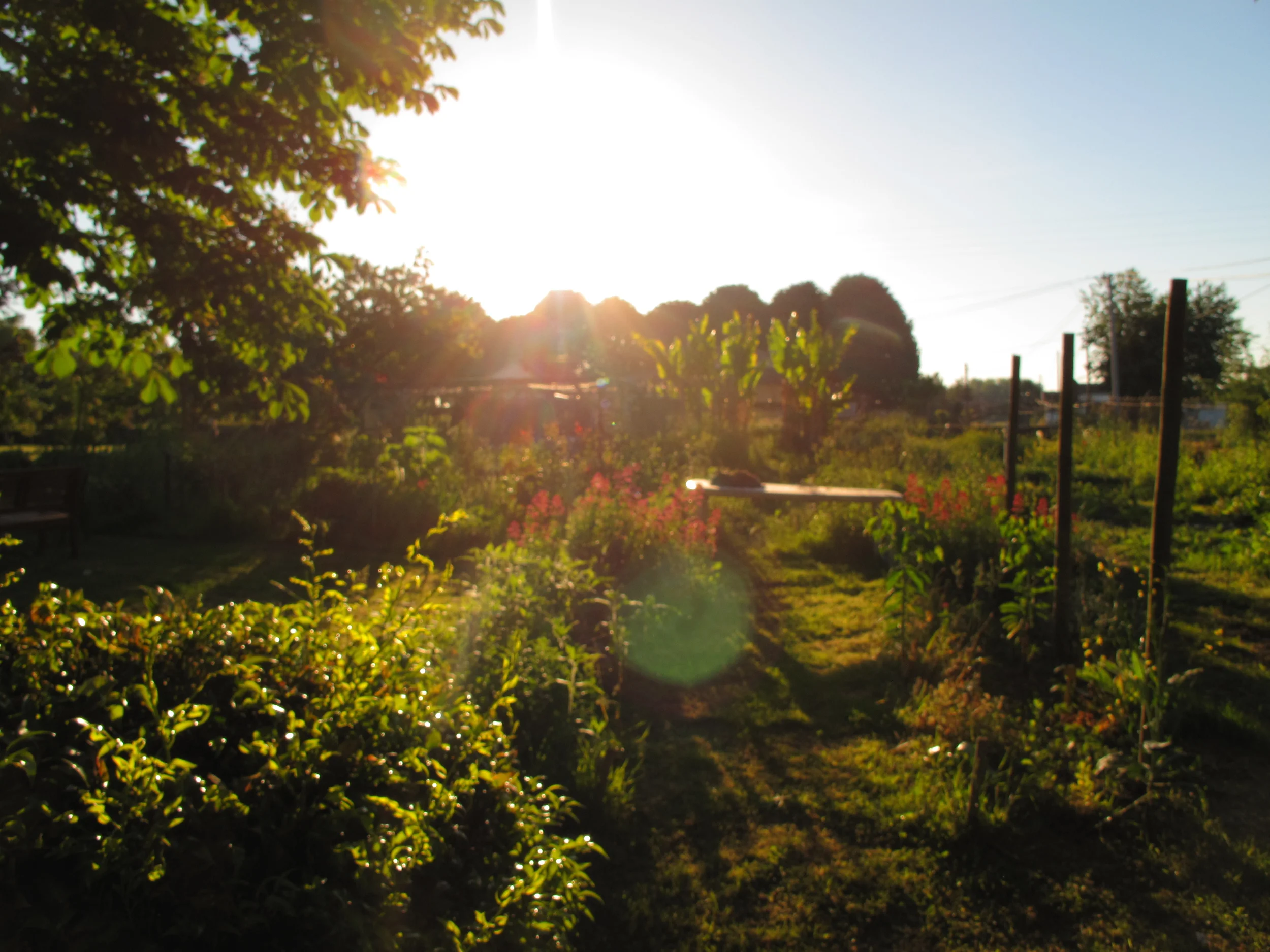
Morning light on the garden of Plum Village, a nun is watering the plants


BEING PEACE


On my bookshelf at home is a small grey book, with a crease in the paperback cover. I must have already read this book ten times, but I know I will read it many more. The title is simple: Being Peace. Inside, it is filled with words that seem so clear, so insightful, that, were they to jump out of the page, they would become a still pond with sparkling waters. 

I first read Being Peace at around age eleven, and back then the name of the author - one Thich Nhat Hanh - seemed exotic and slightly silly. Now, though, it evokes reverence in my mind. Hanh was my unseen teacher for so many years, until I visited Plum Village in France to hear him speak. His words have made such an influence on my life that I can even trace this website's creation back to them. For, it was upon my first reading that the joys of the world were made clearer. I began to actively search for the beauties of the Earth in simple things. And each reading after that ingrained the habit further. Now, I would love to share with you some of Thich Nhat Hanh's words:

Life is filled with suffering, but it is also filled with many wonders, like the blue sky, the sunshine, the eyes of a baby. To suffer is not enough. We must also be in touch with the wonders of life. They are within us and all around us, everywhere, any time.

If we are not happy, if we are not peaceful, we cannot share peace and happiness with others, even those we love, those who live under the same roof. If we are peaceful, if we are happy, we can smile and blossom like a flower, and everyone in our family, our entire society, will benefit from our peace. Do we need to make a special effort to enjoy the beauty of the blue sky? Do we have to practice to be able to enjoy it? No, we just enjoy it. Each second, each minute of our lives can be like this. Wherever we are, any time, we have the capacity to enjoy the sunshine, the presence of each other, even the sensation of our breathing. We don’t have to go to China to enjoy the blue sky. We don’t have to travel into the future to enjoy our breathing. We can be in touch with these things right now. It would be a pity if we were only aware of suffering.

We tend to be alive in the future, not now. We say, “wait until I finish school and get my Ph.D. degree, and then I will really be alive.” When we have it, and it’s not easy to get, we say to ourselves, “I have to wait until I have a job in order to be really alive.” And then after the job, a car. After the car, a house. We tend to postpone being alive to the future, the distant future, we don’t know when. Now is not the moment to be alive. We may never be alive at all our entire life. Therefore, the technique is to be in the present moment, to be aware that we are here and now, and the only moment to be alive is the present moment.
— THICH NHAT HANH - BEING PEACE
Plants in the garden of plum village in the morning light
Paths between the lettuces at Plum Village
Nuns sitting outside in the fields above the orchard at Plum Village
An orange and black spotted butterfly on a daisy in the meadow

PLUM VILLAGE

MEMORIES OF PRESENT MOMENTS

Arriving with uncertainty to the small monastic hamlet where I was to stay for the next week. 
Waking each day to walk in the fresh air, under a waning moon, to the meditation hall.
Drinking numerous cups of tea, hands clasped around the mug.
Watching the buddhist nuns pick cherries from the tree with wooden hooks.
The beaming faces of the nuns, like every atom of their skin was glowing with happiness when they laughed together.
Making the most wonderful friends, with a group of women who I will never forget - Rachel and her mother Laura, Katy, Elisabeth, Jackie, Leonara, Sandra, Sirisha and Kathryn. 
The porridge with nuts and fresh fruit for breakfast. And eating each meal in contemplation, feeling truly grateful.
The three breaths on the sound of the clock chiming: a moment of peace.
Sharing poems with Rachel, and talking about her grandmother's ring.
Washing up dishes with friends, and the silky smoothness of water on a clean plate, when you focus on the feeling.
The croaking frogs in the pond. Sitting very still, they would appear above the surface and leap between lily pads.
Eating strawberries in the garden.
Talking with Katy about traveling. That wonderful laugh she had, and the awesomely mixed-up accent - from Belgium, America and Mexico.
Elisabeth's blue eyes, and our conversations about clairvoyance.
The slow progression of my mind from cynical and whirring, to thoughtful and calm. 
Running alone through the orchard, and chasing butterflies.
The incredible energies in the room of the Dharma talk, where all kinds of beautiful souls had gathered on cushions and mats to listen.
Helping the nuns in the construction of a new house for the hamlet. I couldn't help smiling when I watched them mix the cement!
Laughing uncontrollably with Katy over the prickly, spiny lettuce during the silence of a meal.
A sneaky wine and deep talks, shared with my friends in the nearby town of Duras on the last night.
 

Sunspots filtering through trees at Plum Village hamlet
Bhuddist nuns enjoying a walking meditation among the orchard trees at Plum Village
Little ladybug on a tree in Plum Village
Leafy trees and the beauty of nature
Breakfast meal at Plum Village - porridge, fresh fruit, nuts and prunes
Katy sitting beneath some trees at the hamlet of Plum Village, the frogs chirruping in the background
Rachel having a cup of tea at Plum Village
The orchard at Plum Village, with a pagoda roof peeking through the trees
Elisabeth drinking tea by the window
Togetherness 
Sunset over the beauty of Bordeaux and fields near Plum Village
There is no way to happiness. Happiness is the way.
— THICH NHAT HANH

BEAUTIFUL BEAUVAIS

Beautiful old houses in Beauvais

THE MIRROR

OF


LITERATURE, AMUSEMENT, AND INSTRUCTION


No. 770  |  SATURDAY, APRIL 2, 1836  | PRICE 2d.

Beauvais is an extensive city: the streets are wide; the houses are built of wood, and presenting their gables to the street, they give to the place a picturesque irregularity.

Beauvais is of some consideration among the manufacturing towns of France. It has a royal manufactory of carpets, established by Colbert in 1664. These carpets are nearly equal in quality to those of Gobelins, and fetch a high price.

The finest public building is the cathedral, of enriched Gothic architecture. This edifice is, however, imperfect, having neither nave nor steeple. But the choir, from its boldness and fine proportions, is superb: it even appears more lofty than that of Amiens, though actually not so.

SMALL WONDERS IN BEAUVAIS


The creaky old stairs in the hotel.
The wide avenues lined with purple-rose covered trellises, where once there was a medieval fortified wall. 
The river running through the town; each one a small branch of the Thérain: a source of water for the mills that were once used to weave linens and carpets.
A church garden full of twittering birds.
The smiles of the people I pass, out promenading. This, more than anything, gave Beauvais a village-feel, as inner city smiles are rare in France.
Spending time making daisy-chain-crowns on a verdant lawn.
And everywhere there were small houses - with shuttered windows and wooden beams showing, in the Maison Paysannes style.


However beautiful the town of Beauvais was, it was nothing compared to the breathtaking beauty of its Cathedral. And this is what I had come for...


Old French garden of roses in a churchyard in Beauvais
Easter eggs - blown and painted, in the window of an old house in Beauvais
Old relocated traditionally rustic house in Beauvais centre
Beautiful old houses - timber frames painted in colours, in Beauvais, France
Old houses in timber framed rustic style - Beauvais
Purple roses in a French garden in Beauvais

BEAUVAIS CATHEDRAL


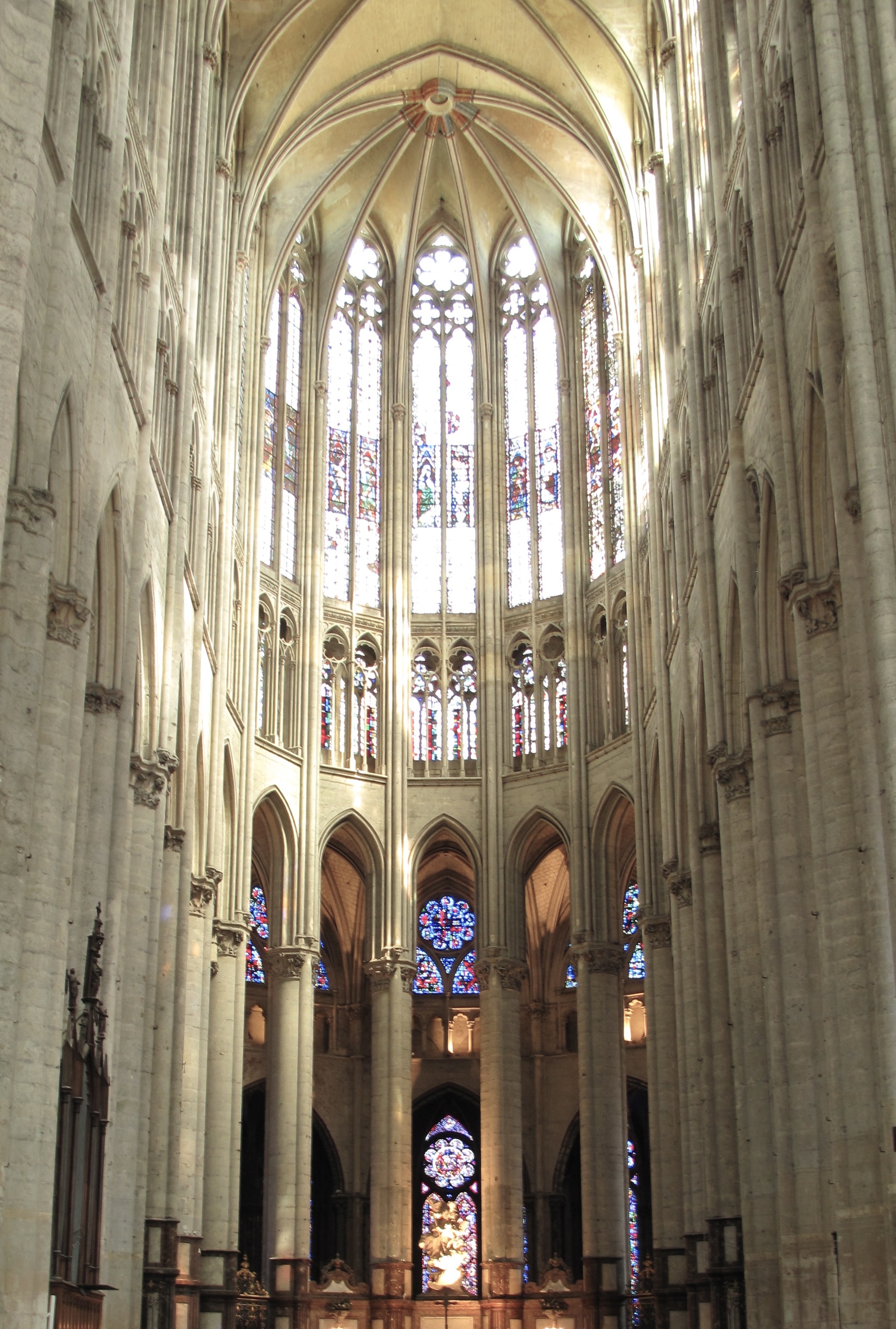
Beauvais Cathedral after restoration

The Cathedral of Beauvais drew me out of Lyon, like a moth to a flame. I had only ever studied it on paper; in the pages of dusty books, full of 19th century illustrations. Actually standing beneath my subject of study - one of the tallest and most intricately detailed Gothic cathedrals of the Middle Ages, I felt a little teary-eyed. 


EXCERPTS FROM MY RESEARCH PAPER, 2013

In France, a competitive environment pressured the medieval cathedrals of the nation to new heights.

Notre-Dame's then 'outrageous' height of 33 meters was quickly surpassed by Chartres at 34 meters in the early thirteenth-century; Bourges at 37 meters in the mid century, and Amiens at 42 meters near the end of the century. It was this competitive environment that pushed Beauvais into the stratosphere, with the inner height of the nave reaching 47 meters.

Cathedrals were not only in competition with one another, but were also competing with the surrounding town. The urban boom of the middle-ages resulted in the doubling of populations between the years 1000 and 1328, with at least two-thirds of the growth situated in urban areas. The cathedrals of France, often set in the midst of the town, were in danger of being marginalized. Thus, the new soaring superstructures were meant to dominate the encroaching cityscapes. Beauvais itself was allotted only a small plot of land, and, being situated in a geographical basin, it rises to the sight of pilgrim walkers only thanks to its immense height. In contrast, English cathedrals - which display nothing of the French propensities for height - were often situated a little outside the town as they had a more monastic function. 

Moreover, the literal height of each French cathedral was then embellished upon, and visually extended using the architectural features therein. By running shafts up the piers, and the intimately connecting these with the shafts in the vault, the desired effect of an uninterrupted vertical line could be achieved. For example, in Beauvais Cathedral, the vertical tracery cage connects both the triforium and the clerestory above. These vertical shafts are also joined by the pointed arches, the piers and the arcades, all working together to draw the eye upwards.

By emphasising a cathedral's height and vertical lines, French masons wished to lift the viewer's eyes and mind to the heavens. Such motivations are directly laid out in the diary of Abbot Suger of St Denis, during his construction of what many now call 'the first truly Gothic church.' Lifted by the beauty of the decoration, to somewhere around the eaves, Abbot Suger could find himself in another region or plane of existence that was between this earth and the glories of heaven. Many others have also described such metaphysical feelings upon entering a Gothic cathedral. 

RISING ABOVE ALL OTHERS

Beauvais cathedral took the French proclivity for height to its ultimate peak - the interior could easily house the Statue of Liberty within its 47 meters of glass and stone and air.

When visiting Beauvais in 1837, Benjamin Winkles described the intense feelings of a visitor upon entering the space. The first impression seems 'truly magical,' yet the second brings on a sense of danger, as one realises the true immensity of the exaggerated height. Stephen Murray elaborates on that feeling, saying:

The central vessel of the church is an inverted chasm; the beholder is drawn upward with a feeling of near vertigo.

One would not be wrong, to sense danger in the heights of the roof, as Beauvais Cathedral has been subject to two major structural disasters, and is now being held up with extensive supports. Yet, these do not detract from the sheer wonder of the building.


The entire paper, with footnotes, can be found HERE. 

Stained glass in Beauvais
Inside the transept of Beauvais amazingly tall cathedral!
Beauvais Cathedral being held up by beams of wood because the vaults are too high
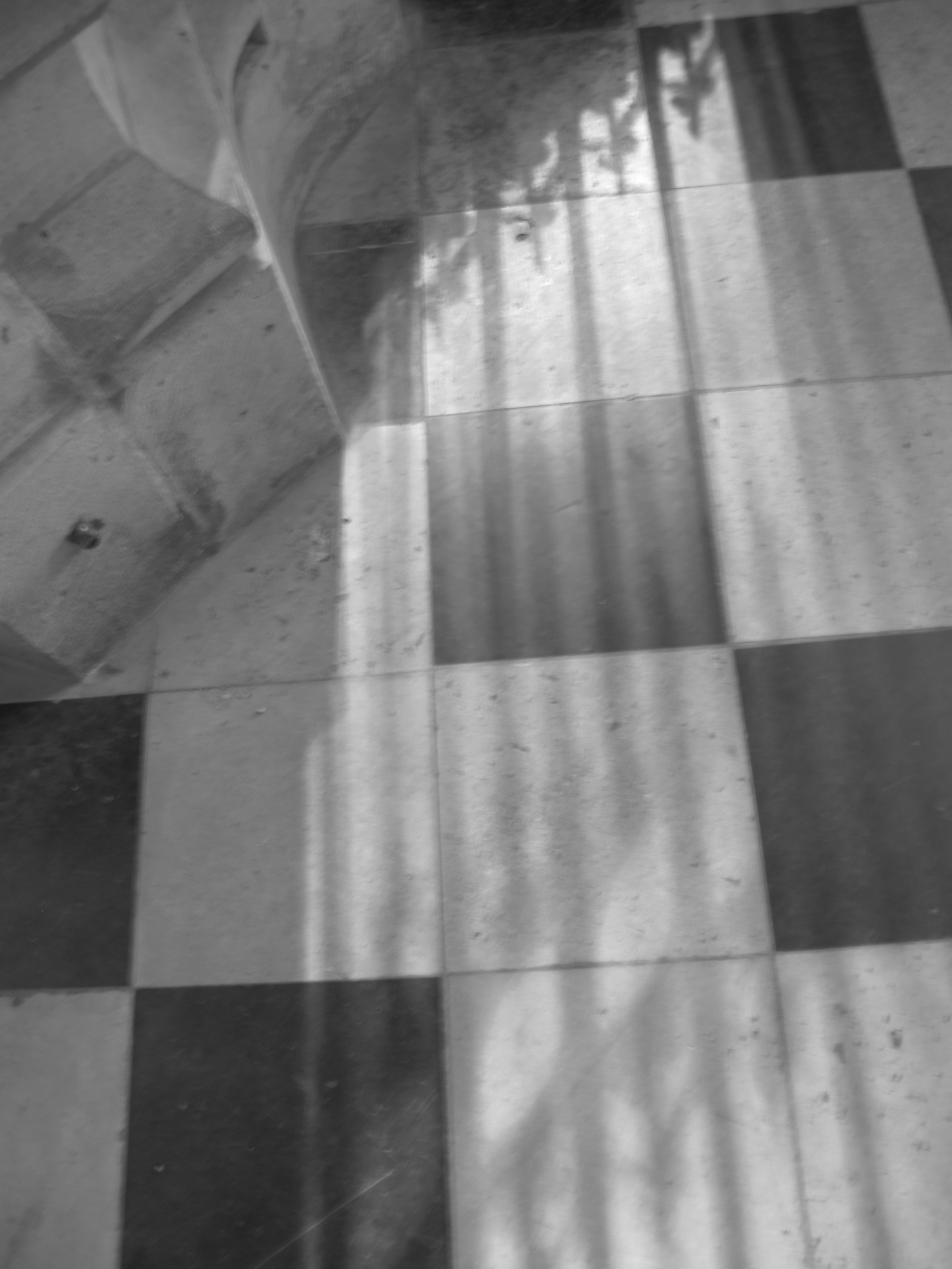
Shadow and light from the windows of Beauvais - shadows on the floor tiles
Floor tiles and flowers in Beauvais Cathedral
Lighting a candle in the dark of Beauvais cathedral
Old working medieval clock with moving parts in Beauvais Cathedral
Thus sometimes when, because of my delight in the beauty of the house of God, the multicolor loveliness of the gems has called me away from external cares, and worthy meditation, transporting me from material to immaterial things, has persuaded me to examine the diversity of holy virtues, then I seem to see myself existing on some level, as it were, beyond our earthly one, neither completely in the slime of earth nor completely in the purity of heaven. By the gift of God I can be transported in an anagogical manner from this inferior level to that superior one.
— ABBOT SUGER OF ST DENIS - c. 1144

AMUSE-BOUCHE

Escargot at La Table Anna, Reims

ANNA S.

LA TABLE AMOUREUSE


An amuse bouche at La Table Anna, Reims
A palate cleanser at La Table Anna


- JUNE 4TH 2014 -

A TRANSCRIPTION OF THE BEST MEAL OF MY LIFE { TO DATE }


The restaurant is slowly beginning to fill up for lunch, as French businessmen and women in grey suits come to drink fancy wine over plates of swordfish. The sound of fizzing champagne. The obligatory piles of french bread in wicker baskets on each table. The low murmurs of delight when a dish is brought out, and soft laughter all fill the air.
There is a waiter, for food, and it appears I also have a wine waiter too. He has some really great suggestions. I wonder how one gets such a specialised position.
My entrée arrives: snails cooked in small clay pots filled with parsley and garlicky butter, each one topped with an equally buttery round of toast. There and then, I eat my first ever snail...
Fishing it out of its burning-hot clay pot, I notice it has no shell, and thus it does not look particularly like a snail. Without thinking too far into it, though, I go ahead and try one. It tastes the way damp earth smells in a garden after the rain. The earthy flavour and the garlic butter mingle surprisingly well.
I have already eaten an amuse bouche, twelve buttery snails, and a small glass of raisin sorbet - a kind of palate cleanser - before the main course comes out. There is something so divine about a multi course meal, and, when paired with wine, I feel like I am seated in a concert hall, my mind moving through the various parts of a symphony. There is the anticipation before the beginning, the excitement at the first notes, the intense concentration on the composition, and then that feeling of losing focus and becoming utterly lost in the music. Or, in this case, lost in food.
I think I lost myself around the time of the main course. It is duck, with mushrooms and one single heirloom tomato. That tomato though... It is a revelation, all warm and bursting with flavour. The wine is going to my head. Inwardly, I sound like Chandler Bing from the tv series 'Friends': Oh. My. God.
But wait, there's more! I must have looked stunned just now as the waiter approaches with the cheese platter I greedily ordered. But what reads as a platter of fine cheeses on the menu, turns out to be a giant trolly of unlimited choices in real life. If the waiter thought my expression was comical, he should have seen the old French guy beside me, sitting with his wife. His eyes lit up and became all sparkly, before he realised the cheese selection was not for him. I have to go with my gut here, having no idea how to pick, I simply point at the ones that look most interesting. This tactic proves both a blessing and a curse, as I then experience the best and worst cheeses of my life. The best: a white 'Chaourse' that is so light and creamy it could be spun from moonbeams and butter. The worst (and here I should have trusted by better judgement) was an orange monster that tasted like toenails and the way damp basements smell. Well, each to their own, I guess.
Finalement, I choose a coffee from their extensive coffee menu. You know you are in the right place when they have a coffee menu.
There is that certain feeling of tummy-satisfaction that comes when one eats French bread, French cheese and drinks French wine. Mix that in with a good meal, and your tummy gets all warm and happy. Much like a hobbit might be after Elevenses. 
If the day had ended right there, I would have been utterly content, but my day was blessed further by the lovely conversation I struck up with the old French gentleman and his wife; a good twenty minutes of contemplation in the deserted church of St Remi during a thunderstorm; and a singly perfect glass of champagne in the limestone caves of Taittinger, underneath the city of Reims.
Later, running through the pelting rain, I felt not just contentment but complete bliss.

✩✩✩


Plate du jour, La Table Anna 
The cheese board - select four at La Table Anna
Dessert at La Table Anna
Coffee at the end of the meal, of course - very French. 
New friends met at the restaurant

The restaurant Anna S. can be found at:

6. Rue Gambetta, Reims, France.