REIMS

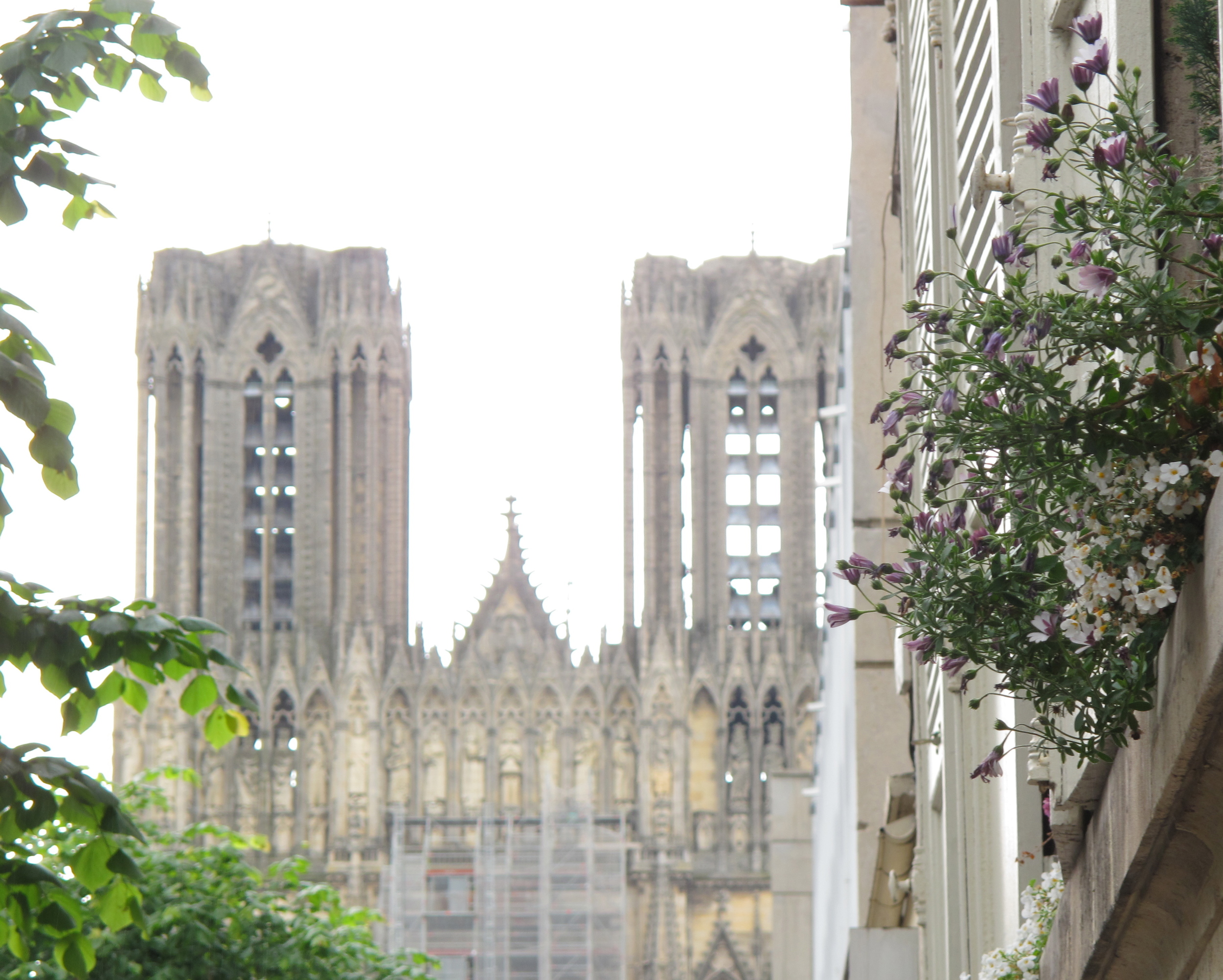
Reims Cathedral, seen from a distance, with flowers in the foreground

CLAIRSENTIENCE

noun | clair.sentience | ,kler"sen(t)SH(ē)ans

clair - to see + sentient - to feel | clairsentient - clear feeling.


The ability to perceive things strongly and clearly, including things others may not normally feel: others emotions, the energies of people, animals and plants, and possibly spirits.


Reims Cathedral has been called the epitome of Gothic architecture. 

The windows are centered like jewels in their casings; glinting royal blues and purples, deep magentas and fine spidery traces of green and ochre. Between all these windows, the walls of the church begin to give way and dissolve into light.

In the Gothic quest for height, this Cathedral was one of the tallest of its time. Inside, the ribbed vaulting and pointed arches are all vertically inclined, and every part of the edifice works to draw the eye upwards. And, oh, those pointed arches! An architectural marvel, after centuries of the limiting Romanesque rounded arch, the pointed arch dispersed the forces of gravity, allowing masons to perforate the walls with those enormous windows.

Reims Cathedral is a pumice-like creation of light and rock, reaching toward the heavens.

⚜♕⚜


What makes Reims even more captivating, in my mind, is the history that happened within.

Reims was the site of the baptism of Clovis, first King of the Franks - thus establishing a precedence at this cathedral for the divine unction and the coronation of kings. It was also here that Joan of Arc led Charles the Dauphine, through town after town that had been occupied by the English. And without bloodshed, each town was recaptured, until, at Reims, Charles was formally crowned king with Joan standing by.

When I first glimpsed Reims, my mind swirled with words I had read on paper: ambulatories, covered galleries, west portals, tympanums and arcades. Spires, traceries, masons, lead-workers and pilgrim-walkers.
The place seemed encrusted with time. Inside, I could almost hear the whisperings of a million prayers. It smelled of wax and candle wicks.
After admiring the rose windows, I walked between the isles. Then, rounding a corner, a strange feeling overcame me. Before me was a statue of a figure, as small as a child, and dressed like a boyish knight. The feeling became stronger, and tingled in my fingers - somehow I knew this figure. Somehow, this person, this place, was important, and the importance was lingering in the very air around me. Goosebumps. Stepping forward, it slowly dawned on me who the statue represented: Joan of Arc. From the backlogs of my memory, my mind whispered that, yes, Joan of Arc had been here. In fact, upon reading the sign, I learnt that this was the precise place where Joan had stood beside King Charles VII, during his coronation.
I had been called to Reims by the architecture alone, yet now I was utterly overwhelmed by the feeling that Joan's presence was, well... still present. Emotions bubbled up from some unknown source, and I kneeled in reverence and contemplation. 
I returned to that spot a few times before leaving Reims, and each time, I felt Joan there.
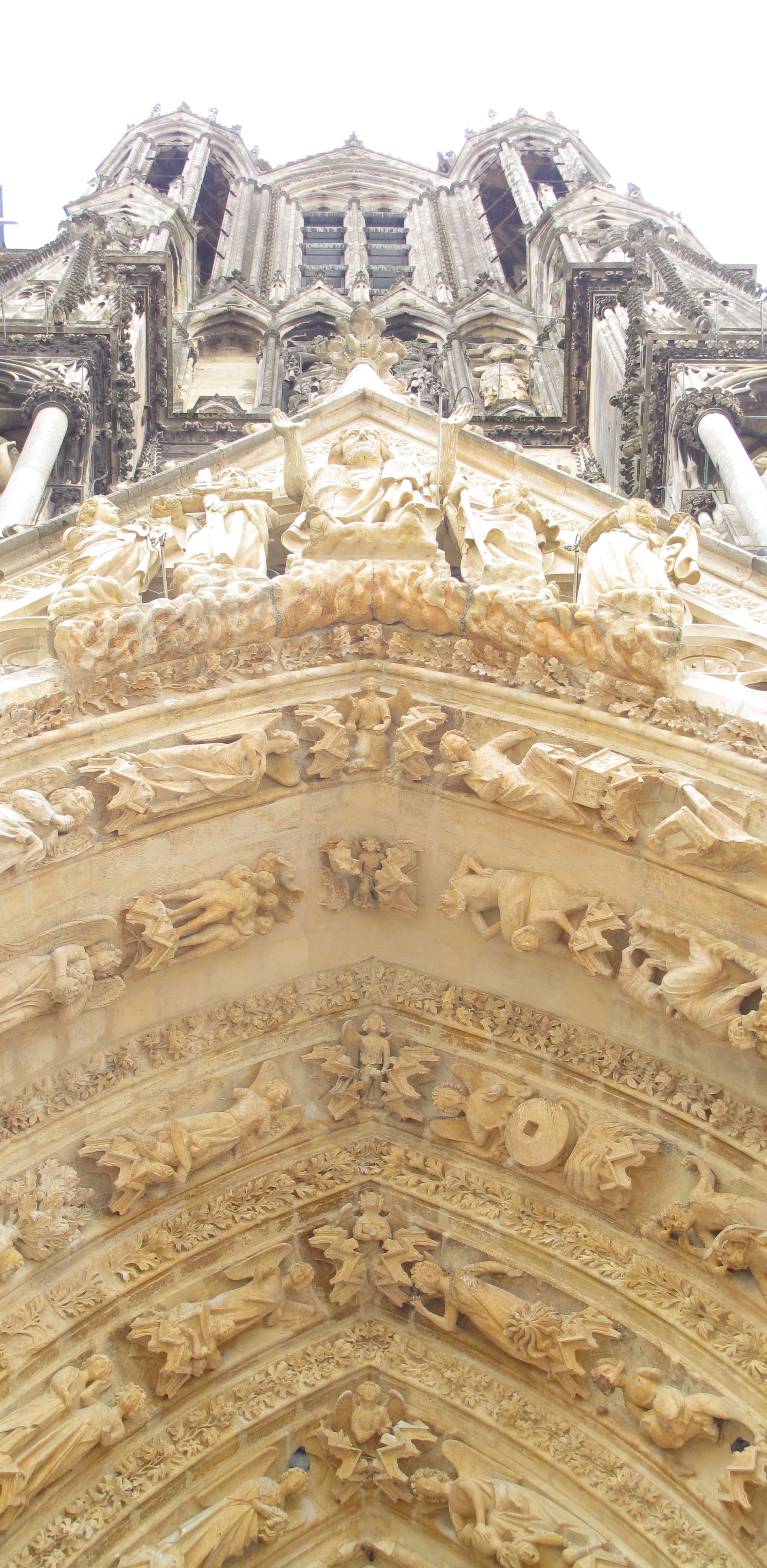

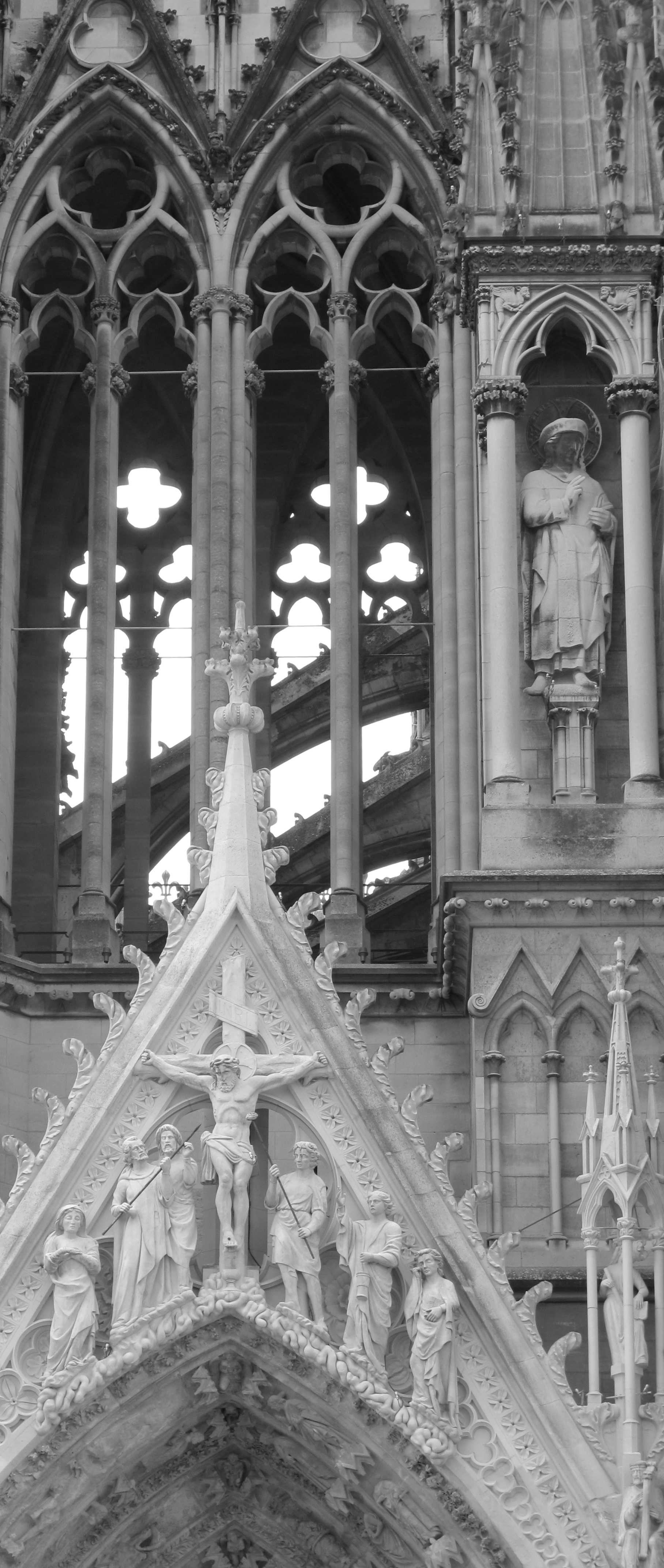
The Western Port and façade of Reims Cathedral
Windows and towers of Reims Cathedral in detail
Statue of Joan of Arc in a small chapel at Reims cathedral

JOAN D'ARC

&

CLAIRAUDIENCE


Joan of Arc mentioned her own powers of perception many times. She told friends, and even her inquisitors, of the voices she would hear - instructing her in life, in her mission to speak with the Dauphine, and in battle. Altogether, it is uncanny what Joan achieved before the age of nineteen. 

Joan accredited the voices she heard to St. Michael, St. Catherine and St. Margret. She would also see visions of light, and sometimes felt the presence of these saints. Notably, her first episode of clairaudience - a heightened ability to hear things - happened in her father's small garden. And, from this point on, Joan seems to have heard more clearly when she was surrounded by nature, in meadows, and in the woods. 

Tuesday, Feb 27, 1431. Fourth Session in the Trial of Joan d'Arc.

... Asked whether the voice which spoke to her was that of an angel, or of a saint, male or female, or straight from God, she answered that the voice was the voice of St. Catherine and St. Margaret. And their heads were crowned in a rich and precious fashion with beautiful crowns. 

Near Jeanne d’Arc’s home at Domremy there was a wood in which stood a beech-tree called the Ladies’ Tree, or the Fairies’ Tree, famous throughout the countryside. As a child, Jeanne used to hang on its branches garlands of leaves and flowers, and dance under it with the other children. A great deal was made of this by her inquisitors - dark things were said: the garlands vanished during the night, the birds in the oak-wood fed from her lap, the wolves there would not hurt Jeanne’s sheep. There was always the mystery of the voices, to which, when they had stupefied the child of another world and burned a saint, they were no nearer.

In the course of her long trial they asked her if she still heard her voices. Worn out with questions and learned subtleties, “Menez-moi dans un bois,” she said, “et je les entendrai bien.”

Lead me into the woods, she said. I will hear them well.
— Charlotte Mew - Men and Trees. 1913.
The smiling angel at Reims Cathedral
Shadows and light in Reims Cathedral - a perfect example of Gothic Architecture and the pointed arch.
Candles for prayer in the gloom of Reims Cathedral
The nave of Reims Cathedral
“The mystery of nature and life hovers about the columned temple of the forest. The secret is always behind a tree, as of old time it was always behind the pillar of the temple.”
— Charlotte Mew - Buckhurst Park. 1890.
Roses in Reims on a stone-walled house
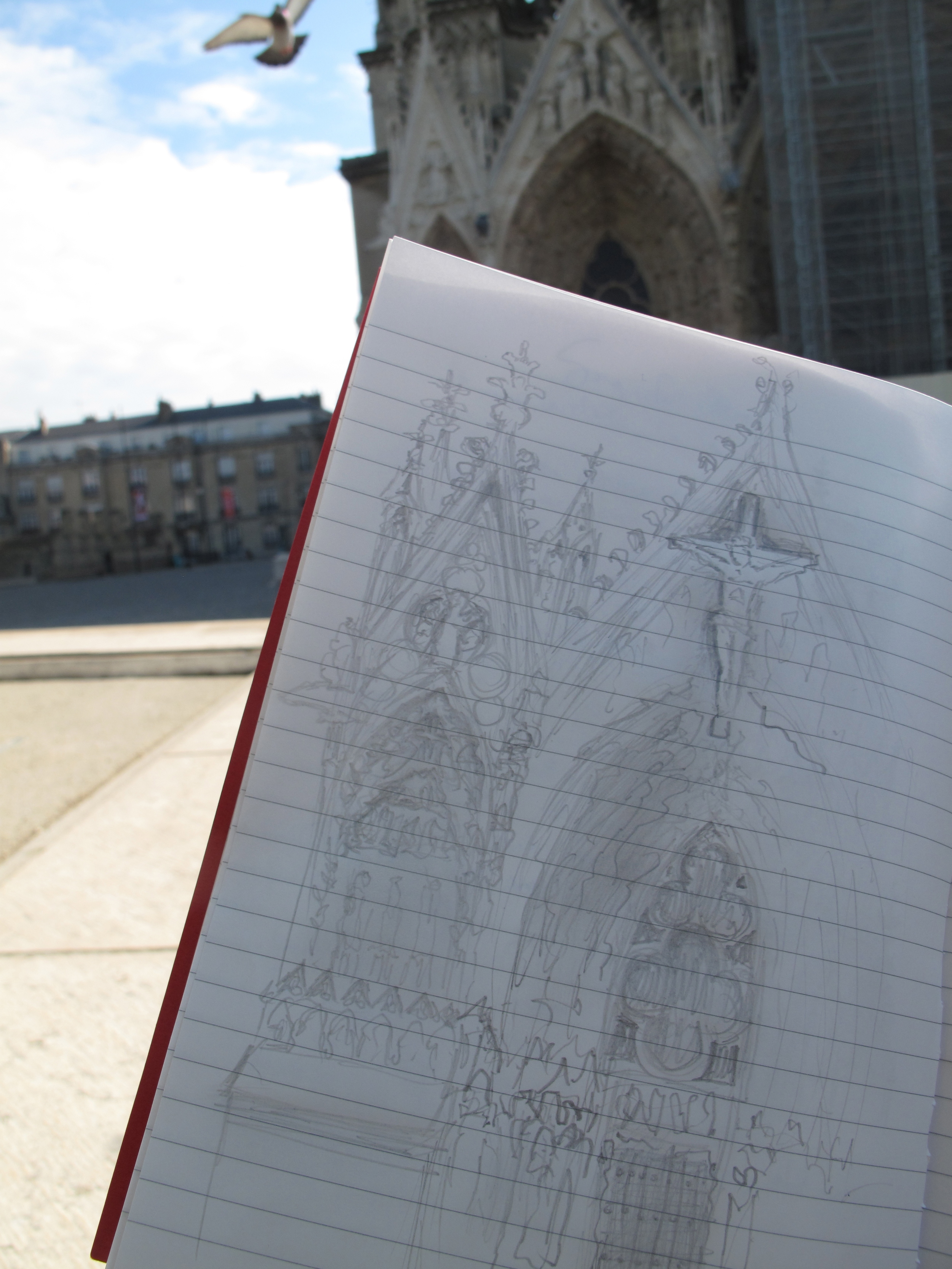
Sketches of Reims cathedral - the West portal and door
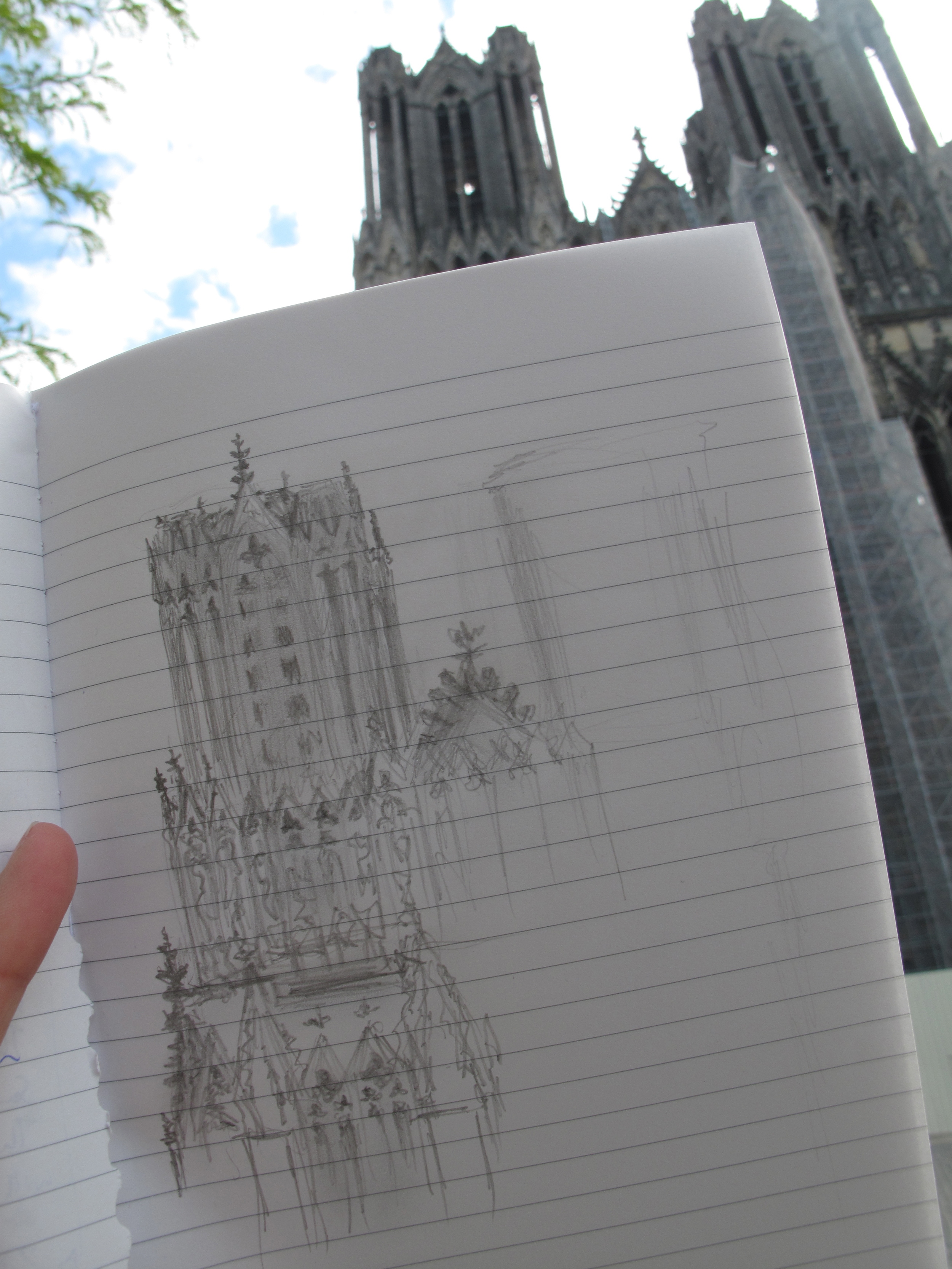
Quick sketches of Reims cathedral  - the towers

VICTORIAN FOR A DAY

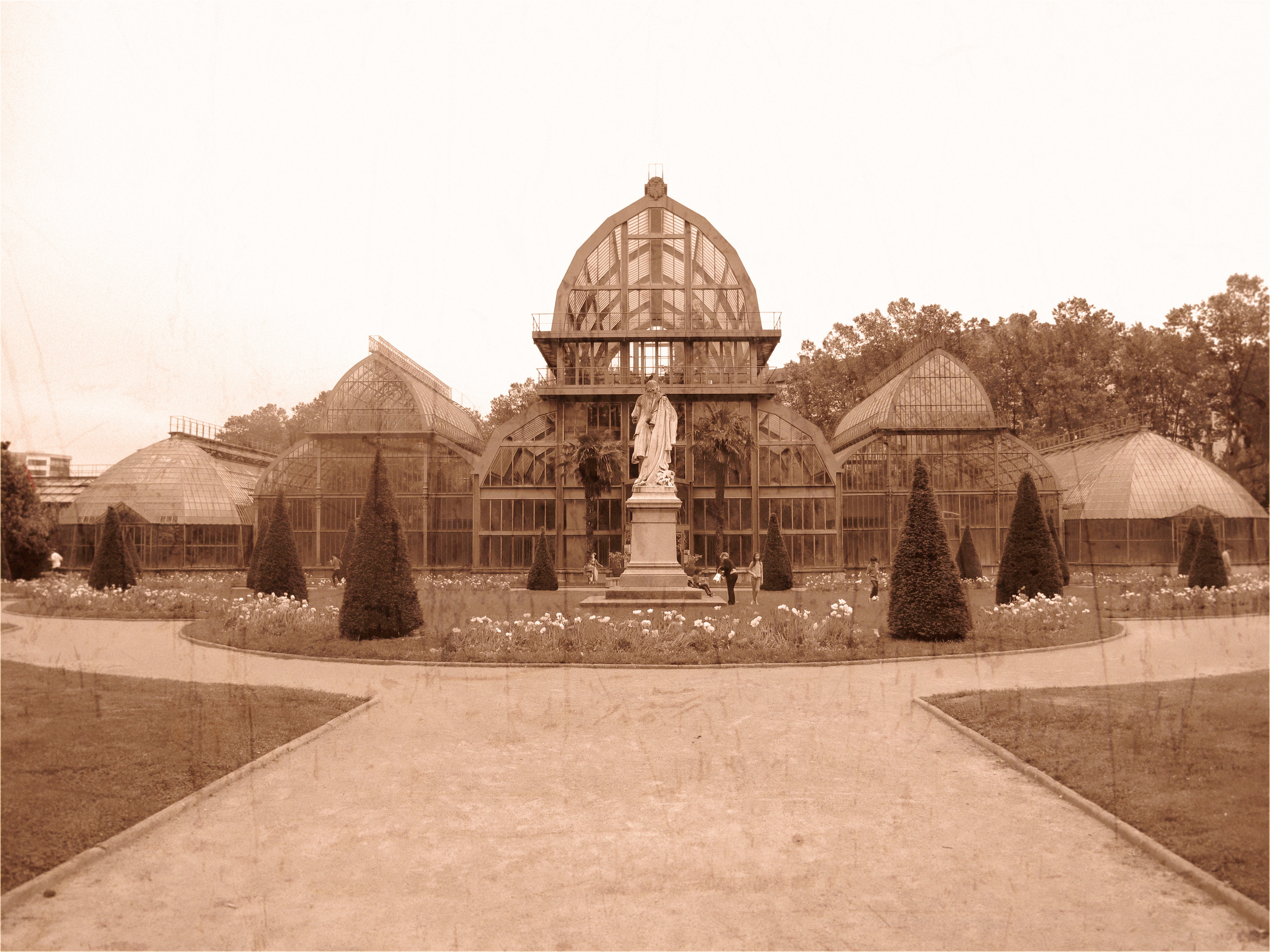
Greenhouse in Lyon in an old photo style

...PICNICKING ALFRESCO...

JUNE 4

It is a delight, to picnic alfresco, especially when one is with friends. On this day, I met with Nicole and Penny, to gather cakes and other such small treats for our luncheon in the park.

The Parc de la Tête d'Or offered us a perfect day of Victorian whimsies, what with the extensive flower gardens, glasshouses and herbariums, and the beautiful zoo filled with exotic creatures.

Penny and Nicole were such good sports, allowing me to do their hair in new styles while we talked about all manner of things. 

After luncheon, we three resolved to walk through the glasshouses and observe the plants that were growing there. I made several rapid sketches of certain plants that seemed to me quite pretty, and kept these in my notebook. 
 

I do adore plants, and to study them in sketch is great fun, but I am also reminded of a lovely article I once read about the collecting of different plant types. I will attach a copy below:


GOLDEN HOURS

May 1878 pp. 232-233.

Even those who think that 'botany' is a repulsive science, bristling with unmeaning and unpronounceable names, will probably confess themselves fond of gathering plants. Some love to cull flowers, others to hunt for ferns, and others, again, to collect grasses. The mere mention of these things will awaken in the minds of many who read our pages a longing for green fields, shady lanes, and bosky dells; mingled, perchance, with a little impatience for the full bloom of Spring or Summer. We wish to appeal to such feelings, and to turn them to some account in the present paper; for what is 'out-door botanizing,' but picking plants, with something more of knowledge and definite purpose than the gatherer usually possesses? Do not take fright at a few technical terms. Every language and every trade must needs have them; and what if every lad who is apprenticed to a watchmaker, or every lass who begins to learn French, were to give up in despair because a number of unfamiliar words had to be committed to memory and understood. Botany will prove intelligible, if we will only throw our fears aside, and be content to learn by degrees.
Our young friends, we will assume, are desirous of taking a first step in plant-lore by becoming collectors. This is truly a step; for no book knowledge, can compare, for interest and benefit, with actual inspection of living plants.
For gathering and preparing, you will require but cheap and simple implements - a digger, a tin box (called a vasculum), and a press. A hand-trowel, such as you can buy at a hardware-store, or even an old case-knife, will form a capital tool for digging. A vasculum is a long tin box, which is strapped to the side of the collector like a telescope case; but a press has some advantages. It is made thus: two pieces of mahogany, or some other wood which will not bend, are strapped together, and a quire or two of blotting paper placed between them. Fifteen inches by eleven is a convenient size for boards; and, by means of a third strap, the press may be easily carried. As soon as a plant is selected, it is carefully take up - root and all, if not too large - with the digger, shaken free from earth, and laid between two half-sheets of paper, in as natural a position as possible. The straps are then tightened, and the collector moves on.
The plants thus gathered will need to be preserved by drying and further pressure. The drying process is accomplished by keeping the specimens between sheets of blotting, or porous paper for some days, changing the paper several times, so as to remove all moisture. They are then fixed to sheets of cartridge with gum or thin glue, and kept in a drawer supplied with camphor to keep out insects. But, as the drying must be under pressure, the aforesaid boards, or two stouter ones of slightly larger dimensions, may be used, the requisite pressure being given by screws and nuts, or by weights, such as bricks neatly packed in brown paper. 
Some plants preserve their colours in drying much better than others; but in the eyes of a collector, the specimens he has gathered in his own hands are always replete with beauty and interest.

I am truly of the opinion that the study, and admiration, of plants will lead a person to feel more connected to nature - perhaps to grow fonder as they begin to understand more about this world.


Raspberry cake pastry in old style photo
Mille Feuille pastry in old style photo
Old Victorian style photo of bridge in a garden
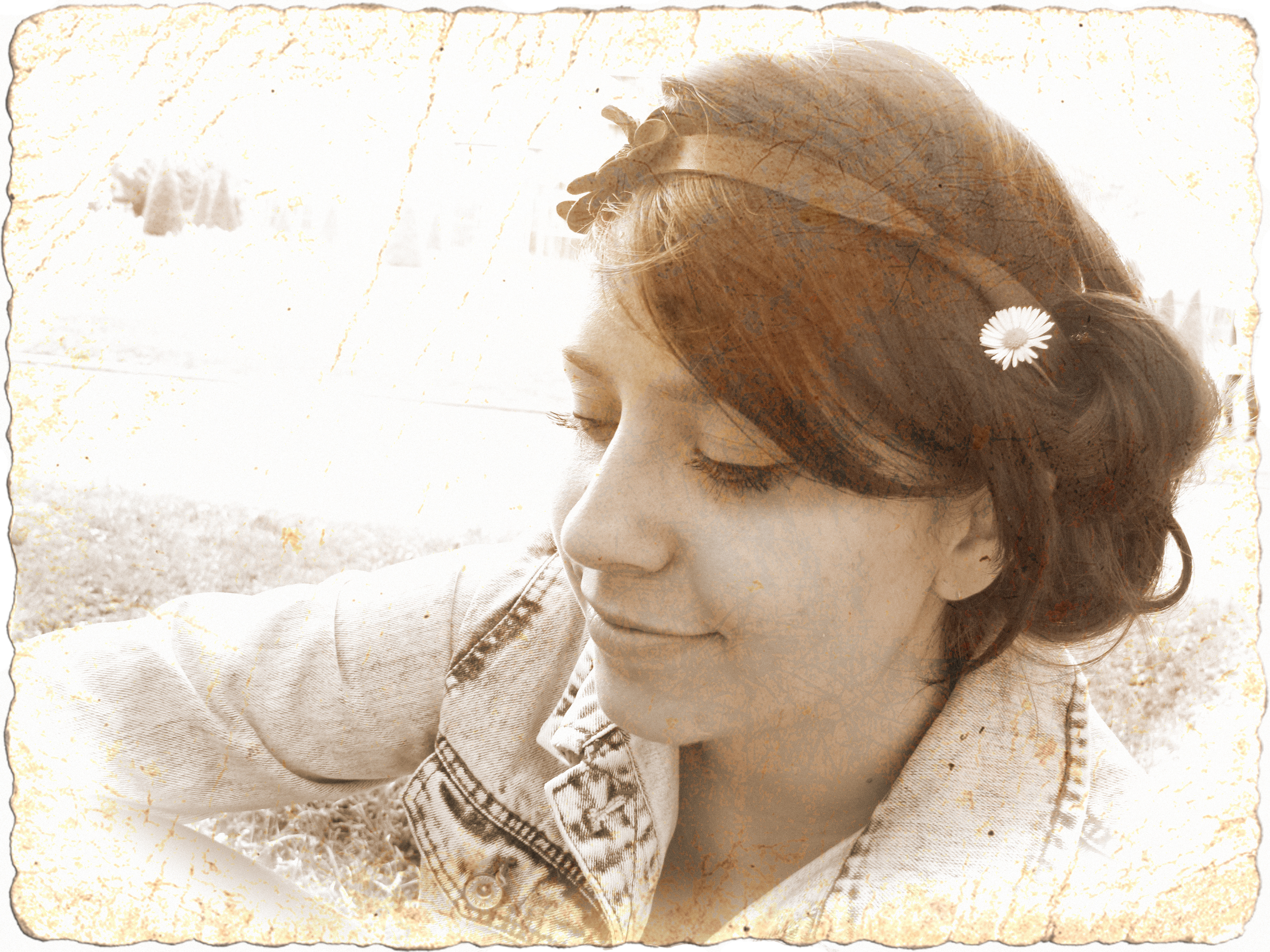
Penny in an old style Victorian portrait
Nicole in an old Victorian portrait style photo
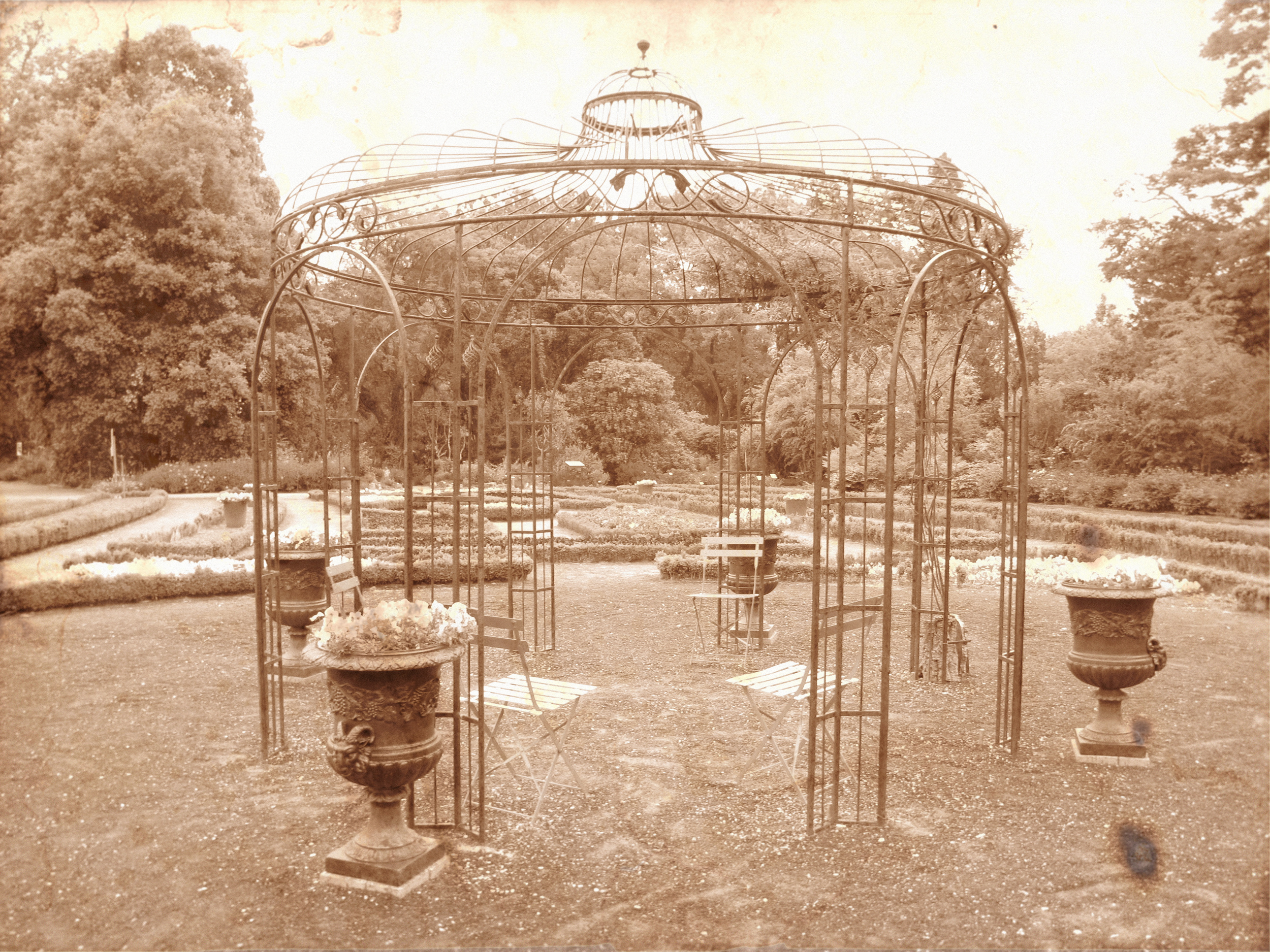
Rose trellis pagoda in old Victorian style photo
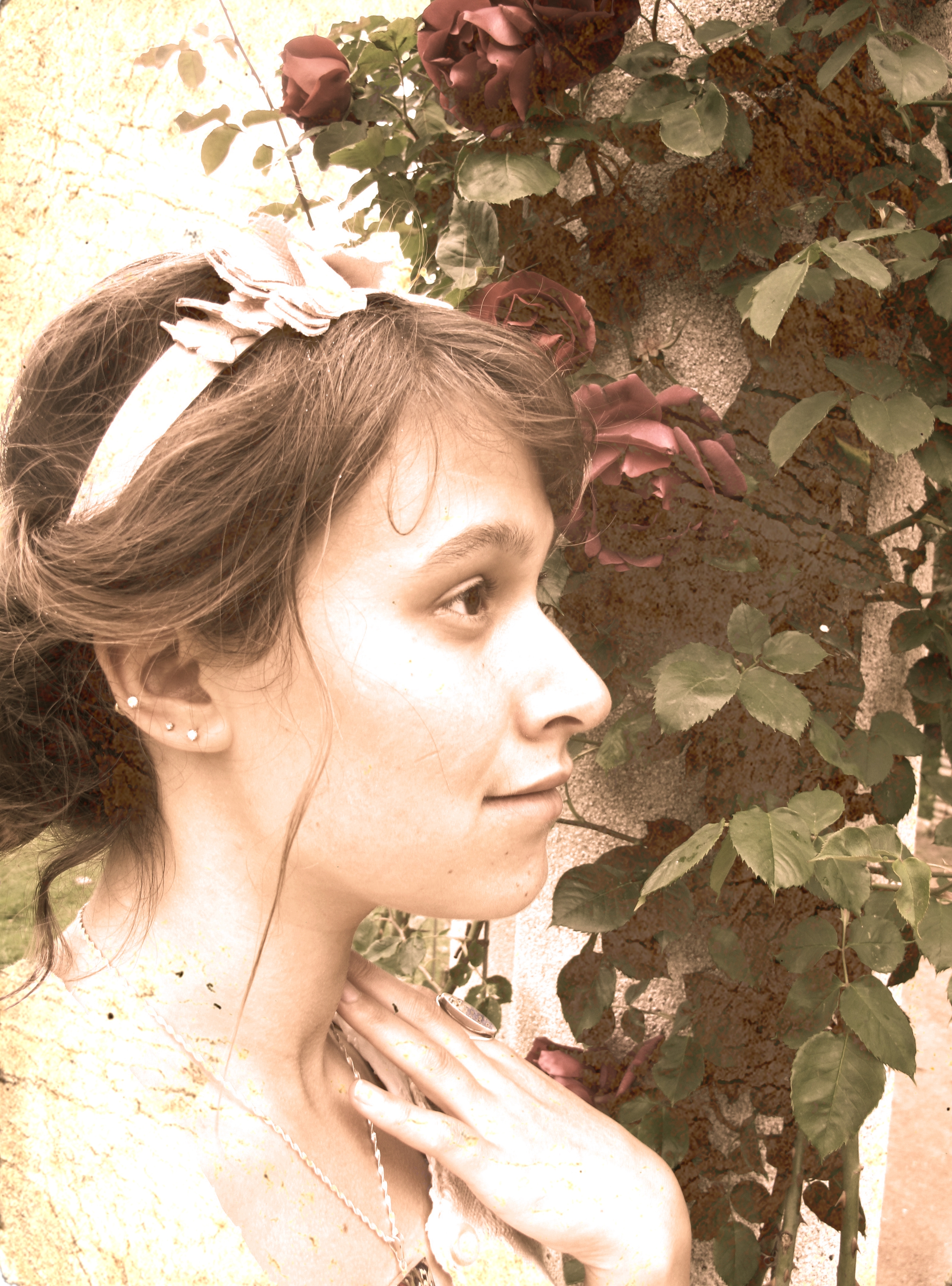
Victorian rose portrait.
Necklace of flowers in an old style crackled photo
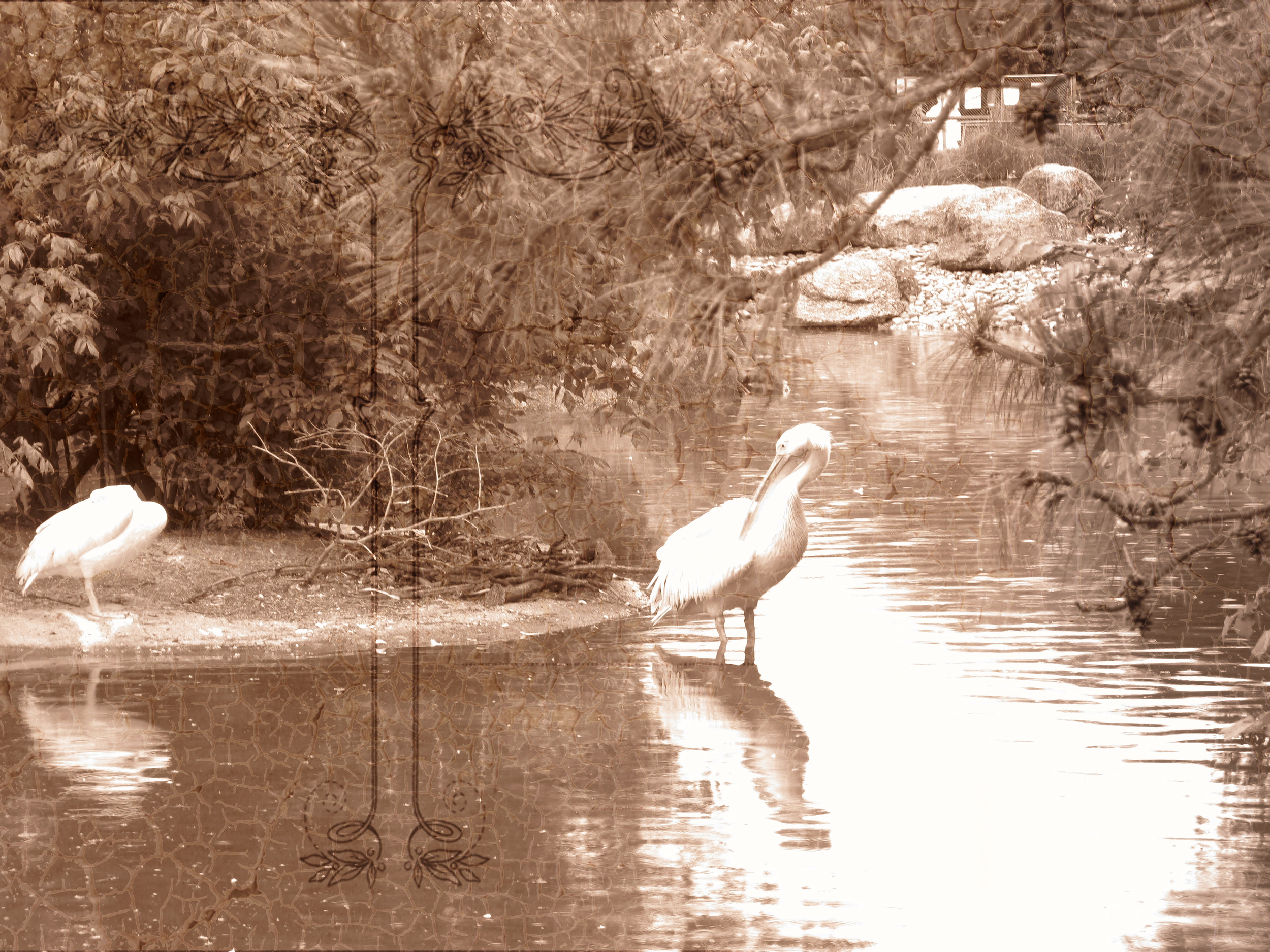
Old style photo of herons in a lake at a garden
Old style Victorian photo of a rose

THE ÎLE BARBE

Île Barbe island of medieval castles and churches in Lyon

PLAYING THE EXPLORER

I first saw the Île Barbe for only a few milliseconds, when it whizzed by my window while we were driving around Lyon. That vision could have been part of my daydreams - from a small craggy rock in the middle of the Saône river, there appeared to be a growth of Romanesque stone structures and hidden gardens.

I resolved to find that mysterious island.

After two failed attempts and twelve hours of walking, I had not given up hope. I set out again, backpack and notebook in hand, down the river Saône, against the flow of the current. A few hours later I crossed the oldest bridge in Lyon, and arrived onto the Île Barbe - for so my mystery island is named. This is what I saw...


FIELD NOTES:

My observations of the Île Barbe were made during two visits, in the months of May and June, 2014.

The island is separated into two halves: downstream, to the southwest, is the public section, whereas that section that lies upstream - northeast of Lyon - has been partitioned into a private area, accessible only by inhabitants.

To begin with the public side, I observed a number of charming details, such as the small copse of trees on the very western edge of the island, and the dusty pétanque courts.

It must be noted that the island remains unharassed by tourists, the only day-trippers appearing to be the locals from around-abouts the island, who come to picnic in the woods, play pétanque, or fish in the stream. And every so often, they will hold a market which sells antiques and food delicacies, as I observed one Saturday upon my second visit.

Proceeding eastwards, we arrive at the large wall that divides the island in half. In this wall, there is one gate, closed, and guarded by a concierge at most times of the day. The gate opens for shiny black cars driven by the inhabitants en île.

I was most fortunate, upon my first visit, to arrive at said gate just as it was closing, and I slipped through unnoticed, to conduct further investigations. 

For, it is on this private section that the beauty and former glories of the island can be found: large Romanesque stone buildings, which I am convinced are of various origins. The several parts which were met with lead me to conclude that the island has been inhabited for well over a millennium.

The first building to the right is chiefly remarkable, as it appears to be the hollowed remains of a twelfth century church, complete with a bell tower in the Romanesque style. When indicating the age of the building, I may mention as proof: the several rounded archivolts still imprinted in the stone walls, where the building has been ruined somewhat, the scarcity of windows in the edifice (the opposite of which would indicate a later Gothic style), and the square construction of the bell tower.

Nearby the old church, one may spy: a small Auberge of some renown, where they serve traditional meals; red roses climbing stone walls - reminiscent of the tale of Beauty and the Beast; many mullioned windows on the beautiful old buildings now used as housing; and tall stone fences covered in trailing ivy.

Somewhere, somebody was whistling.

These scenes were so beautiful, my heart just about melted clear down to my toes.

Now, if one was to curiously approach a wooden gate in one of the stone fences, and peer into the keyhole, they may see a family, sitting in their garden, eating croissants and reading the newspaper. 

Beyond the bell tower, there is a path between high walls and stone stairs, leading to an old tower fortress - a remnant of what may have been a fortified wall. And through an arch in the tower we may find an ancient port, where boats would be pulled to shore.

Further to the north lies a real treasure: a standing wall, a ruin of what may have been a church building, the details of which appear to me very interesting and worthy of attention:

In this wall there are several stone arcades, with pointed arches and ribbed vaulting, but in the middle of the wall is a Romanesque door, above which is a tympanum - a carved stone scene in a semi-circle design, as one might see above the door of a Gothic church.

The tympanum is carved with a scene of Christ and two angels, by their sides are two figures - possibly monks - and all are crushing allegorical animals underfoot; Christ himself is crushing a serpent or dragon. The inscription reads: EGO SUM LUX MUNDI - 'I am the light of the world.'


Altogether, the Île Barbe struck me as an incredible masterpiece, one which has remained largely unheard of, and one which retains its mysterious charm and a truly mystical feeling.

My observations and feelings were thus magnified when I learned the true history of the island - retold below in my own research notes.

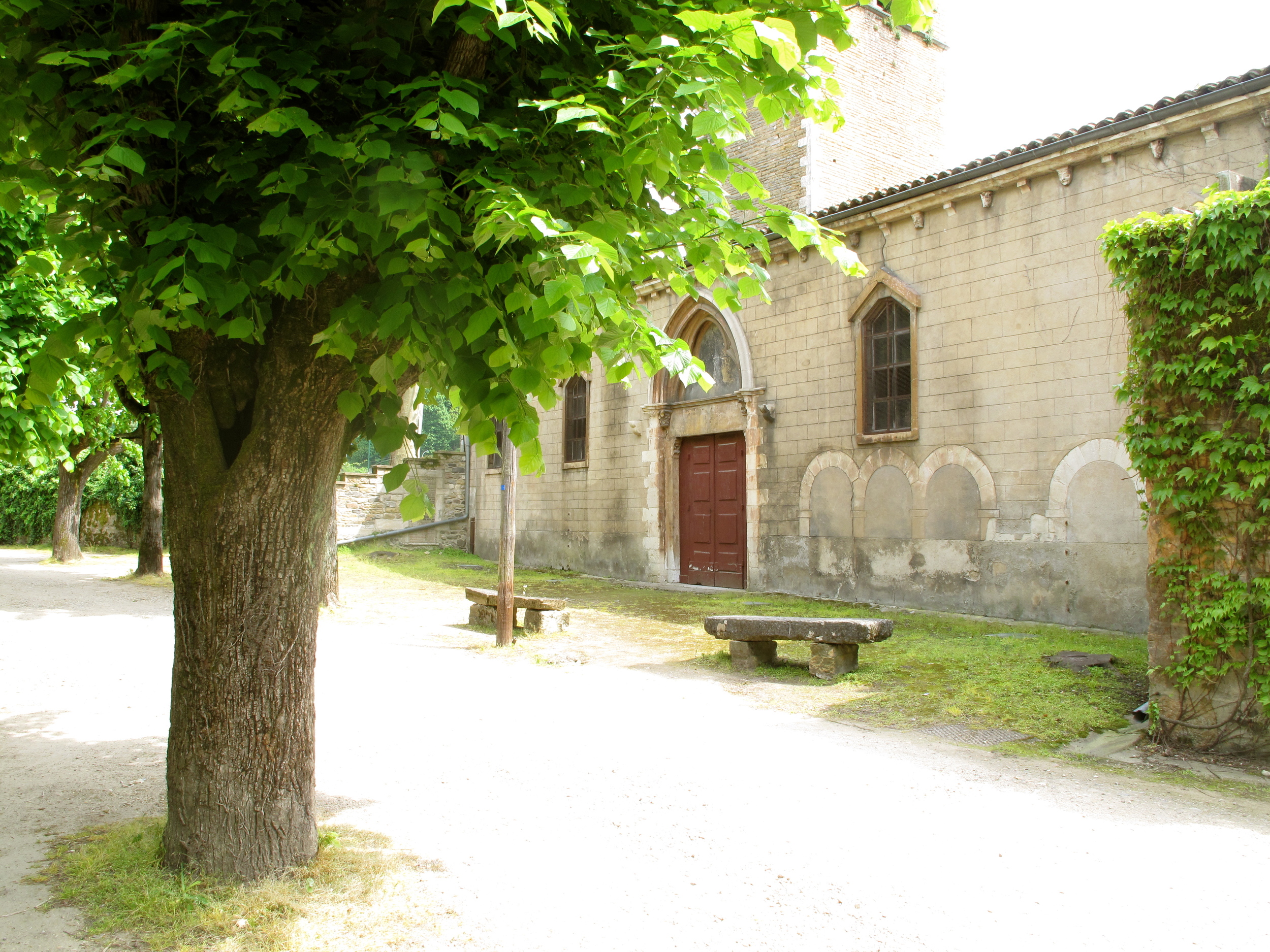
The Romanesque church of Notre Dame on Île Barbe.
Romantic old house on the Île Barbe, with roses at the door
Ancient medieval wall of stone on the Île Barbe, Lyon, France

A MYSTICAL HISTORY


 The Île Barbe’s forgotten history…

700 BC – At this time, the IÎle Barbe was simply a large boulder covered in vegetation in the middle of the river, occasionally visited by Celtic Druids who used the space for ceremonial processions.

Then, during one of the many Roman persecutions of the Christians, a chap by the name of Peregrinus took shelter on the island.

5th century – A monastic abbey is founded under St Andrew, making this the first abbey in Lyon, and one of the very first in all of Gaul.

9th century – The abbey gains a Carolingian lustre when Charlemagne donates an extensive library, which quickly becomes one of the greatest libraries of the age – the medieval equivalent of the Library of Alexandria.

9th century – The Abbey adopts the rule of St Benedict, and the affiliation of the Abbey’s church changes to St Loup and St Martin.

Thus, the Île Barbe gradually became a spiritual centre, characterised by piety, art and intellectual pursuits.

1075 – Fra Ogier, the new Abbot, becomes worried about the increasing number of pilgrims who come to observe the piety of the monks. He commissions a small chapel to be built–outside the walls of the cloister–to make it accessible to the public without disturbing the tranquility of the monks inside. The chapel is dedicated to the Virgin Mary, and is called Our Lady.

12th century – The chapel of Our Lady is finished, and pilgrims are welcomed onto the island by boat.

1306 - Pope Clement V grants 100 days indulgence to pilgrims who will worship at the chapel during one of the four celebrations of the Virgin. The chapel quickly becomes so popular that the monks begin to conduct their activities there, moving their worship from the more private church of St Loup.

15th century – The “shady meadow” downstream is noted in the records as a place “a little less pious” during the pilgrim’s festivities. Later, the meadow is planted with trees (still standing) to retain the land during floods.

By the 1400’s, the Île Barbe had become a centre of Marian devotion, as pilgrims came from all over to worship the Virgin and gain her generosity. The chapel of Our Lady was only overshadowed seven centuries after its creation, by the currently famous Notre Dame de Fourvière.

For six hundred years or more, the Virgin Mary has been revered in this place, and she has always shown generosity to those who have prayed.
— Claude Plowman, 1665

September 1630 – Louis XIII visits Lyon and becomes deathly ill, even receiving extreme unction. A few days later his internal abscess bursts and he is healed. To give thanks for the king’s healing, the two Queens of France–Anne of Austria and Marie de Medici–walk from the centre of Lyon to the chapel on the Île Barbe.

However, things have been going downhill since 1551...

1562 – The Reformation motivates local Protestants to slash and burn many churches, including parts of the Île’s abbey.

Around the same time, the coming of the plague pushes officials to ban visits to the Île Barbe, and the partially ruined abbey is temporarily abandoned.

1600’s – The centre of Marian devotion in the Lyon region shifts, as Notre Dame de Fourvière steals the limelight with lavish processions, supposed miracles, and greater accessibility.

1789 – The French Revolution devastates the abbey and the island, after the seizure of church property.

During these tough times the library of Charlemagne is mostly destroyed, and the many artefacts, stone decorations and silver chalices owned by the abbey are sold and dispersed. The buildings themselves are sold to private buyers who take up residence on the island.

The monastery and college have been reduced to total ruin by these disorders.
— Guillame Paradin

Around this time, the Île Barbe becomes a haven for wealthy landowners like the Lyonnaise painter Revel, who placed his country estate on the island.

1801 - Catholic worship in France is restored and the new owner of the chapel of Our Lady applies for a decree to celebrate mass in the old building. 

1827 - the suspension bridge is built - what is now the oldest surviving bridge in Lyon.

1860 – The nave of the chapel of Our Lady is destroyed, to make way for a garden.


Red door and a keyhole in a garden gate
Spying through a keyhole into a garden of roses on a hidden island in France
An overgrown castle on a small island in the depths of Lyon

THE PRESENT DAY…

Today the island is still revered, so much so that boatmen still sometimes remain silent in veneration when passing the Notre Dame.

The island also retains a separation of public and private spheres, put in place by the medieval abbey when they welcomed pilgrims onto the shores. Now, though, the canonical houses are inhabited by private residents, and the former glories of the island are forgotten, locked behind those closed gates.

The chapel of Our Lady is undergoing restorations to ensure that the beautiful stonework and frescos therein do not sustain any more water damage from open the bell tower. Some gorgeous Romanesque features still remain–a 13th century keystone in the roof decorated with a four-fold symmetrical golden oak leaf design, and several of the grotesque beasts carved into the roman capitals–typical of cloister decorations. About one meter of soil now sits above the original foundations, as evidenced by the column bases found in archaeological investigations. The covered gallery is being used as the nave, and, on certain heritage days, the chapel is open to visitors!

One of the only remaining clues as to the incredible origins of the island is that beautiful Romanesque tympanum I mentioned, above the wooden door in the ruined wall. Once upon a time it formed part of the monastery’s Refectory–where the monks would have gathered to eat in silent reverence.  

A real life beauty and the beast - an island of chateaus, roses and churches hidden in France
If there is a heaven, and I am allowed entrance, I will ask for no more than an endless living world to walk through and explore.
— Edward O. Wilson