BRUGES

The colourful houses all in a row in Bruges market place.
The air is hot and rich with the scent of chocolate. Quite unlike the white powdery chocolate I knew as a boy, this has a throaty richness like the perfumed beans from the coffee stall on the market, a redolence of amaretto and tiramisù, a smoky, burned flavor that enters my mouth somehow and makes it water. There is a silver jug of the stuff on the counter, from which a vapor rises. I recall that I have not breakfasted this morning.
— JOANNE HARRIS - CHOCOLAT

A MIND MAP FOR INDULGENCE

The word indulgence can be complex - it denotes both the act of indulging - a pursuit of personal pleasure, and the act of giving indulgences - a pardon obtained from the Catholic church for ones sins. Not surprising, then, that we should have gotten the two meanings mixed up somewhere along the way.

Is it not common, when we think of indulgences, to think first of small guilty pleasures? The thought of indulging ourselves brings up a myriad of odd associations: delicious food, sin, bubble baths, repentance, self care, selfish acts, luxurious moments, guilt, and above all... chocolate!

I wish, here, to clear up the messy meanings of something that to me is so simple. In order to do so, we must look back the root meanings of the word...

INDULGENCE

inˈdəljəns | noun


1. From the Latin root indulgere, meaning = to give free rein to.

2. 17th century, the meaning shifted to include = to treat with excessive kindness

3. Current meaning = fulfillment, satisfaction, gratification, appeasement.


When I look at all these meanings in conjunction, what I see is not some messy act of guilty pleasure, but is instead a word for an act of self nurturing, bordering on mindful consumption, with an end point of fulfillment. 

That word, indulgence, ran through my mind once or twice when we visited Bruges.


My Most Vivid Memory from Bruges

sitting on a park bench, the evergreen shellac peeling off the wood, Oliver beside me, both of us watching the world go by as we passed a small chocolate back and forth...
The taste of that one chocolate will stay with me forever. I have cemented it in my memory, along with the moment.
It was green, too, although lighter than the bench. The colour denoted the contents, which were said to be 'cilantro and lime'...
I remember the way that first chocolate burst like an orange nodule, tangy and sharp, almost hurting my sleeping mouth, before the layers of flavours became apparent - bittersweet like a guava, pitted and grainy like blackberries, smooth as milk and soft as butter, the effect was a symphony, one part moving through to the next.
It was a moment that deserved my undivided attention. There is nothing I needed to do, right then, except be there, eating chocolate.


The whole of Bruges was like this - a feast for the senses. By awakening, opening, surrendering and focusing my attentions, I felt I could drink in the colours, imbibe impressions, and engage with the fabulous visions of the world around me, tasting the very essence of it all.


Best chocolates in Bruges - Line chocolates.

... and a small map of places where one can indulge themselves ...


Taste:

- Chocolate at The Chocolate Line, Brugge.

- Waffles at Maison Albert.

- Beer from the Westvleteren Monastic Brewery


See:

- Michelangelo's Madonna and Child at the Church of Our Lady.

- The beauty of Bruges on foot, or by water.


Hear:

- A chorus of ducks at Minnewater Park.

- The slow click and creak of windmills along Kruisvest.


The beautiful canals of Bruges - with small medieval houses on either side.
Primroses in pots hung on a brick wall.
Belgian fries - twice fried, extra crunchy, perfect.
Colourful town houses in a row in the market place of Bruges.
The best waffles in Bruges - from Chez Albert.
The tower of Bruges - sparkling in the sun.
Secret alleyways and small cottages in Bruges.
Drinking a glass of Westvleteren beer at the Trappist monastery.
Michelangelo's madonna and child in Bruges Church of Our Lady.
The old town of Bruges - a boat leaves off the dock of the canal, by medieval houses.
Windmills on the edge of the old town of Bruges - set upon green hills.
Minnewater lake in Bruges - the lake of love.
A bridge over a canal in Bruges.
A painting of the crucifixion in Bruges Church of our Lady.
Horse and carriage waiting in the market place.
Candied oranges in the windows of Dumon chocolatier.
A brick house with red shutters and a small boat in the canal.
Dumon chocolates in a small box.

ABBAYE DE VILLERS

The ruins of Abbaye de Villers, Belgium - in black and white.

Dans les ruines d'une abbaye

Seuls tous deux, ravis, chantants !

Comme on s’aime !

Comme on cueille le printemps

Que Dieu sème !


Quels rires étincelants

Dans ces ombres

Pleines jadis de fronts blancs,

De cœurs sombres !


On est tout frais mariés.

On s’envoie

Les charmants cris variés

De la joie.


Purs ébats mêlés au vent

Qui frissonne !

Gaîtés que le noir couvent

Assaisonne !


On effeuille des jasmins

Sur la pierre

Où l’abbesse joint ses mains

En prière.


Les tombeaux, de croix marqués,

Font partie

De ces jeux, un peu piqués

Par l’ortie.


On se cherche, on se poursuit,

On sent croître

Ton aube, amour, dans la nuit

Du vieux cloître.


On s’en va se becquetant,

On s’adore,

On s’embrasse à chaque instant,

Puis encore,


Sous les piliers, les arceaux,

Et les marbres.

C’est l’histoire des oiseaux

Dans les arbres.

In The Ruins of an Abbey

Alone, the two together, ecstatic and singing!

How they love one another!

How they gather the springtime

That God has sown!


What sparkling laughter

Fills these shadows

Once filled with blank faces

And somber hearts!


They have just been married.

They send each other

Various charming cries

Of joy.


Their antics mix with the wind

That shivers!

Joyful expressions that the dark convent

Enhances!


They ruffle the jasmine flowers

On the stone

Where the abbess joins hands

In prayer.


The graves, marked with crosses,

Become a part

Of these games, just slightly bitten

By the nettle.


They chase each other, play hide-and-seek,

And feel the growth

Of your dawn, love, during this night

In the old cloister.


They go about, pecking at one another,

They adore each other,

They embrace at every moment,

And then again,


Under the pillars and the arches

And the marbles.

This is the story of the birds

In the trees.


~ A Poem By Victor Hugo, upon visiting the Abbaye de Villers.


Hide and seek with the ghosts of Abbaye de Villers.

VIRIDITAS

noun

1. A force of nature

2. The real and visceral energy and spirit of life on earth

3. It is particularly associated with abbess Hildegard von Bingen, who wrote of it many times in her mystical treatises.

synonyms: vitality, lushness, verdure, and growth.


...

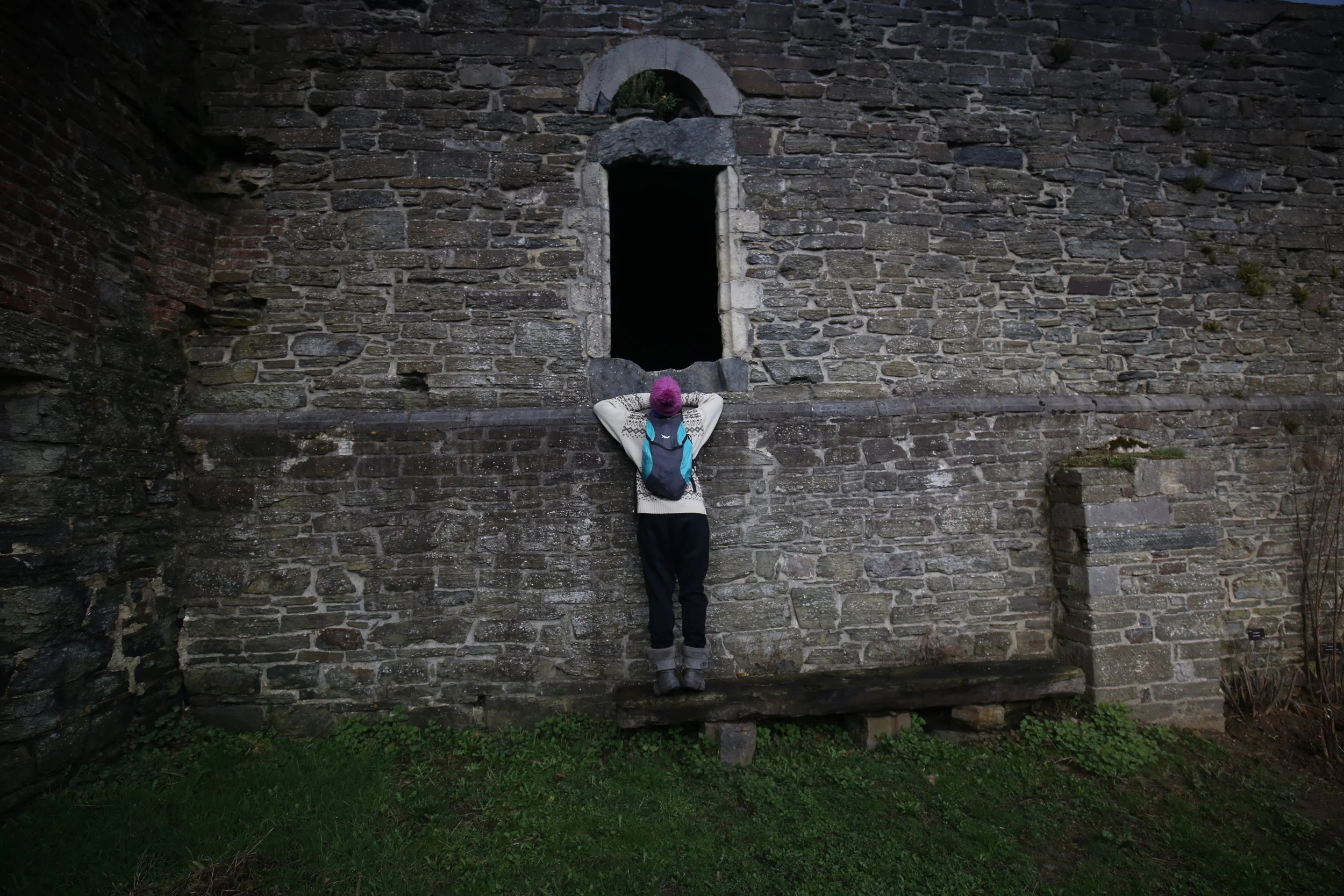
Just us, amongst the ruins: Myself, Oliver, and several honking geese.
Wandering and wondering about ancient halls, wind-swept cloisters, playing hide and seek between the walls beneath the sky.
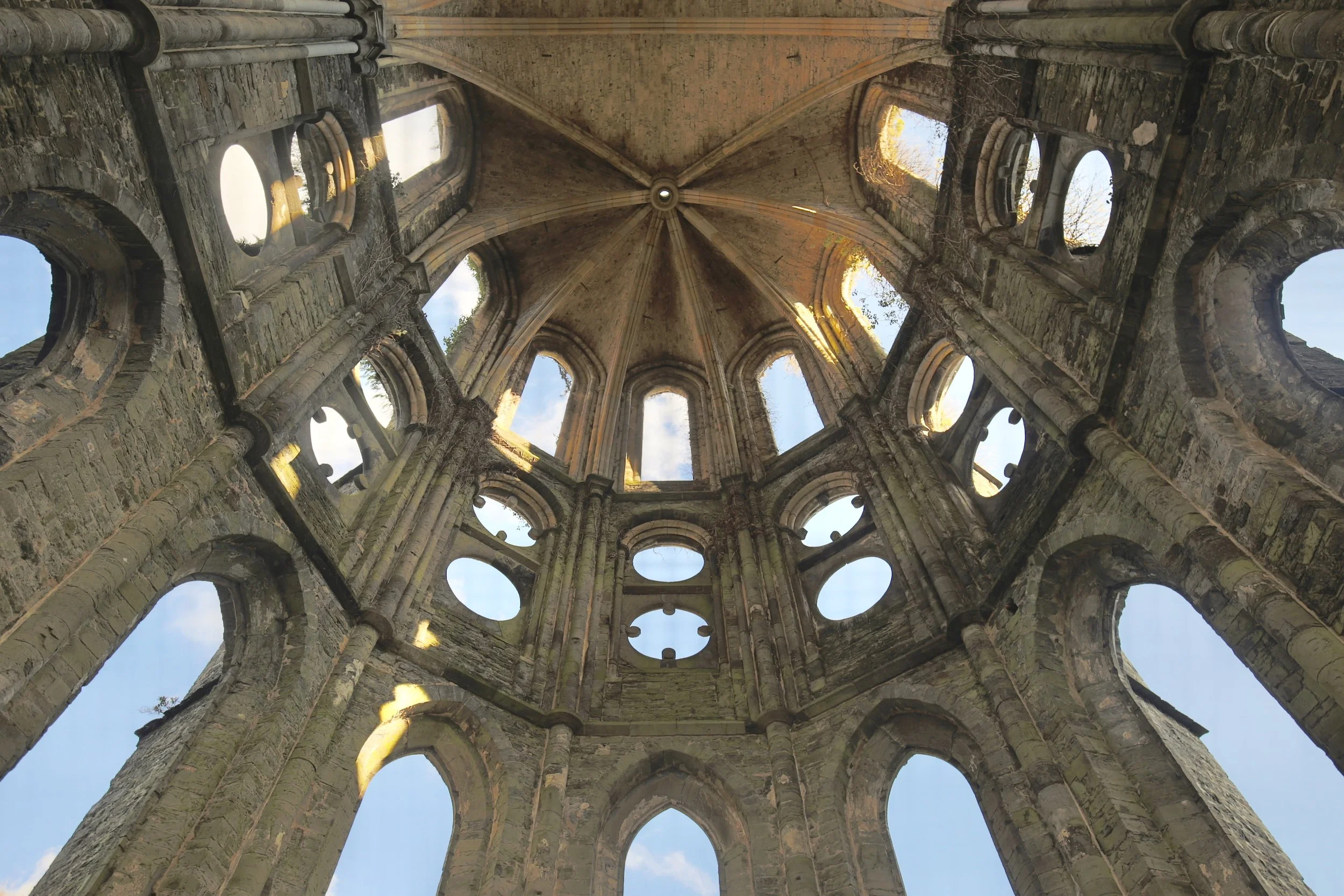
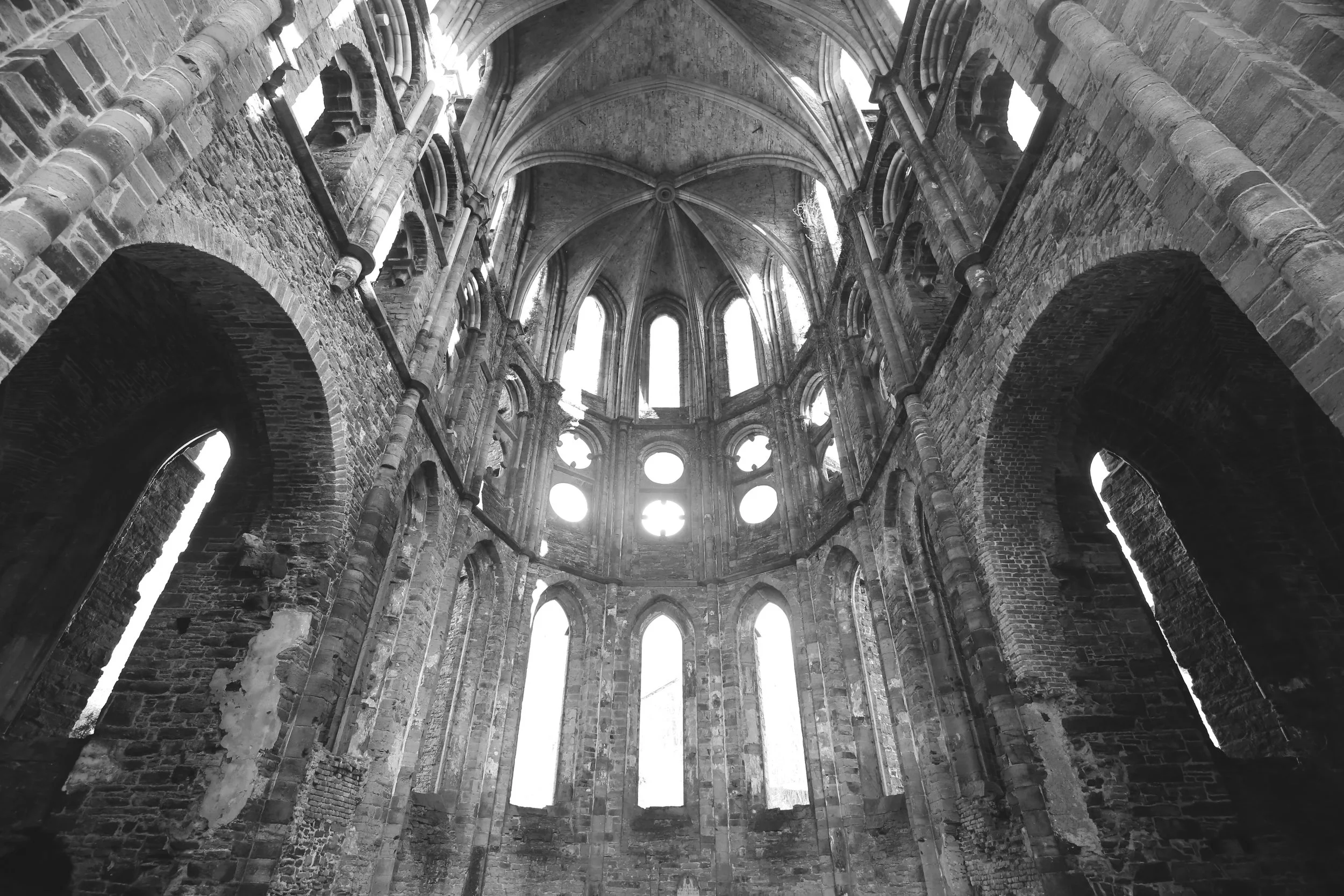
My laughter was caught by my breath, stopped short in the vast nave where the pillars went down, rows and rows, to the apse.
The bones were showing. I imagined what it must have been to walk the nave, in the light of candles, and shifting shadows, sent down from the cracks that now opened onto daylight.
Windows on the sky.
A ceiling that touched the clouds.
The height of the nave was even more apparent, now that it was stripped bare. Vertiginous. Vertigo. Can one get vertigo, looking up? I felt a little dizzy when I craned my neck to stare into the depths of the heights.
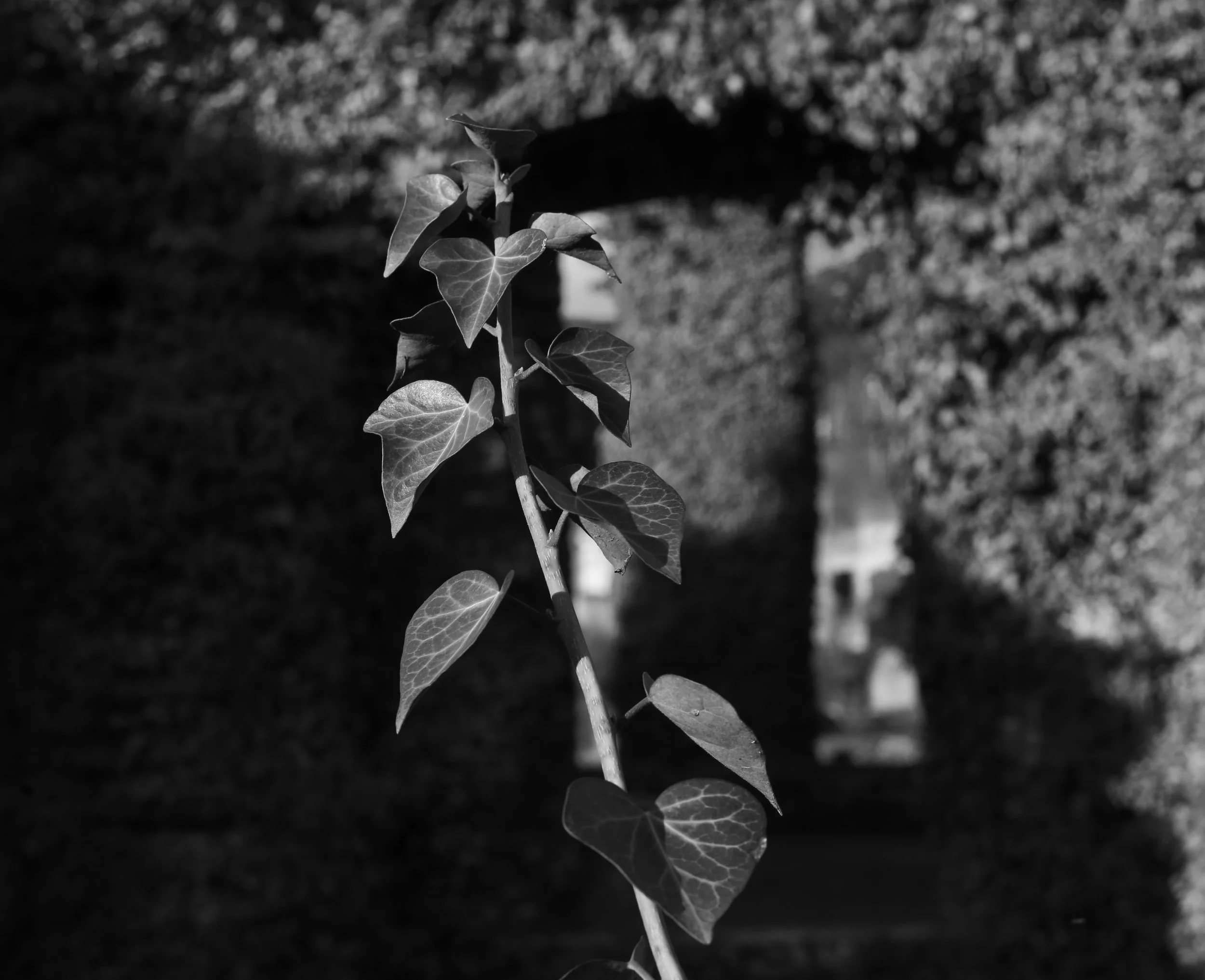
And all along the walls were ropes and tendrils of ivy, and pockets of grasses growing from brick-shaped-holes.


The beautiful stone apse of Abbaye de Villers - with light pouring in.
The ruined stone walls and ivy clad gardens of Abbaye de Villers.
Ivy leaves in the sun, close up of ivy on a stone wall.
Black and white photo of Abbaye de Villers, Belgium - in afternoon sun.
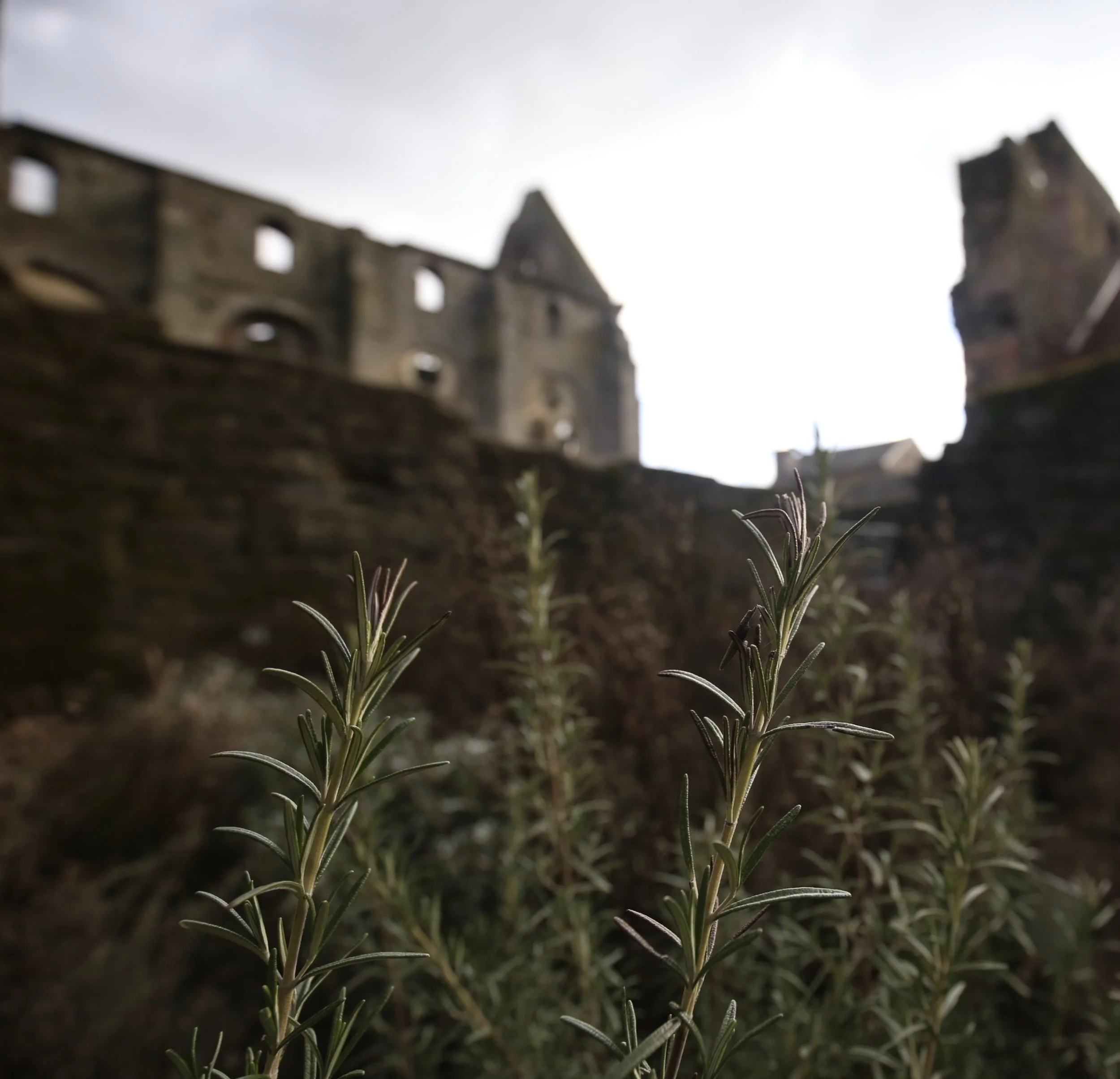
Rosemary still grows in the gardens of the ruined Abbey of Villers.
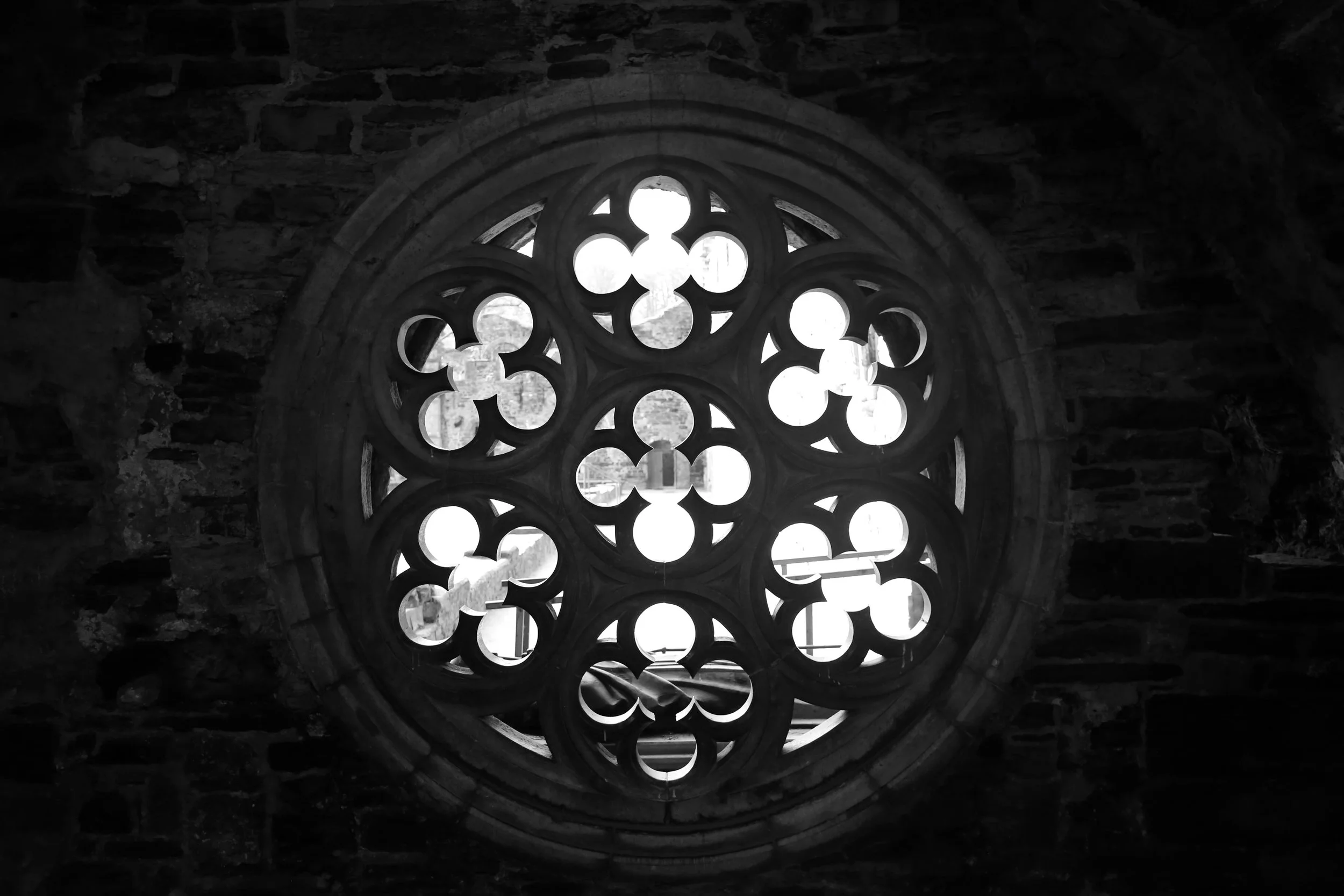
Round window with stone tracery, in an old Abbey of Belgium.
Light pours through the windows in the old stone apse.

OUT OF SHADOWS

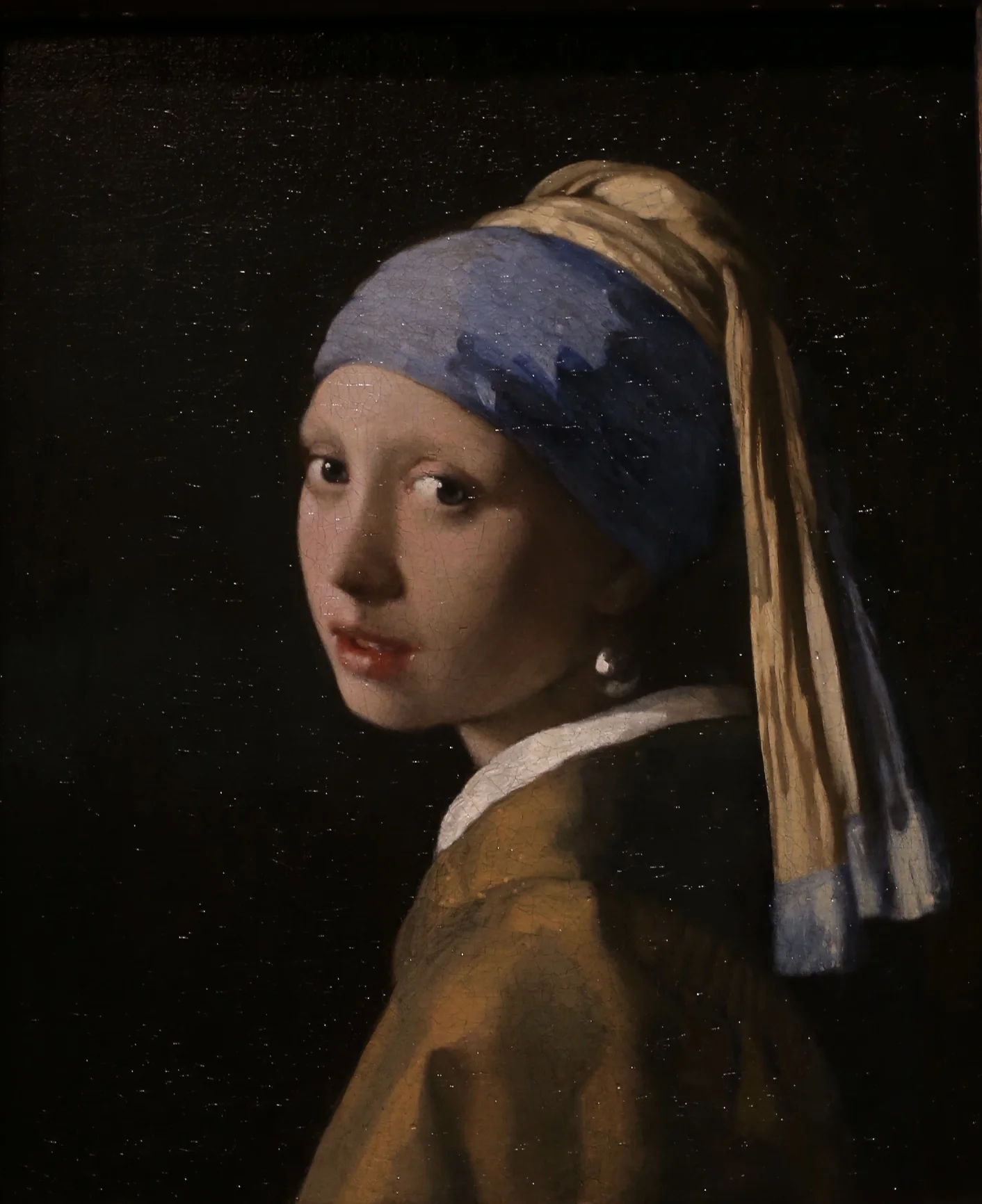
The Girl With the Pearl Earring - by Johannes Vermeer.

chi·a·ro·scu·ro

kyärəˈsk(y)o͝orō | noun


1. The treatment of light and shade in drawing and painting.

2. Mid 17th century, from Italian: 


chiaro = ‘clear, bright’ (Latin clarus )

oscuro = ‘dark, obscure’ (Latin obscurus )


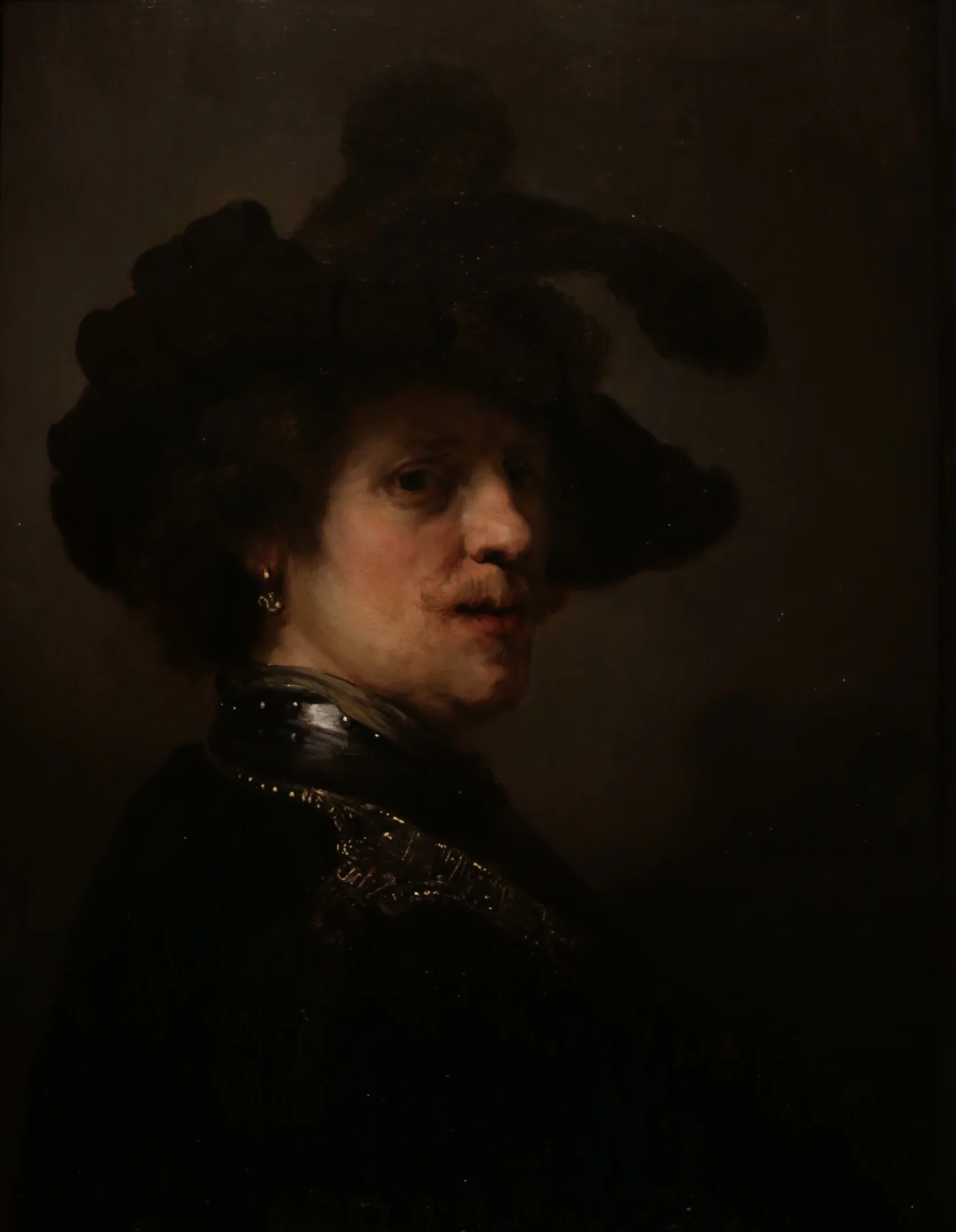
History is like a Rembrandt painting: some parts are clear, while others have been lost in the shadows of time.

Out of the shadows, the little details are illuminated - clear and bright, full of life immortal.

As I wandered Amsterdam's hallways, galleries, artists' studios and living quarters, visions came to me in fragments...


weathered leather seats, indicating the outline of the sitter.
several old protractors.
a box, dusty now, filled with butterflies stuck on pins.
a pair of reading glasses.
the set of eyes they belonged to: creased lids unable to hide the inquisitive twinkle held within.
a wicker chair, the seat of which is sagging.
a candle by the bed...
the bed itself is boxy, the pillows bolstered, the sleeper laying in a sitting position for health's sake.
a window overlooking the canals and passersby.
a sitter, on a settee, her gaze languid in the morning sun.
copper pots and pans, and a huge hearth in the downstairs kitchen.
thousands of chipped blue and white tiles, showing little boys and girls and windmills.
many creaky sets of stairs.
flowers in a vase, beside a moulding orange.
a stiff lace collar.
a human skull.
a set of used oil paints, and the smell of turpentine.

These are the fragments of beautiful human lives.

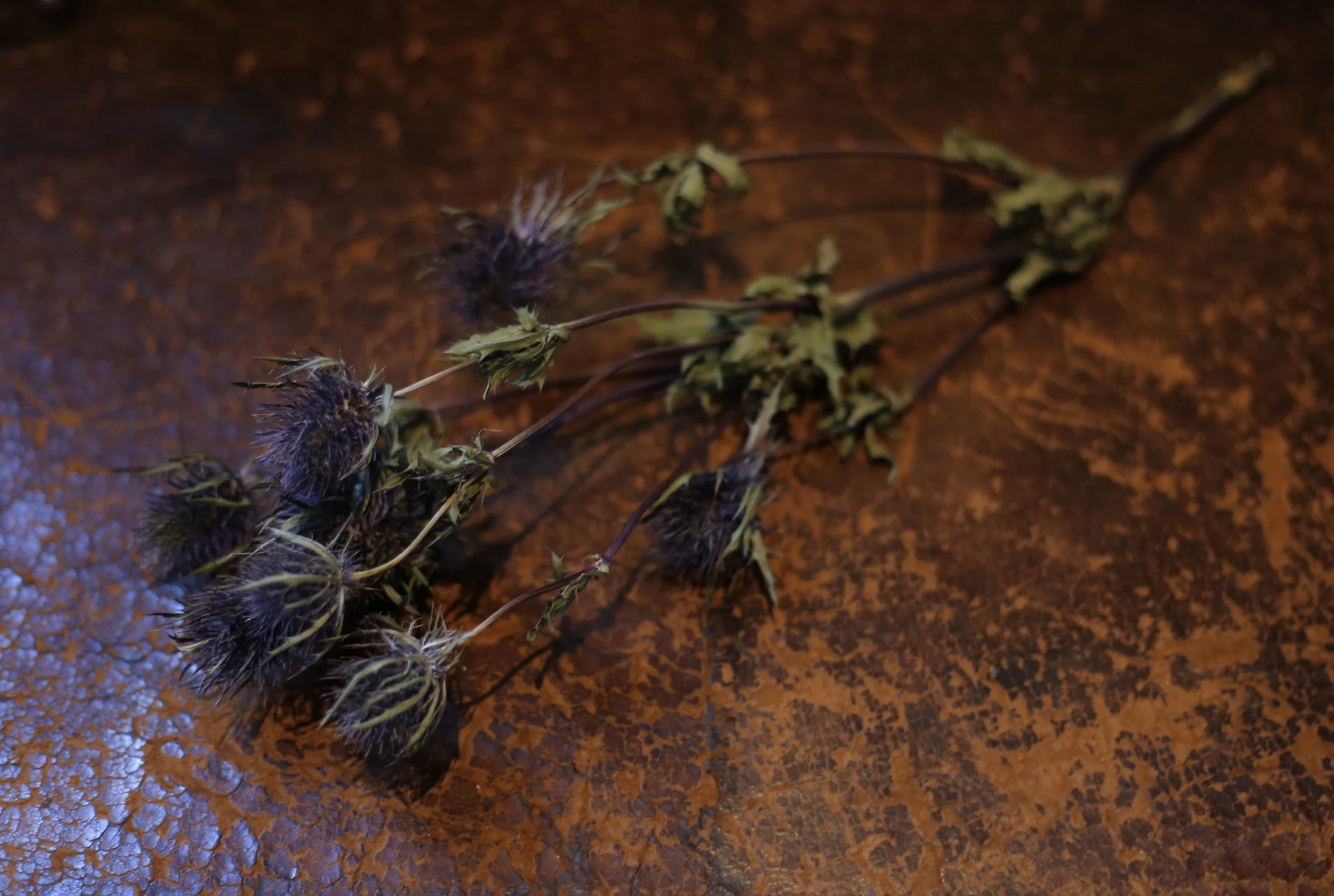
Dried thistle flowers on a leather seat in Rembrandt's house.
Small curios and compasses on a shelf in Rembrandt's old house.
Rembrandt portrait.
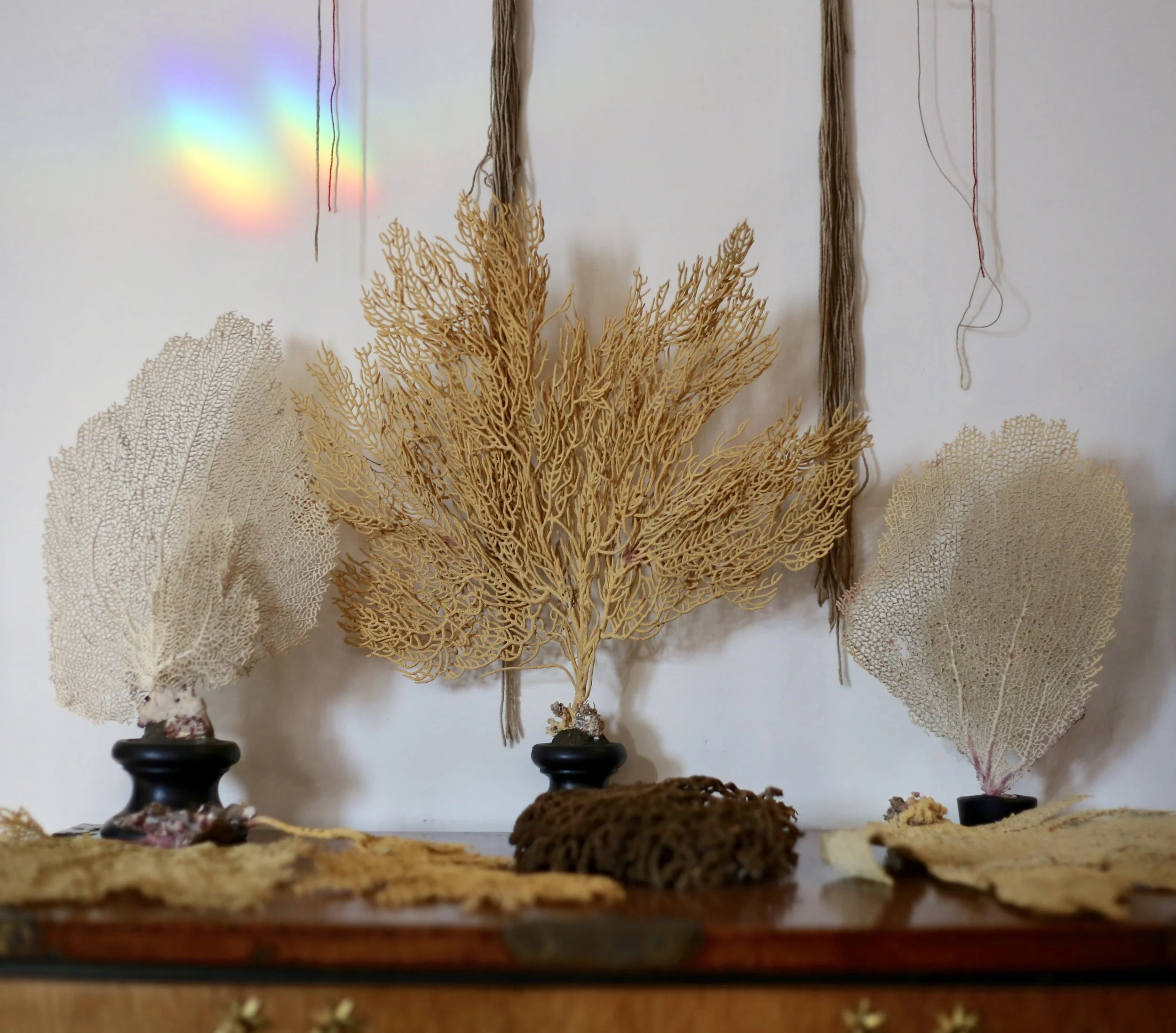
Pieces of coral and rainbows - a painter's collection.
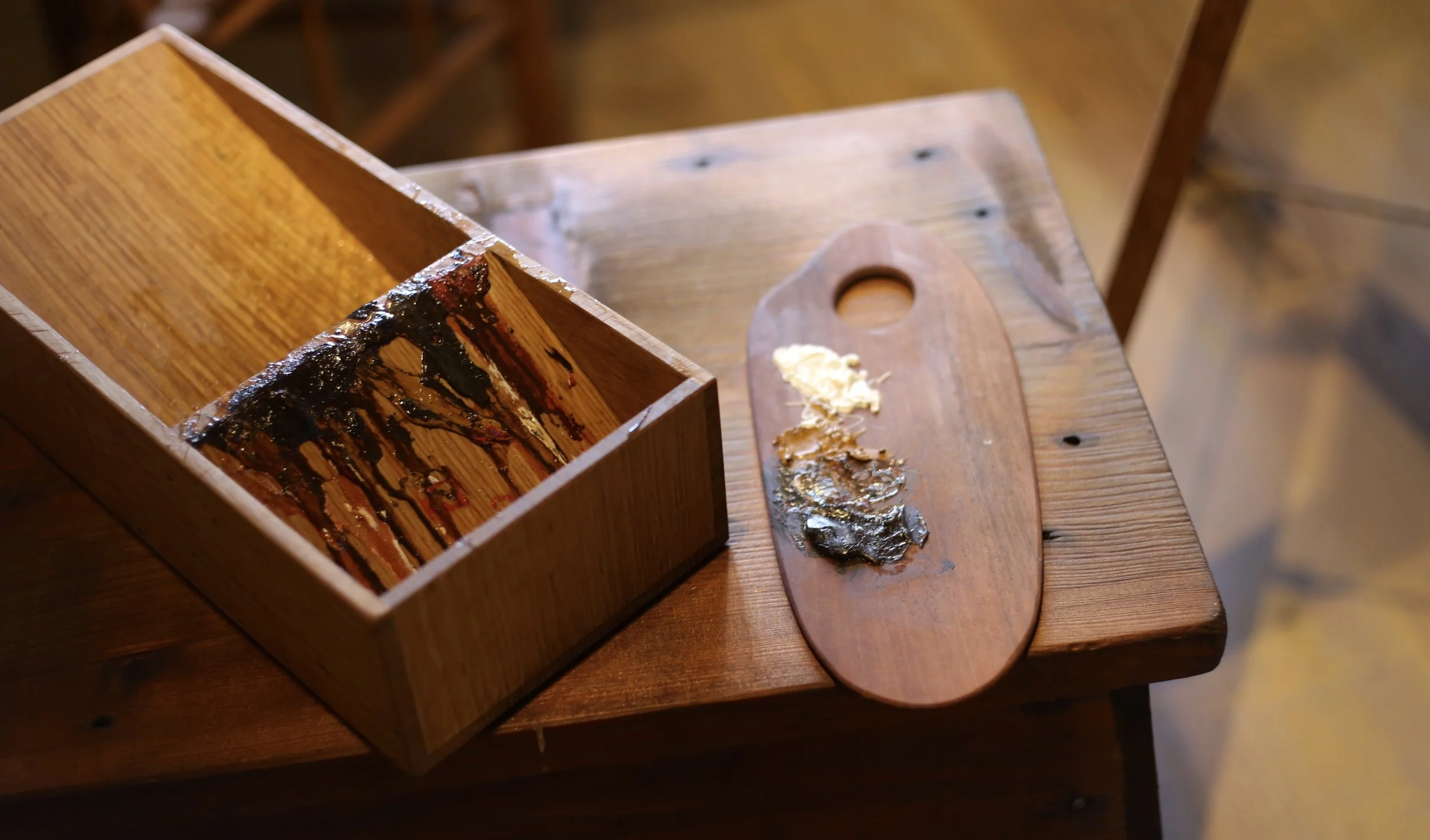
A painter's palette - Rembrandt's house.
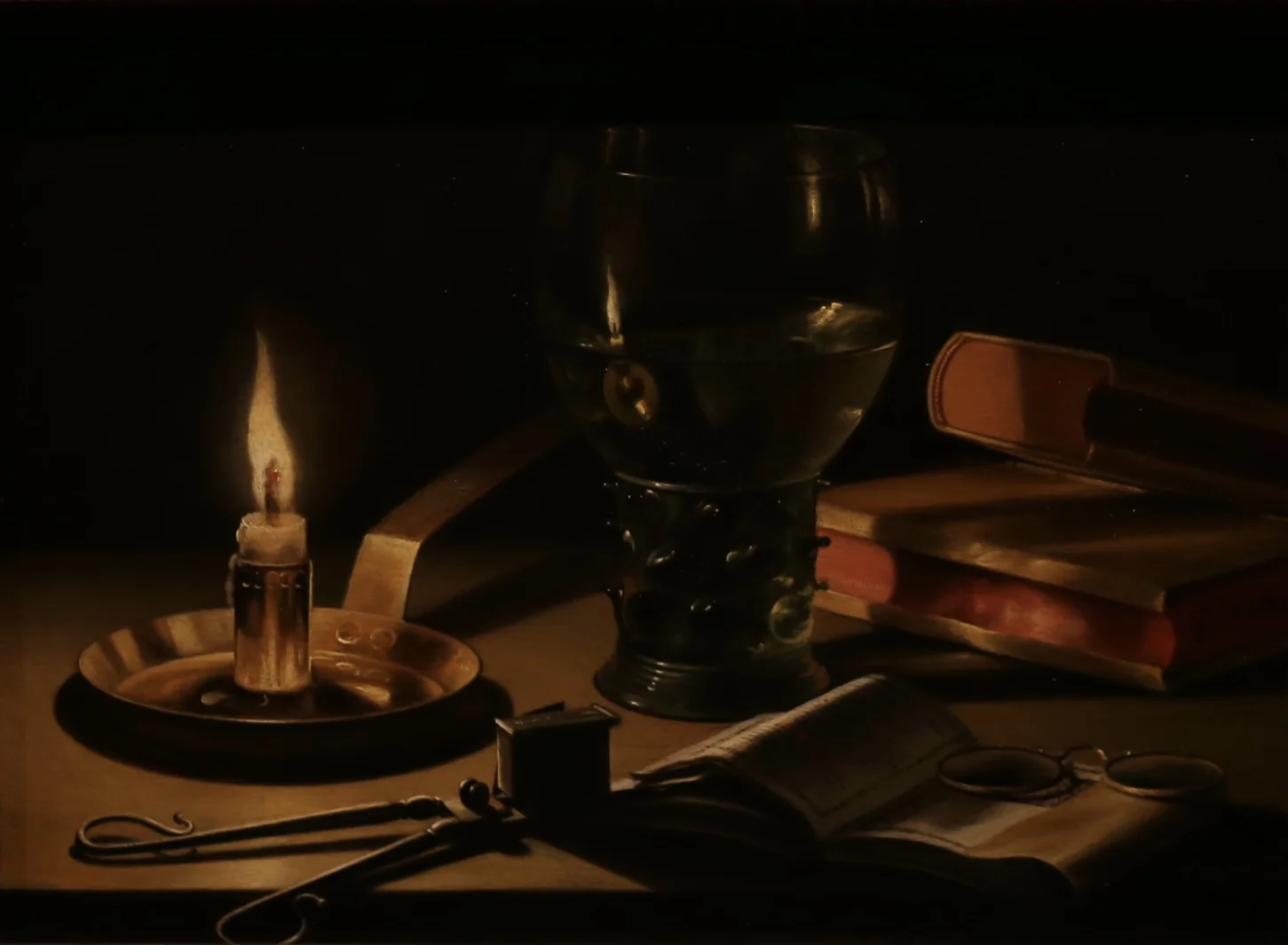
A candle illuminates a dark still life scene in an old dutch painting.
A beautiful old wicker chair in a dutch tiled kitchen - homes like a painting.
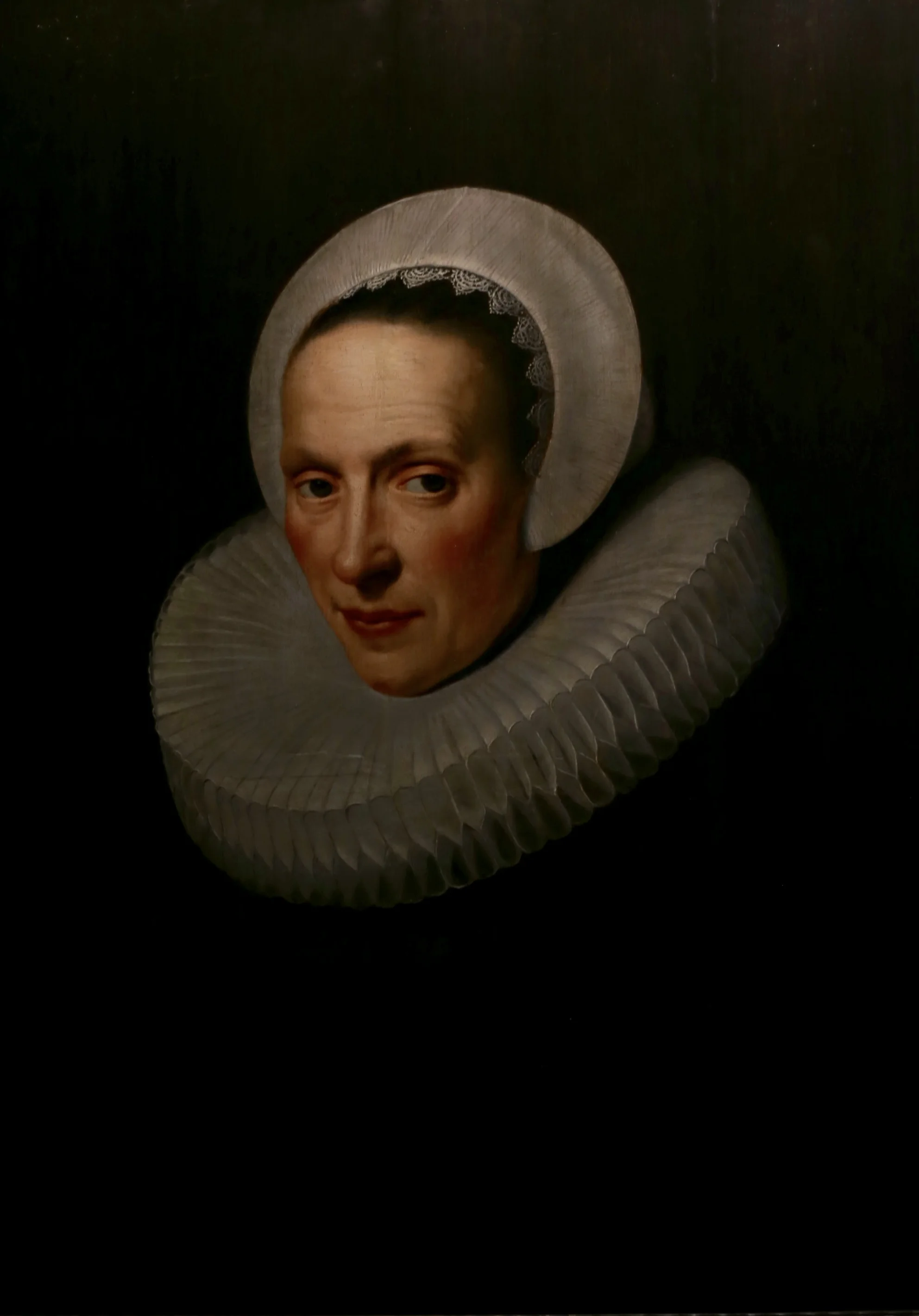
Old dutch painting of a lady with a stiff neck ruff.
Vase of Flowers by Jan Davidzs de Heem.
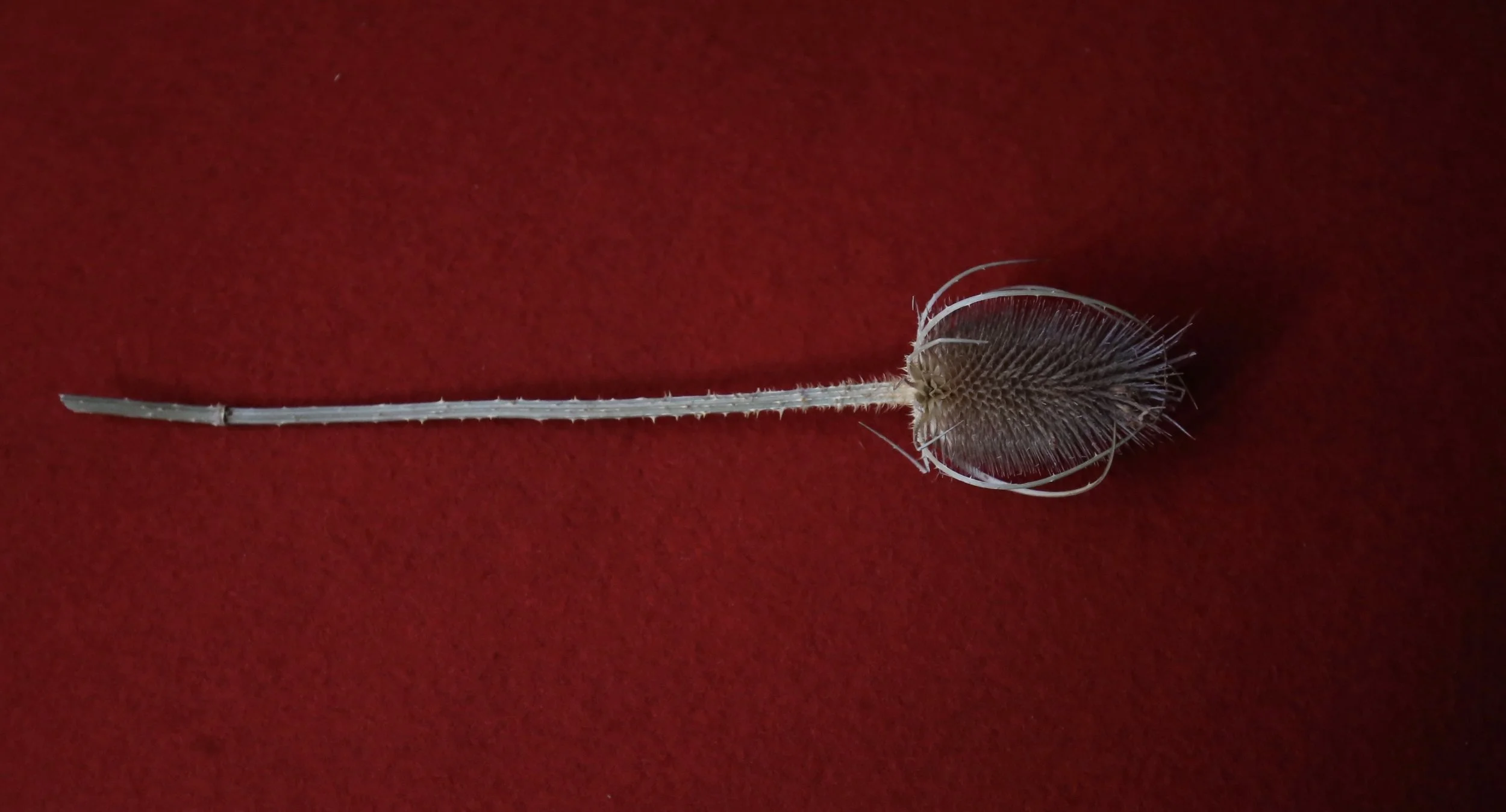
A dried thistle seed head on red wool.
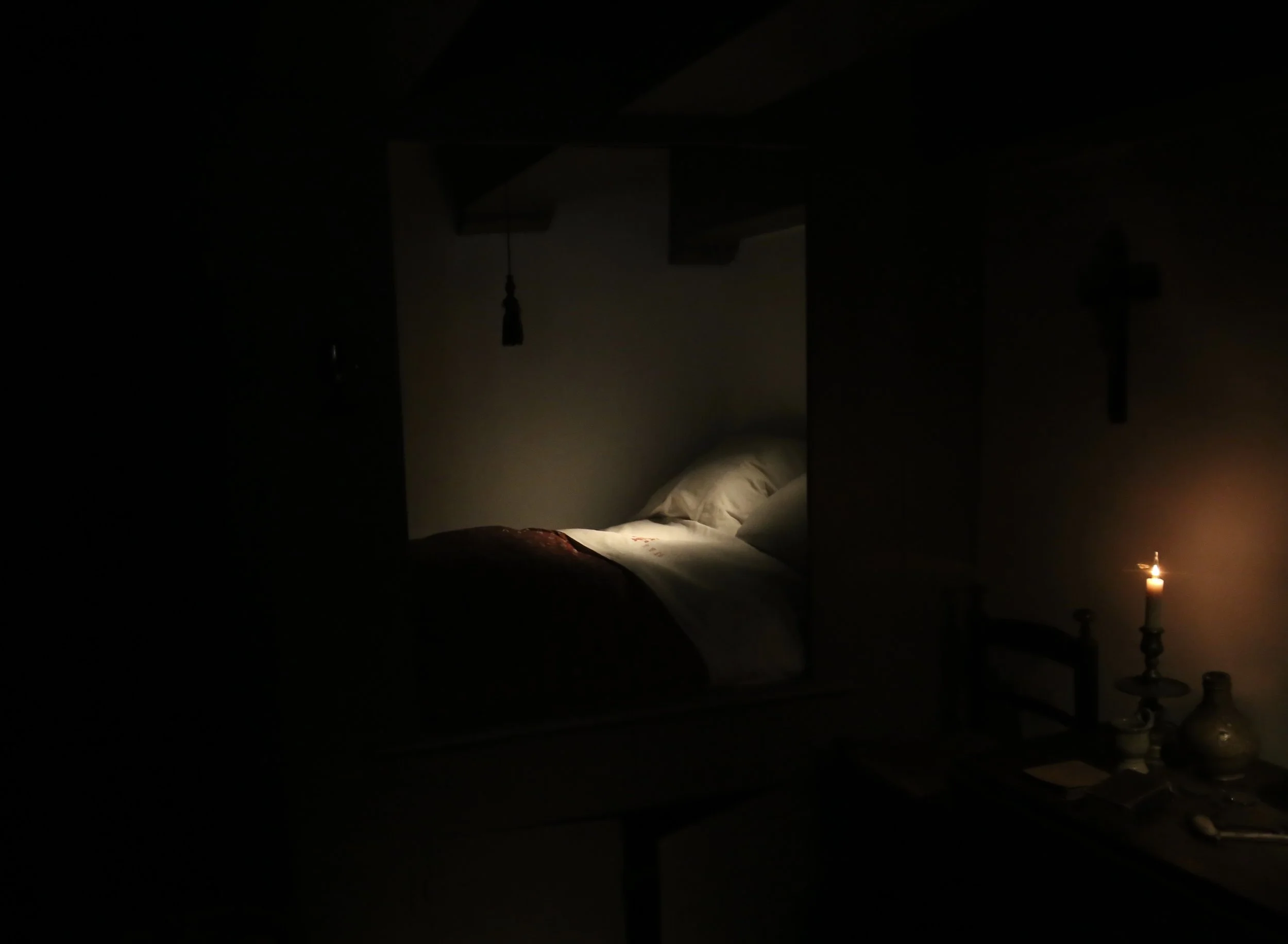
A 17th century box bed in the dark and light of a candle.
Vase of Flowers dutch painting by Rachel Ruysch