FAIRYTALE CITIES

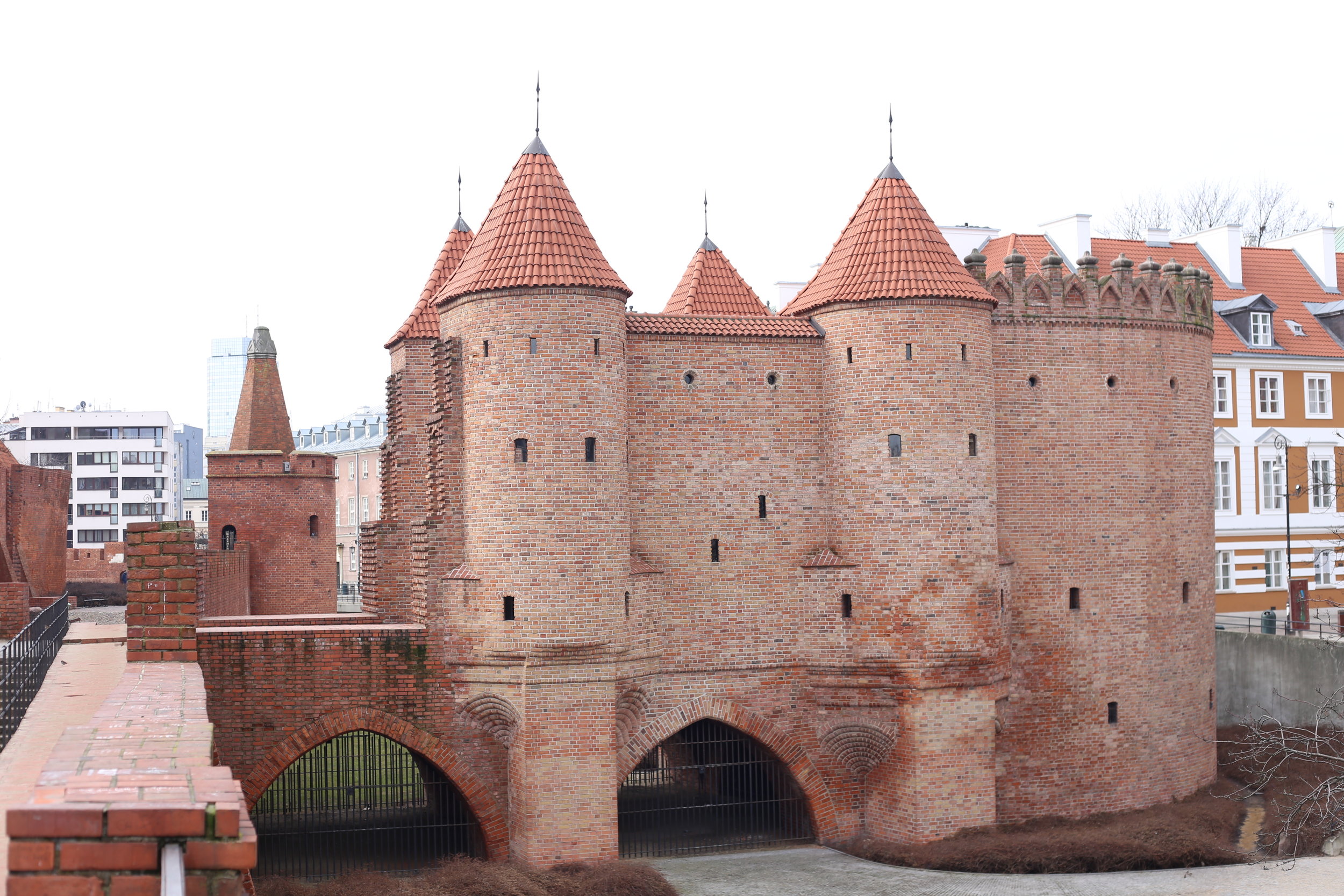
What looks like a small red castle - the medieval city gates of Warsaw in Poland.

KRAKOW
WROCLAW
& WARSAW


SEEING THE MAGIC

Life Gazing has always been my method of seeing magic.

Whether we are talking of ancient legend, medieval folktales, or our own modern, collectively-held beliefs, the way we talk about our world depends on the way we see it. Because, in the end, the stories we tell are all ways of SEEING this world - they are a lens onto life, a kind of post-processing of our sensory experiences. We use stories to explain the different phenomena we come across in life.

But what about science? Well, science is a method of understanding and explaining natural and historical phenomena, just as much as folktales are, and there is a lot of crossover between the two! The words are a bit different, but really, what they have in common is:

The Observer!

To observe, and analyse (pick apart), and theorise (make connections), all requires a person to watch something more closely, in order to see what may be under the surface appearance, or beyond the scope of a quick glance.

The observer is the explorer of every situation, place and object he comes across.

The stories he tells are the results of his findings


Ancient Legend 

The Legend of Krakow's Wawel Dragon

Smok was a nuisance of a dragon. He wasn't one of those penny-pinching, agoraphobic kind of dragons. No. He was the kind that liked to take to the skies, wreaking havoc on the nearby towns and capturing maidens in the process. Smok ate, and he ate a lot. He especially liked sheep, cattle and fair young women.

His lair was built into the banks of Wawel Hill, beside the flowing Vistula river, in the city of Krakow.

The city folk grew weary of Smok and his antics. Moreover, the good King Krak began to get a little worried for the safety of his own daughter, fair young maid that she was. Deciding to deal with the issue, he set a task: to any man who could slay the dragon, he would give his daughter's hand in marriage. Of course, many brave men died trying.

That is, until Skuba accepted the challenge. Skuba was a young cobbler's apprentice, and quite clever, too. He had a plan. He set up a trap for the dragon, by filling a dead sheep with sulfur and placing it near the dreaded lair. The dragon, being used to such gifts, ate the poisoned sheep, but then began to feel ill. His belly felt full of fire! He ran to the river, and drank and drank and drank, but couldn't get enough water... he drank until he exploded! Then the people of Krakow rejoiced, for they were finally free of his terror, and Skuba married the princess, and the city went on to flourish and grow.


The Myth of Warsaw's Mermaid

Once upon a time there was a sea mermaid who got lost and swam up the Wisła (Vistula) River. After a long journey she decided to take a rest on the riverbank and it happened to be the area where the modern-day Warsaw is located. She looked around, fell in love with the surroundings and decided to stay.

Then, some of the local fishermen began to notice that something unusual was disturbing the river’s calm waters, and releasing fish from their nets. They decided to catch the culprit.

They lay in wait, and in the early hours they heard, to their surprise, a woman's voice - singing as she released the fish from their nets. Her legs were covered in scales. Shocked, and more than a little entranced, they decided to let the mermaid swim freely. From that day on they often gathered on the riverbank after a hard day of work, listening together to the mermaid’s soothing songs.

One day a rich traveling merchant found out about the mysterious creature and crept up to the riverside in the evening. After listening to the mermaid, his greedy heart and soul desired to own her. The merchant’s mercenaries put up a trap and captured the mermaid, then locked her in a nearby hut.

The mermaid started singing, a song so haunting and sad it touched the heart of a passing fisherman's son. Longing to help the maiden who sang so sweetly, he broke into the hut, and upon finding the mermaid there, he set her free.

“I will never forget your deed” said the mermaid. “I can’t be coming to sing for you any longer, but whenever your people would meet overwhelming troubles, I will be ready with my shield and sword to protect you, just like you protected my freedom."

&

MODERN MYTH

(my own magical findings)

Come closer, dear one, and I shall tell you tales of the fantastical things I found in the land of the Poles...

The Wawel Chakra

In a beautiful city, called Krakow, where the ancient walls still stand to this very day, there sits a castle: a seat of noble heritage upon which rests the remnants of elder days when art and architecture reached great peaks of beauty and finery.

In the very walls of this castle there rests a treasure: an orb of energy belonging to the Earth herself. This type of energy is known by many names, but most commonly it is called a 'chakra.' The chakra lies in the corner of the courtyard, under St Gereon's Chapel. It is said that those who are gifted and perceptive may go there and feel this energy pulse in the very air around them, enlivening their own spirits. Many people have traveled there from near and far to see the place. But, beware, young one, because any who dare try to meditate therein may face the wrath of the guards, who do not like such things. They have tried to cover this corner many times with papers, or other obstacles, and even trash receptacles.

And I, your story teller, traveled to this very place, to feel for myself the incredible Wawel Chakra... and lo... it was grand beyond my reckoning!


Besides this chakra, there were a great many other things that gave me cause to stop, and stare!

- A celestial ceiling, in the old quarters of Jagiellonian University, where the great Copernicus studied before he went on to become a renowned astronomer.

- A huge mound of earth, raised up in a circular fashion, as to one half of a globe, dating back to before the time of records.

- Several animals in a courtyard in Wrocław, which had mysteriously turned to bronze!

- A small shop, almost hidden in a wall, selling donuts, glazed and filled with rose-jelly... these delicacies we did eat many times.

- So many horse drawn carriages, each of which hearkened back to another time, in its splendid decorations.

- Food beyond my wildest imaginings, all cheaper than our usual fare, and all more delicious than the greatest offerings of home! Dumplings called 'pierogi,' and savory breads with many toppings called 'zapiekanka,' and a blood red soup of beets called 'barszcz.' In the very streets, there were the most fabulous stalls selling 'obwarzanek' pretzels, and in the friendly milk bars one could order a drink of vodka or beer to wash down their potato pancakes.

- Beautiful paintings adorning the walls of old buildings.

- Large cars called trams that rattled and rocked through all the streets.

- The most various collection of doors: carven wooden doors, stone doors, great iron doors with huge keyholes, tiny doors, glass doors, doors with intricate detailing and doors of plain wood... 
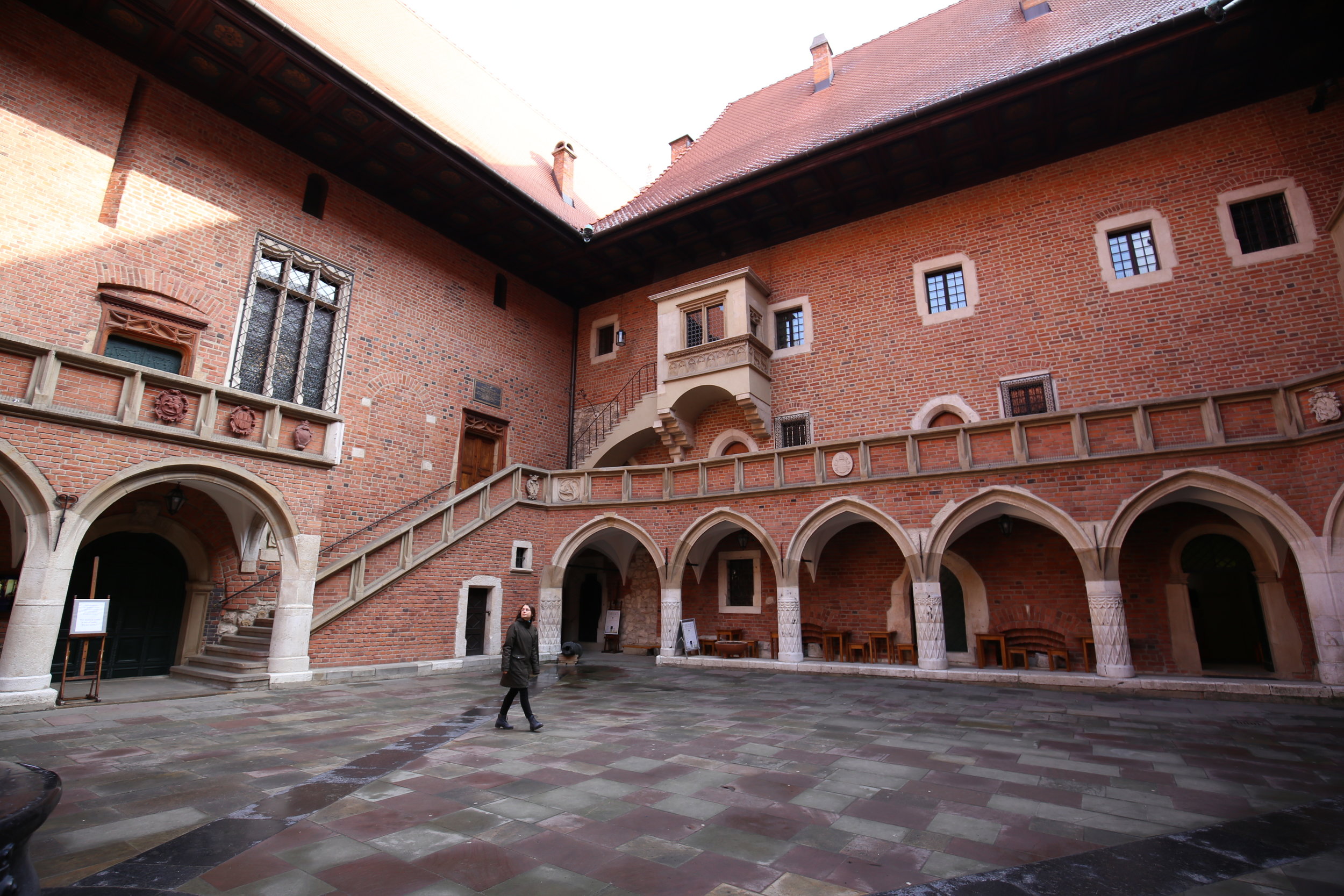

The University in Krakow - the beautiful stone courtyard.
Sculpted and painted tympanum showing a coat of arms and an eagle.
A little wooden door, of ancient make, in the University of Krakow.
A ceiling with clouds and blue sky, and rows of books and philospher's busts in the UNiversity Library of Krakow.
Sky painted ceilings - with white clouds and blue patches, in the medieval hallways of Krakow's Univeristy.
St Mary's Basilica in Krakow on a sunny day, with a lamp-post in front.
Details of an iron door - with medieval crosses and rust.
Ivy in a hollow of a stone wall - romantic castle details at Wawel Castle.
A close up of a small ivy leaf, with a stone wall in the background.
Krakus mound, a prehistoric monument and possible tomb, Krakow.
Wawel castle stone walls and turret details with a blue sky.
A gold lion door knocker on an old studded door, in the streets of Krakow.
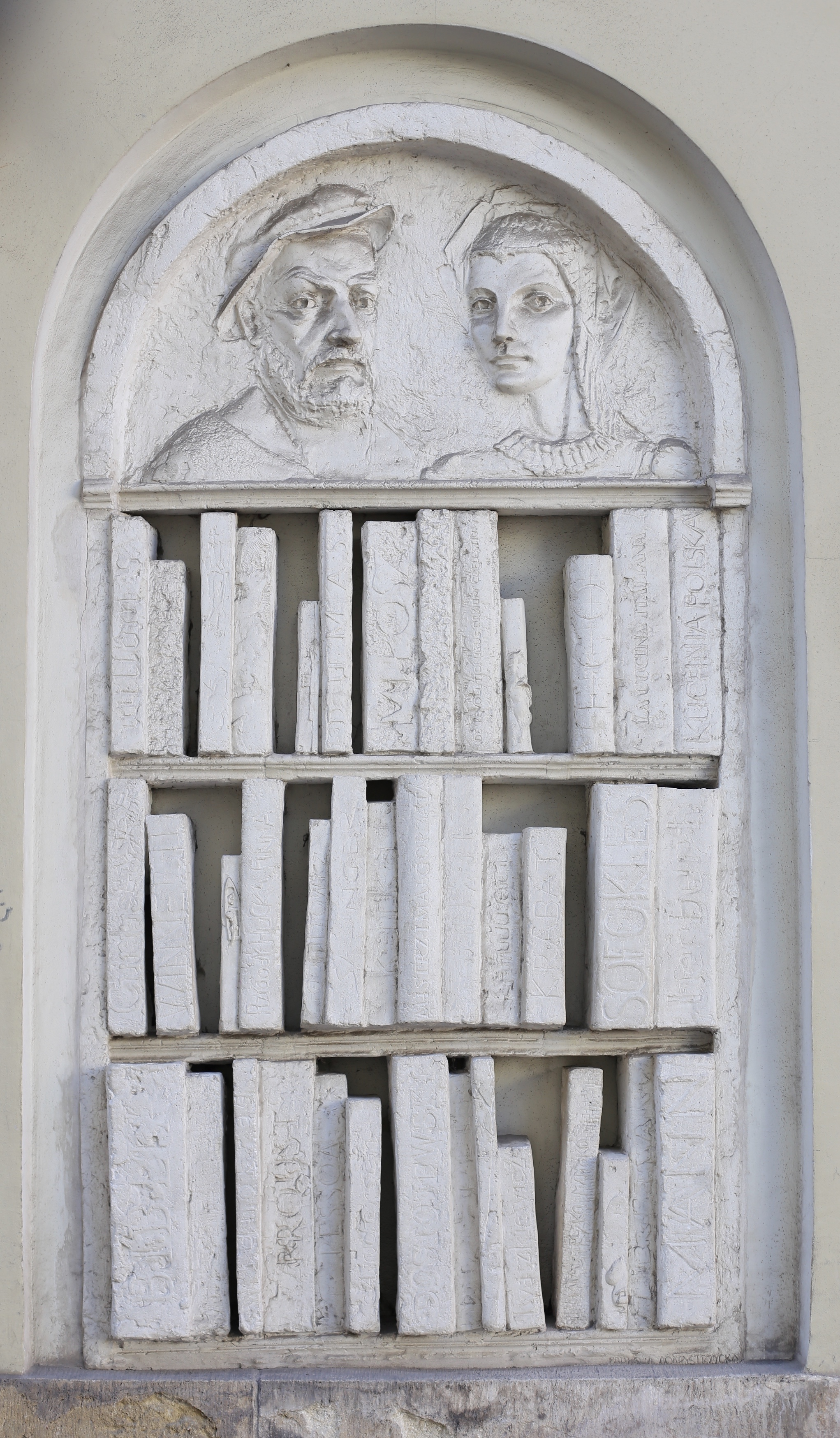
A stone bookcase watched over by two stone guardians, on a wall in Krakow.
A battered wooden door with delicate detailing and carvings.
A statue in front of two church spires, on a winter's day in Krakow.
An old lamp-post style clock and a polish church, Krakow.
A pink façade on a grand old polish building.
A fairytale-like horse drawn carriage in the cobbled streets of Krakow.
A pretzel seller by her stand in winter, with pigeons all around, Krakow.
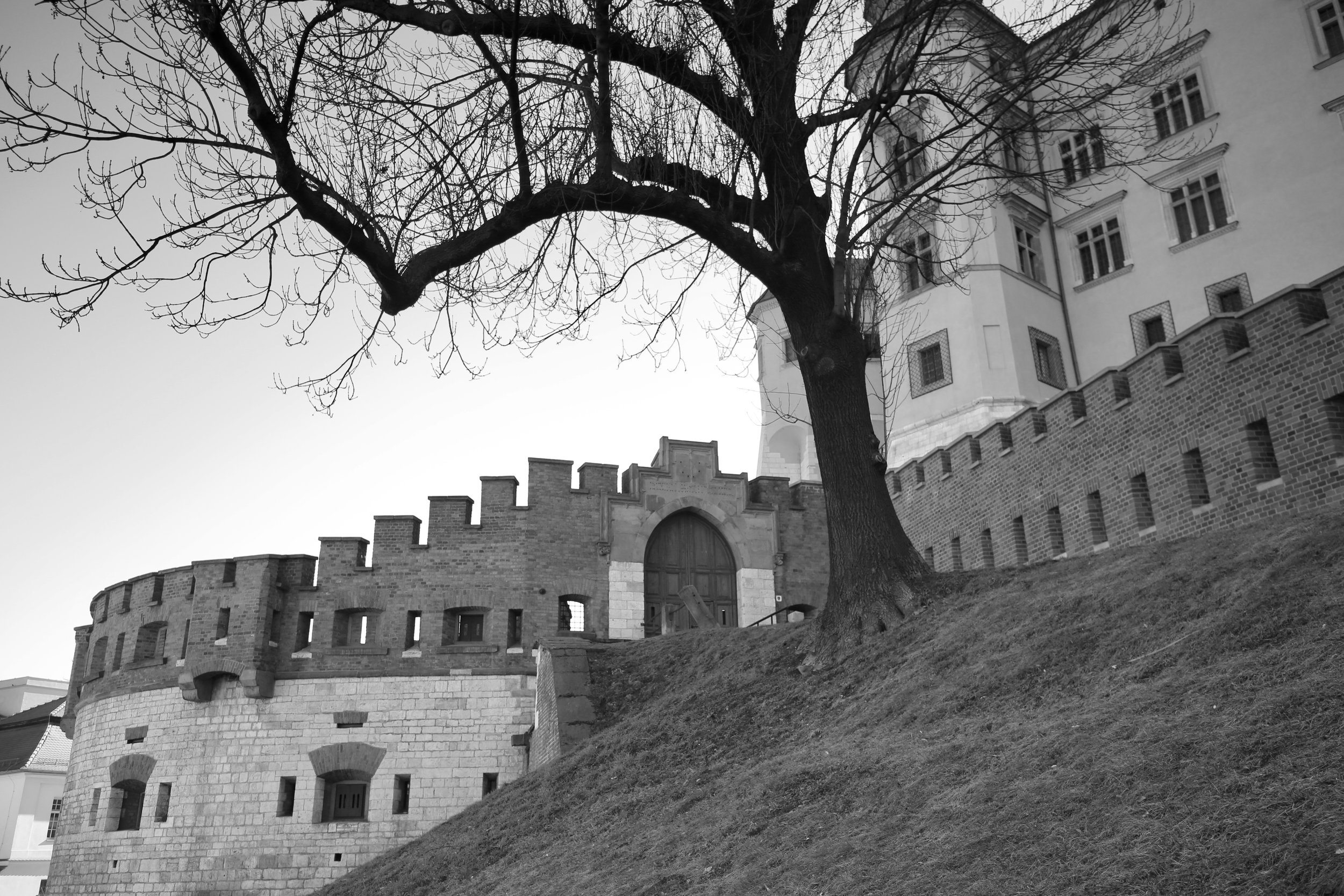
Medieval walls of Krakow castle - old fairytale city with fairytale castle.
A church spire with a shining white light behind it.
Witch's house in Poland - with crawling vines and an old window in a tower.
Farm animals in bronze, in an alley of Wroclaw, Poland.
The beautiful town square of Warsaw, Poland.
The Warsaw mermaid in white stone.
Cream puff meringues with liquor from a bakery in Warsaw.
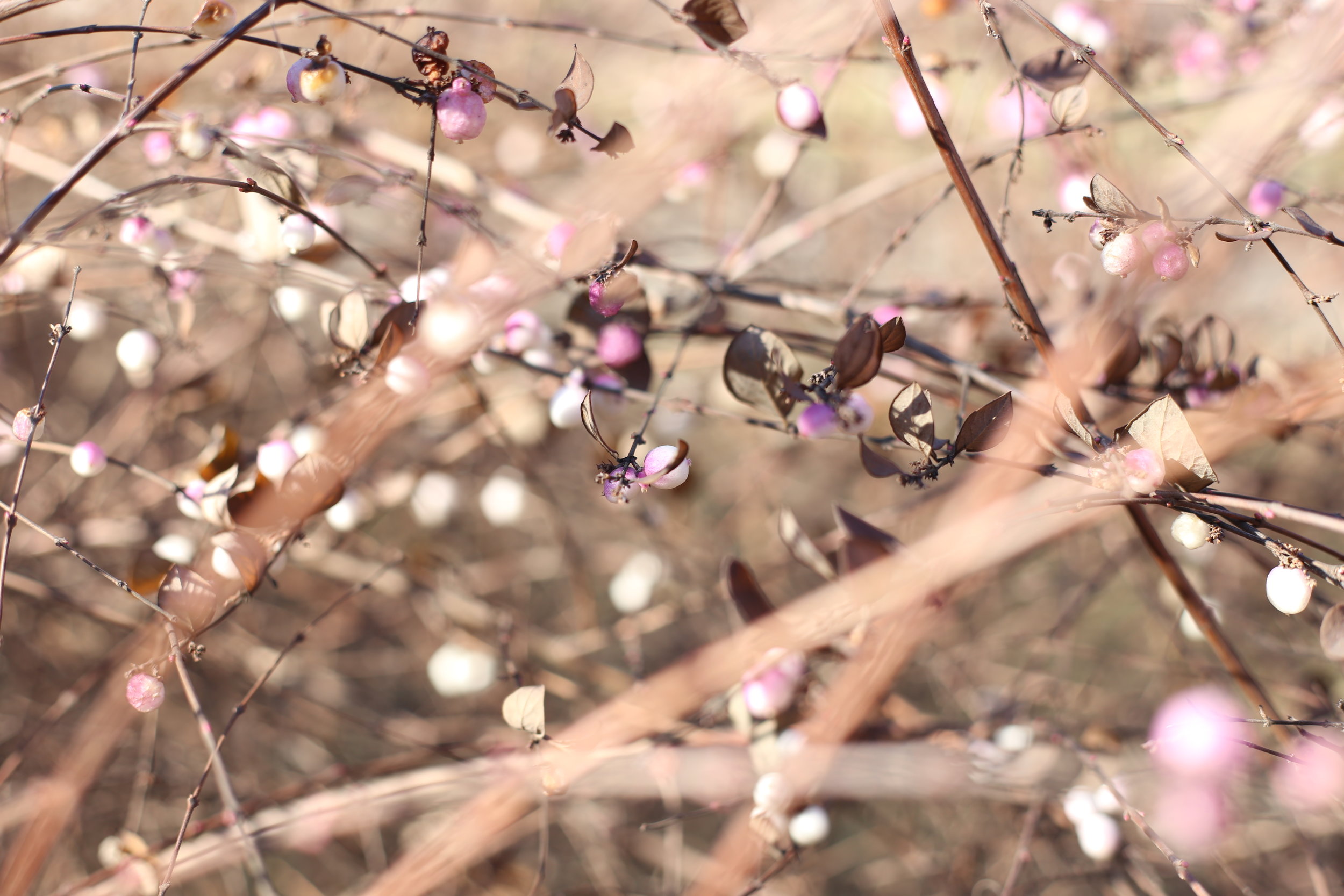
Pink berries on a bare bush.
A small turreted castle-like town gate made of red brick, on the edges of Warsaw old town.
Eating Polish beet soup from a small earthenware bowl
Rose petal chocolate cake in a Polish bakery.
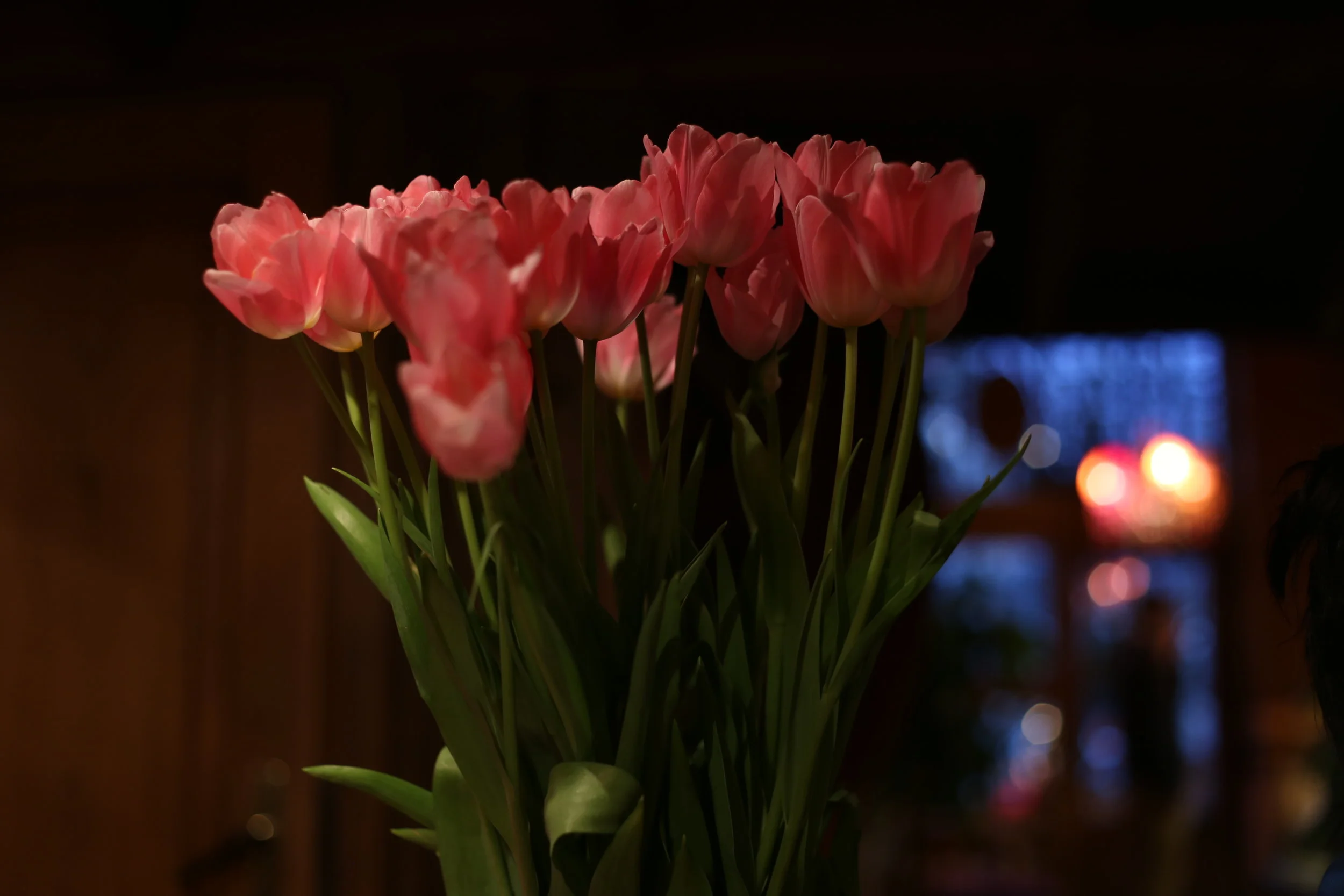
Tulips in a low lit homely bakery, full of love.
Small bronze rabbit in Wroclaw.

ONE MORE, JUST FOR FUN!

Here is a fairly modern tale of mischief, magic, and over 350 little dwarves...

In the 1980's, when Poland was still under the mighty and oppressive grip of the USSR, there began to appear a group of mysterious gnomes, or dwarves. They would show up in paintings, (conveniently painted over the propaganda on the streets), and they appeared in person too, to protest the communist regime.

This was the calling card of the underground Orange Alternative movement, and over time the dwarves became synonymous with the city of Wrocław and with the concept of freedom. Then, in 2001 when the city decided to honour this symbol by commissioning the first dwarf statue in the square where the original protests took place.

This one dwarf multiplied, the city shopkeepers caught on, and soon there were dwarves everywhere - banking dwarves, reading dwarves, drinking dwarves and even dwarves riding small lions. Today there are over 300 dwarves throughout the city center.

...

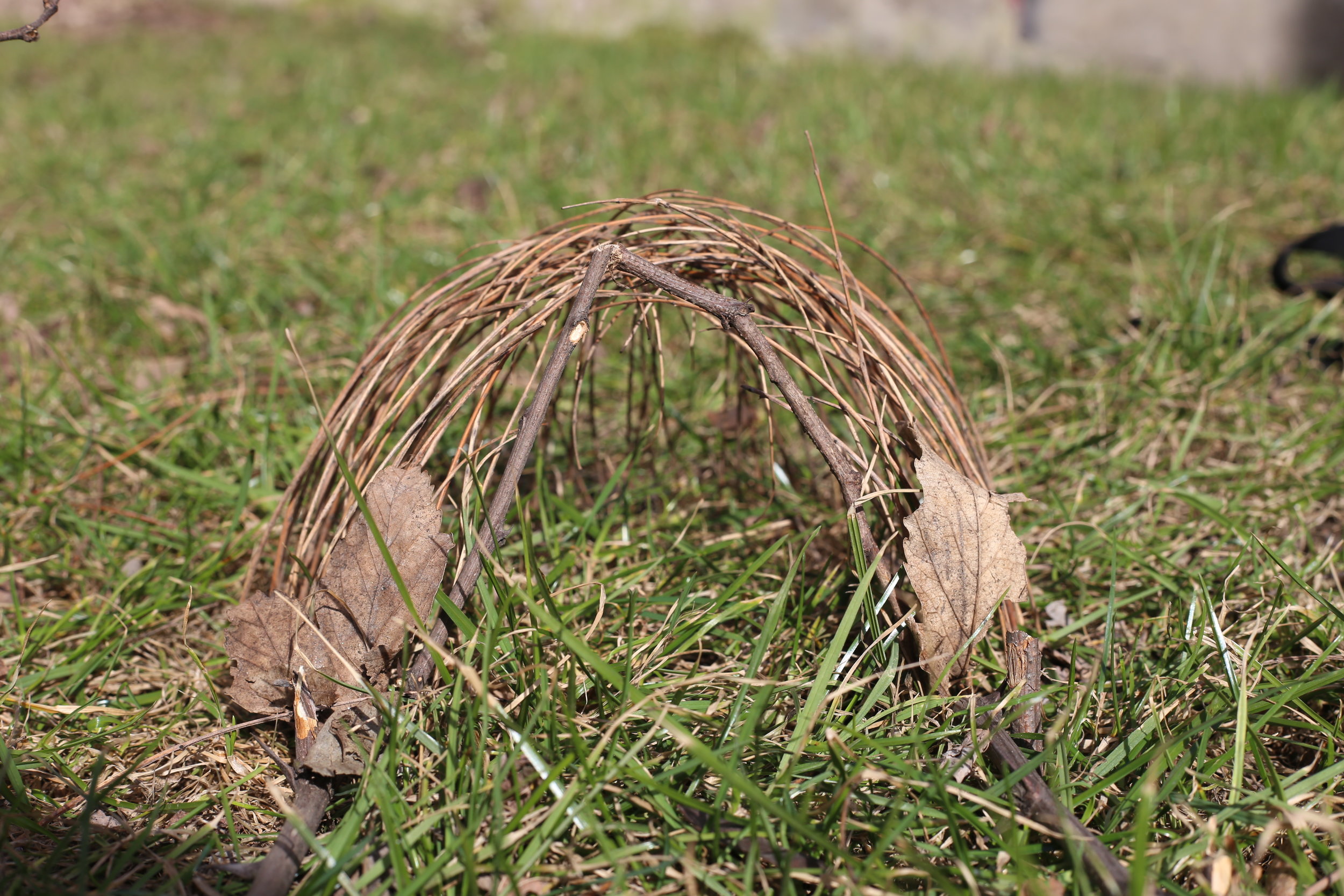
In an effort to try and help house the dwarves, whose population continues to rise, I built a little house of twigs and leaves on a grassy knoll in the park.


The pretty colorful houses of Wroclaw.
Dwarf with a sunflower - Wroclaw.
Gnomes live ten times faster than humans. They’re harder to see than a high-speed mouse. That’s one reason why most humans hardly ever see them. The other is that humans are very good at not seeing things they know aren’t there. And, since sensible humans know that there are no such things as people four inches high, a gnome who doesn’t want to be seen probably won’t be seen.
— TERRY PRATCHETT - WINGS
Bank dwarf in Wroclaw.
Sleeping dwarf by a tiny hobbit hole - Wroclaw
Reading and laughing dwarf - Wroclaw.
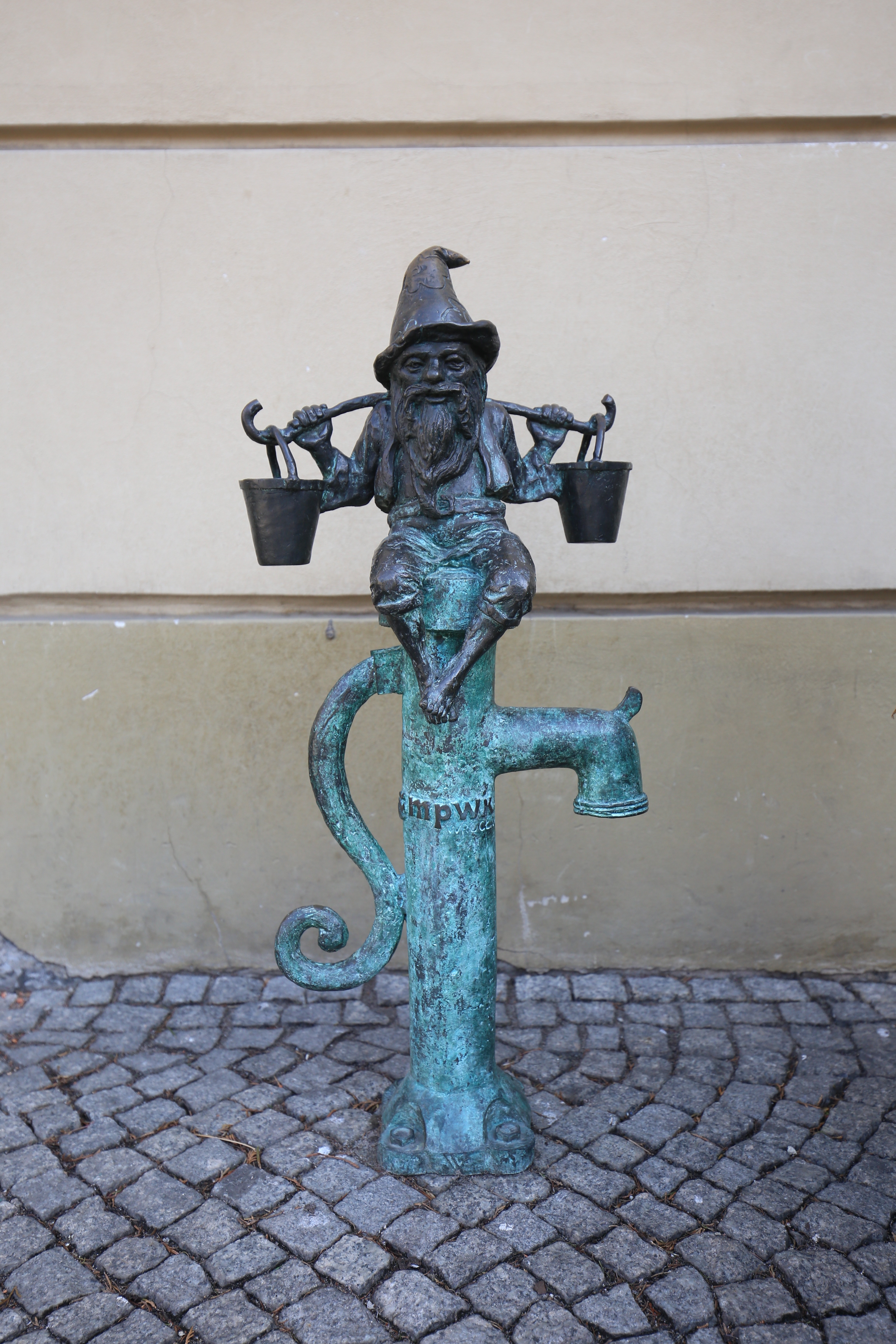
Water pail carrying dwarf - Wroclaw.
Wroclaw old town reflected in the river.
Small model in bronze of the Wroclaw church.
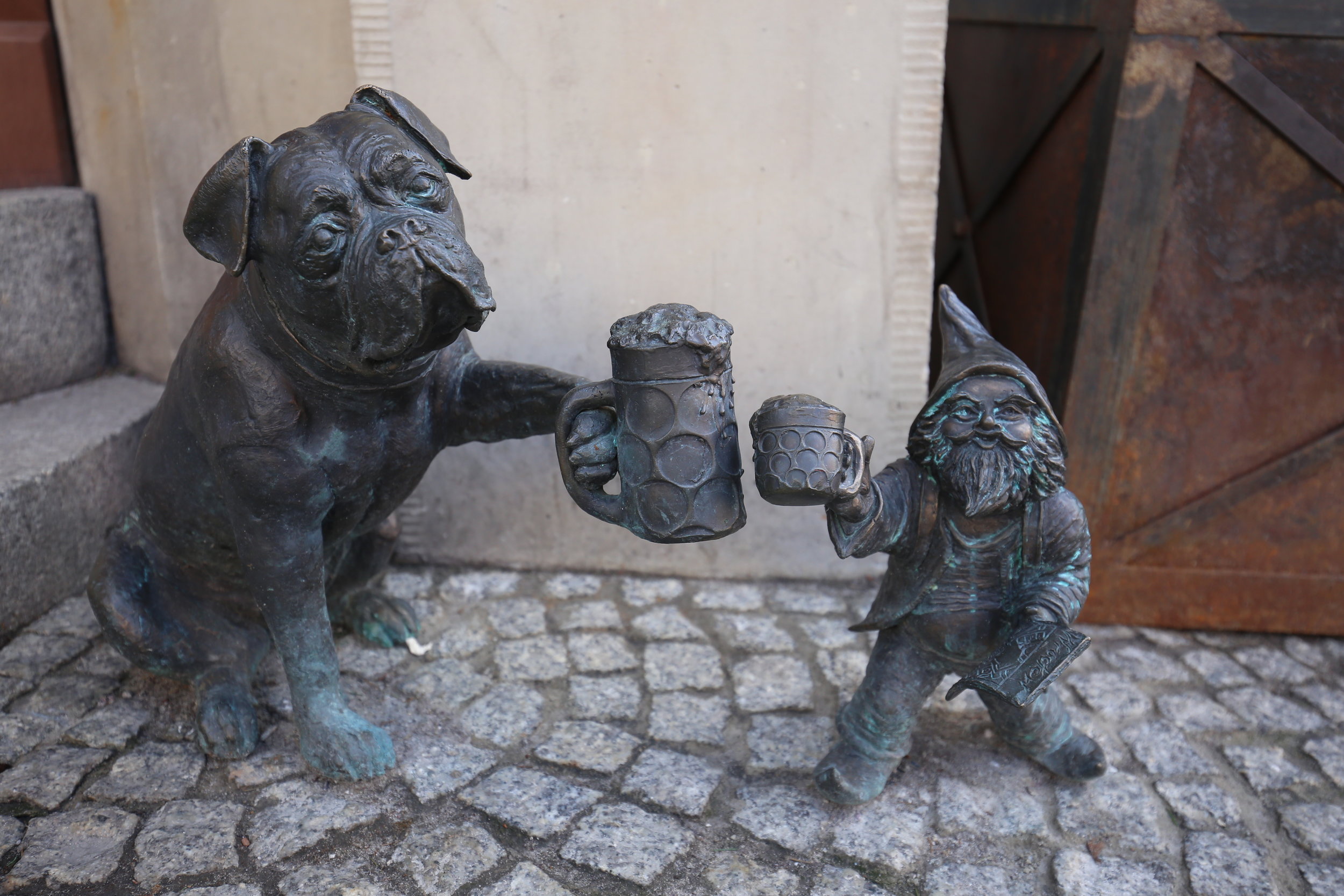
Dwarf and a dog drinking beer - Wroclaw.
Dwarf riding a lion - Wroclaw.
Beautiful colourful houses all in a row, in Wroclaw.
Little fairy house made of twigs and leaves.

THE ZALIPIE FLOWERS

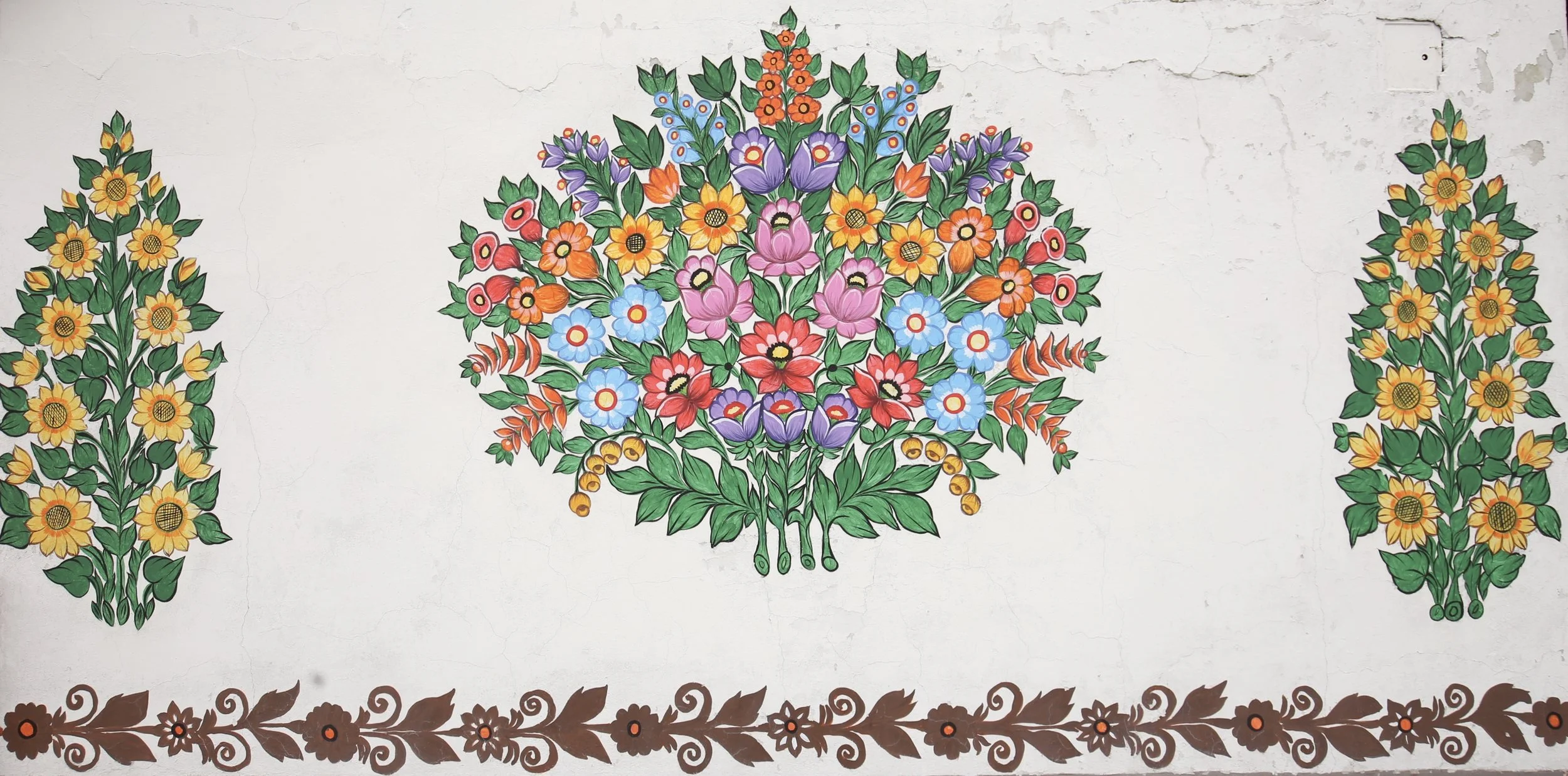
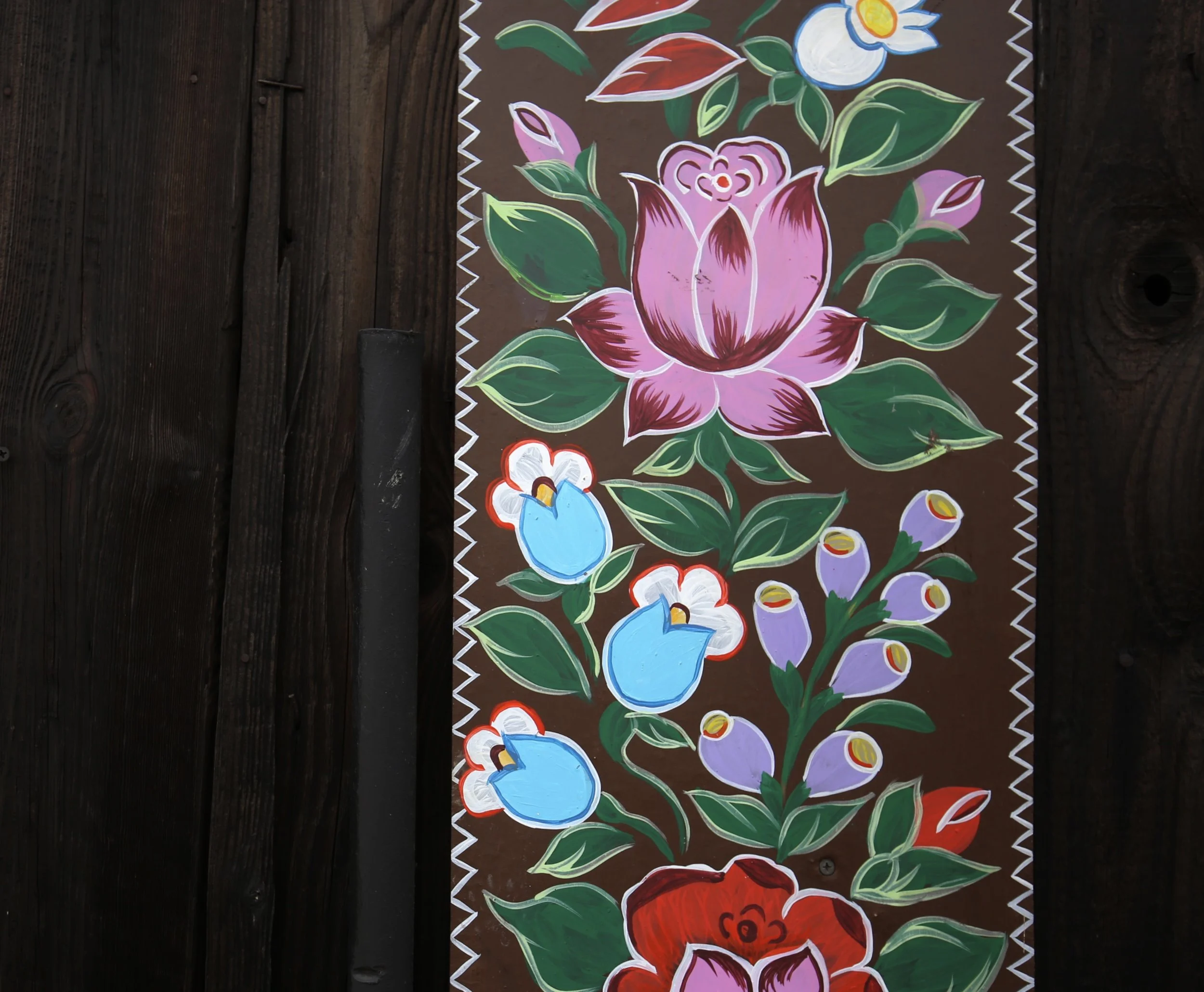
The flowers of Zalipie, Poland. A bouquet and sunflowers painted on a white wall.
I am working with the enthusiasm of a man from Marseilles eating bouillabaisse, which shouldn’t come as a surprise to you because I am busy painting huge sunflowers.
— VINCENT VAN GOGH

In a village called Zalipie, on the flat plains of the lower Polish farmlands, we experienced a small, but beautiful moment that will forever remain in my memory.

A kindly old lady, while watering her plants, saw that we were wandering around the village, and speaking no English, she came to her gate and simply gestured that we should follow her into her home.

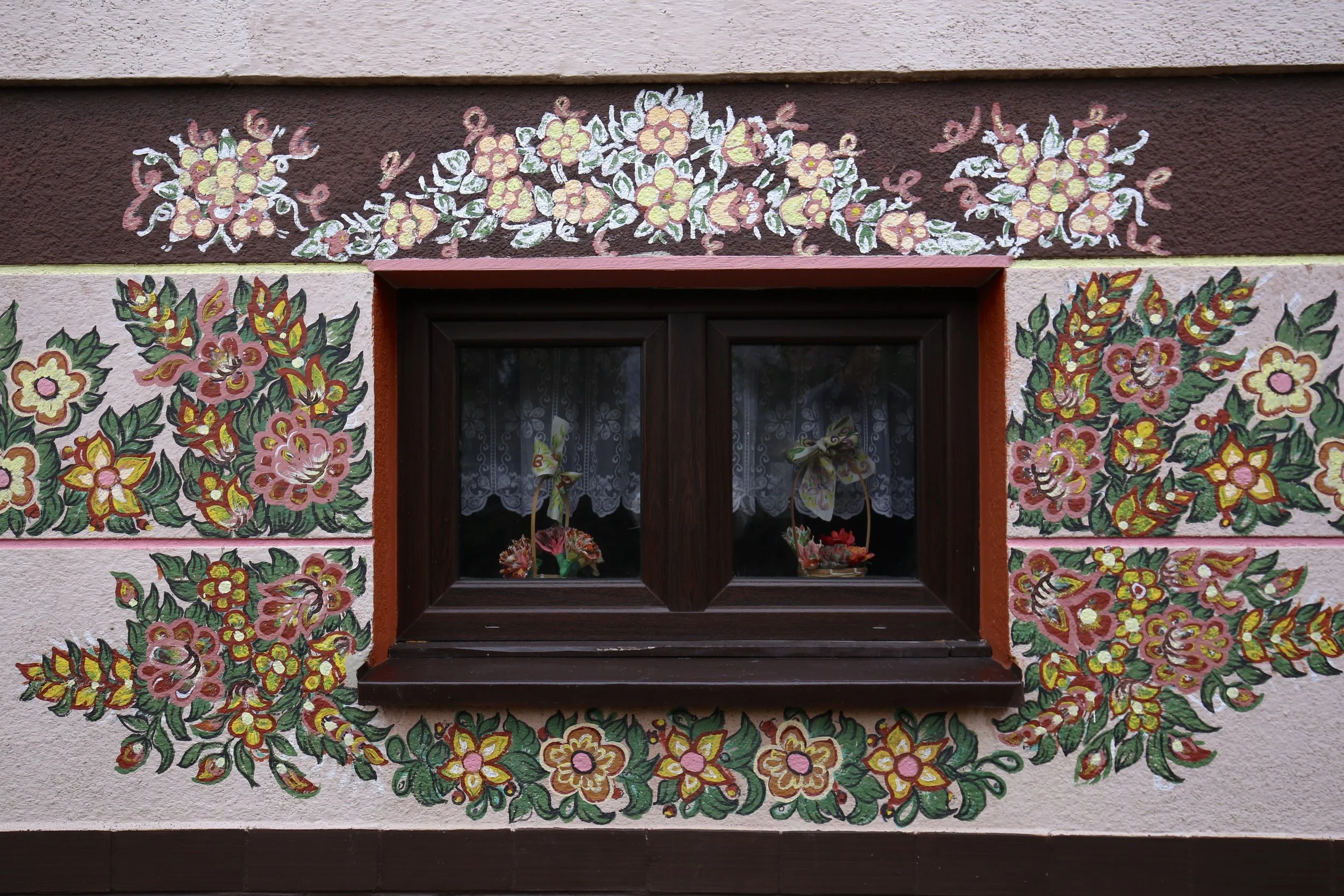
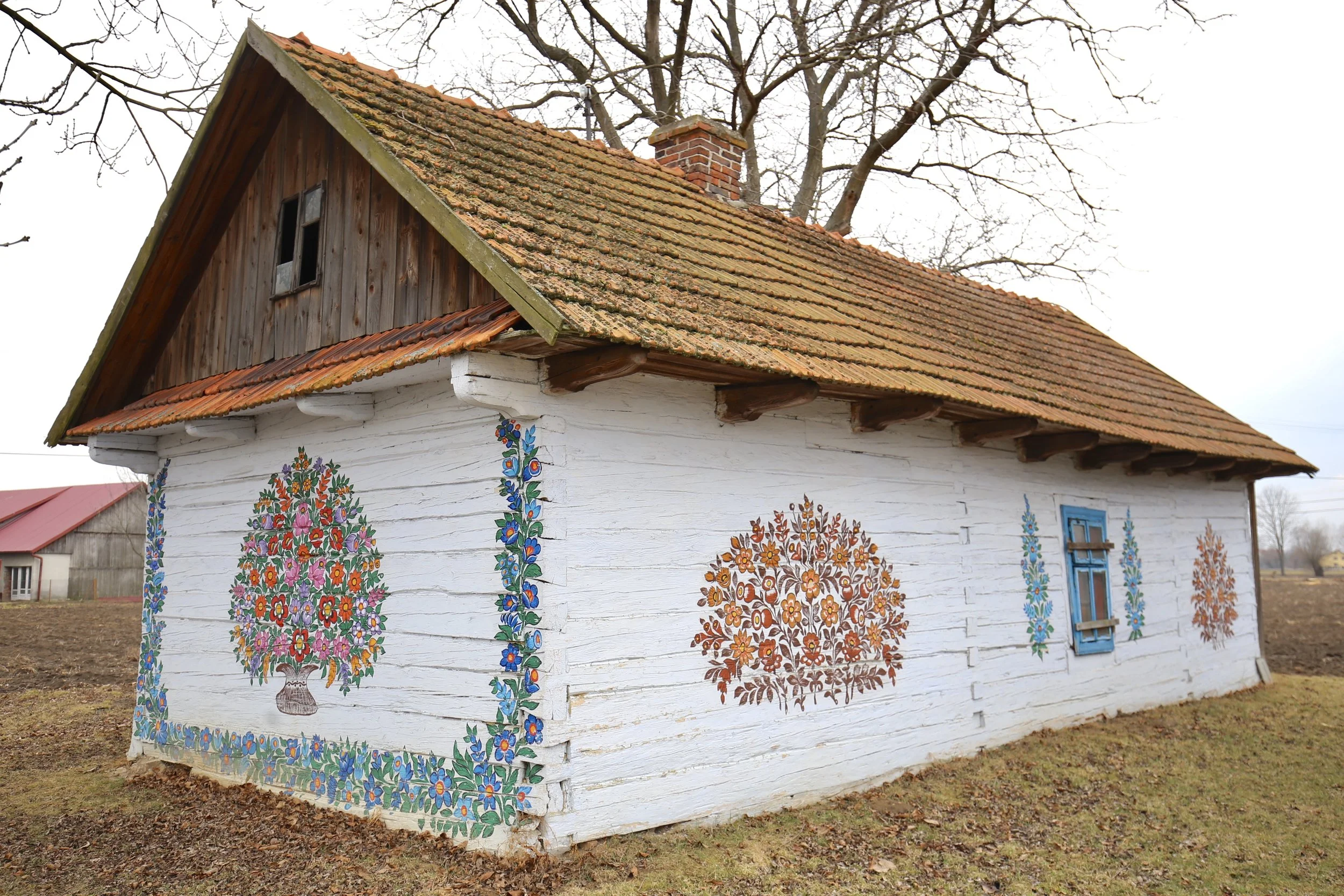
Her house was, like all the others, adorned with painted flowers - wreathed above the windows, and all along the walls. But inside that tiny space, where the ceiling was so low it almost brushed the top of Oliver's head, the flowers burst into a huge array: on every surface, every bowl and spoon, every couch and cloth, every corner, there bloomed some gorgeous element of spring! I was taken aback, having felt a little apprehensive at following this stranger indoors. All my doubt melted away, and I just stood there gazing around me, mouth open...

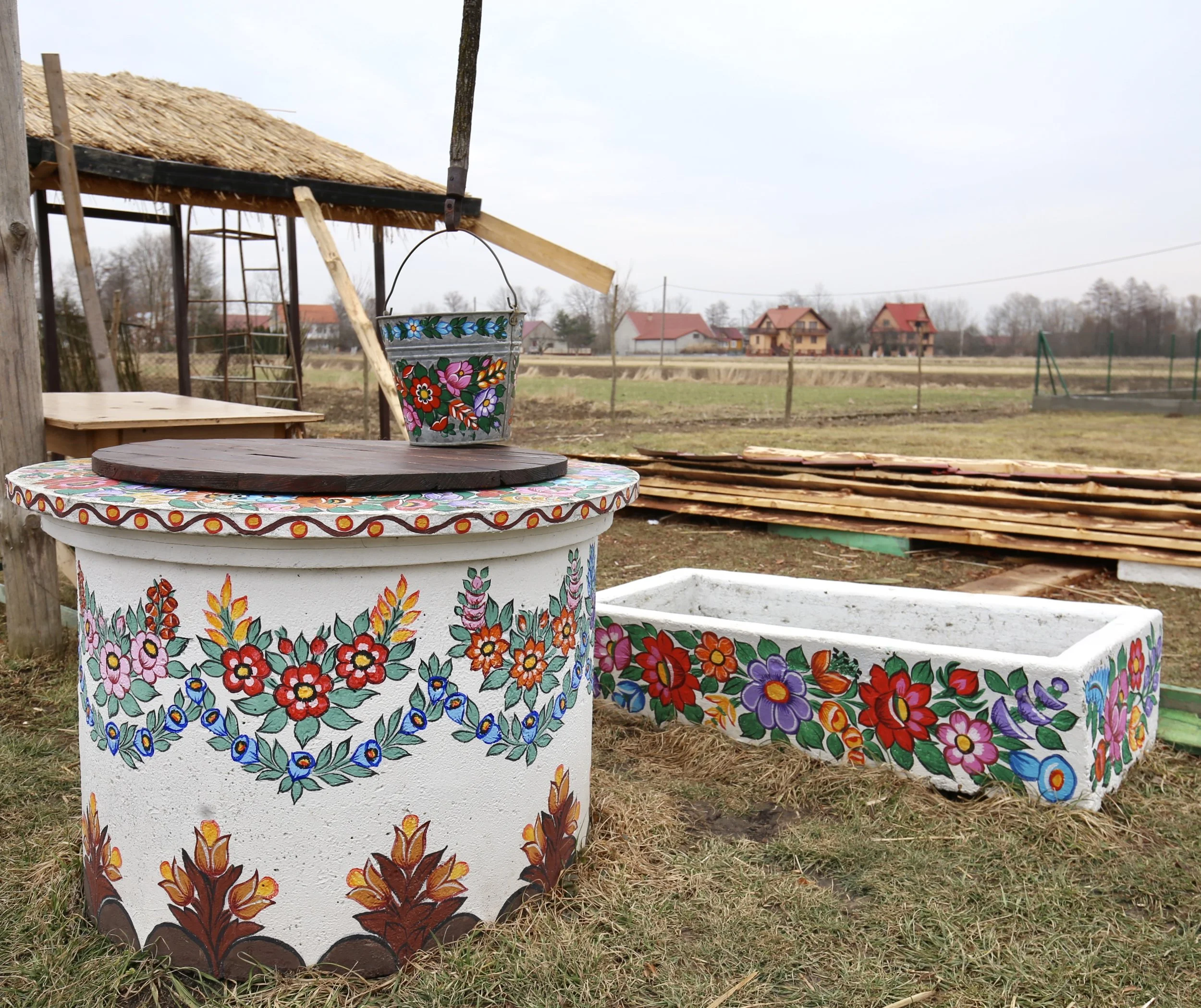
She spoke to us in Polish, explaining it all in words we couldn't understand. Her smile, and her gestures told us so much more. She offered us food: boiled eggs and mash, then took us back outside to show us the barn and her chickens. Like everything else, the barn was painted with bright flowers, that seemed to make her smile even as she looked at them on that grey winter day.

She was a flower ~ a bright sunflower, with shining face and waving hands. And, just by being so sweet and joyful, she reminded me, a passing stranger on the meadow lane, to smile.


Bright flower details painted on an old brown barn in Zalipie, Poland.
A bucket hanging over a well, painted with bright flowers, in Zalipie.
A little wooden fence and wall painted with colourful flower patterns in Zalipie, Poland.
The sweetest little blue cottage door with painted flowers hung all about - in Zalipie, Poland.
Looking in at the window - brown and pink flower patterns on a small house in Zalipie.
A charming little cottage with tiled roof and white walls painted with colourful wreaths of flowers, Zalipie, Poland.
An old lady who lives in a painted house, with her traditional clothes, in Zalipie, Poland.
A whole living room painted with flowers - even the tissue box is painted.
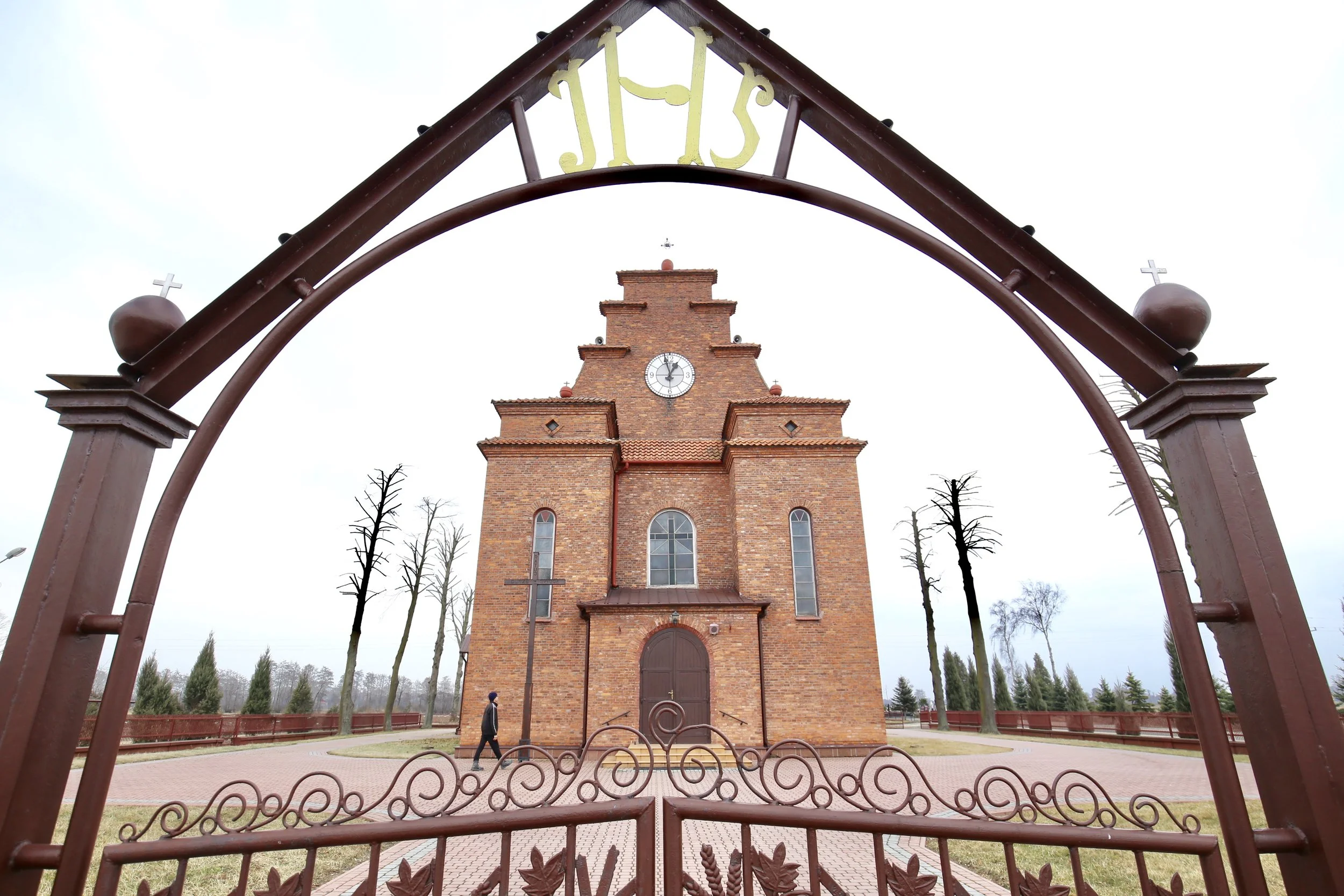
The red brick church of Zalipie, Poland. Seen from the front gate.
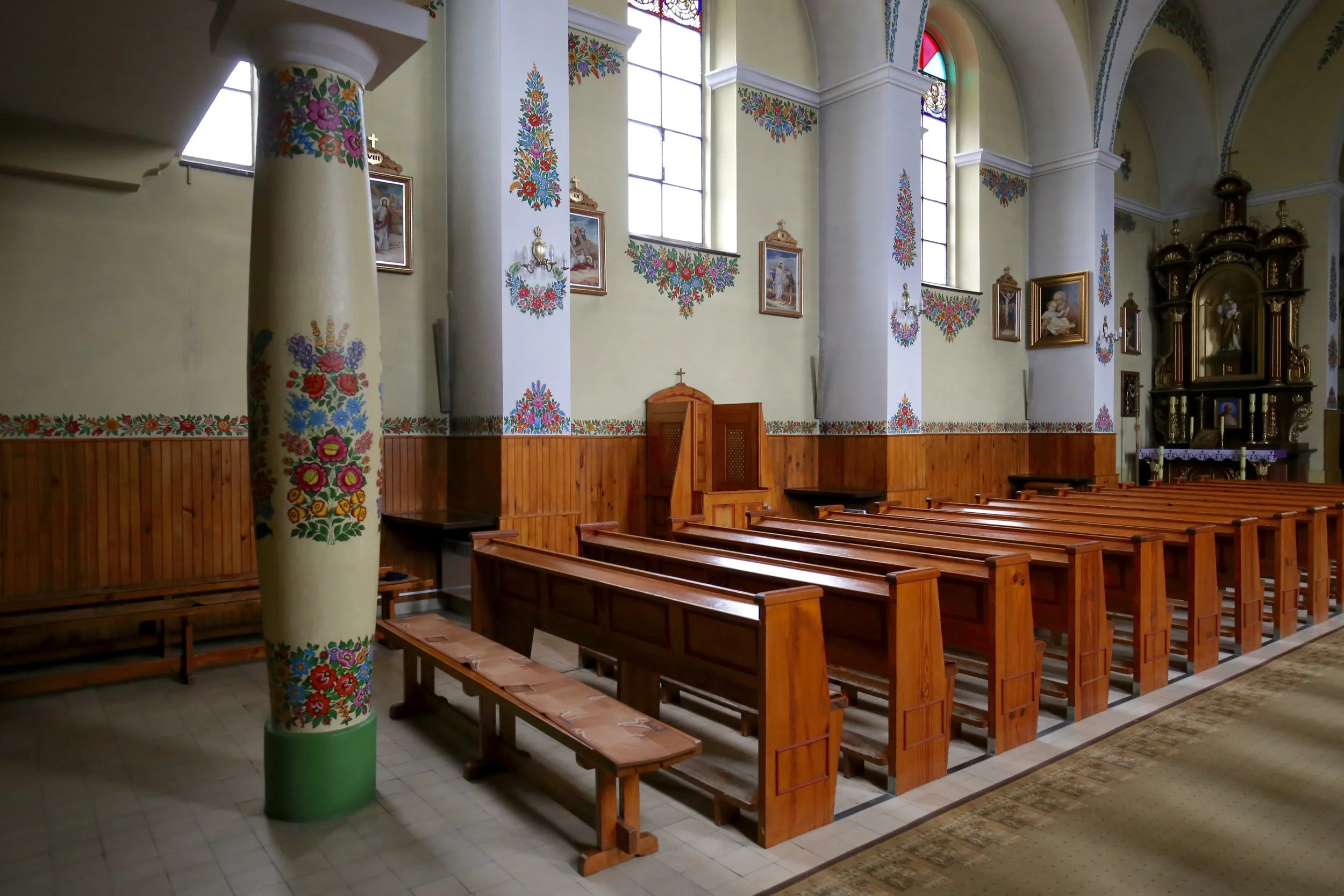
The beautiful church interior of Zalipie - all painted with wreaths of flowers, and the old wooden pews.
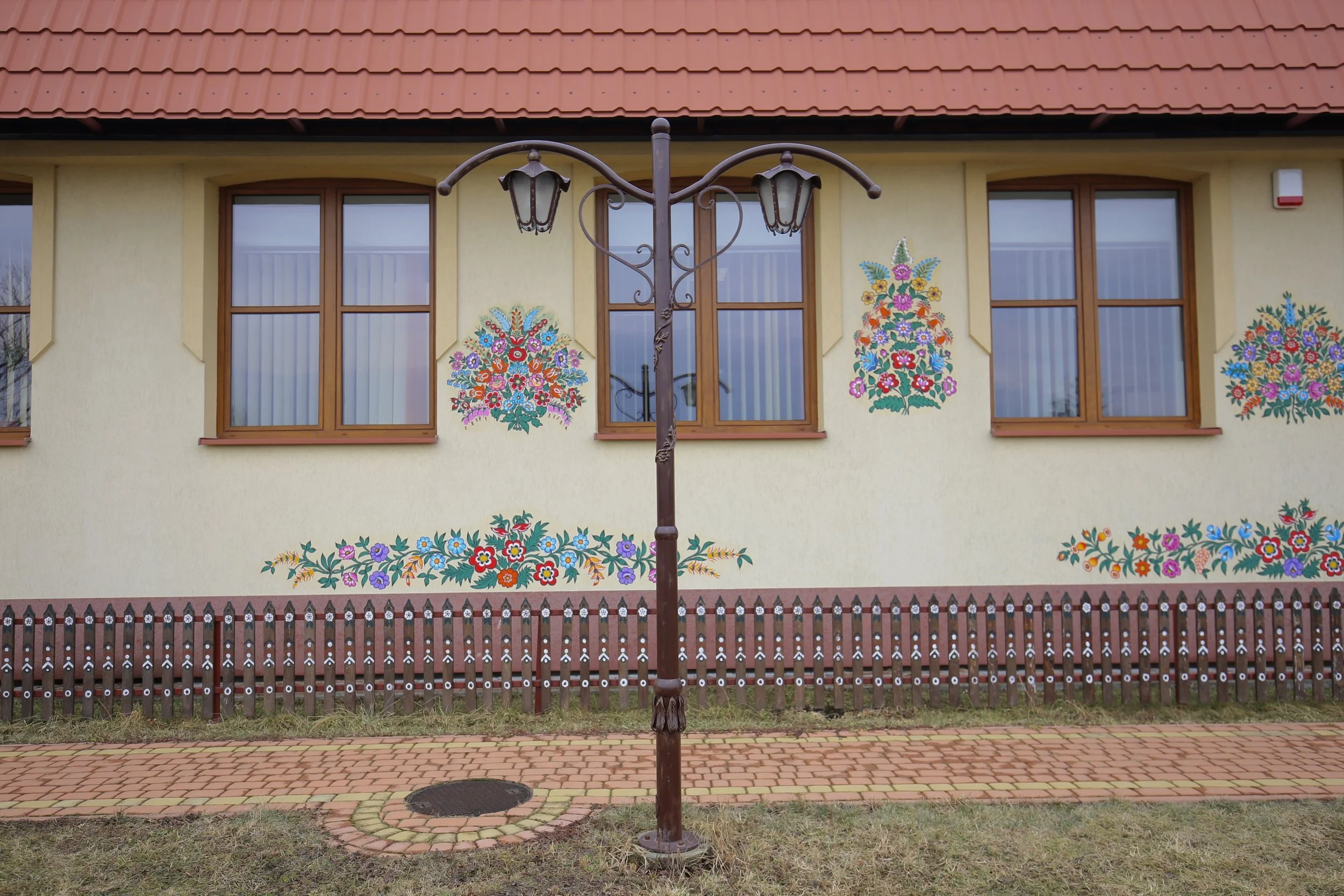
Flower fences at the local school of Zalipie, Poland.
A church organ sits above the pews, on a painted balcony of bright flowers, Zalipie Church.
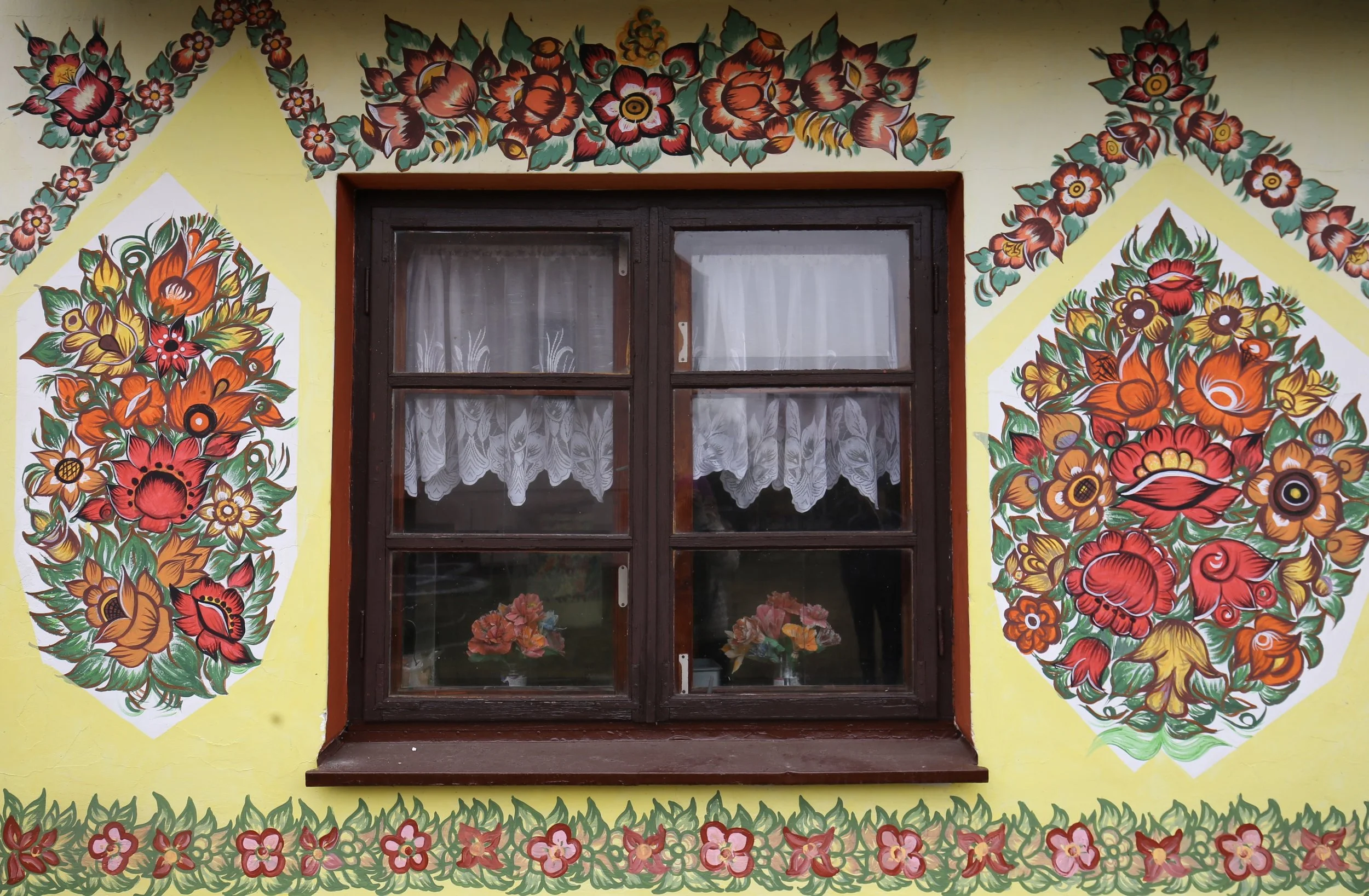
Brightly patterned walls on an old barn window in Zalipie - with orange and red flowers.
Someone was sitting in front of a sunflower, watching the sunflower, a cup of sun, and so I tried it too. It was wonderful; I felt the whole universe in the sunflower. That was my experience. Sunflower meditation. A wonderful confidence appeared. You can see the whole universe in a flower
— SHUNRYU SUZUKI

MORSKIE OKO

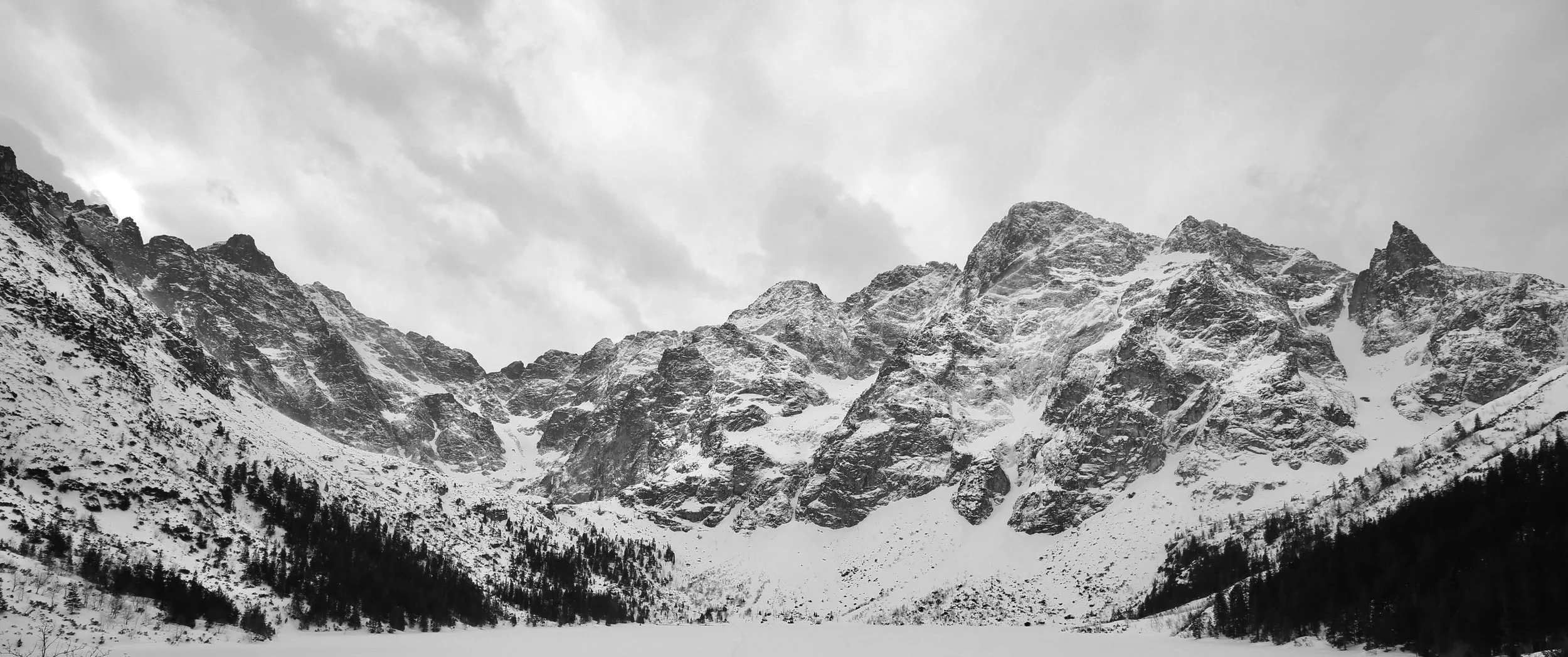
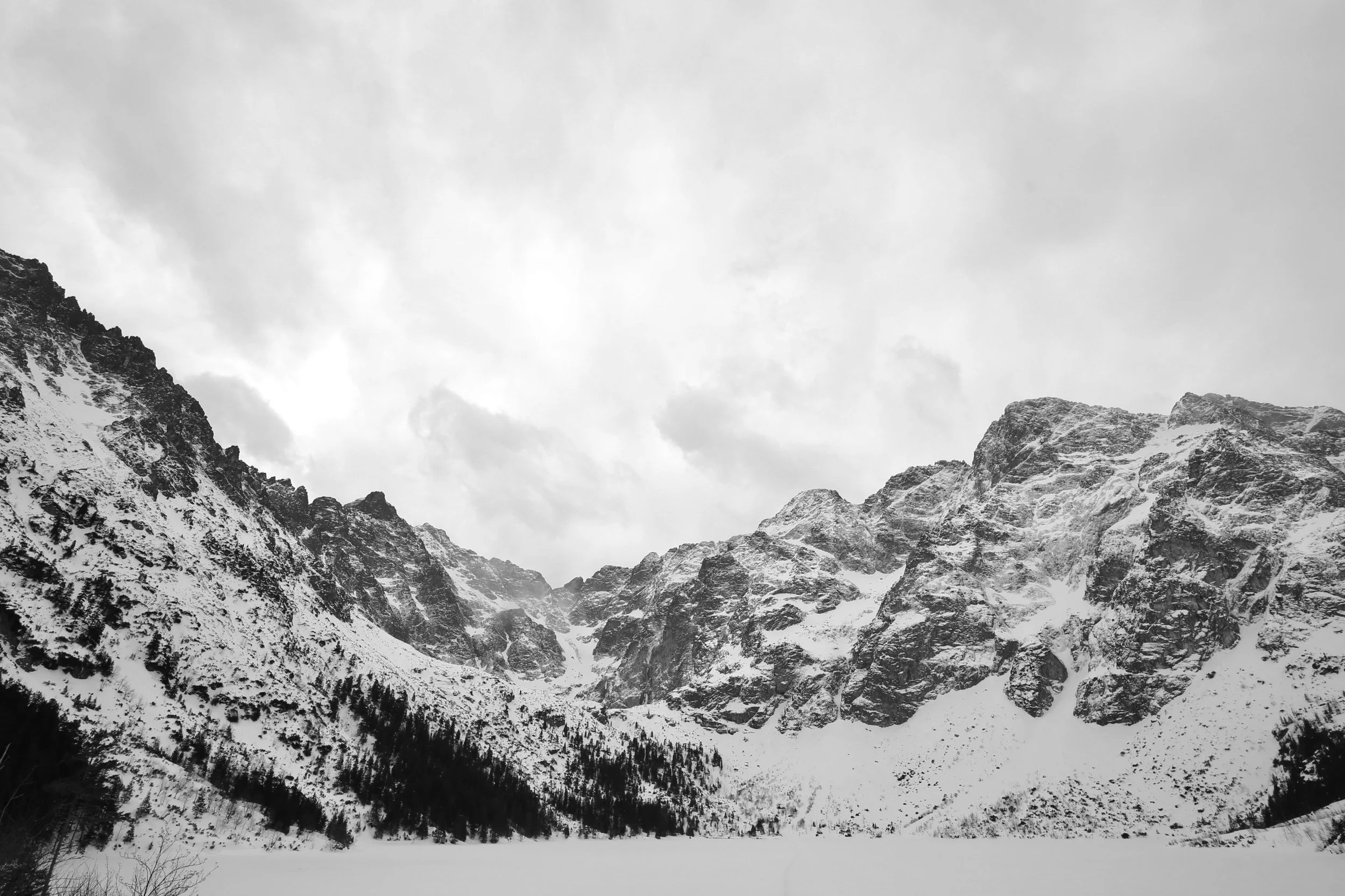
Lake Morskie Oko and the Tatras Mountain range, in winter snow, black and white photography.

EARLY BIRDS

In the high Tatras, on the Polish side, the forests are of spruce and pine. I remember walking beneath the slender limbs of tall trees, one winter morning...

We had awoken early, in our car seats, in some nondescript parking lot outside of Zakopane. It was cold, although not as cold as it had been in Slovenia, and the windows remained clear and unfrosted. It took only a few moments to get ourselves ready for that day's adventures: a good stretch, a new pair of socks, a banana and an apple, and we were on our way. Living in a car is easy like that.

In the half light, between the hours of 6 and 7, we began our trek through the forest, with a little food tucked away, water, and wooly hats, to protect from the wind. That wind. I remember the way it moved up through the hills up towards the peaks, the tail ends getting caught in the trees, making them creak and sway in solemn song, like monks in a choir beneath the fading stars.

The creaking noises were a little eery, and in these early hours, when not another human soul was around, it was easy to imagine things...

...bear, fox, lynx and wolf; deer, boar, goat and squirrel,
all living somewhere in the shadows, beyond the first layer of trees. I wondered if they were watching us.

The ascent was gradual, and the path began to follow a small stream, ducking in and out of woodland groves into wide clearings where the mountains could be seen in the distance. They grew larger, as we got nearer. First the snow capped peaks appeared as tiny pinnacles - peeping up from the vast stretch of trees. Then they seemed like a great wall on the edge of sight. Until, finally, when we were standing below them, they shrouded everything, towering over the lake like giants peering into a pool... 

And oh, that lake! It was bitter cold, on the edge of Morskie Oko - the Eye of the Sea - the lake was now still, the eye unseeing, covered by a great snowy lid... The wind that had moved the trees to song was now whirling about the mountain tops, composing snow and rock into various formations. I stood there, on the shore, gazing out for a long while, till my fingers grew cold and stiff, and my nose turned red, and my eyes watered and stung. But still I stayed to look - in awe of the incredible beauty, strangeness, and seriousness of this Earthly place. Had I stayed for much longer, I am sure my body would have frozen there. The delicate nature of my human life meant that eventually I would have to go inside to bring my body temperature back up... but just for those few minutes, I was allowed to witness something incredible.

Humans, no matter how delicately they are made, will always feel this curiosity and attraction to the wildest places of our world... It was that particular feeling that led my wandering feet up the mountain.

...

There, at the top, we ate something warm, talked a while, then met a group of mountain climbers who were preparing for their own early ascent further up the mountain. I imagined that these people were much more intrepid than us, more driven, crazy even, to want to get up so early and do something so dangerous. But then I saw that same twinkle of curiosity in each of their eyes, that I know lives in my own.

This is why we travel... this is why Oliver and I push our limits, live in cars, get up early to walk miles in the cold to stand, if only for a few moments, in front of splendour... because we feel that same twinkle of curiosity and awe that pushes us outside our normal limits.


Our capacity as human beings is made greater by awe.


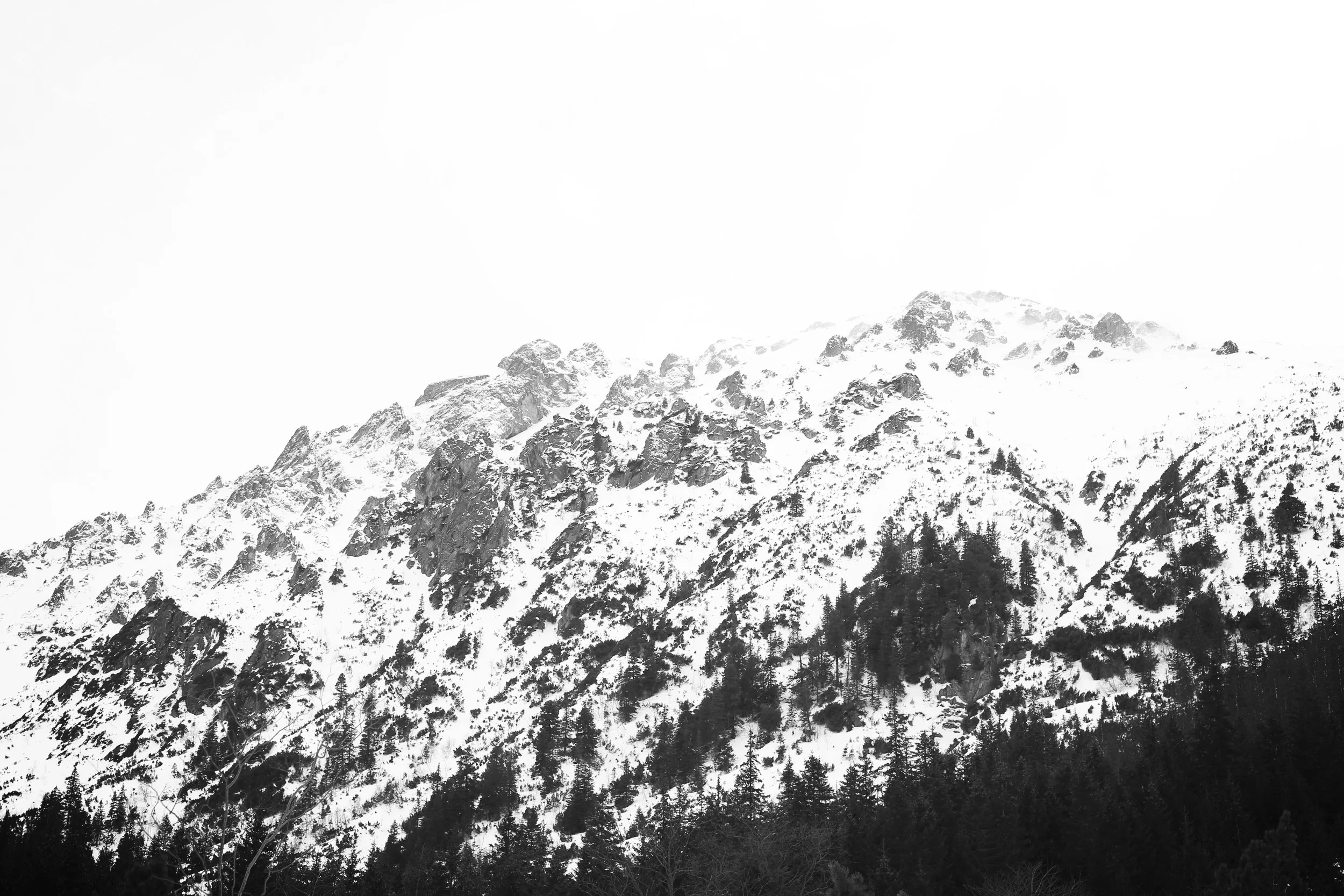
The Tatras mountains of Poland and Slovakia - covered in snow in the winter.
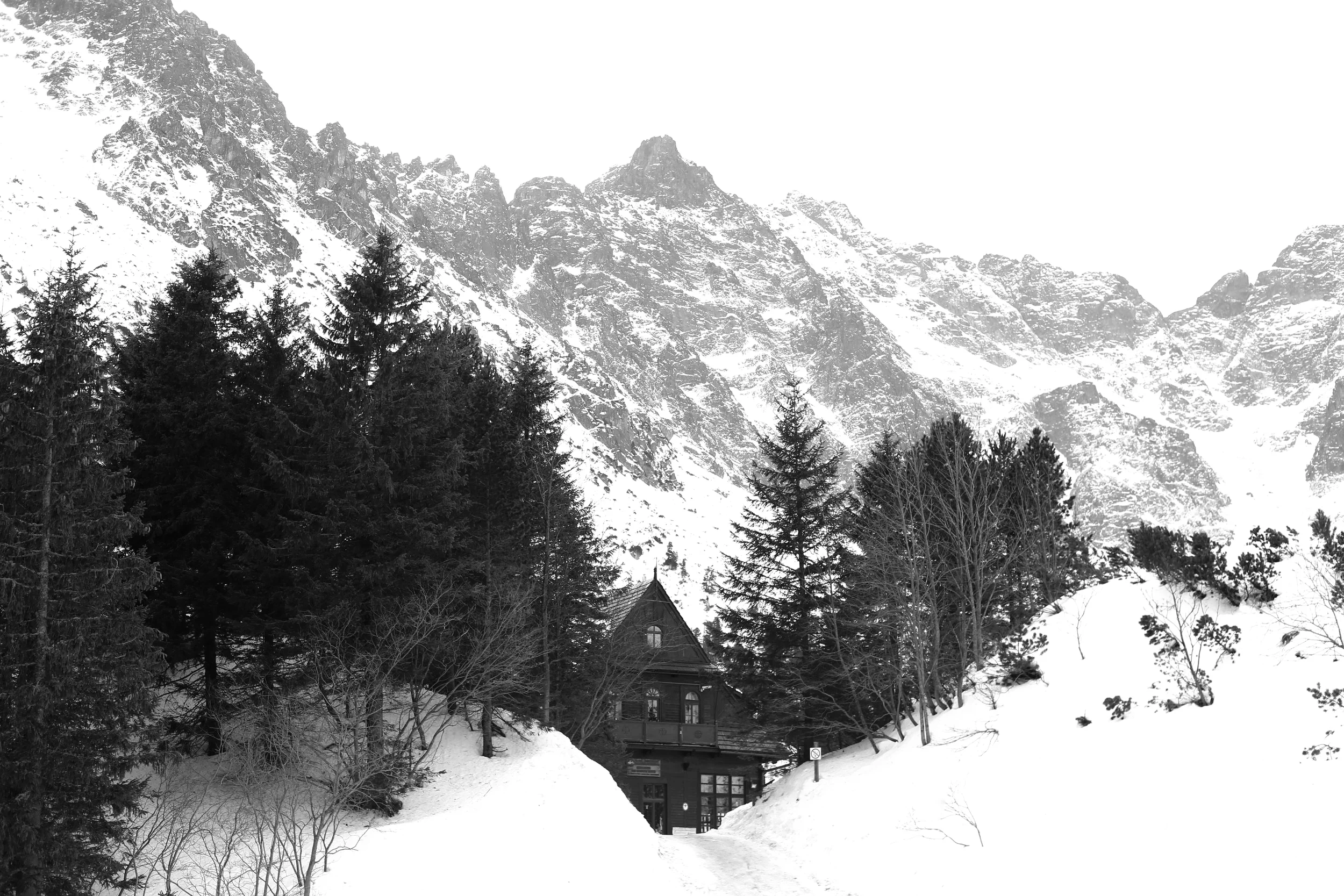
The small cabin at the top of Morskie Oko Lake, where climbers get ready to scale the mountains.
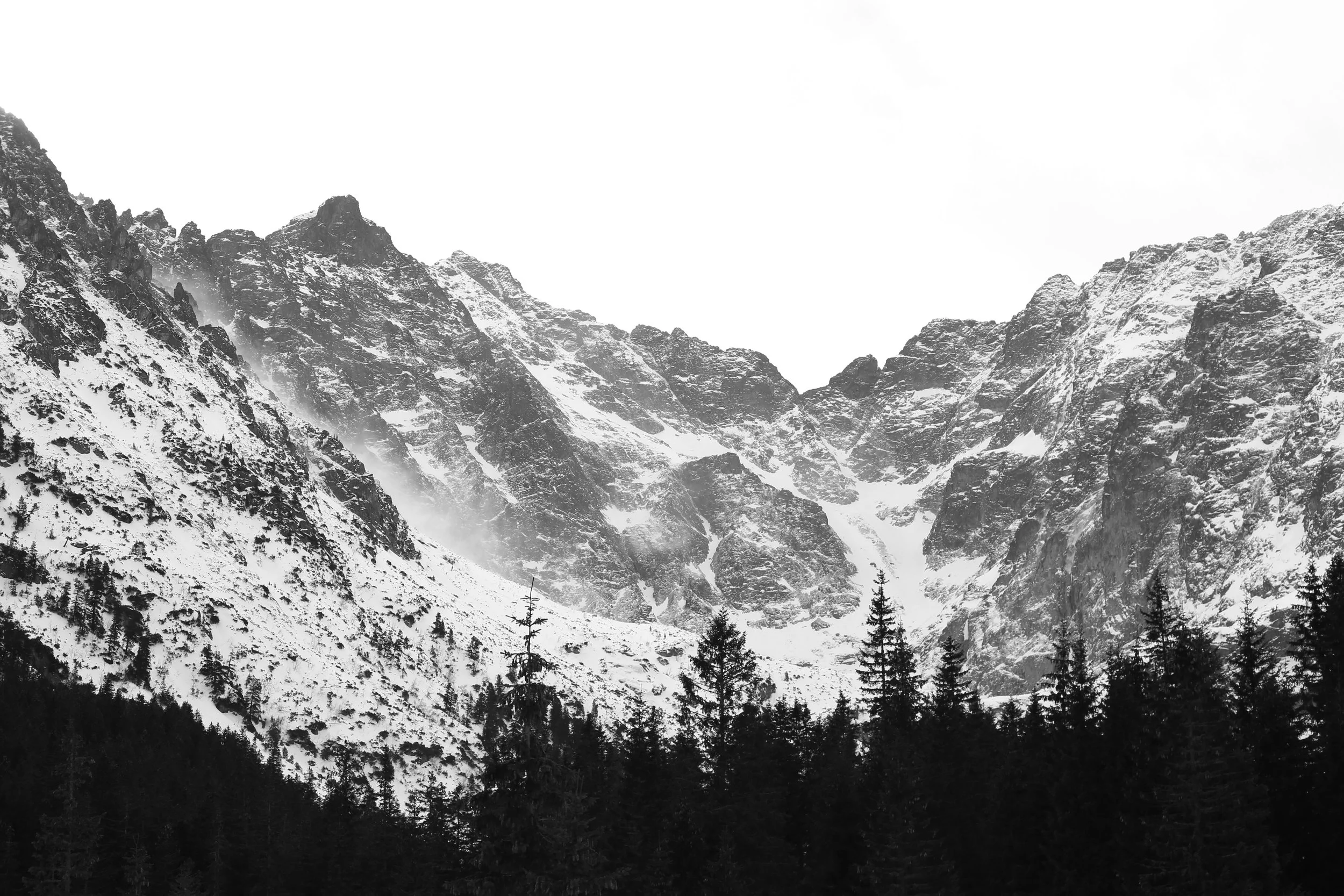
Pine trees and tall snowy mountains in Poland, near the border of Slovakia.
Waterfalls and blue pools in snow on the hike to Morskie Oko.
The beauty and majesty of the Tatras mountain range in winter - black and white photography, Poland.