HARVEST

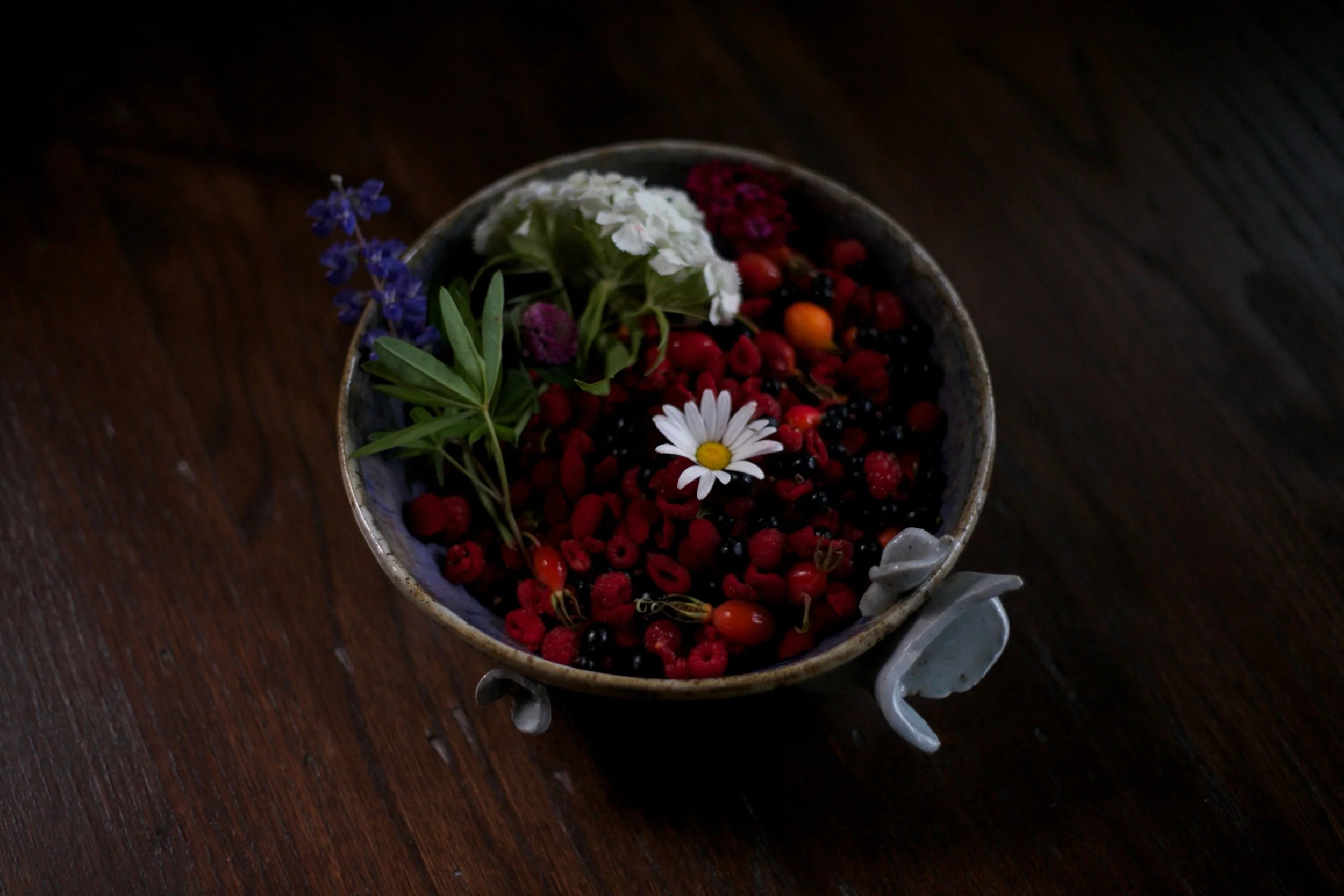
Foraged berries and flowers.


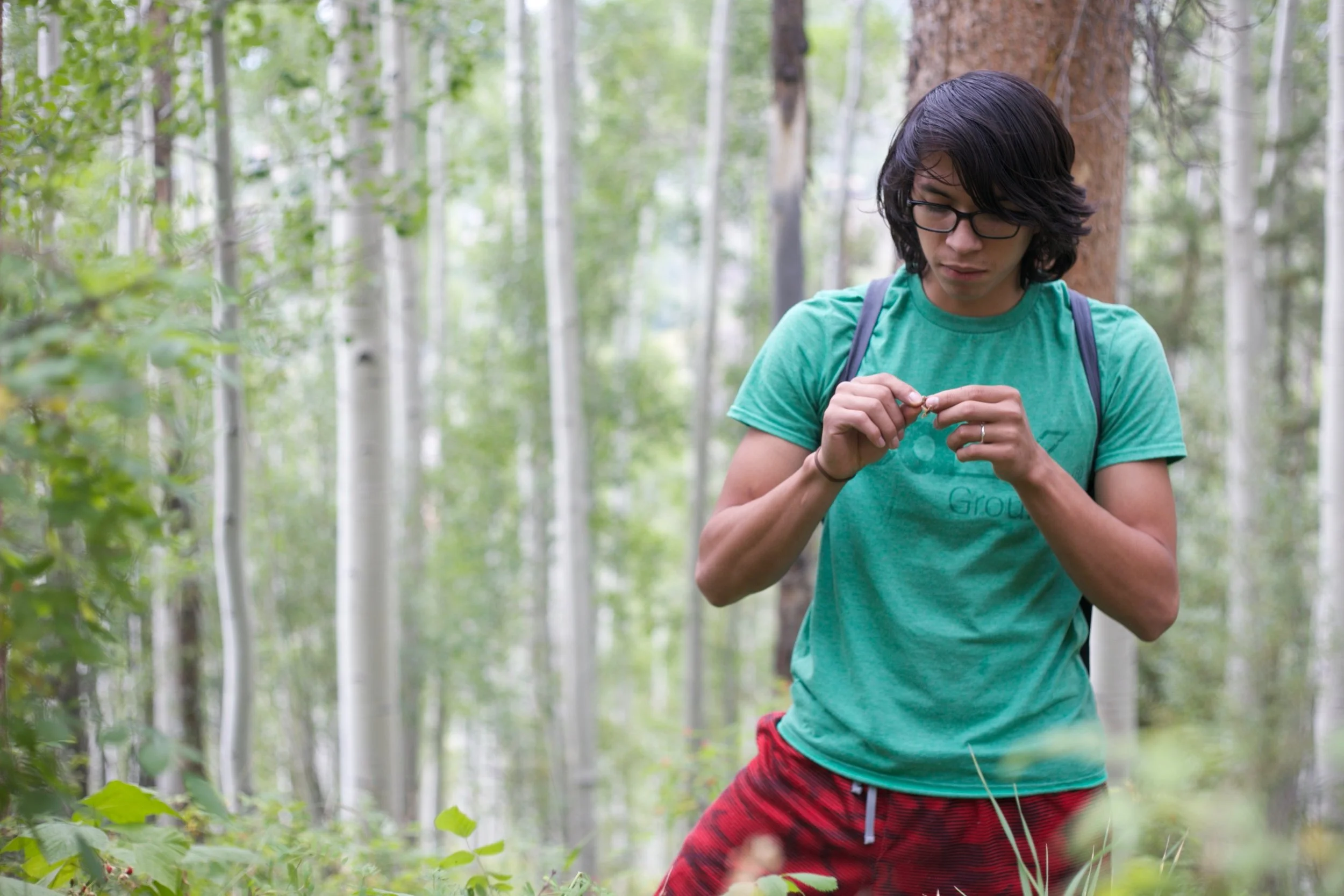
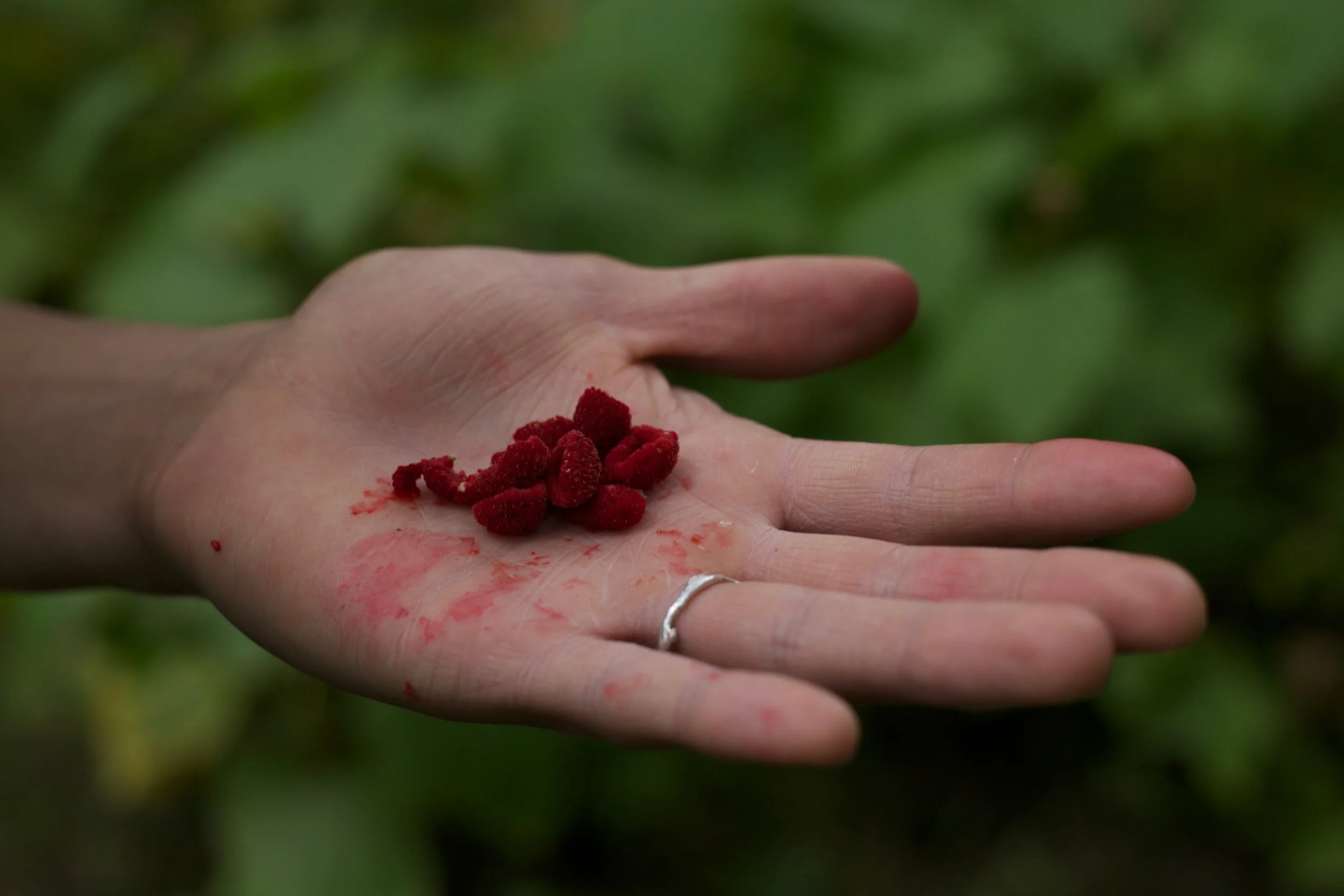
Then the rains came, pouring down upon us through the flocked branches of the aspens, reaching the ground within seconds. It had been a dry summer, but Autumn was wrought with thunderstorms like this one. We were a-berry-pickin in the mountains - eating just as much as we saved in our containers. The berry bushes had been promising an abundant harvest for some time; briar patches of aggregates: raspberries and blackberries out in full force. Thimbleberries too, nodding above their palm sized leaves. Once your eyes adjust to the task of berry picking, they seem only to see the shapes of leaves and colour red. 

I thought much about the symbolism of the harvest. Karma, you could call it. The concepts of sowing and reaping. It had been on my mind lately, and I found myself wondering what it was exactly that I had been sowing for all these years. 

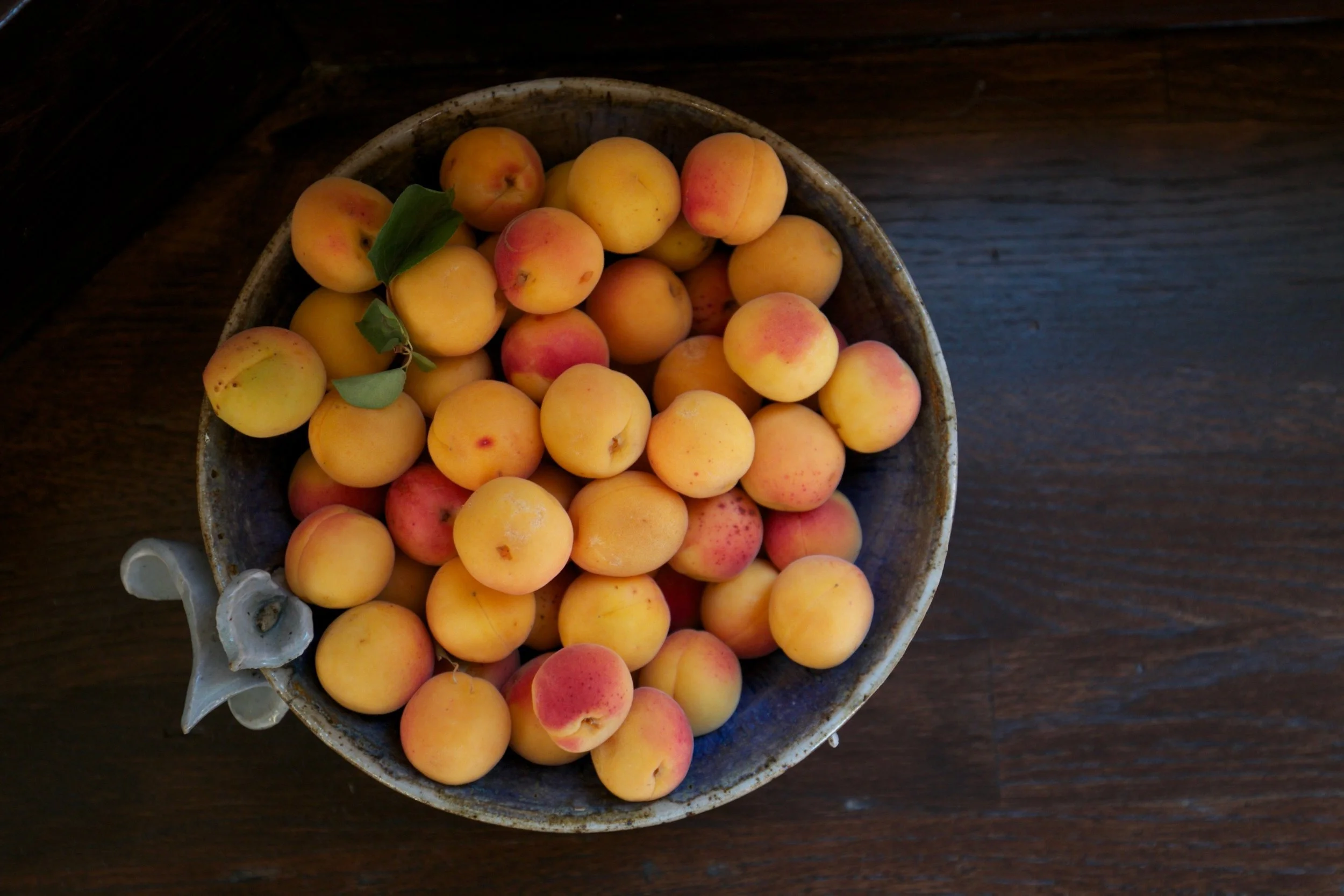
My gratitude abounds for the gifts of the Earth... The berries given freely in the forest, the apricots from a neighbour's garden, the pea pods and peaches, and the strawberries I thieved on the regular at work. I feel it like an overflowing force within my being, this gratitude for such truthful items of nourishment.


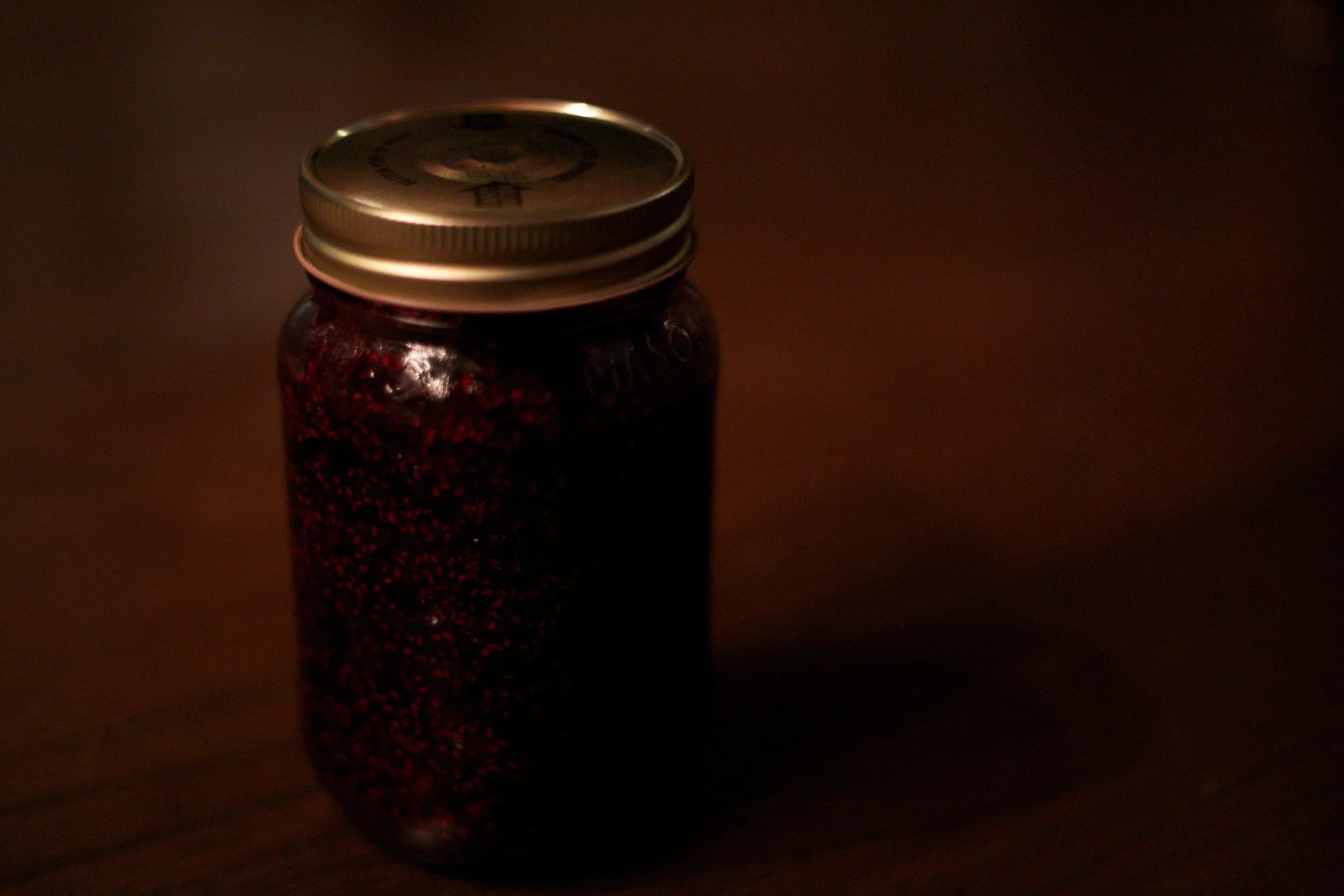
We made one jar of precious jam from the mountain berries...

Raspberries

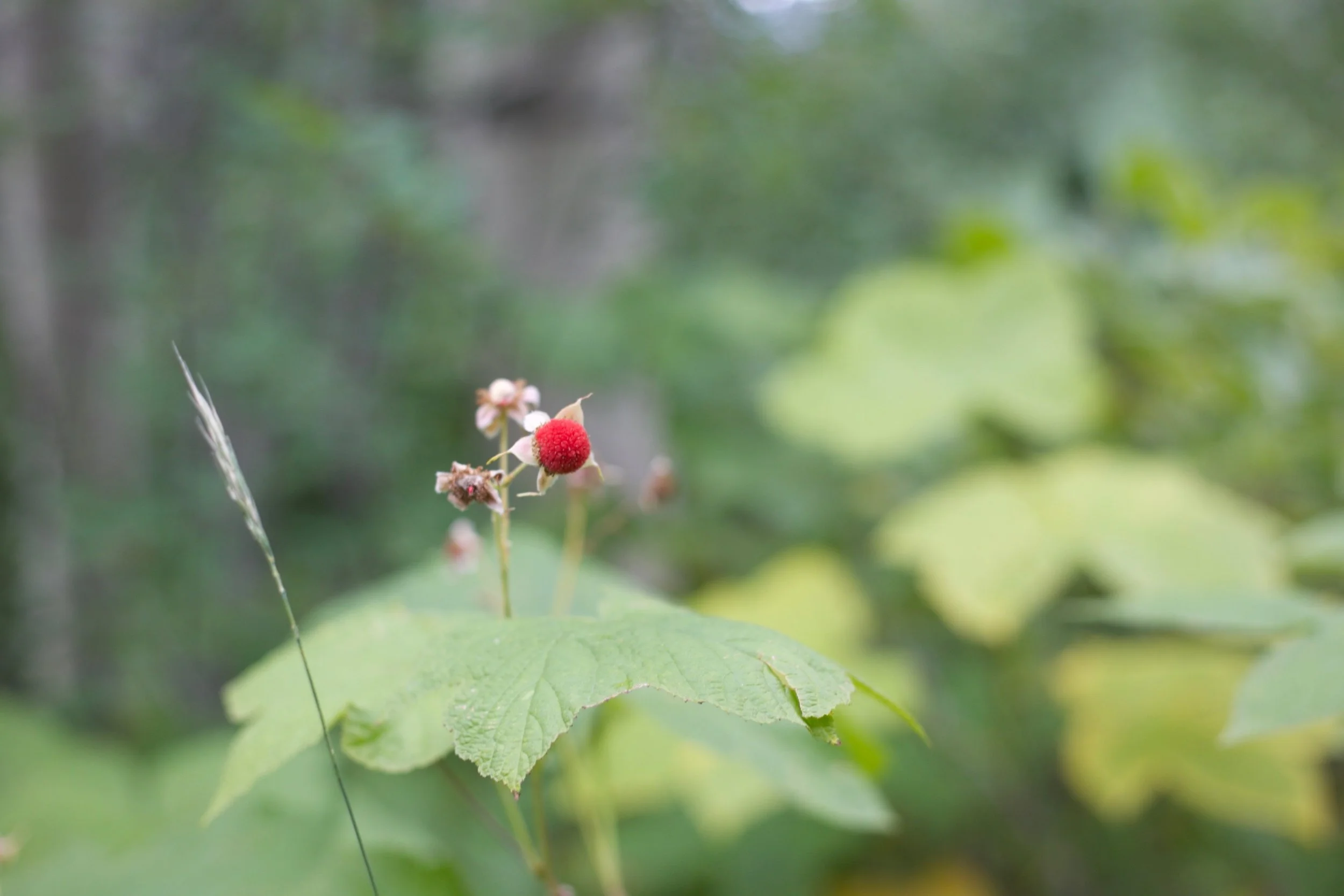
Thimbleberries

Red currants

Blackcurrants

Strawberries

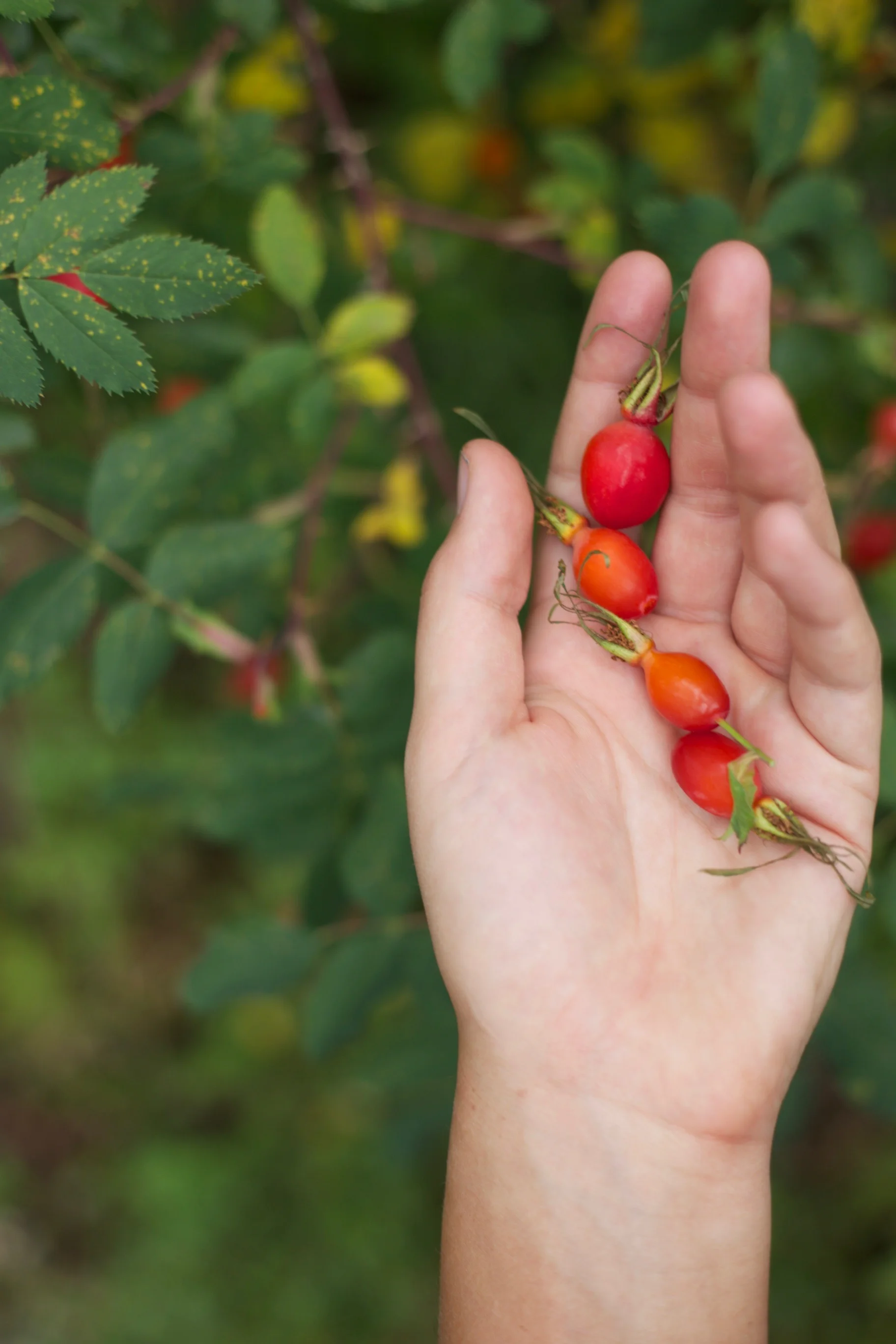
Rosehips


Maybe it is a kind of medicinal process, to forage for food. In the wild I find what I need: a little nourishment for the body, and for the soul, a connection with my food source, a respect too, a syncing of my body with the seasons. Real food is like a key, unlocking secret doors in my body that I never knew were there, and I am constantly learning.

. . .

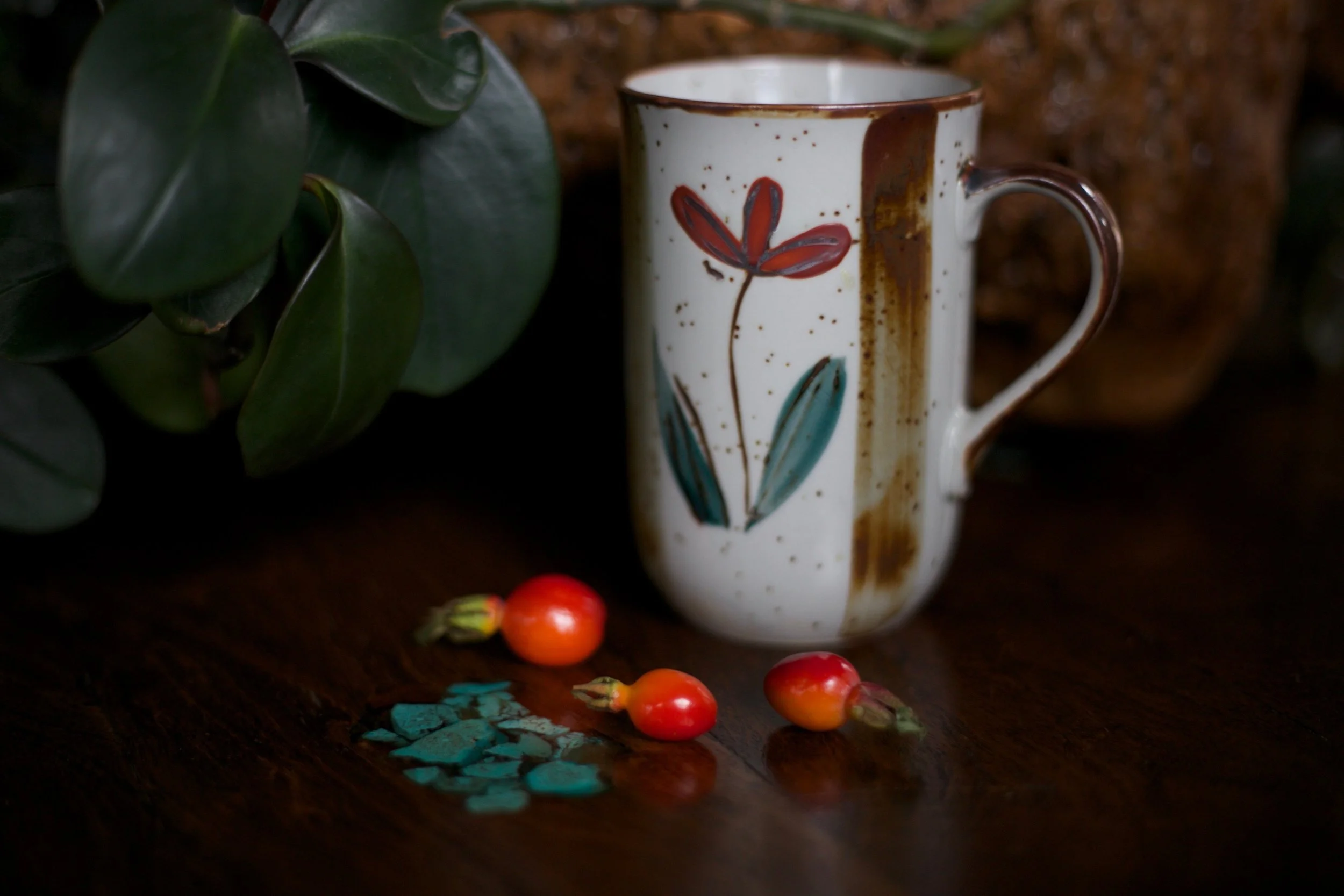
I scraped the rough seeds from the rosehips, saved them in a muslin bag, boiled water on the stove, then chose the nicest mug in honor of the occasion. I read a chapter of my book, closed my eyes and took my time drinking the rosehip potion. 
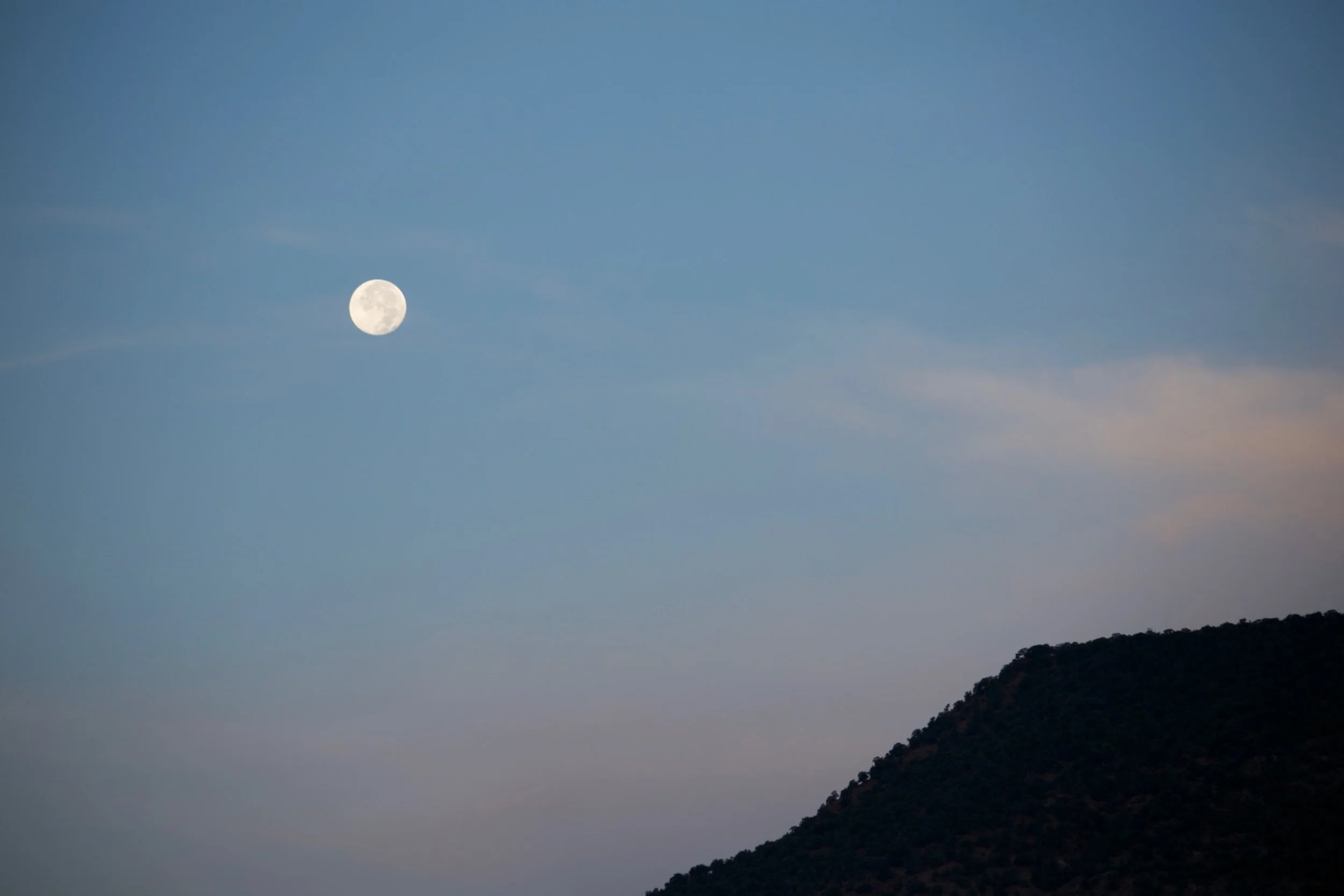
 

The harvest moon 2016.
Rose hips foraged from the wild. 
Foraging for wild blackberries.
Foraging with Oliver in the mountains of Colorado.
Foraging for thimbleberries in Colorado.
Foraging for thimbleberries - bright red berries like flat raspberries.
Home grown apricots.
Rose hip tea made from wild rose hips.
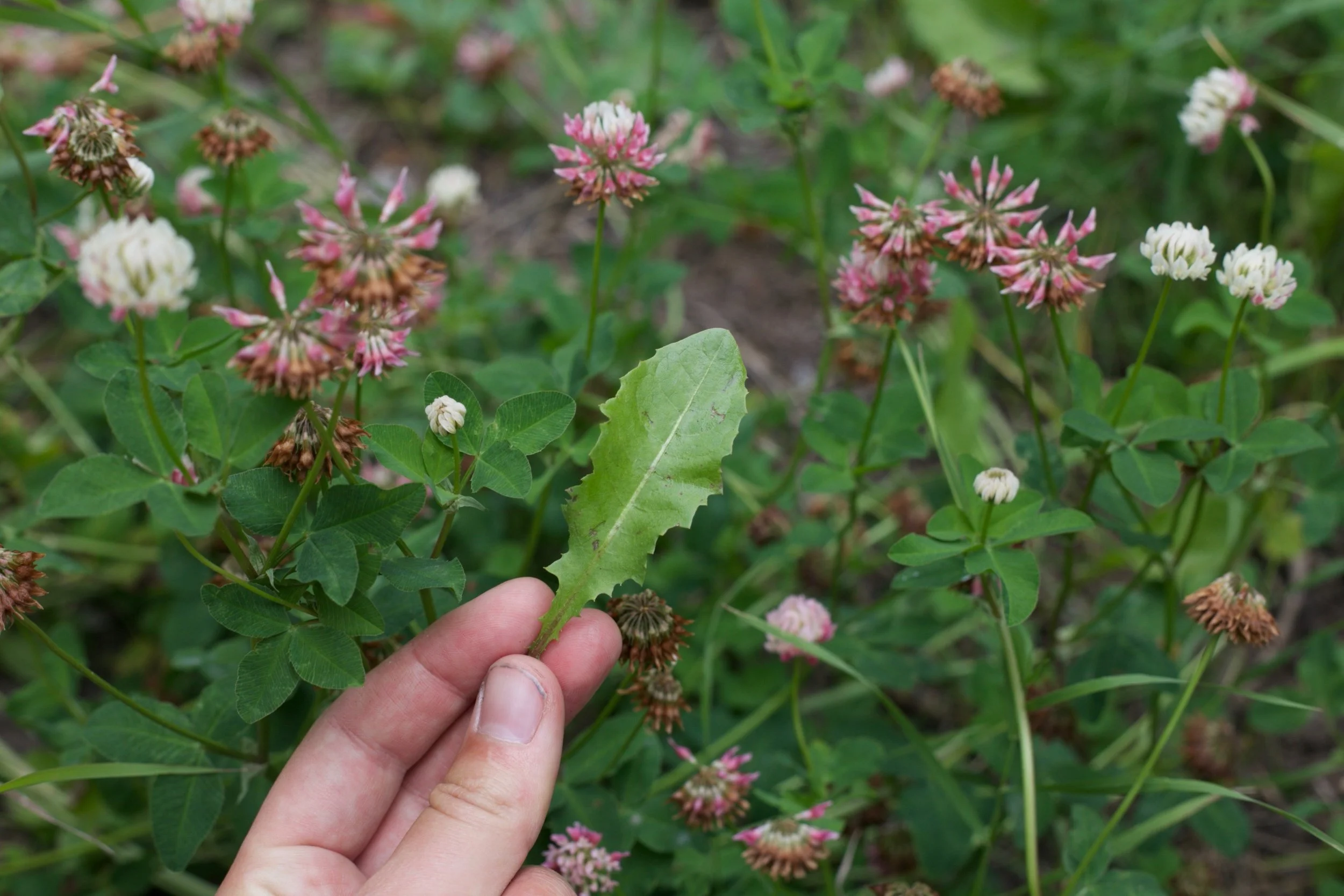
Dandelion leaves - the baby ones are delicious.
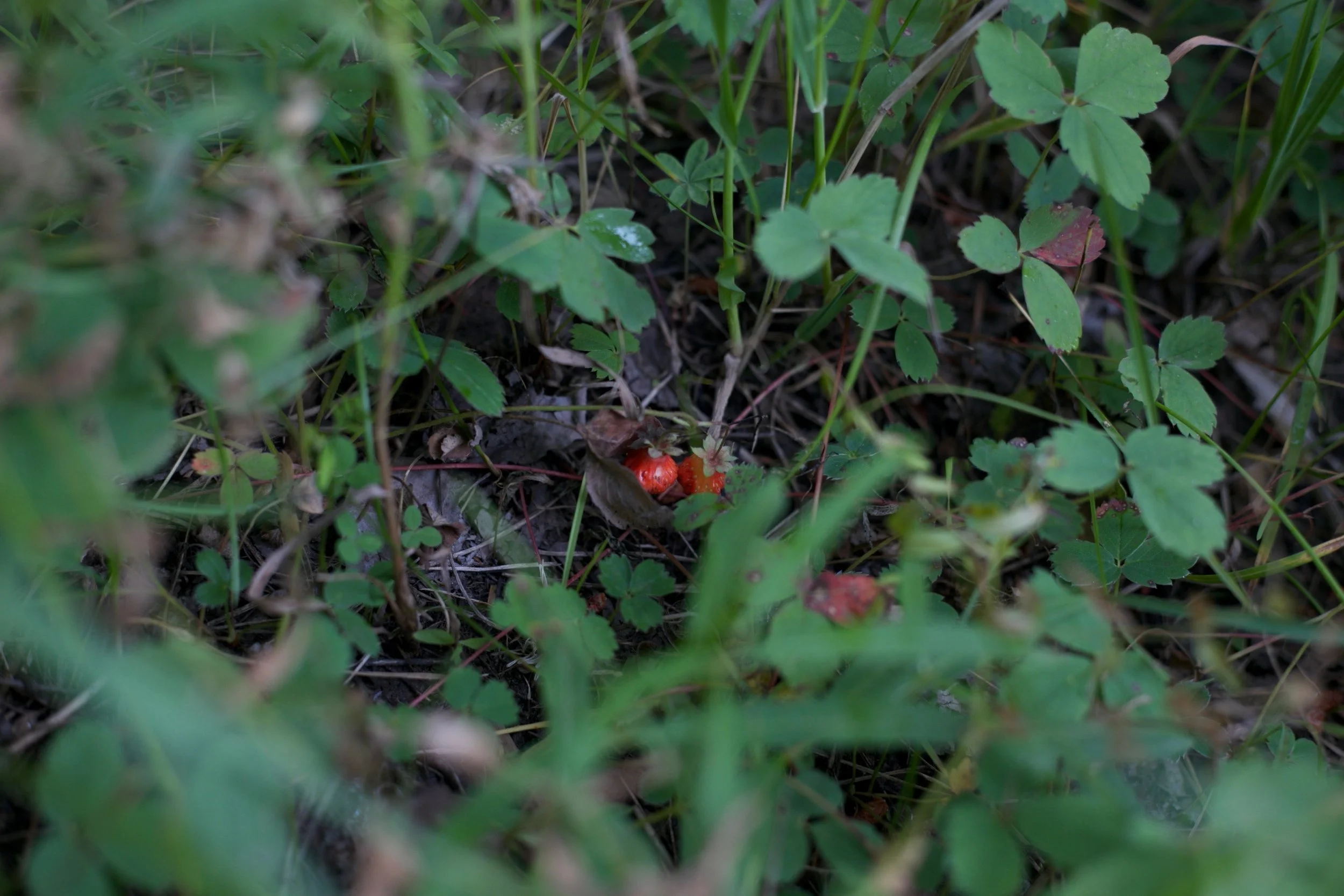
wild strawberries in the mountains of Colorado.

WILD FRUITS

- Henry David Thoreau


I do not think much of strawberries in gardens, nor in market baskets, nor in quart boxes, raised and sold by your excellent hard-fisted neighbor. It is those little natural beds or patches of them on the dry hillsides that interest me most, though I may get but a handful at first—where, however, the fruit sometimes reddens the ground and the otherwise barren soil is all beaded with them, not weeded or watered or manured by a hired gardener. The berries monopolize the lean sward now for a dozen feet together, being the most luxuriant growth it supports, but they soon dry up unless there is a great deal of rain.

You seek the early strawberries on any of the most favorable exposures, as the sides of little knolls or swells, or in and near those little sandy hollows where cows have pawed in past years, when they were first turned out to pasture, settling the question of superiority and which should lead the herd. Sometimes the berries have been dusted by their recent conflicts.

I perceive from time to time in the spring and have long kept a record of it, an indescribably sweet fragrance, which I cannot trace to any particular source. It is, perchance, that sweet scent of the earth of which the ancients speak. Though I have not detected the flower that emits it, this appears to be its fruit. It is natural that the first fruit which the earth bears should emit and be, as it were, a concentration and embodiment of that vernal fragrance with which the air has lately teemed. Strawberries are the manna found, ere long, where that fragrance has been. Are not the juices of each fruit distilled from the air?

This is one of the fruits as remarkable for its fragrance as its flavor, and it is said to have got its Latin name, fraga, from this fact.
Making jam with wild berries. 
Jam made from wild berries foraged from the mountains of Colorado.
Geese flying south for the winter. 

SUMMER IN THE CITY

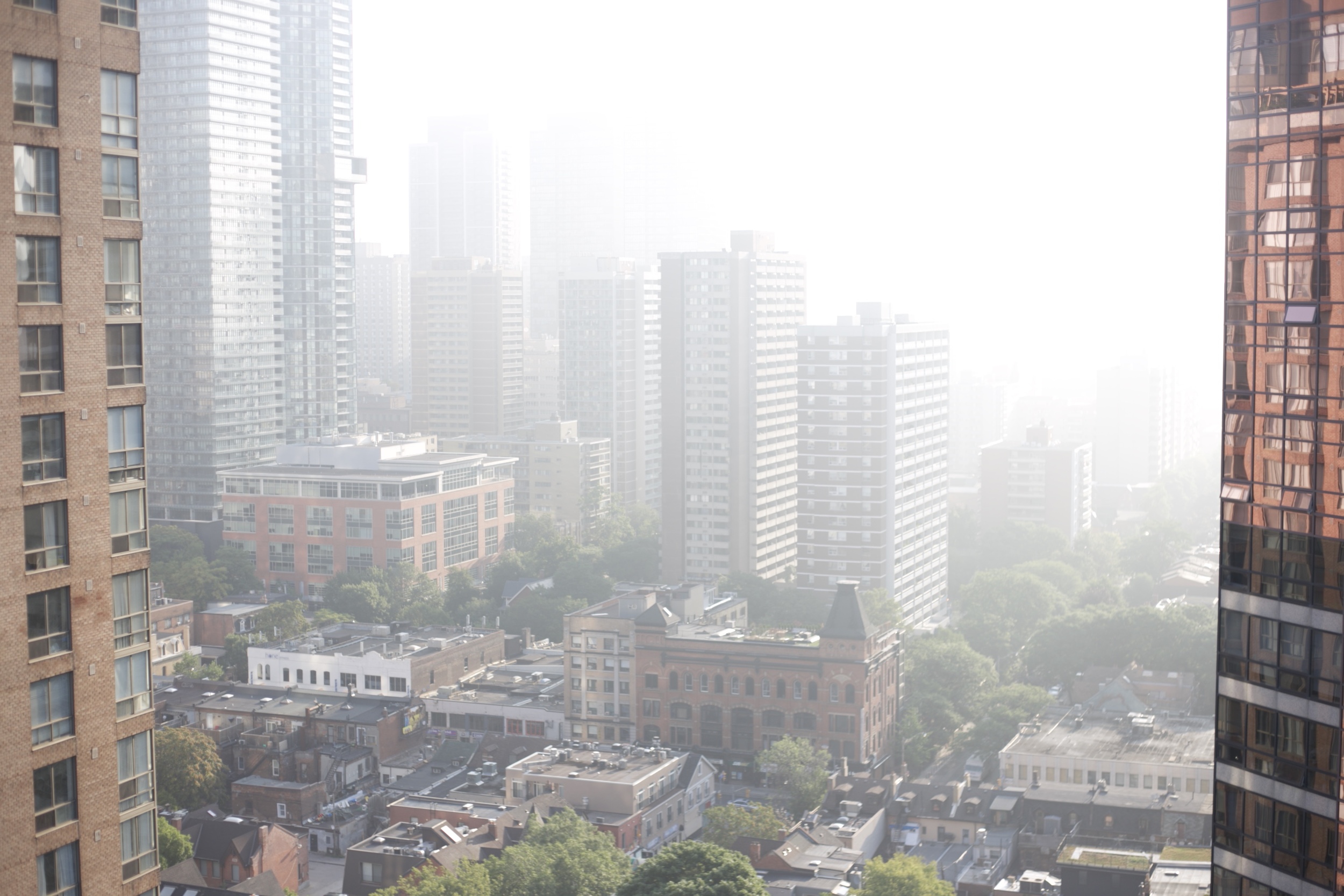
Toronto city in the morning mist.

SMALL WONDERS OF THE CITY

..SEEN FROM A BALCONY..


A city waking up

Humidity like a greenhouse.
A lady walks her poodle.
Men wearing black suits talk on cell phones, walking in circles in a garden with benches.
Construction workers yell, clank chains and drill through stone.
The bus hisses, whines, then drones on again.
Toy cars whizz by.
A biker in spandex too.
A young woman feeds pigeons in the park.
A delivery van with squeaky breaks stops at a red light.
Two people sit in the window of the ninth-story, eating breakfast. There is orange juice in the cups.
A small dog pees on a lamp post.
A couple kisses in the park.

Toronto downtown in the morning.
View from my balcony onto the high rise buildings.
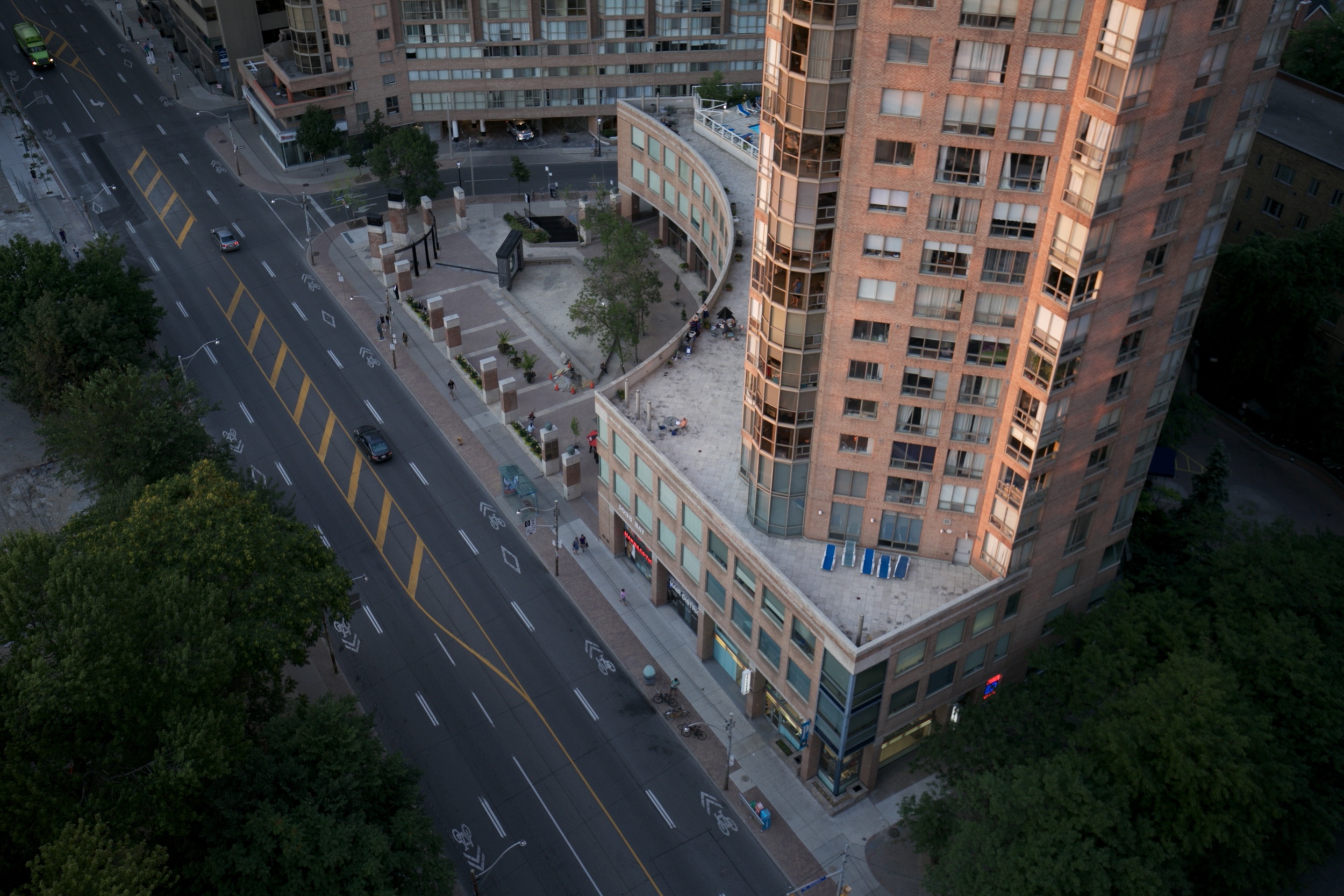
Looking down at the streets from a balcony in Toronto.
Cars driving through the streets of Toronto.
Watching the street below my balcony, Toronto city downtown.

a city going to sleep

Some friends drink wine on a third floor balcony garden.
Snatched conversation drifts along a warm breeze.
The sunset reflects on the dark glass of the company buildings.
Lights flicker on at random intervals.
Sirens come from one street over.

Sunset over Toronto cityscape.
Windows of the city all lit up at night.
Toronto city scape at night.

MOUNTAIN CLIMBING

Alpine buttercups on Mount Elbert in Spring.
If I have seen further it is by standing on the shoulders of Giants.
— ISAAC NEWTON - 1676.

ON THE IMPORTANCE OF MOUNTAINS


80% of fresh water on Earth originates in the mountains.
That is, nearly all our major, life-giving rivers find their source in some mountain or other.
20% of the Earth's surface is mountainous.
Moreover, those mountainous climates often cultivate a diversity of life and culture: plants that grow specially low to the ground, in order not to be disturbed by the wind; and people who grow wiser, adapting their lives, languages and customs to the landscape.
Mountains have long been held in human esteem, as the abodes of great deities. Look only to those mountains of myths: Mt. Olympus, Everest, Machu Picchu, and Helgafell, and you will find the great gods.

ON THE WISDOM OF MOUNTAINS


An ancient Sumerian legend names Ninhursag, 'Lady of the Sacred Mountain,' as the divine mother goddess. 

. . .

Oldest, born of rock, she birthed into this world the plants and the people. And when her escort, the God Enki, became sick from his overconsumption, she took him in, healing him and bringing health back to the world.

. . .

I cannot help but see the parallels between this 5000 year old myth, and our own contemporary predicaments. The mountain goddess teaches us to care for others, to heal all things.

▴△

Roots to the core of the planet,
Tops touching the outer reaches of the atmosphere,
the mountain body is like to our own - 

grounded yet lofty. Careful observation reveals our interconnected natures.

▴△

From the tops of mountains,
we may gain some greater perspective.

. . . 


Laid out before us is the land below - all things happening there without our presence - the world goes on and on. Our problems shrink in the ever-distance. We see change along the horizon.

▴△

The mountain knows Time inside and out.
She was there when the plates moved to make her.
She will be there till the rains erode her.

. . .


She knows the secrets of the June flowers,
and of the fox that passes,
and the climber who stands for a moment,
surveying an impassible ridge,
and the thoughts of beetles...
Long years, passing moments.

▴△


The view of the Rocky Mountains from Mount Elbert, Colorado.
Made it to the top of the mountain!
Lakes in the valley, Colorado.
 

...small wonders to be found on mount Elbert...
14,440 feet above the sea

A treeless land of hillocks.
Blasting wind, then silence.
Chirruping insects in the low grass.
Alpine buttercups.
A sense of great achievement.
The silence of my body,
shutting down every facet of thought and function
till all that is remains
are the essentials:
legs, heart, breath, blood.
Being thankful for my lungs, and for the air that I breath.
 
Alpine buttercups waving in the wind.
Oliver on Mount Elbert.
Alpine sunflowers and blue skies in the Rockies, Colorado.
Rocky Mountains of Colorado.
The steep slope of Mount Elbert.
Resting at the top of Mount Elbert.
Dog riding on a ladie's backpack.
Small green lake in the mountains.
Alpine sunflowers on Mount Elbert.
The view from the top of Mount Elbert, Colorado.

For over 1,000 years we Tibetans have adhered to spiritual and environmental values in order to maintain the delicate balance of life across the high plateau on which we live.

In these stores of natural treasure, our doctors found many of the precious herbs and plants from which they compounded their medicines, while nomads found rich pasture for their animals, so crucial to the Tibetan economy. But of even wider-ranging impact, the Land of Snow’s mountains arc; the source of many of Asia’s great rivers.

Only hermits, wild animals, and, in the summer, nomads and their herds actually live high amongst them. But in the simplicity and quiet of our mountains, there is more peace of mind than in most cities of the world. Since the practice of Buddhism involves seeing phenomena as empty of inherent existence, it is helpful for a mediator to be able to look into the vast, empty space seen from a mountain - top.
— H. H. THE DALAI LAMA - ESSAY ON MOUNTAINS, 1992