TEMPORAL CYCLES
13. 0. 3. 11. 9.
To the Mayans, time was everything...
Time allows us to be and to experience.
Time allows us to grow and prosper, to sow and to reap.
Time allows for change, change is a truth of life.
Time, by its very nature, synchronises our lives with all other things in the cosmos.
The Mayans kept track of time using various different calendar systems. The Haab' calendar coincided with the solar year and counted 365 day cycles. The Tzolk'in calendar aligned with the movements of stars and the cycles of corn cropping, and counted in 260 day cycles. The Long Count calendar ran in a series of interlinking cycles of days, counting periods of up to 2,880,000 days. These calendars linked like cogs and wheels, the various parts moving in complex patterns, and cycling in seemingly random natures due to the discord of the numbers. And yet, as with every cyclical thing in the Universe, the loop eventually comes back around.
Paradoxically, by observing the sky, the Mayans learnt much about the Earth below them. By tracking the movements of the sun, they learnt of the seasons, and of the best times to plant and harvest their crops. Being avid born time keepers, they kept track of such knowledge in their Tzolk'in calendar.
THE SYNCHRONICITIES OF THE TZOLK'IN
This calendar tracked the pattern of the sun across the sky, focusing on the two zeniths: those moments when the sun would pass directly overhead and no shadows would form on the Earth. There are two solar zeniths a year, their dates dependent upon the location of observation. Oftentimes, local Mayans would plant their corn crops on one solar zenith, and harvest them on the next.
The approximate time between the last solar zenith of the year, when crops were harvested, and the solar zenith of the following year, when crops would be planted again, was 105 days...
365
- 105
----------
= 260
260 days is the length of the Tzolk'in calendar.
The gestation period for corn is approximately 260 days,
or nine lunar months.
The gestation period for humans is also nine months.
Here, we may observe one of the many random synchronicities of this world, which, although arbitrary for us, was so important to the Mayans who relied on the sun and corn for their own lives. It is no wonder, then, that the Popol Vuh tells us that humans were formed in the beginning from corn.
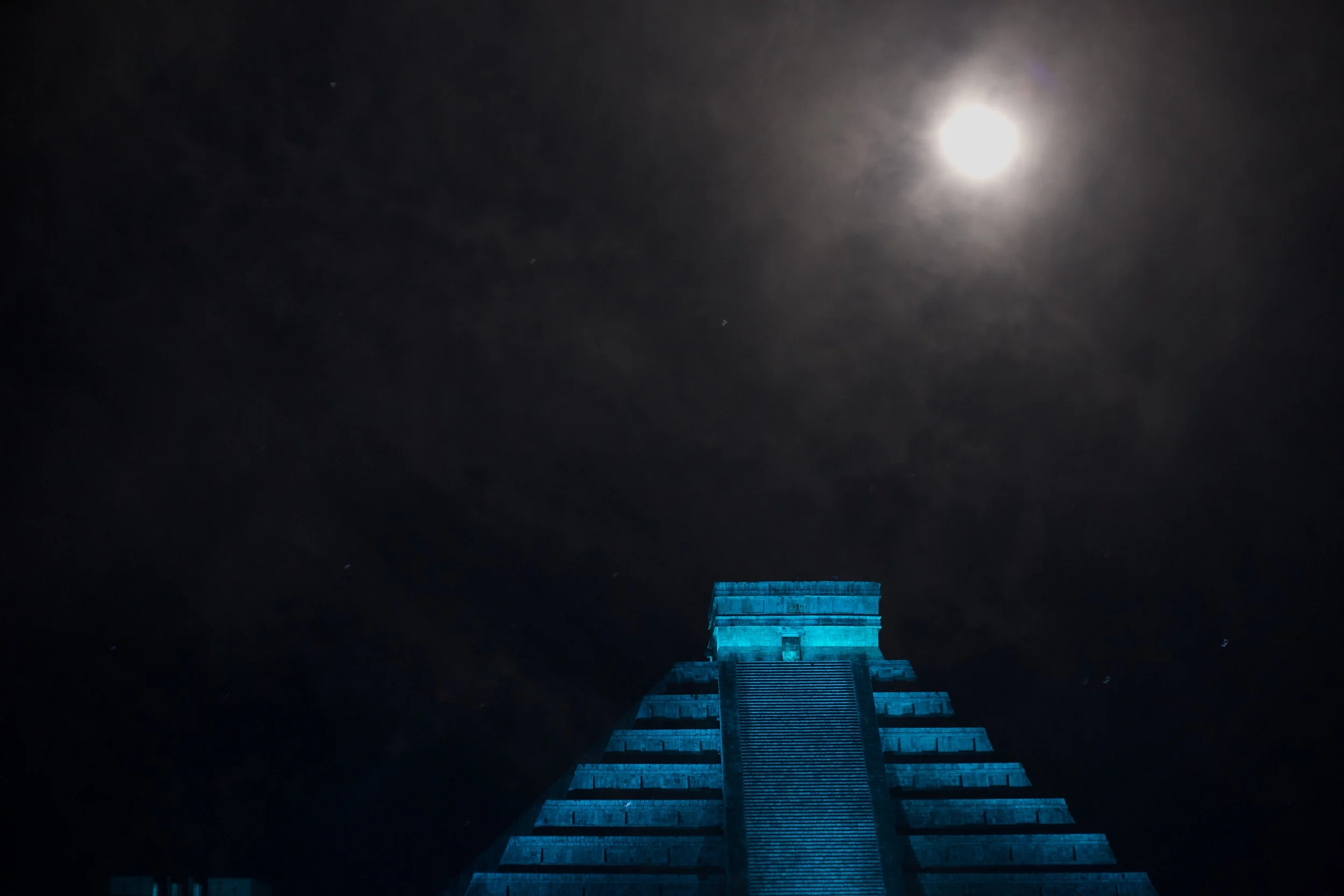
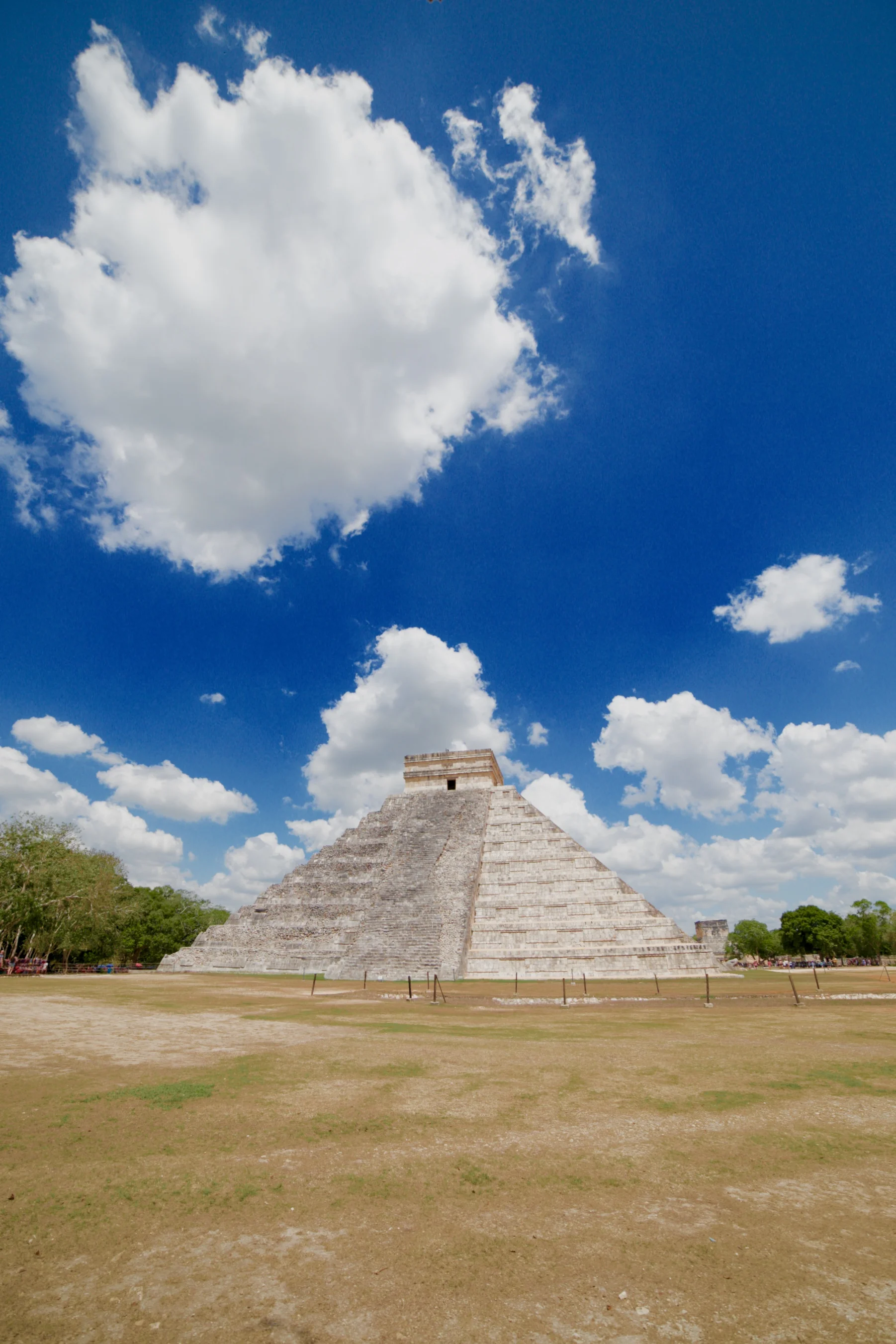
We may wonder, though, at the incredible accuracy of Mayan astrologers and time keepers. Time formed such an important part of everyday existence in Meso-America, that many village monuments were built in alignment with the heavens.