EPIC FRIENDS

Epic cake with lots of candles.
Three awesome, kick-ass ladies.
Musical characters made from icing - Elle Woods, and Glinda.

IN HOMAGE TO

REBEKAH | ALICIA | & YANA


I met Rebekah at the University's Harry Potter Society. After seven months in Europe, I had only twice met another New Zealander, and it was refreshing to be able to chat with a person who understood my cultural mores. I remember laughing with her about our shared experiences, things so commonplace as mince pies and the Goodnight Kiwi.

It was Rebekah who introduced me to Alicia and Yana, thus inducting me into a powerful circle of feminine friendship. 

One hardly ever reads of strong female friendships, and women are often depicted as a self-hating bunch, always bickering, always finding the friendships of men easier to bear, using the word 'dramatic' to describe other women. When women are depicted in close friendships, they often talk of men, as if they have nothing better to do. Think Carrie Bradshaw and her bunch. But, here in my life was an example of close female friendship that defied all preset boundaries. 

I would take the bus out to Leith some nights, to hang out at the apartment where they all seemed to live (Alicia being an honorary flatmate of sorts), and we would stay up long into the night talking, watching old musicals on a crappy laptop and pausing it every ten minutes to check on the muffins or cookies that were baking. I loved these times! The other girls were inspirational to me, as we conversed about social issues, and they introduced me to such wonderful movies as Rent, The Phantom of the Opera, and Elle Woods, the Musical. I was also introduced to the Murder Mystery Society, and a plethora of other awesome people. 

My strongest memory, though, is of the week leading up to Yana's birthday. We schemed in secret, meeting at Alicia's small flat to make a glorious cake creation - a musically themed tower, filled with tonnes of buttercream. We watched Doctor Who, as I formed icing sheets into folds and swirls, to create the dress of Glinda the Good Witch. One particular episode we watched scared the bejesus out of me: involving angelic statues that would move when one blinked or turned away. When I said goodbye that night, I did not walk, but ran all through the dark streets of Edinburgh, whilst constantly checking over my shoulder for angels.

The party itself was amazing, an accumulation of all those things that made these three women awesome! Yana had shown incredible amounts of imagination, in asking us to create ourselves into a super-hero character for the occasion, and Rebekah and Alicia showed their expert finesse and loyalty in their costumes and party decorations. I think I hadn't laughed that much in months.

Before I left Edinburgh, Rebekah gave me a Christmas present of a book: The Little Prince. I read that book in the airport, in one sitting, and I cried a shit load. It was so poignant at that moment of my life.


The word homage has been used in two ways. One: to define the making of an oath of respect and honour between a ruler and his subject, during feudal times. Two: to describe an artwork or idea that has some other origin; whether intentional or not, the creator often pays homage to their inspirations. 
 

I wish to pay homage to these three ladies: Rebekah, Alicia and Yana, as I greatly respect and admire them for their qualities, and I have also been inspired by them in my life and in my works. 


Epic musicals themed cake
Story themed party.

COASTAL SCOTLAND

Reflecting sunset in a pool, and walking on water.

DIFFUSION

noun | /dəˈfyo͞oZHən/

1. The intermingling of substances,
by the natural movement of their particles.


    Coarse grains of sand between my toes.


Bending down by my knees to examine the spiral shells, I lose my sense of self for just a moment.
   In the details.


It is later than we intended and the light is failing fast.
Diffusing into darkness.


An hour earlier, I had talked with Jamie on the bus.
About everything and nothing.
I extracted parts of myself, placed them into conversations,
So that these now live on within her... Small moments of me.
   And vice versa.


At night, things lose their shape, disappearing under a dim blanket.
Maybe we do too,
  Perhaps we simply diffuse
    Into the darkness. 


North Berwick houses along the shore.
Coloured sea port houses in North Berwick
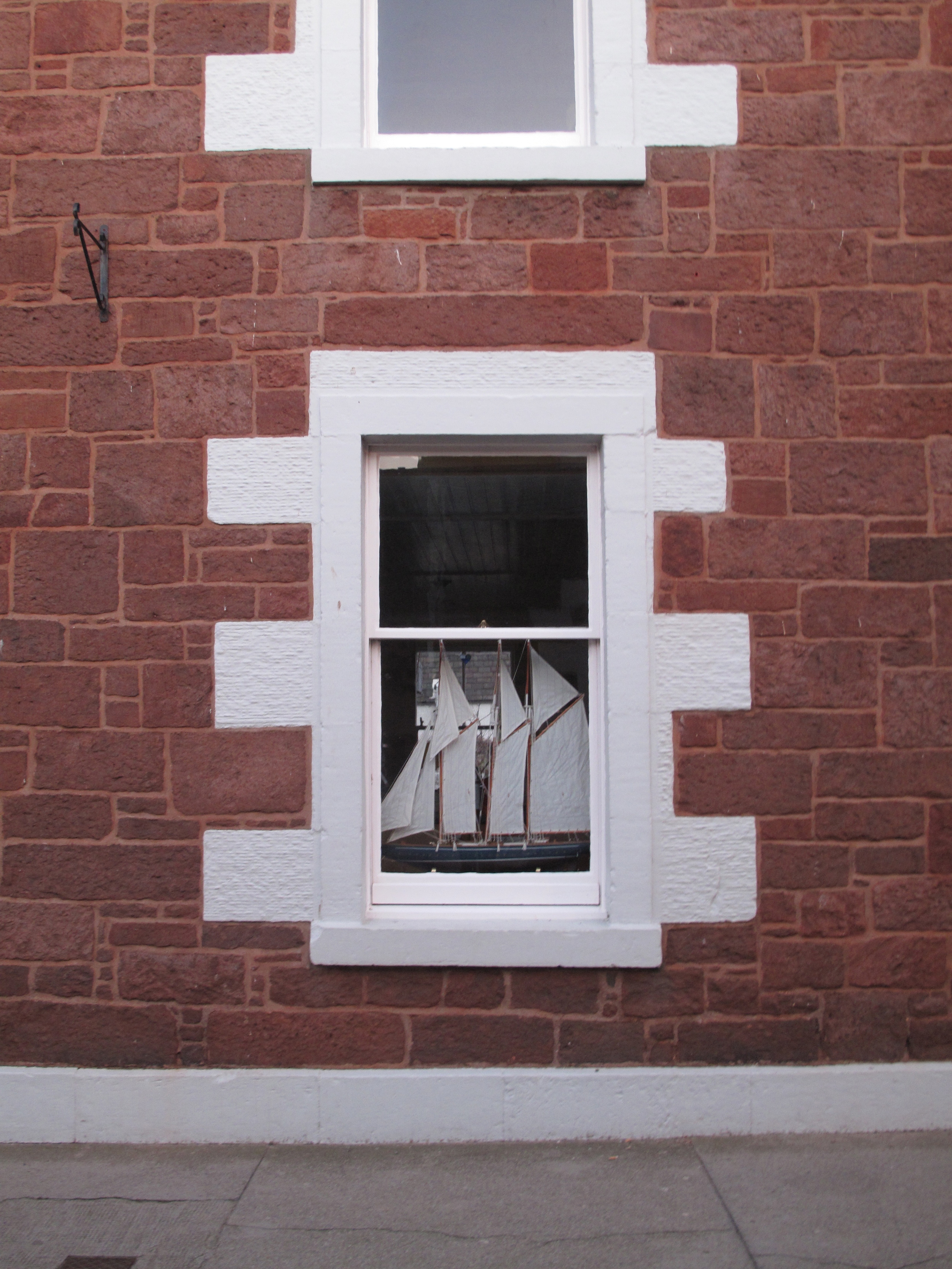
Model boat in a brick window, in the Scottish sea town of North Berwick
Small house with a pastel green door and port hole window.
Tiny colourful houses on the Scottish coast of North Berwick.
Lighthouse on a rocky coast, seen through the eye of a telescope.
Sunset over the Scottish coast - purple colours and rocks.
Puffin Cottage, North Berwick.
Purple sand and black seaweed and small limpet shells.
Sea water reflecting the pink and purple sunset, North Berwick.
North Berwick at dusk, when the sunset makes silhouettes of the houses by the shore.
Christmas lights at dusk, North Berwick.
Christmas lights in bare tree branches.

EDINBURGH CASTLE

Edinburgh Castle, on a green hill top.

EDINBURGH CASTLE


by ROBERT LOUIS STEVENSON


Meditative people will find a charm in a certain conancy between the aspect of the city and its odd and stirring history. In the very midst stands one of the most satisfactory crags in nature - a Bass Rock upon dry land, rooted in a garden, shaken by passing trains, carrying a crown of battlements and turrets, and describing its warlike shadow over the liveliest and brightest thoroughfare of the new town... Princes Street, with its mile of commercial palaces all beflagged upon some great occasion, see, across a gardened valley set with statues, where the washings of the old town flutter in the breeze at its high windows. And then, upon all sides, what a clashing of architecture! In this one valley, where the life of the town goes most busily forward, there may be seen, shown one above and behind another by the accidents of the ground, buildings in almost every style upon the globe. Egyptian and Greek temples, Venetian palaces and Gothic spires, are huddled one over another in a most admired disorder; while, above all, the brute mass of the Castle and the summit of Arthur’s Seat look down upon these imitations with a becoming dignity, as the works of Nature may look down upon the monuments of Art. But Nature is a more indiscriminate patroness than we imagine, and in no way frightened of a strong effect. The birds roost as willingly among the Corinthian capitals as in the crannies of the crag; the same atmosphere and daylight clothe the eternal rock and yesterday’s imitation portico; and as the soft northern sunshine throws out everything into a glorified distinctness - or easterly mists, coming up with the blue evening fuse all these incongruous features into one, and the lamps begin to glitter along the street, and faint lights to burn in the high windows across the valley - the feeling grows upon you that this also is a piece of nature in the most intimate sense; that this profusion of eccentricities, this dream in masonry and living rock, is not a drop-scene in a theatre, but a city in the world of every-day reality, connected by railway and telegraph-wire with all the capitals of Europe, and inhabited by citizens of the familiar type, who keep ledgers and attend church. By all the canons of romance, the place demands to be half deserted and leaning towards decay; birds we might admit in profusion, the play of the sun and winds, and a few gypsies encamped in the chief thoroughfare: but these citizens, with their cabs and tramways, their trains and posters, are altogether out of key.

...A ROMANCE OF THE LAND...


WHAT IS THE ORIGIN of a city? Search your mind, and you might find in there images of archaeological sites: mud and stone dwellings that rose from the ground, formed by the hands of the dwellers.

Then picture Edinburgh... let us say it is one clouded day in August. What can you see? The stones, the grey stones of each building forming a canvas of middle-tones. These stones are not unlike to those that they perch on. Each city has its origins in the earth, from whence it came.

Edinburgh is rooted to the earth, and protrudes from it. Situated on a precipitous rock, the most conspicuous landmass for miles around, the rock provided protection to the first peoples of the area, being difficult to approach as the forest below was wild and tangled with dark pools and treacherous morasses. It was only in the time of King David that the area below the rock was turned into a garden. 

The rock itself was once a power house - a volcano during the Carboniferous period. It is formed of a hard basalt. Only the eastern slope is accessible, being of an easier gradient to climb, and it was here that the town began to form.

The castle and the town seem not like an intrusion on the scene, but an extension of it. 

THE ROMANTICS DEPICTED in their art various scenes of aesthetic beauty. They disdained the movements of the scientific revolution and urbanisation, believing instead that there was more to life than rational thinking and mechanised living. So they painted not the town but the village; not the new but the old. They loved to evoke the haunting beauty of a decrepit site, maybe a tower ruin with tumbled stones, where nature has taken her course. Each poem, each painting was meant to capture the mysteries of the world, to create an emotion in the audience, and to spark the imagination. 

Castles have long been favoured by romantics as sites on which to drape their visions. Or, in fact, our visions, as the common perception of castles has been molded by romantic notions. Take, for instance, Edinburgh castle... Legends abound, of beautiful dames and surly knights, all performing great deeds at the castle. There is St Margaret, the pious queen who kissed the feet of the faithful, and her husband Malcolm, who, although he loved the clash of shield and spear, and although he could not read, would carry the gifts she gave him - small books of devotion - and would clasp them close to his breast. He built for her a tiny chapel, still standing in the courtyard of the castle today. Other legends tell us of showmanship, bouts of jousting, and tales of intrigue and scandal - nights that brought death to whole families, murdered at the dinner table; or great escapes of prisoners down the side of the rock face. These tales would not be out of place in a story book, The Princess Bride perhaps.

And, in fact, Edinburgh castle has found its way into the story books too... The Gododdin, an ancient Welsh text, and one of the earliest references to King Arthur, linked his personage to the city of Edinburgh. The craggy hill facing the castle is supposedly one place where Arthur sat, to watch his army march through the lands below, and there are whisperings that the castle itself was that Castle of Maidens so often mentioned in Arthurian legend. The naming of the castle as 'Castellum Puellarum' (Castle of Women) by the local monks would be one piece of evidence for this theory.

But, we must admit that Edinburgh is not a scene of classical romanticism. As Robert Louis Stevenson so aptly notes, the scene is not one of ruin, devoid of the trappings of present-day men, but is instead a living organism complete with the hustle and bustle of everyday life. And yet, is there not something romantic in all of that? Is it not beautiful, to be able to find emotion and meaning in the everyday goings on of this incredible city?

 
Buttresses on a round tower and white daisies at Edinburgh Castle.
Saluting like a guard at Edinburgh Castle
Edinburgh Castle front gate and coat of arms.
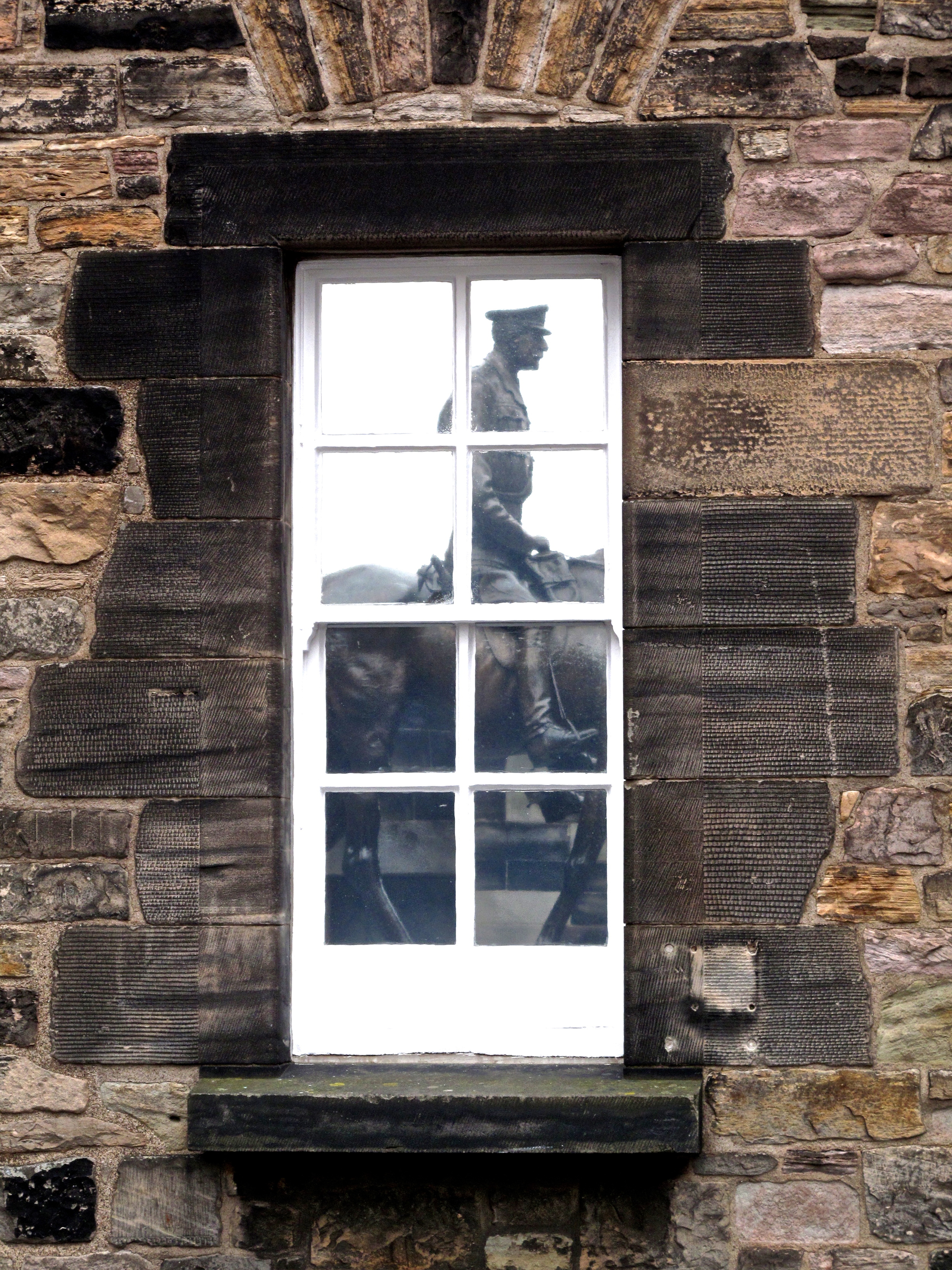
Window reflection of an equestrian statue in Edinburgh Castle.
Stained glass window in the old chapel in Edinburgh Castle.
Tower seen through a walkway, Edinburgh Castle.
Stained glass patterns and knights coats of arms
Medieval painting of Scottish unicorns and declaration.

AN EVERYDAY ROMANCE

I remember coming to the castle grounds many times, feeling drawn to the rock that was visible for miles around. Maybe this is how people felt when they first laid eyes upon it: as if they must absolutely climb to the tippy-top.
I would go to the castle esplanade for a moment alone, to just be with my thoughts. Among all the tourists clicking their cameras, I could blend in. Diffuse myself if you will, and focus instead on the view. 
I went there on the night of Guy Fawkes, when the city was fervent with activity. I was alone, and I missed my family terribly that night, as we would always share Guy Fawkes together, my dad lighting off the fireworks that he had refused to throw out the previous year, and my mother being beside herself with worry that he would blow us all up. But that year it was just me, and I remember looking out at all the fireworks that signified a gathering of people in the streets below, and I thought of my mother, my father, brother and sister. 
The castle was a constant in my everyday life when I lived in Edinburgh. I miss it now, with that same aching feeling I felt on Guy Fawkes.
Stone buildings inside the walls of Edinburgh Castle.