A TASTE OF GRANADA

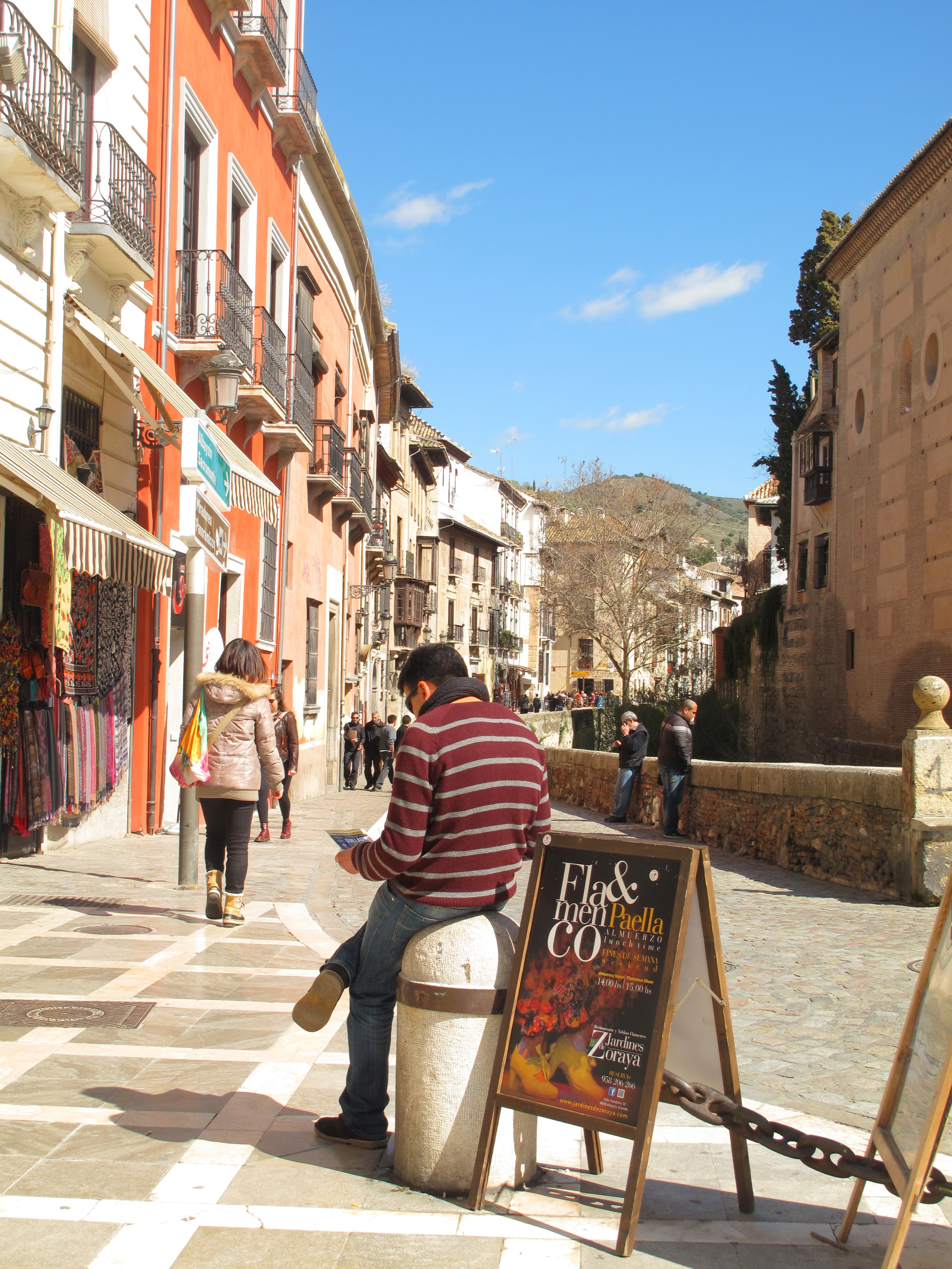
A young man leaning on a post and reading the paper in the sunny streets of Granada

BREAKFAST


Tea cup full of chocolate for dipping churros in
Fresh churros and chocolate for breakfast at the cafe Alhambra in Granada
Pan con tomate and a healthy drizzle of olive oil
 

CAFETERIA ALHAMBRA
27 Plaza de Bib-Rambla


CHURROS Y CHOCOLATE

Churros piped in a huge spiral form, fried and then cut into smaller pieces and served with a cup of scalding liquid chocolate for dipping.

PA AMB TOMÀQUET

A simple dish, consisting of fresh bread, rubbed with tomato, then seasoned generously with salt and olive oil.

 
Old white houses and new graffiti in Granada
glass light shade in geometric oriental design in a white corridor

SMALL WONDERS OF THE MORNING

Churros with chocolate - one of the best, most unhealthy breakfasts I have ever eaten. 
Watching people hang their washing to dry on the balcony, or on the windowsill. Chuckling with Angela over stories of lost laundry and knickers falling on passers-by below.
Dog walkers are out in abundance, as are coffee drinkers. But only at an acceptable hour such as 10:oo am, because of course they have been partying.
A leisurely stroll past the Cathedral, under yawning orange trees, branches drooping with fruit.
Two women walking a small dog in the streets of Granada
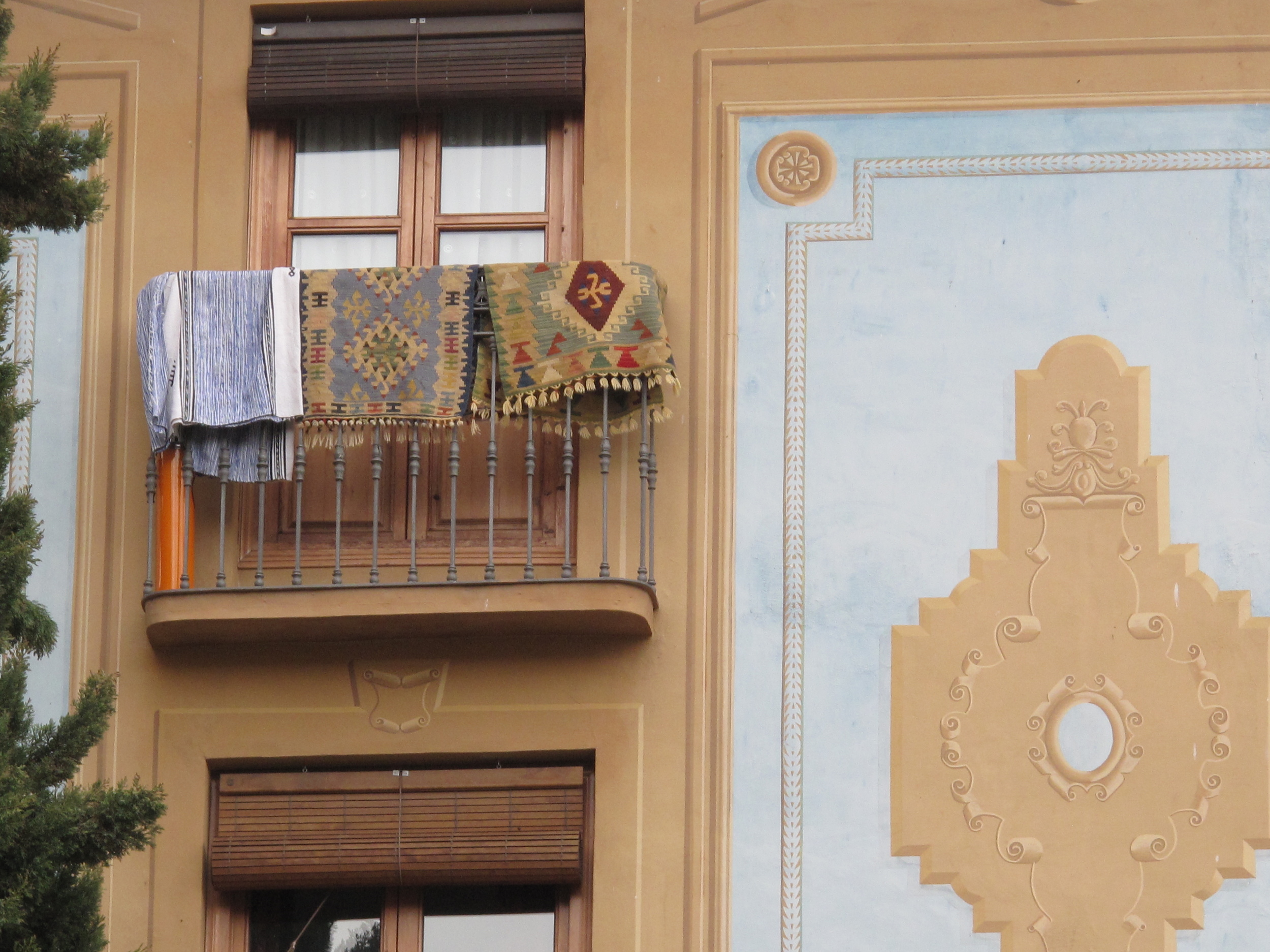
Carpets hanging on a balcony in Granada
Tiled walls in the old market quarter of Granada
old buildings and orange trees in Granada

LEISURELY LUNCH


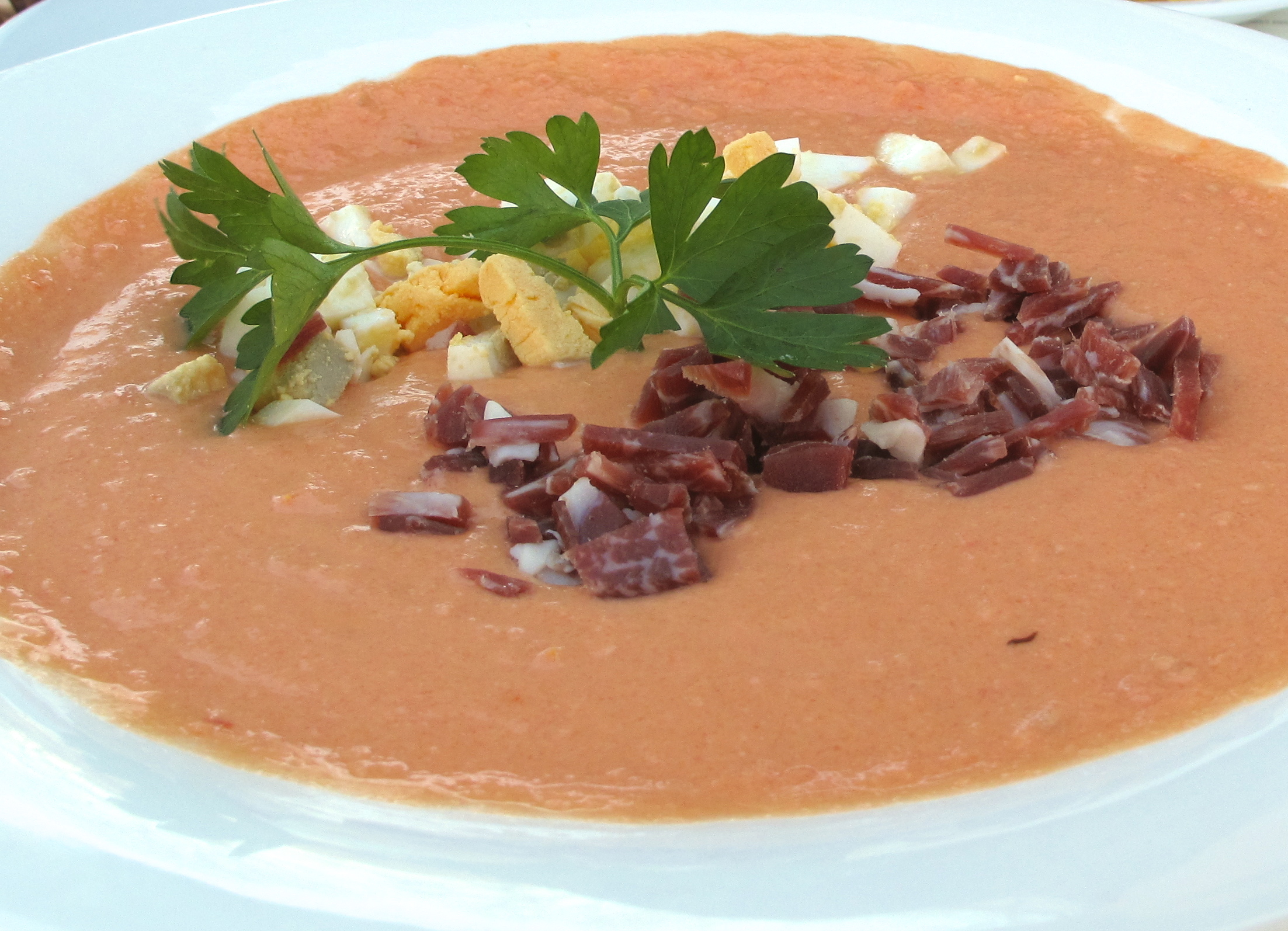
Salmarejo dish in Granada
 

ON THE MENU


SALMOREJO

A thick, gazpacho-like soup made with tomatoes and bread, and a huge amount of olive oil. Even better than a tomato salmorejo is one made with ripe oranges.

DULCES
- artesenia monastica -
A selection of traditional and artisanal biscuits and small cakes made by the nuns in the closed convent of San Bernardo, on Calle Gloria.
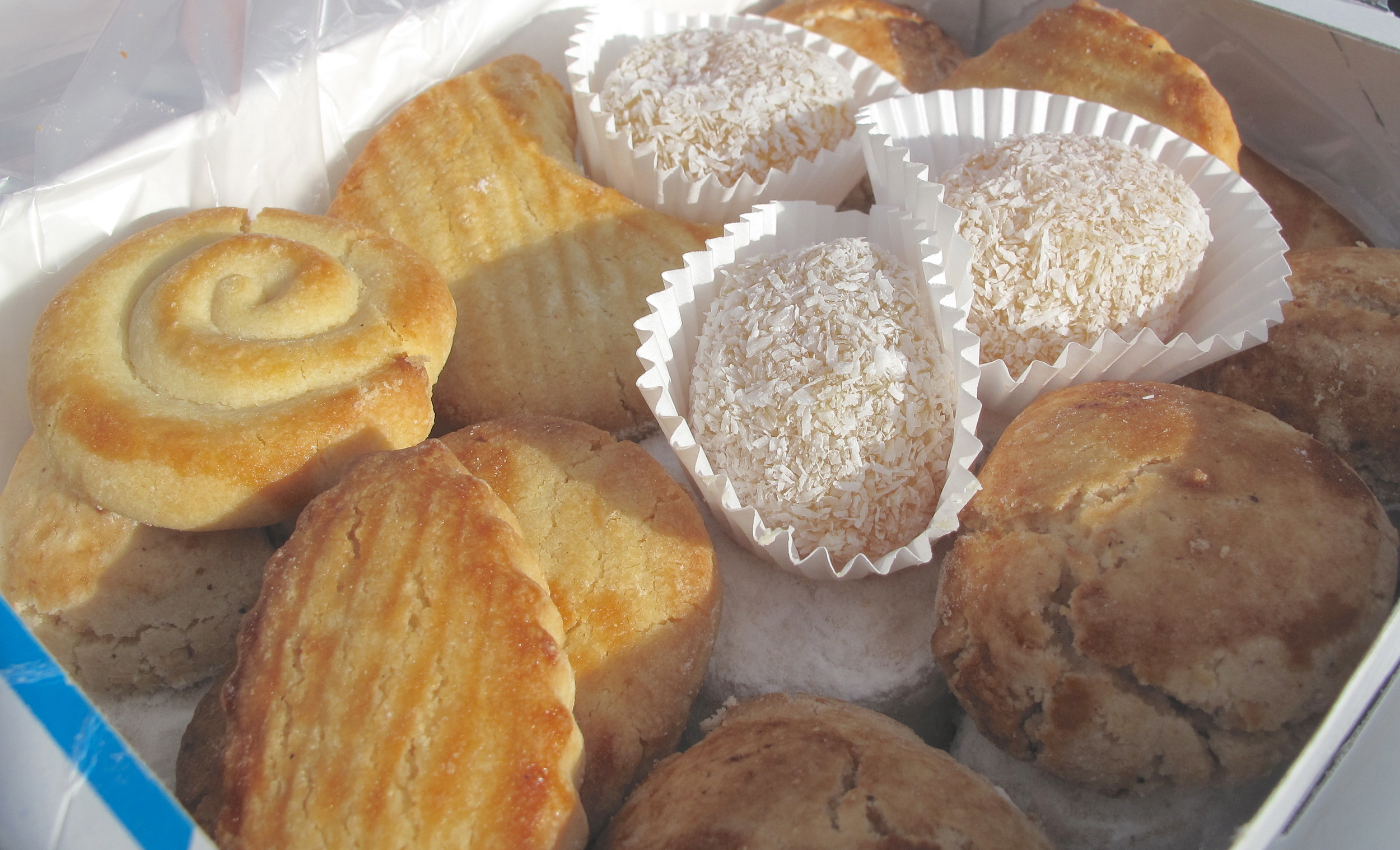
 
Biscuits made by nuns in a closed convent, Granada
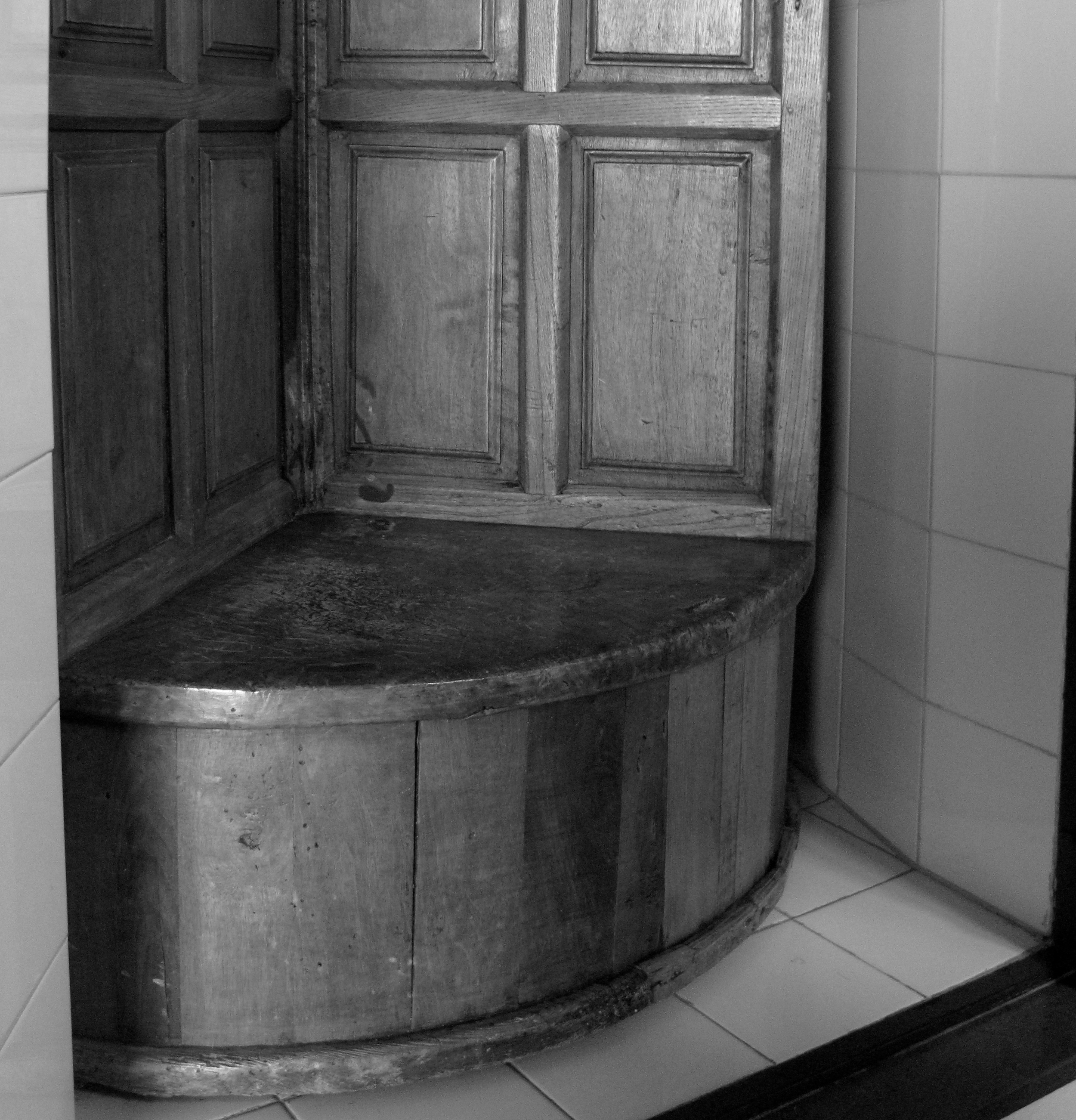
Paying for biscuits at a closed convent - through a small turning wooden door

SMALL WONDERS OF THE AFTERNOON

The pleasure of taking an hour to eat lunch, and then staying at the table to chat with friends afterwards.
The charming practice of buying sweets at a nunnery - where one must place an order to the unseen nun behind the small rotating barrel... wait a few moments and the barrel turns, revealing the sweets, before it is turned one more time to collect the money. Such a system relies on trust.
Partaking in siesta after lunch - that magical time in Granada when the day becomes hot, and the streets empty of all but the tourists, who wander around wondering where everyone has gone.
street lamps and signs in the white washed hills of Granada

SIESTA


Siesta in the afternoon in Granada 
Stunning Granada cathedral in the sun

SMALL WONDERS OF THE EVENING

Waking from a siesta, to undertake a thorough exploration of the Muslim quarter.
Climbing the Cuesta de las Cabras - the Slope of the Goats.
Watching a solitary nun sing in prayer at a tiny chapel on the hill. The nuns of this chapel have kept an ongoing and unbroken roster of prayers for many years, day and night.
Undertaking further explorations in the local cemeteries, where the dead rest in large buildings adorned with plaques and flowers.
Watching the semi-organised mayhem ensue at the green grocer, where shoppers take tickets and wait for their number to be called to select from the mountains of beautiful pineapples, strawberries, and green beans. 
Being introduced to the small dog that lives in the window of the furniture store beside my uncle's apartment.
Being told to 'stand here and keep this parking spot', while my uncle fetches the car to move it closer. Then being told to move by various Spanish people who are also looking for a closer spot.
Being so lucky as to witness an impromptu flamenco session by the locals, with a guitar accompaniment by a gentlemen whose cigarette never left his mouth. 
Man jumping onto a bike framed by church doors, Granada
Nun praying at a chapel in Granada, where prayers are said round the clock.
Cemetery in granada - with small boxes in large buildings, each one with a plaque and flowers
The Alhambra seen from a Mosque garden, Granada.
White walls and yellow flowers and an oriental door
laundry hanging from a window in Granada Hills
Women who started spontaneously dancing flamenco while men sing and play the guitar

TAPAS


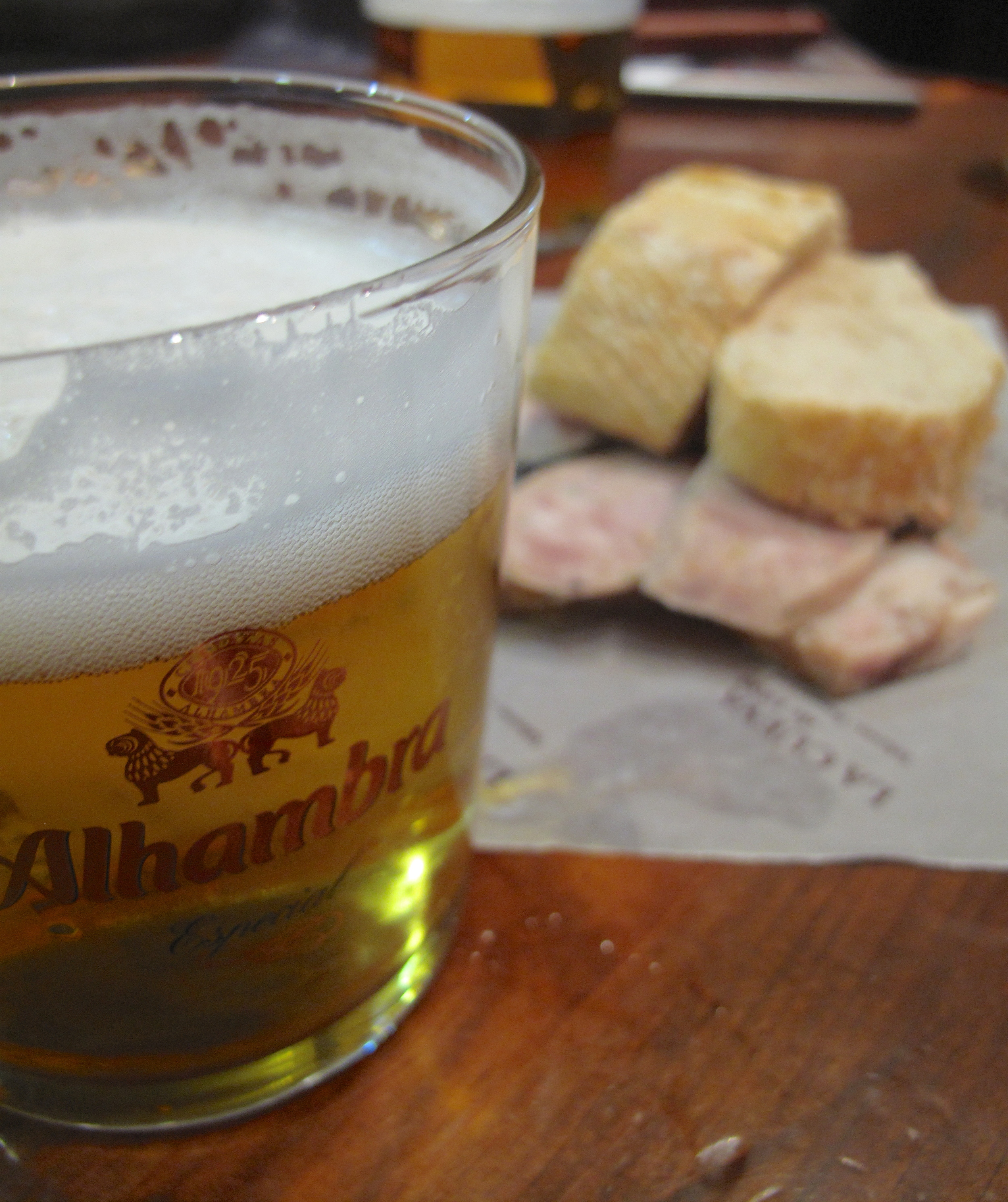
Alhambra beer and jamon ham tapas
Jamon hams hanging from the roof in a tapas bar, Granada. The little cups are to catch the drips
 

ON THE MENU


CERVEZAS

Many, many many cervezas. Especially popular is the ubiquitous Alhambra brand of beer. And with each beer is served a new form of tapas - small finger foods.

MORCILLA

A blood sausage, also filled with rice and onions, fried to a crisp finish then sliced into rounds. Often served with bread.

PIONONOS

A tiny round pastry, rolled into a cylinder, cemented together with syrup and topped with toasted cream. An old favourite of Queen Isabella.

JAMÓN

And not just any jamón, but one that has been cured in the traditional way, and then stored on the roof of the bar with a small cup below  to catch the drips of fat.

PIMIENTOS DE PADRÓN

Fried green chili peppers, from Galicia, in Northwestern Spain. A bit of a risky business as only one in five will turn out to be spicy.

COLA CAO

A spanish chocolate drink, which will be served in a very formal manner to your table in packet form, with a glass of hot milk. You are expected to stir in the drink yourself.

 
tapas of fried chillis
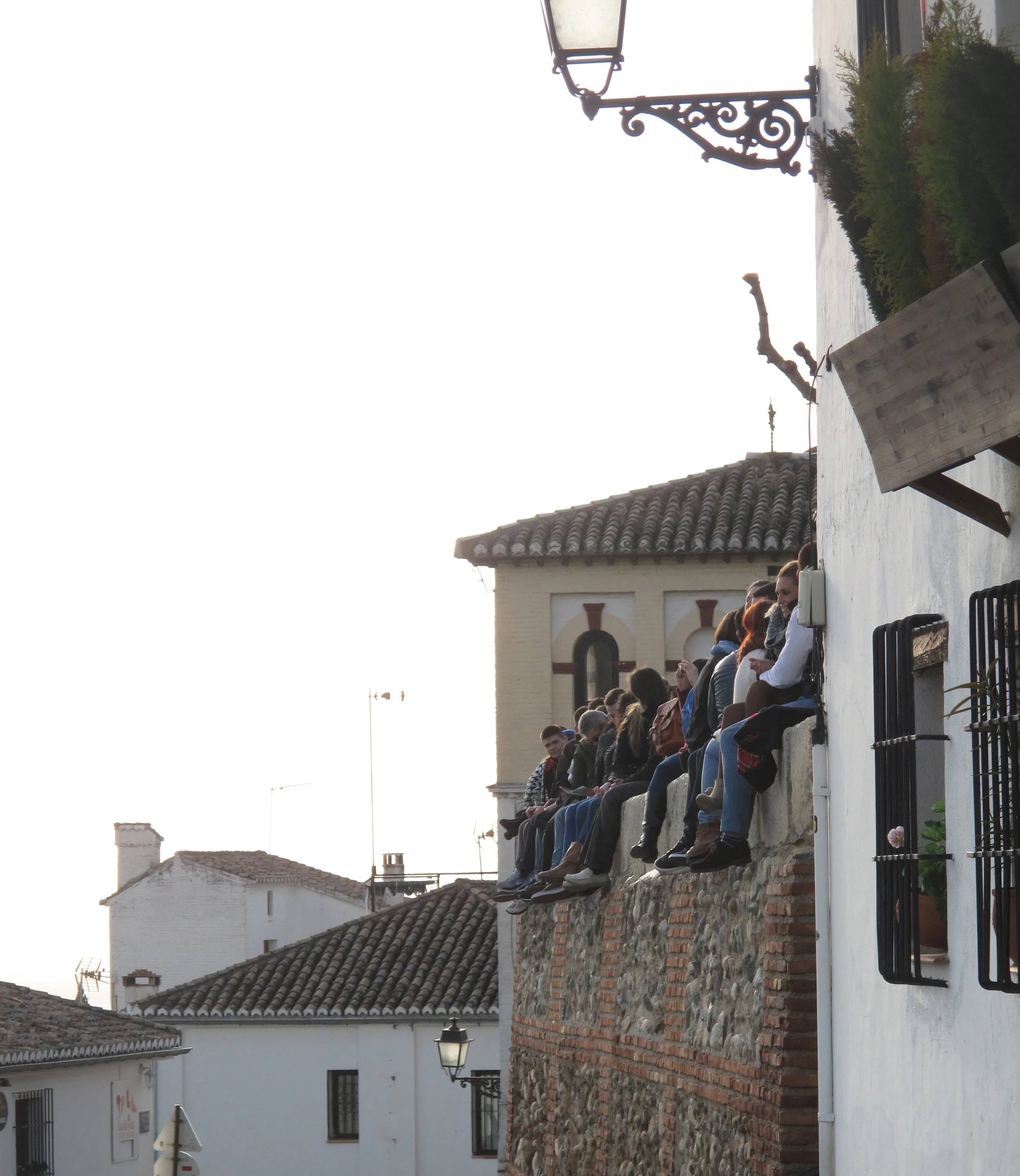
Young people sitting on a fence and watching the sunset over the Alhambra
tapas of bread and cheese and olives

MONTSERRAT

Monserrat monastery nestled in the hills of Catalonia

A SACRED PLACE

But would you estimate the full majesty of this place and all its fragrance, wait till the setting sun traces out upon the ocean the vast shadow of the mountain; till the evening breezes drive the clouds with increased rapidity across the rocks: then commence your solitary course.
— J. Hinton - 1807

Mountains and caves often attract spiritual energies - the one with a masculine energy: reaching to the sky, the other a feminine energy: going deep into the earth. Various religions have equated the sky with a god, and portrayed the earth as a goddess - our mother.

Thus, a mountain may be seen as the meeting of the two points, the touching of the heavens and the earth.

And if a mountain may be a meeting of heaven and sky, and if the earth may be called our mother, then a home within a cave may be called a womb. 


A SMALL HISTORY OF THE WONDERS OF THE MOUNTAIN OF MONTSERRAT

It is no wonder, then, that people have been drawn to live in and to visit the caves on the mountains of Montserrat, since time immemorial. First there existed a temple to Venus, then a hermitage, with the hermits living in the scattered caves far up in the mountains. Later, an abbey was founded, and monks began to practice on the mountain. A figure of the Virgin Mary was carved and was heralded as a relic of St Luke, drawing pilgrims and kings. Stories were told of the mountain, myths created. In the nineteenth century, Wagner's Parsifal - an opera in three parts - named the mysterious 'Montsalvat' mountain as the hiding place of the Holy Grail. Subsequently, a belief was created that Montserrat is that very mountain, and a cult was formed, and Wagner became immensely popular in nearby Barcelona. Even later still, one could find new age enthusiasts on the mountain, searching for the sacred feminine, and believing that the spot is, in fact, the heart chakra of the earth. 

But who, upon visiting the mountain, could fault these people. When I made my visit, I felt as if the mountain itself were alive, and I was reminded of the scene in 'Picnic at Hanging Rock' - of the humming noise, the pure vibration, and the entrancing feeling the rock emits. While the statue of the Virgin might be a 9th century fake, as the most recent scientific analyses show, there is always that grain of truth in the matter. Besides, I do believe that years of focused thought - or devotion - can accumulate until a space or a concept becomes a virtual well of energy, filled from the ages. 


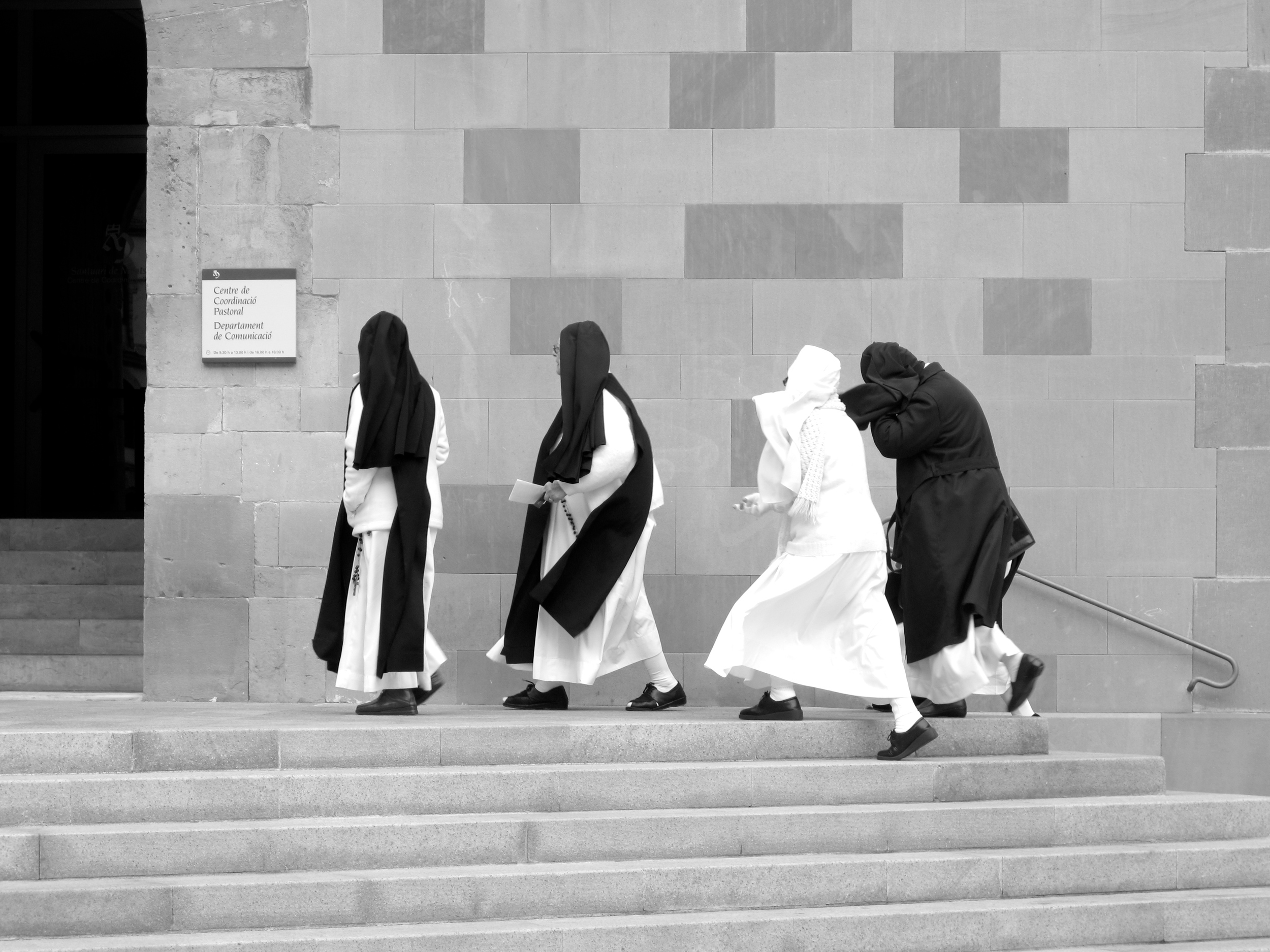
Nuns battling the wind at the monastery of Montserrat, Catalonia
View of Catalonia and some flowers seen from Montserrat monastery
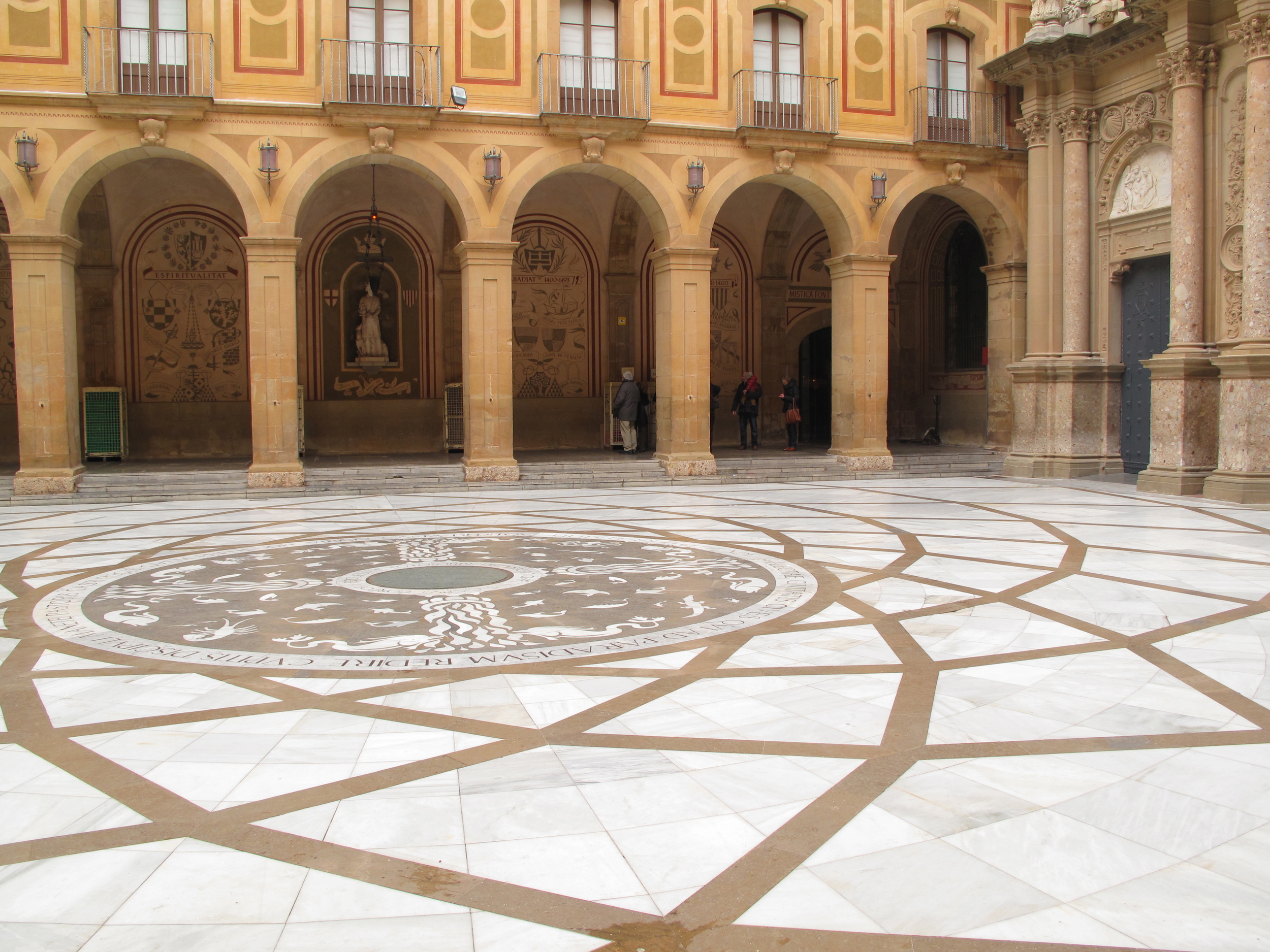
Courtyard and tile patterns at the Montserrat monastery.
Walls and stone figures in the courtyards of Montserrat monastery
Cream stone buildings and cypress trees in the hills of Montserrat

MY OWN FORAYS ON THE MOUNTAIN


Finding myself slightly tipsy from the wine at lunch, I wandered the silent paths of Montserrat.
It was winter, and once I passed the large cross on the hill, I was alone. 
The wind whistled through the cracks of this high-up place.
Something (probably the wine) encouraged me enough to sing to myself - The Hills are Alive with the Sound of Music.
The further I went, the less alone I began to feel. It was an odd feeling, like something was there with me, watching me. 
Up up up, on the wind swept paths, I happened upon some of the older hermitage buildings - now closed. The wind had acquired a force previously unknown to me, and was trying to hurl my off the dizzying heights.
And then I reached the caves. On the peak of St Jerome, a series of small, interlinking caverns exists, where hermits once carved out their existence. The view of Catalonia below was spectacular, the sun was setting, and I felt both chilled and slightly exhilarated. 

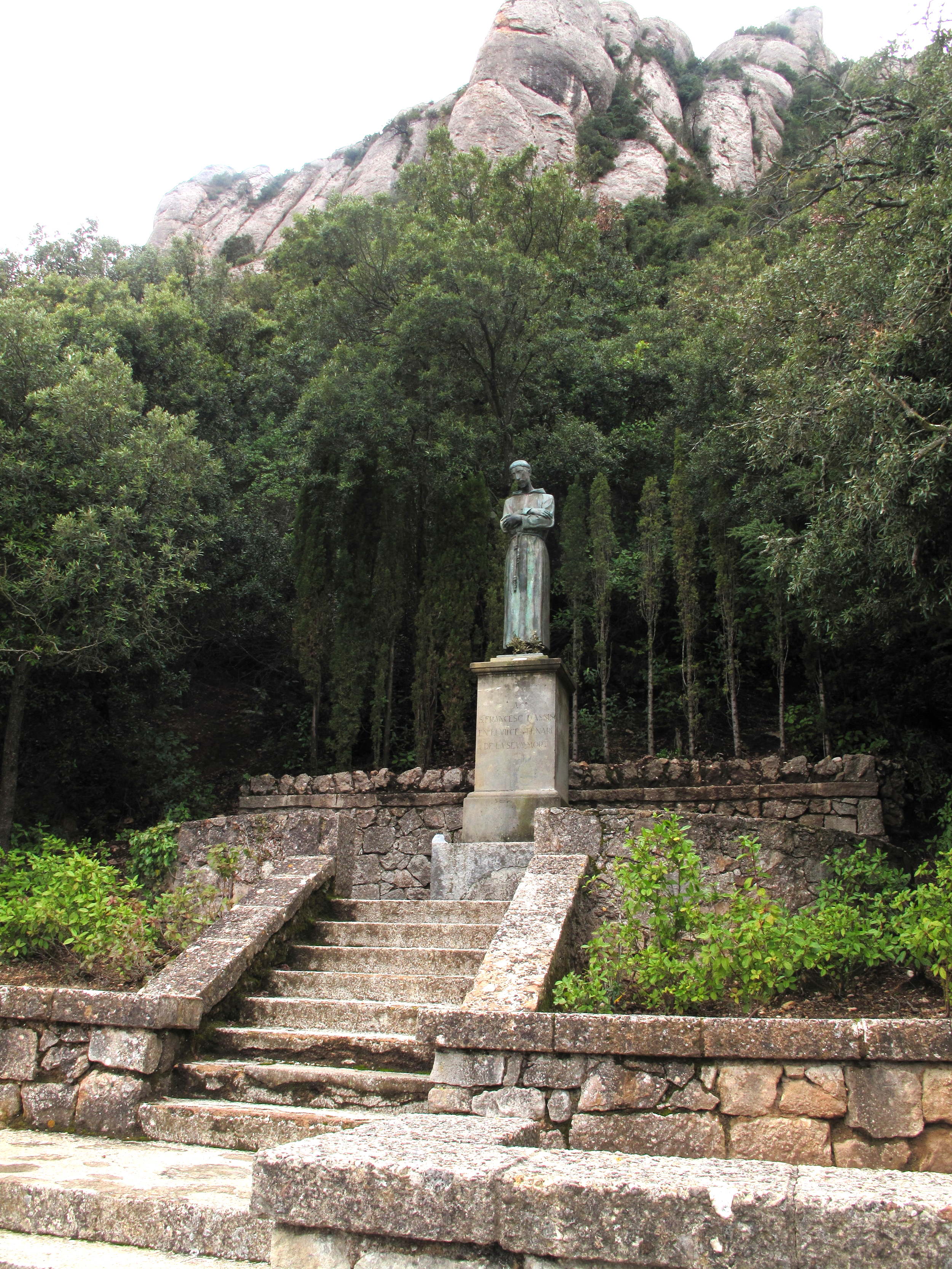
St Francis of Assisi statue hidden in green paths at the monastery on the mountains
Yellow flowers near the cross, tied to the railings on the mountain of Montserrat
Cross at montserrat
Small building of the monastery on the mountain of Montserrat
A small mountain monastery, hills and great views of Catalonia
View of Catalonia from the edge of a hill on Montserrat mountain
St Jerome chapel on Montserrat mountain.
Hermit caves in the mountains of Montserrat.
Montserrat mountain at sunset.

A Spot of Serendipity

Up on the peak of St Jerome, I noticed the time and realised I had to make it back to catch the last funicular of the day, in order to then catch my flight back home to France. A mountain goat could not have made it back down faster than I did.
What ensued was one of the weirdest scenarios I have ever encountered: a chance meeting with two young pilgrims: Matthew and Spencer, who then helped me to jump the barriers of the Barcelona metro, catch a train, run back to my hostel, grab my bags, hurriedly hug my new friends goodbye, and rush rush rush to get that flight back home. 

BARCELONIAN ARCHITECTURE

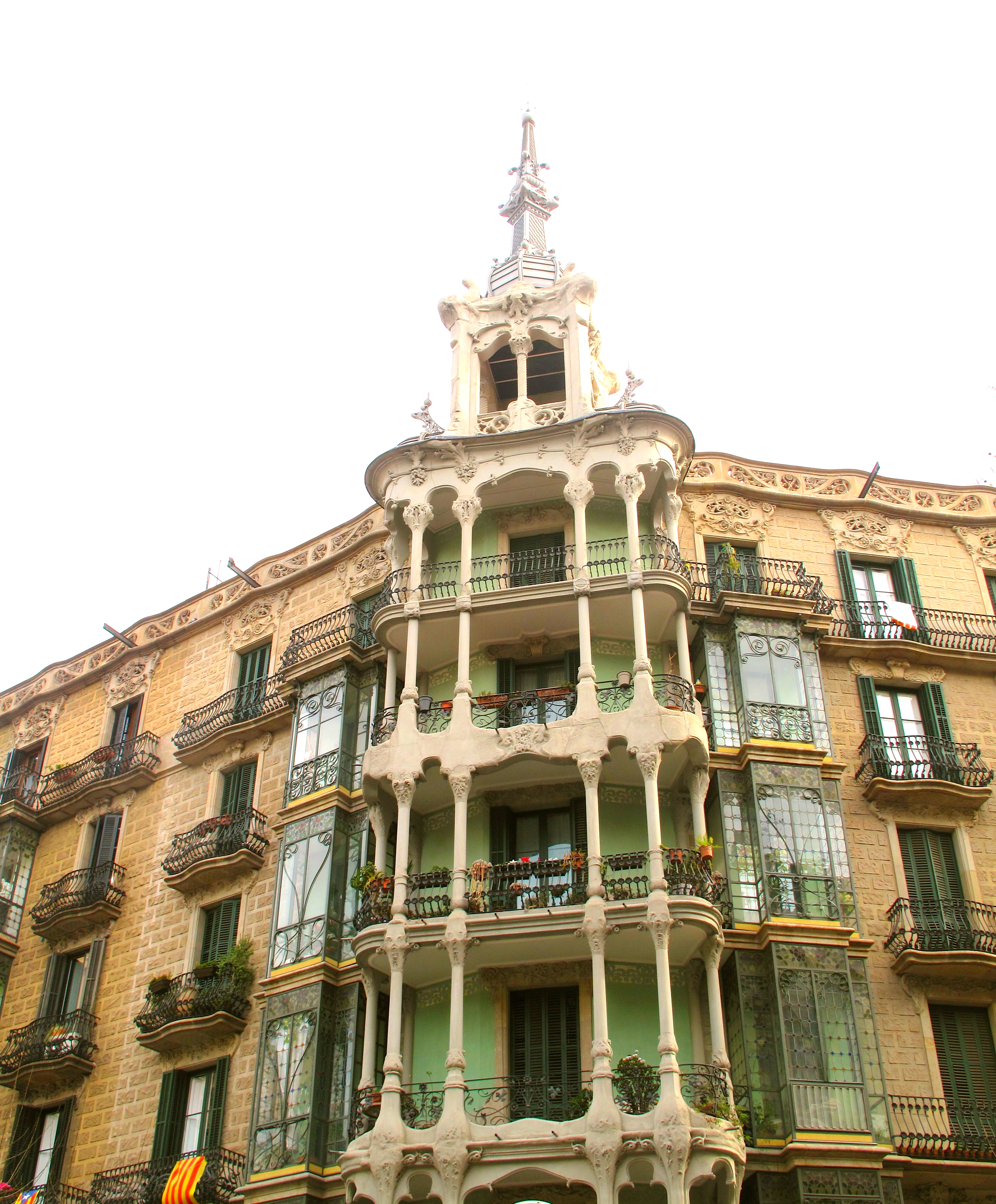
Organic architecture Barcelona.

ANTONI GAUDÍ

AND ORGANIC ARCHITECTURE


Organic architecture Barcelona - flowers and vines on a window frame
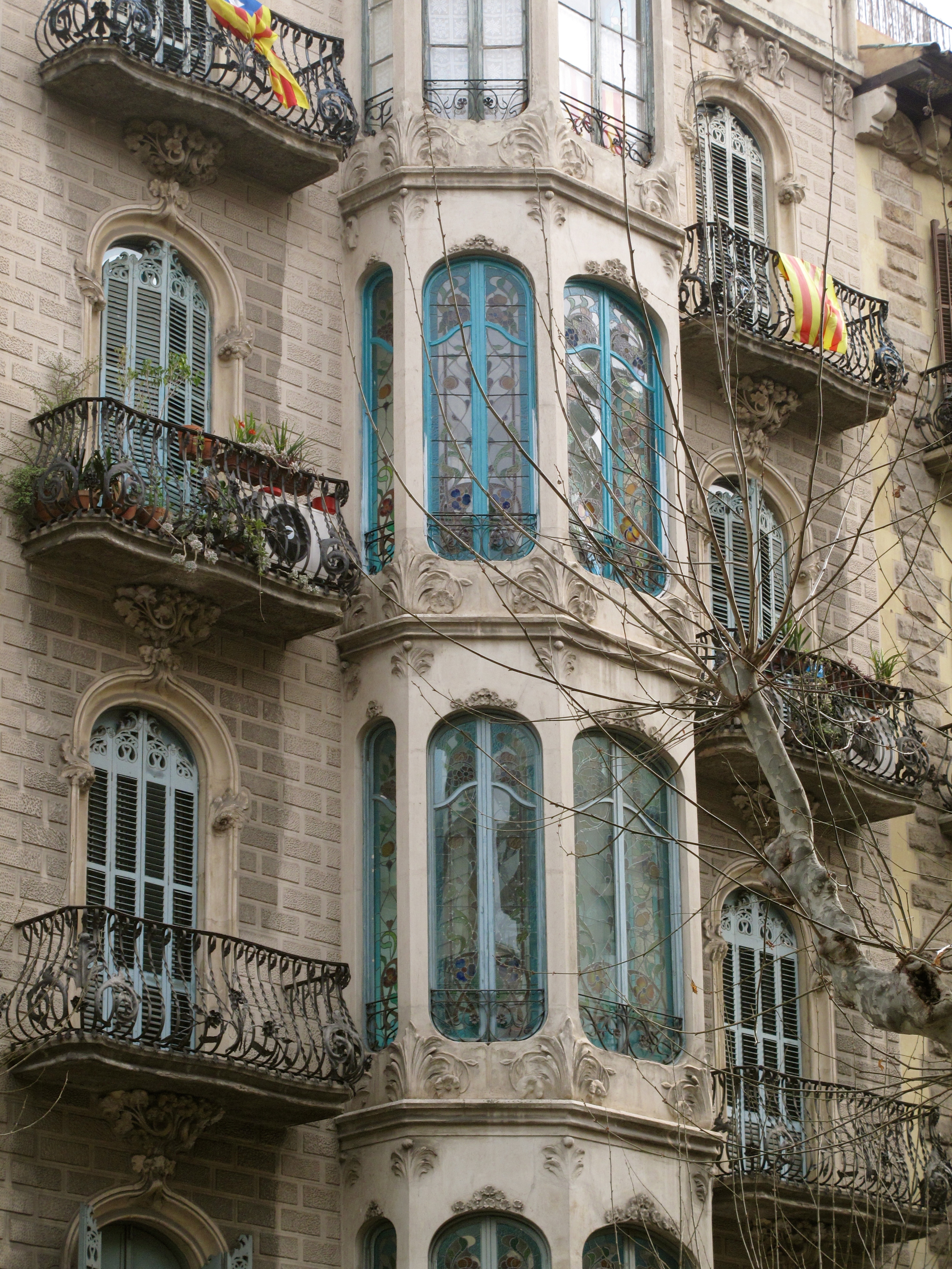
Windows of buildings in Barcelona

AN ARCHITECTURE WITH A PHILOSOPHY


PICTURE THIS...


It is the late 1800's, and Ildefons Cerdà is planning the new city of Barcelona. But unlike Baron Haussmann, who had to first demolish the city of Paris in order to create his wide avenues, Cerdà has nothing to demolish, instead he is working with an open plain: a blank slate.
Now imagine that, to the North of the city, and a train ride of only a few hours, is Paris and her Grand Expositions; an influence surely felt in Barcelona. There, Art Nouveau is a burgeoning movement, pushing forward modern ideas, abandoning the straight line for the curved one.
A little further to the West is England, and the equally influential Arts and Crafts movement, led by the prominent figures of John Ruskin and William Morris. Ruskin and Morris are currently calling for a revival of the handicrafts, in reaction to that pesky Industrial Revolution which seems to be degrading both production methods and societal values with its infernal factories. As you read the manifestos of Ruskin, you read of medieval values, of guild-like societies filled with skilled artisans, and of objects that can be both beautiful and truly functional. 

In fact, all the West seems to be aglow with change, what with the Jugendstil movement in Germany, and Wagner's writings on Total Art; the rise of Liberty Style in Italy; and even the new Glasgow Style in Scotland. 
However, to the East and South of Barcelona, picture the shores of the architectural orient; picture the Moorish monuments of Spain, the intricate artifacts of the Mudéjar and Nazarí arts, and the sprawl of the Alhambra. Picture, also, the remnants of a Gothic past, so riddled with trifles between the East and West, that at the very crux of it a new style was born.
And smack-bang in the very middle of this picture is Barcelona. It is 1888 - the year of the first Barcelona World Fair. The city is in midst of a nationalist resurgence - a 'Renaixença' or rebirth of Catalan culture. It is also in the midst of an artistic revolution: Modernisme. While Lluís Domènech i Montaner is trekking through Catalonia in search of a national heritage, recording it in his sketches of Gothic buildings; others are busy planning a modern and cosmopolitan city. The result is the Modernista architectural movement - an intriguing combination of foreign and nationalist movements, of old and new styles. 


The times, they are a-changin'. 


This was the environment in which Antoni Gaudí began his career. Gaudí himself felt each of these influences keenly, and the results may be seen in many of his works: we may glimpse the curved lines so beloved by Art Nouveau, and the prominence of handicrafts as set out by Ruskin and Morris - as, from the ironworks to the stained glass, to the very furniture inside his buildings, Gaudí considered each detail to be important. In his works we may also see the intersecting influences of Nationalism, Orientalism, and the Gothic Revival, so popular at the time.

Thus, in the beginning, Gaudí's works were a dynamic culmination of Barcelona's past and present. 

But then his works began to transcend that Modernista feeling, and Gaudí formed his own style, reminiscent of nature in all her various forms...


BACK TO THE ORIGINS

Originality consists in returning to the origin.
— Antoni Gaudí

So much of Gaudís later works are inspired by nature. By studying the forms of nature - the hyperbolic paraboloid, the hyperboloid, the helicoid and the cone - Gaudi discovered how to translate the language of the earth into architecture. Inspired by tree trunks and human bones, he resolved to make his buildings more stable than those of the Gothic era, which required buttresses to keep them standing. Similarly, his studies on light aided his creation of uniformly lit spaces.

Light achieves maximum harmony at an inclination of 45 degrees, since it resides on objects in a way that is neither horizontal nor vertical. This can be considered medium light, and it offers the most perfect vision of objects and their exquisite nuances. It is the Mediterranean light.
- Antoni Gaudí

Using his discoveries on light, Gaudí could imitate the light of stars and the dappled light that falls through a canopy of leaves. He pushed the envelope even further, creating organic shapes and forms within his buildings - hallways that twisted and turned; façades that appeared like dripping sand or dragons bones; crops of wild mushrooms masquerading as columns and capitals; representations of natural habitats - stone building blocks, sea creatures and sprouting plant kingdoms. The result is a portfolio of buildings that look as if they germinated from a seed in the ground, and were then cultivated by Gaudís green fingers.


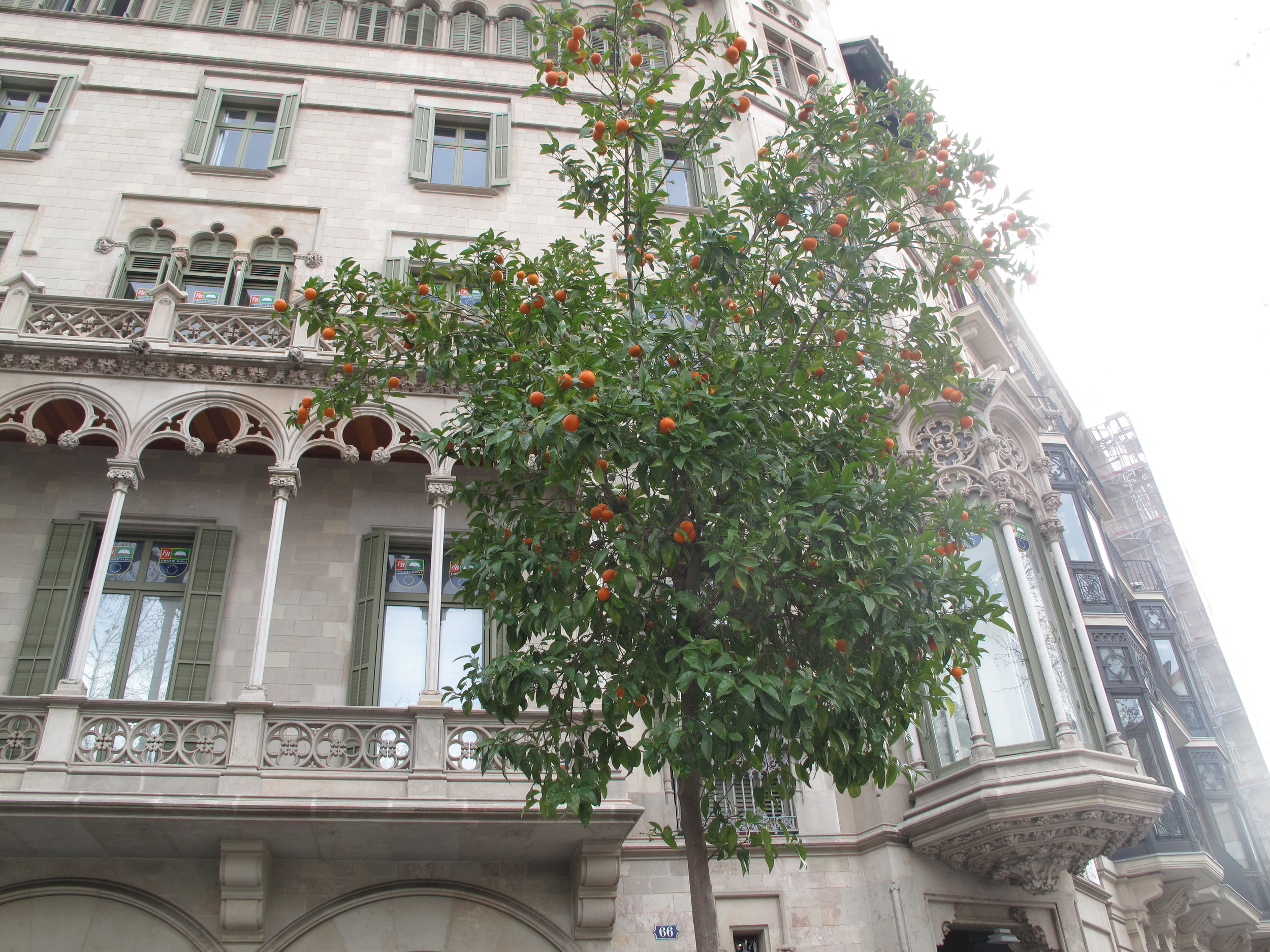
Architecture in Barcelona - balconies and windows and an orange tree
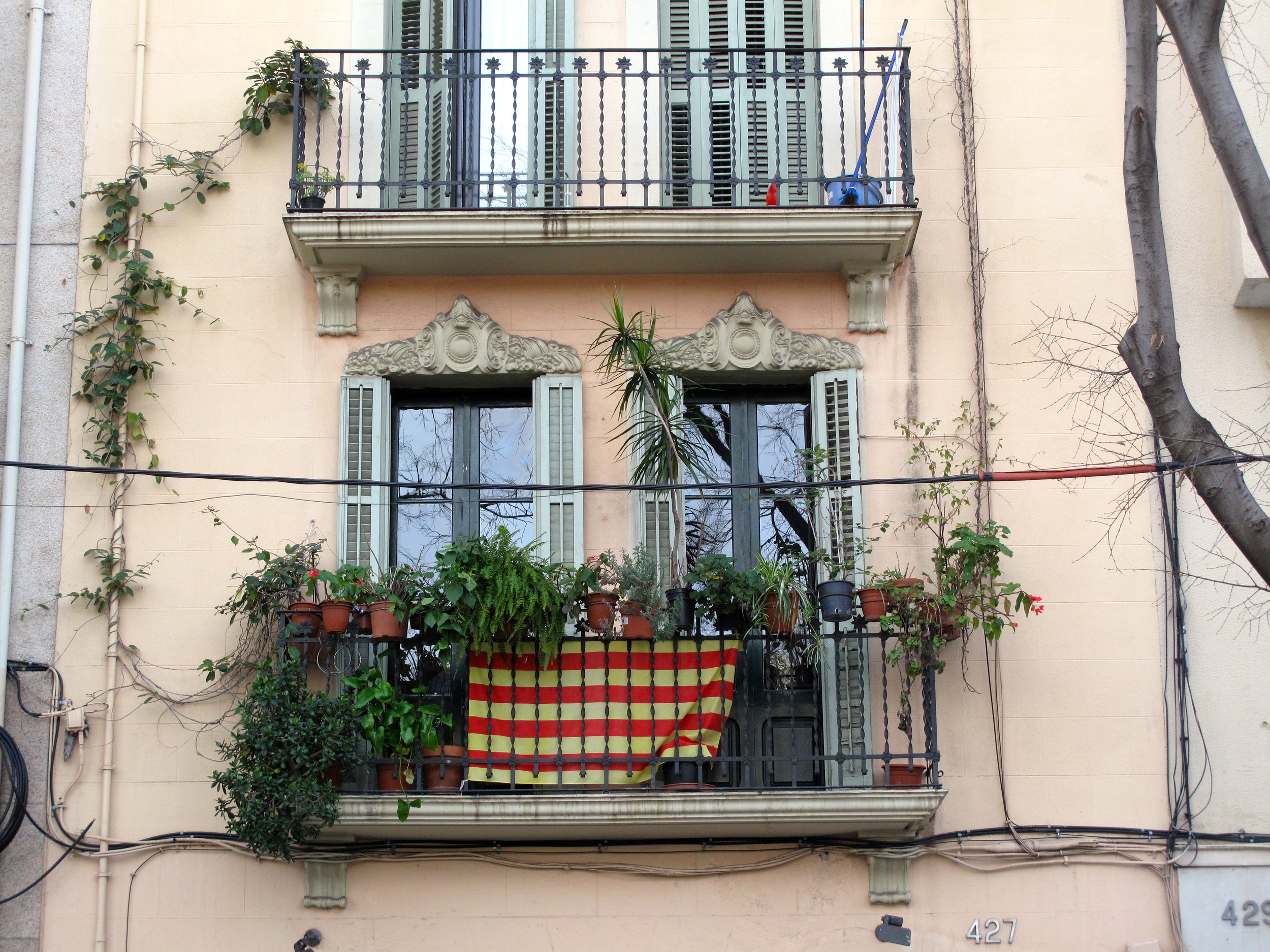
Colourful balcony on an old apartment in Barcelona

...TWO GORGEOUS EXAMPLES...
Of MODERNISTA ARCHITECTURE

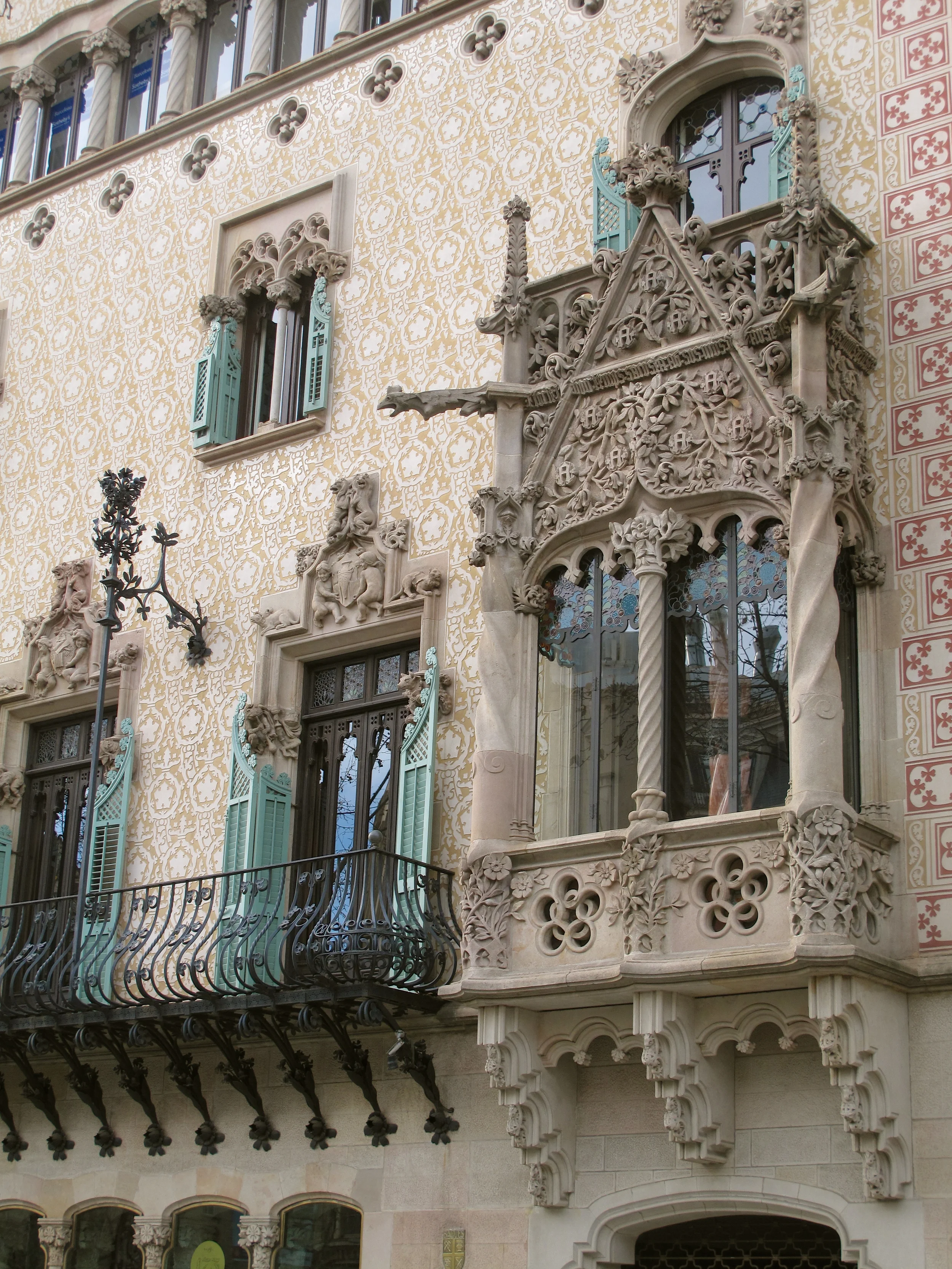
extended windows and organic detailing on stonework in Barcelona

1. CASA AMATLLER

Built in a creative neo-medieval style, this building combines historical elements with new building technologies, a perfect example of the Modernista attitudes contemporary to its time.

Organic architecture in Barcelona - flowers in stonework and art nouveau pillars

2. PALAU DE LA MÚSICA CATALANA

Called the most Wagnerian building in Barcelona, the façade follows the influence of the Arts and Crafts movement - showcasing all manner of handicrafts such as stonework, stained glass and mosaic tiling.


SAGRADA FAMILIA


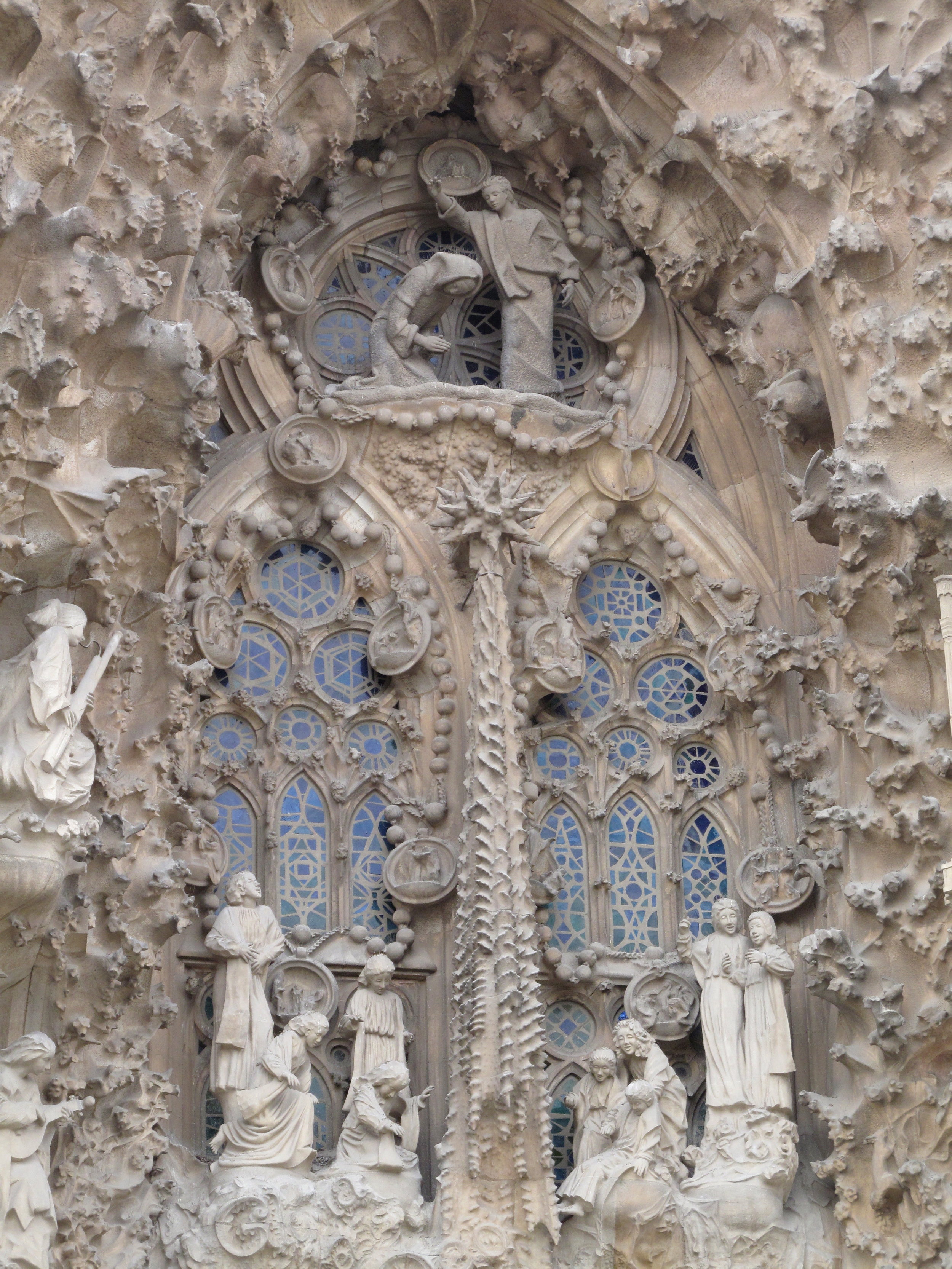
Façade at Gaudí's Sagrada Familia
Façade of Sagrada Familia with organic architecture by Gaudí

WHERE ART, NATURE AND RELIGION COMBINE

Those who look for the laws of Nature as a support for their new works collaborate with the creator.
— Antoni Gaudí

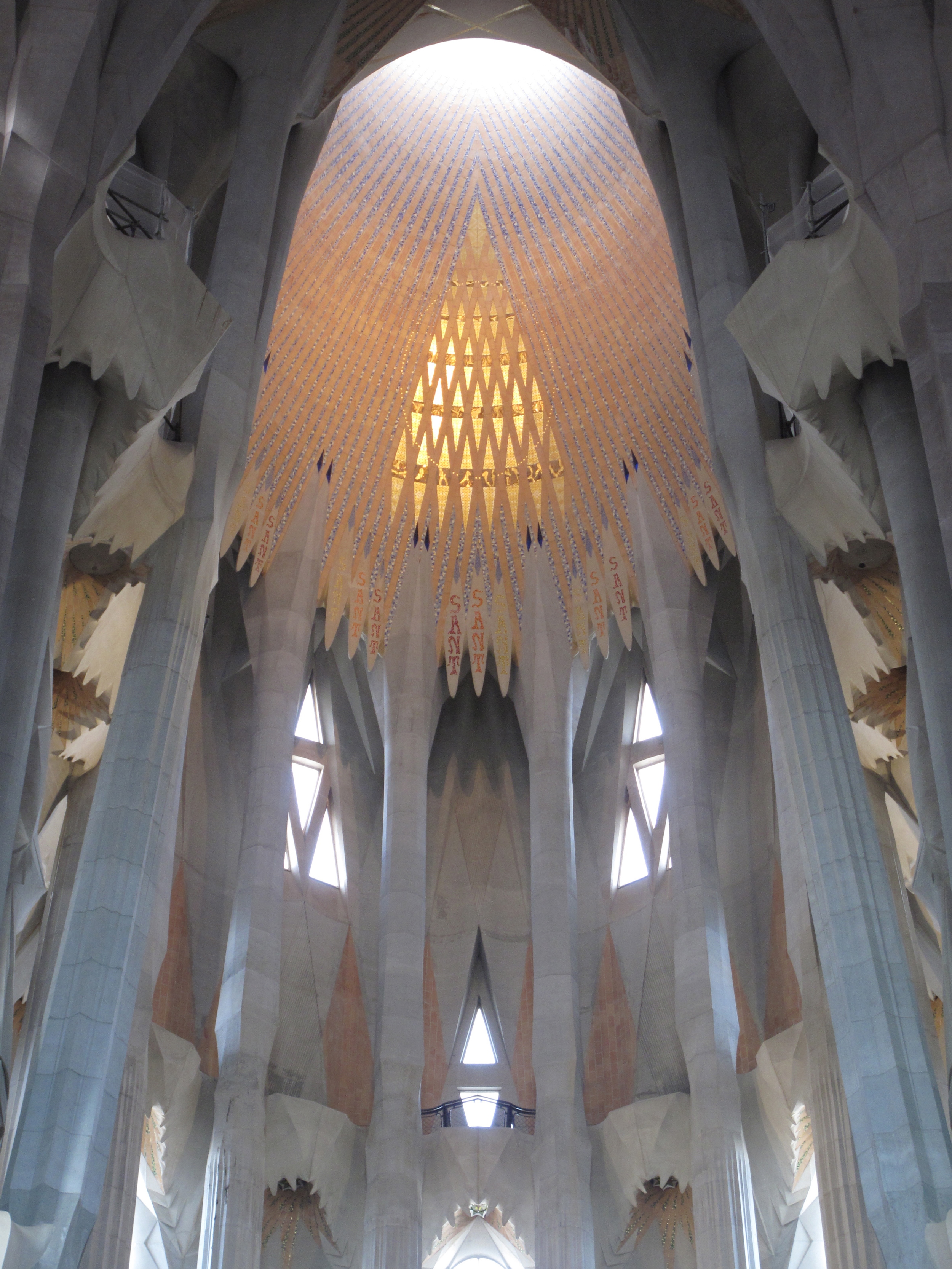
Sagrada Familia - Gaudís unfinished magnum opus, and an insight into the mind of its creator. This church is the epitome of Gaudí - his devout Catholicism, his obsession with nature, his technical skill, and his previous artistic influences. The outside structure is like a sandcastle, topped with spiral seashells. For the interior, he conceived of not a church, but a forest in which to worship the creator of this earth. The pillars are vast palm trunks, the roof: their spreading leaves. Each trunk has an slight inclination and a double-turn helicoidal shape, as in the branches and trunks of real trees. Remarkably, this fractal structure he envisioned actually allows the immense space to be divided into smaller, self-supported modules - eliminating the need for buttresses. The effect, combined with the light from the coloured windows and starry roof, is one of an ethereal quality.  Unlike any other temple I have ever seen, this was almost more suited to the realms of wood elves than to the cities of men.


Looking down the nave at Sagrada Familia, at the pillars and roof
White stone stairs and coloured windows at Sagrada Familia
Cross section of the ceiling of Sagrada Familia
Stained glass window inside Sagrada Familia
Inside of Sagrada Familia, rays of light on the ceiling

The architect of the future will build imitating nature, for it is the most rational, long-lasting and economical of all methods.
— Antoni Gaudí
 
Still, all evidence suggests Gaudí
was most enamoured of the information
he could summon with a naked eye
attuned to fine degrees of variation:
the subtle patterns in a reptile's skin
reborn as phosphorescent mosaic scales
in the outsized lizard fountain at the entrance
to the quirky, razzle dazzle Park Güell
while others are still reeling from the blue-
white to pearl to sea to sky to cobalt-
light-drenched arrow through the Casa Batlló
betraying every other earthly edifice
as, at best, a squandered opportunity, 
at worst, an airtight substantiation
of the irreversible insolvency
of our close-fisted imaginations.
Our sin here: the simple-minded reflex
to shut ourselves inside the rectilinear,
a contour wholly alien to nature
whose sole enclosed dwellings
- dovetailed hexagons for wasps and bees -
avail themselves of only obtuse angles.
But a curator friend will interrupt
my sketchy theories about nature
and point me to the rising trunks of trees:
clearly, nature's lavish with right angles,
...for example, that tentacled cathedral's
interior not forest but oasis:
those slim bare trunks are clearly palms -
crowned, in gold leaf, on the ceiling's vault
with fronds I take for disembodied wings
it is a house of God - by angels.


Extracts from 'Love Song to Antoni Gaudí'
- by Jacqueline Osherow